





Latest News




Want more of our stories on Google? Click here to make us a Preferred Source.
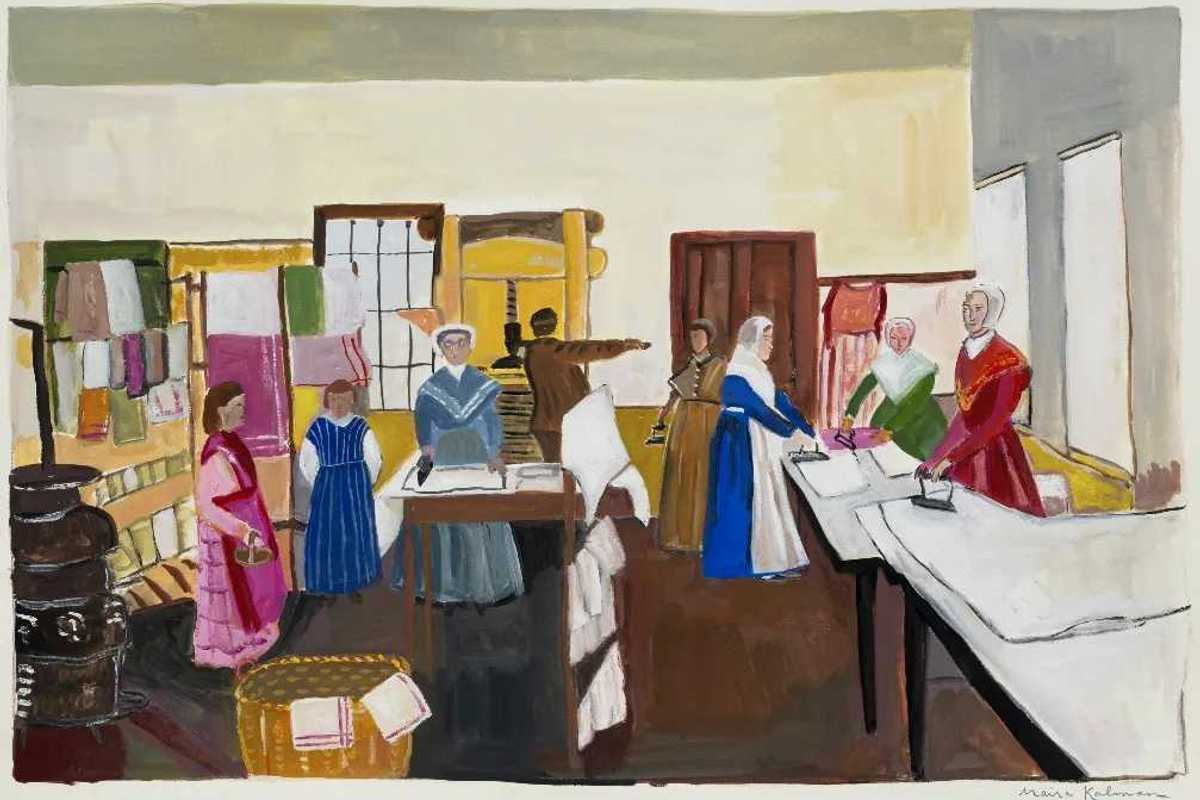
‘The Laundry Room,’ a painting by Maira Kalman from the exhibition “Shaker Outpost: Design, Commerce, and Culture” at the Shaker Museum’s pop-up space in Chatham.
Photo by Maira Kalman; Courtesy of the artist and Mary Ryan Gallery, New York
“I always approach my work from an aspect of love,” she said. “I fall in love with a face or a chair or a shoe. And then it is my pleasure to paint. That is how I approached the pieces I chose for the installation. They spoke to me. They SANG to me.”
Her selections for the Shaker Outpost include clothing of daily life — hats, shoes, socks, gloves — alongside objects shaped by hand and necessity. A pair of bear fur mittens, a glove form, a forged iron stake. Items that once moved through ordinary days now sit in conversation with Kalman’s paintings, which draw from the museum’s photographic archive. “As I looked at the photo archive, I gravitated to images that made me happy,” she said. “The Shaker work is so full of delicate elegance and superb utility. I love that.”
 Maira KalmanPhoto by Kimisa H.
The idea of utility that is elevated to poetry is at the center of the show. Kalman described the impulse to “edit your life” after encountering Shaker design, and here that instinct becomes both curatorial method and invitation. “After seeing their work, you want to run home and throw out everything you have,” she said. “You want to edit your life. You only want what is essential. The simplicity and beauty of Shaker design are rarely equaled… They have wit and wisdom. Clarity and kindness. They are practical and they sing. You just cannot go wrong.”
The exhibition also marks a return. After more than two years at the Kinderhook Knitting Mill, the museum’s programming comes back to Chatham — if only temporarily — before the opening of its future permanent home.
The pop-up exhibition at 4 Depot Square in downtown Chatham extends beyond the gallery walls. A small, carefully assembled General Store — also curated by Kalman — offers books, textiles, notecards and handmade goods by local artisans. Like the Shakers’ own public-facing shops, it blurs the line between commerce and ethos, asking what it means to buy something made with care. It is, deliberately, a place to linger.
Kalman sees the Shakers as kindred spirits. “Even though my mother was a Russian born Jew, she could have been a Shaker,” she said. “But then all of the women in my family could have been. A sense of beauty, care, simplicity and love imbued all that they did. They were frugal and fastidious.”
That inheritance feels newly relevant. “Today we have a very fast-moving day. Never enough time,” she said. “And I think that the sense of taking time to make beauty resonates very much these days. It restores the soul.”
Kalman worked closely with her son, Alex Kalman, on this exhibit. “Working with my son Alex Kalman on this installation has been a joy,” she said. “He curates for his museum MMUSEUMM, in a defunct elevator shaft on Cortland Alley in Manhattan. He is always looking for the intersection of humor and human expression and endeavor. That is how I approach the installation at the Shaker Outpost. Everything should matter.”
Shaker Outpost: Design, Commerce, and Culture runs through July 5 at 4 Depot Square in Chatham, with subsequent installations by Paula Greif and Kiki Smith later in the year. For more information, visit shakermuseum.us.

The Ticking Tent Spring Market returns to Spring Hill Vineyards in New Preston on May 2.
Jennifer Almquist
Juarez is president of Christina Juarez & Co., a communications and business development consultancy. Reynaert is market director at ELLE DECOR, an interiors stylist and author of “The Layered Home,” which he will sign at the event.
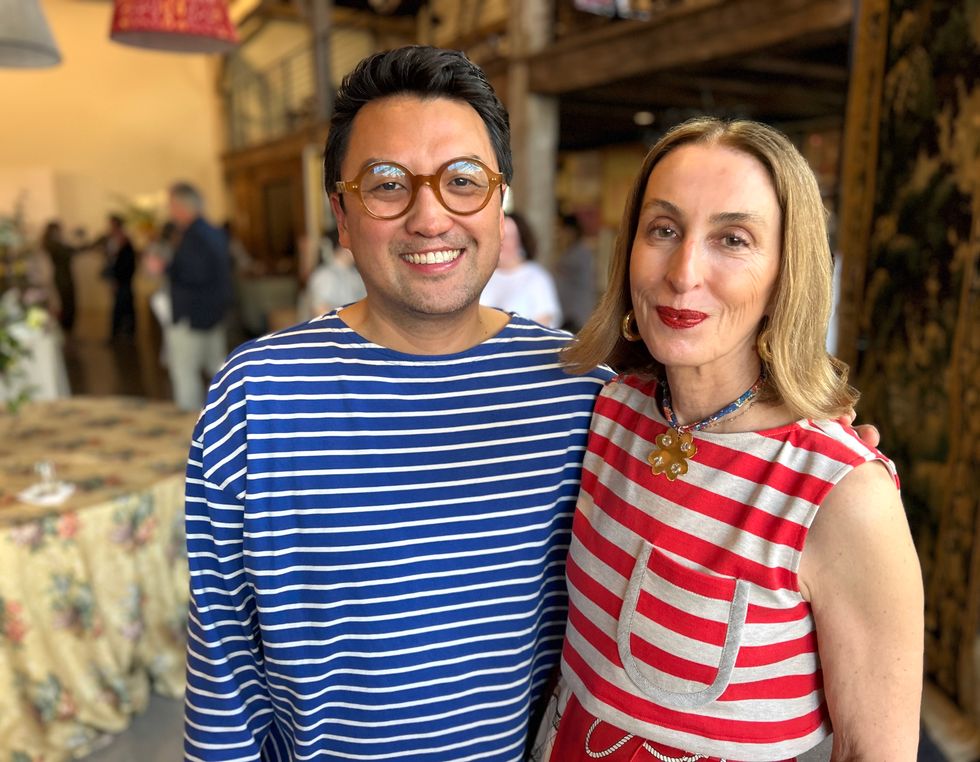 Benjamin Reynaert and Christina Juarez, co-founders of The Ticking Tent. Their one-day Spring Market returns to New Preston on May 2 at Spring Hill Vineyards on Bee Brook Road.Jennifer Almquist
“The Ticking Tent is about reimagining the joy of discovery — bringing together antiques dealers, artisans and design enthusiasts in a setting where community and creativity thrive,” Reynaert said.
Among returning vendors is Rhonda Eleish of Eleish Van Breems Home, with shops in New Preston, Roxbury, Westport and Nantucket. “The Ticking Tent is a fun event where you can shop curated goods, meet friends and enjoy the setting,” she said.
The market partners with ELLE DECOR as national media sponsor, along with Home & Garden CT & NY, Connecticut Cottages & Gardens, New England Home CT and Litchfield Magazine.
For information and tickets, visit thetickingtent.com or follow @thetickingtent.
Want more of our stories on Google? Click here to make us a Preferred Source.