SALISBURY — While the country is going through times of uncertainty, two Connecticut officials spoke of the solid financial position the state is in.
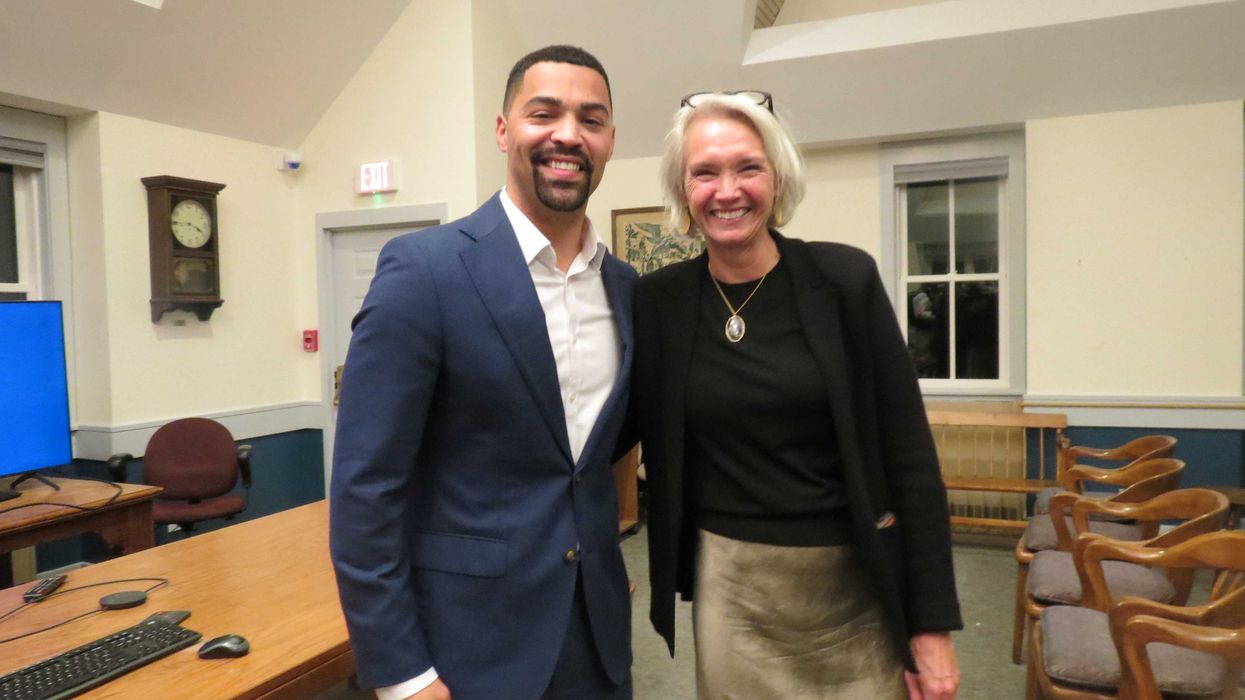
State Rep. Maria Horn (D-64) was joined by state Treasurer Erick Russell (D) on Tuesday, Oct. 14, to talk about the current financial picture. Horn began by saying that in 2017 Connecticut put in a system of fiscal guardrails entailing a spending cap and revenue cap.
“We can’t spend all our money — we have to have buffers so we have a surplus at the end of the year,” said Horn, who chairs the House Finance Committee.
She spoke about now having to tap out the rainy-day fund at 18% of the budget, which allowed for using $8.6 billion to pay down the state’s pension liability. Other positive aspects are a tax cut of $6.5 million and putting $300 million into a childcare trust fund, which would provide free care to families earning under $100,000 as of July 2027. Those with a higher income would pay a maximum of 7% of their salary. By 2032, the plan is to create more childcare seats and raise caregiver salaries.
Horn said the state having more in its budget affords a good reputation and brings down borrowing costs.
Turning to the federal budget bill, Horn talked about how it will kick a lot of citizens off Medicaid and put increased pressures on rural hospitals, including Sharon Hospital.
“We are in unprecedented times,” she told those gathered at Salisbury Town Hall, but praised Russell, saying, “I’m gratified we can rely on his judgment.”
She turned the talk over to Russell, who reiterated Connecticut is in a strong position compared to other states. It has had seven balanced budgets and received two additional points in its credit rating.
“We got the fiscal house in order, but we have also invested in people,” said Russell. He touched on some initiatives, including Connecticut Baby Bonds, which addresses welfare and poverty, noting that although Connecticut is considered a wealthy state, the gap between rich and poor is wide. His office is also focused on CHET (529 College Savings Fund), universal free childcare and a Safe Harbor Fund, which calls for raising private funds to be used by those traveling from anti-women’s health states.
“Everything we’re doing here in Connecticut is just opposite what is being done in Washington,” he said. “That bill guts social safety nets for the most vulnerable and gives massive tax cuts to billionaires, adding $4 trillion to the national debt. We’re in the best spot we can be, but we see something different every day. I’m worried about sectors that will be targeted in blue states.”
He believes that the cuts will negatively affect red states more than blue and said, “80% of people in Connecticut on Medicaid are working. That’s not so in Mississippi.”
During the question period, he was asked by Jessica Fowler of the Sharon finance board what local boards of finance can do in these times, Russell advised they maintain as much flexibility as possible and if able, increase reserves.
When a woman expressed concern about local hospitals and nursing homes, Horn said in her discussions with Sharon Hospital personnel, there is so much they don’t know. She is hopeful that the recent merger between Nuvance and Northwell will be positive, since Northwell has a record of investing in small hospitals.
When Russell said there are 80,000 unfilled jobs in Connecticut, one woman asked how that can be rectified. He and Horn said retraining programs for jobs that exist need to be encouraged. Housing shortages also play a role in that problem.
Horn said farmers are terrified about the federal government’s stance on immigration. “They have long and valued employees and farms could not exist without them.”