Sharon Hospital performing in key areas since merger, report finds

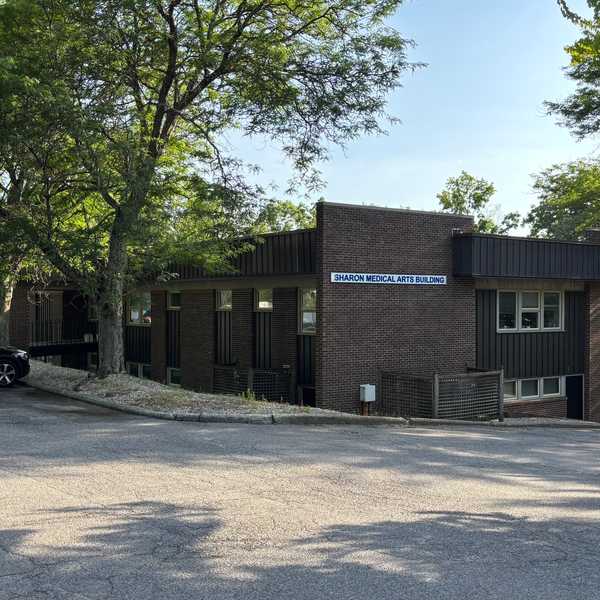
Sharon Hospital
File photo

SHARON – Sharon Hospital is meeting most of the requirements tied to the 2025 merger between Nuvance Health and Northwell Health, but still faces challenges in patient access services and workforce stability, according to an independent review.
The findings were presented April 8 during a community forum at the hospital, and were also streamed online.
The review, conducted by consulting firm PYA and required by the Connecticut Office of Health Strategy, examined whether the hospital is complying with conditions set when Nuvance Health merged with Northwell in May 2025. Funded by the transitional entities, the assessment is required to be conducted semi-annually. Sharon Hospital was one of three Connecticut sites required to host community forums following the merger, along with Danbury/New Milford and Norwalk, both formerly part of the Nuvance network.
David McMillan, president of PYA, said data was collected and occasional on-site visits were made to each of the Northwell-Nuvance hospitals.
McMillan reported that, of five sets of evaluation criteria, Sharon Hospital was found to be in full compliance with three: oversight, governance and public accountability; community engagement and local representation; and financial sustainability, investment and quality.
The hospital received partial compliance marks in patient access services, such as mammograms and colonoscopies, and in workforce stability, or its ability to retain qualified employees.
Additionally, the hospital was found to have inconsistent wait periods for some Medicaid patients across different departments.
For example, McMillan noted, “a difference was seen in neurology between how quickly Medicaid patients received access as compared to others.” He added, “Northwell will work on remedying that.”
While each of these two areas will require a follow-up, McMillan said they “do not represent substantial non-compliance.”
Michelle Robertson, market president of Nuvance, spoke about the hospital’s strategic plan, highlighting five key pillars: patient experience, people, quality, financial performance and efficiency.
McMillan said the state concluded that some points of the strategic plan were missing from Sharon Hospital.
However, hospital officials throughout the state have pushed back, saying some of that information – such as business plans – should be considered confidential.
During his presentation, David Seligman, executive vice president, chief integration officer and market president of Northwell, said the aim is to keep the Northwell hospitals local.
“Our intent is to strengthen services,” Seligman said. “We always start by focusing on quality.”
In addition to matters relating to patient and fiscal operations, a significant rebranding project will kick off on May 1 and will serve as a visual representation of hospital changes. It is estimated to take around two years to complete, and will include placing Northwell’s name on hospital signage, ambulances and workwear.
“This will keep people apprised of what Northwell is all about,” Seligman said.
Sharon Hospital President and Chief Nursing Executive Christina McCulloch spoke of the investment Northwell is making in programs, services and technology. She touched on several new initiatives, such as the Center for Transfers and Acute Coordinated Care (CTACC), which will provide more efficient methods of patient transport; the installation of a hospital paramedic service, which will join the local emergency responders in providing care; the increase of personnel with the hiring of 30 new employees in the last few months; welcoming family medical residents to team up with doctors for clinical experiences; the installation of a new CT scanner and renovations in the emergency department.
She also listed several of the awards Sharon Hospital has received, including 5-Star recognition and honors for the maternity department and stroke care.
“I wanted to share these awards with you so you can have confidence in the care you receive,” she told the audience of about 20.
During a question and answer period, McCulloch said there are 12 members serving on the local community board, hailing from Connecticut and New York state towns with a wide range of experience in various professions.
An audience member asked whether efforts are being made to bring more family medicine practitioners to the area. McCulloch said recruitment is being done. She also responded to a question about whether the labor and delivery unit is being marketed.
“Yes,” she replied. “We are sharing that we are open and here to deliver.”

Jennifer Almquist
The parking lot of The Little Red Barn Brewers in Winsted was full on Wednesday, April 8, as more than 100 people from 43 Connecticut towns — including New Haven and Vernon — arrived carrying personal treasures for a live taping of “Audacious LIVE Show & Tell.”
Chion Wolf, host and producer of Connecticut Public’s “Audacious,” and her crew, led by production manager Maegn Boone, brought the program to the packed brewery for an evening of story-driven conversation and shared keepsakes.
Reflecting on the evening’s spirit, Wolf, a four-time Gracie Award winner from the Alliance for Women in Media Foundation, said: “To me, Audacious — and Connecticut Public — are about making space for people to be fully themselves: curious, vulnerable, weird, honest, all of it. ‘Show & Tell’ feels like that spirit brought to life.”
Attendees clutched mementos — sentimental, unusual and sometimes humorous — hoping for a chance to step onto the small stage and share their stories.
Caroline Christensen of Winsted carried a large conch shell and told the audience about nearly losing her fiancé to a storm tide while he struggled to retrieve the shell she wanted.
Gerry Griswold, a wildlife rehabilitator and educator from White Memorial Conservation Center in Litchfield, brought a Victorian taxidermied pet dog in a glass case.
When Tim Dwyer of Coventry showed a vintage T-shirt featuring “Bill the Cat,” Wolf rolled up her pants leg to reveal a matching cartoon tattoo.
Author Christine Ieronimo drove from Plymouth with a photograph of her late grandmother, Florence De Mario, holding her beauty contest trophy as a young woman, along with the original silver cup engraved with “Interstate Rhode Island and Connecticut Beauty Contest, September 28, 1929.”
The evening blended humor, nostalgia and vulnerability, with food and drinks provided by Nils Johnson, co-founder of the brewery, which has become a lively gathering place in
Winsted.
Jessica Severin de Martinez, Robyn Doyon-Aitken, Meg Fitzgerald and Vanessa de la Torre were also part of the Connecticut Public team that helped produce the event. Connecticut Public is home to Connecticut Public Radio and Connecticut Public Television.
Lucy Nalpathanchil, vice president for community engagement, said the organization hosts “Audacious LIVE Show & Tell” events around the state to connect with residents and reach new audiences.
“We’ve hosted them so far in Winsted, Willimantic, Hartford and Stamford,” Nalpathanchil said.
“If your readers have thoughts about where the next one should be held, they can email ideas to events@ctpublic.org,” she said.
Wolf summed up the night simply: “We held the space, sure, but those who attended made the magic. People walked in as strangers carrying meaningful objects from their lives, and by the end of the night, the room felt warm, open and deeply connected. That’s public radio at its best.”
Sarah Belzer
Marge Parkhurst with a collection of historic nails recovered from wall cavities during restoration work.
Walls still surprise me. If you look hard enough, you can find buried treasure.
— Marge Parkhurst
After nearly 50 years of painting some of Litchfield County’s oldest homes and landmark properties, Marge Parkhurst has developed an eye for the past—reading the clues left behind in stenciled vines, forgotten bottles and newspapers tucked into walls, each revealing a small but vivid piece of Connecticut history.
Parkhurst was stripping wallpaper in a farmhouse in Colebrook — the kind of historic home she has spent decades restoring — when she noticed something odd. Three layers of paper had already come off — each one a different era’s idea of decoration — and beneath them, just barely visible under dull, off-white plaster, a pattern emerged.
“At first it just looked like old paint,” said Parkhurst, who has been painting and restoring historic homes in Litchfield County for decades. “Until I realized it was a stencil, a beautiful pattern that repeated.”
She kept going carefully — a wet sponge, hot water, a little fabric softener — peeling back until she could see it clearly. A climbing vine emerged, applied in vertical runs to give the wall the look of wallpaper. Someone had signed it. The signature was faint, tucked above the baseboard in the corner, not fully legible. But the date was clear: 1870.
Parkhurst, owner of Cottage & Country Painting Co., has worked in enough old houses to develop a practiced eye for what they conceal — understanding that layers of paint, paper and plaster in a 19th-century New England home form a kind of compressed archive of the people who lived there.
The stencil bore a strong resemblance to what historians call Moses Eaton-type stenciling — a tradition of itinerant craftsmen who traveled New England in the early 1800s with portable kits of cut-pattern stencils. Their trade flourished because imported wallpaper was expensive. Stenciling offered the same visual effect at a fraction of the cost.
“These stencilers typically worked for a combination of cash, food and lodging,” Parkhurst said. “Their compensation was modest by any standard.” She paused, “He was a tradesman. But the work he left behind — that’s art.”
The vine pattern was dull with age but still legible. One section had survived intact beneath the layers of paper. The homeowners chose not to paint over it — instead building a wooden frame around it, a small window into 1870.
“Preservation means protecting something to prevent further deterioration,” she said. “Restoration means returning something to a previous state. In that room, we preserved what was there.”

A Station’s Secrets
Not every discovery is decorative. Some are written into the bones of a building.
Parkhurst’s own home in Colebrook is a former railroad outbuilding moved from Canaan in 1920. Scraping the trim revealed it had once been sage green — and beneath that, a warm orange-brown soaked into the wood grain. “Old paint was made more like a stain back in the 1800s,” she said. “It penetrated the wood rather than sitting on top of it — so there’s never a shine.”
Up in the attic, eye bolts still anchored in the framing mark where cables stabilized the building during its move a century ago.
The most memorable find came by accident. Cutting open a wall under the stairs, she found a clear glass bottle sealed with a glass stopper held by a rusted wire. The label read: Hartmann Brewing Co., Bridgeport, Conn. It took days of careful oiling to free the stopper. Inside: a handwritten list of sandwiches and drinks, a postage stamp still attached. Not treasure. But a treasure just the same.
“I worked for days to get that thing open — and it was just somebody’s lunch order.”
Newspapers stuffed into wall cavities, hand-wrought nails, paint layers thin as stain — over 50 years, Parkhurst has cataloged the details that tell a trained eye when a house was built and by whom. Litchfield County’s architecture is unusually varied: Georgian and Federal-style houses on Litchfield’s Main Street, industrial buildings along the rivers in Torrington and Winsted. “Each town has its own fingerprint,” she said.
The most consequential mistake she sees is changing a home’s character. “When you paint over stained woodwork, you hide the details. You can’t get them back.” She has talked more than a few owners out of it. Some have listened.
Not long ago, Parkhurst and her grandchildren gathered a few small objects, wrote a letter and tucked it into a wall of her Colebrook home. Someone will find it — a record of people who were once here.
“Walls still surprise me,” she said. “If you look hard enough, you can find buried treasure.”
In a county full of houses whose walls hold untold stories — stenciled by traveling tradesmen, nailed together by farmers, papered over by housewives following the fashions — Marge Parkhurst has spent a lifetime reminding us that history doesn’t only live in museums. Sometimes it’s hiding just behind the wallpaper.
Sarah Belzer is a writer, editor and creative director whose career has crossed journalism, advertising, film and cultural commentary. Managing Editor of The American Rant and founder of Jump Advertising, she has spent three decades shaping narratives for media and national and global brands. Marge Parkhurst is the owner of Cottage & Country Painting Co. She can be reached at marge@cottageandcountryct.com or 860-379-4748.
Mike Cobb
On Sunday, April 19, at 4 p.m., Close Encounters With Music (CEWM) presents On the Wings of Song at the Mahaiwe Performing Arts Center in Great Barrington.
The program focuses on Robert Schumann’s spellbinding song cycle Dichterliebe (“A Poet’s Love”), a setting of sixteen poems by Heinrich Heine that explores love, longing, and the redemptive power of beauty. Featured artists include John Moore, baritone; Adam Golka, pianist; Miranda Cuckson, viola; and Yehuda Hanani, cello.
In a recent interview, Artistic Director Yehuda Hanani said,“Audience members will bask in the glow of Romanticism at its apex with Robert Schumann, Clara Schumann, Felix Mendelssohn and the poet whose verse underlies their music—Heinrich Heine.‘In beautiful May, when the buds sprang, love sprang up in my heart: in beautiful May, when the birds all sang, I told you my desire and longing.’”
Dichterliebe strips away the distance between singer and listener, capturing the age-old themes of love and betrayal with exquisite sensitivity. Romanticism here is at its most personal and refined.
Heine’s poetry also captivated Felix Mendelssohn, who set several of the poet’s verses to music, including the iconic “On the Wings of Song,” which lends the concert its title. Mendelssohn’s majestic Piano Trio in D minor—one of the towering chamber works of the nineteenth century—completes the program. Radiant, urgent, and expansive, the trio reflects the composer’s unwavering belief in the possibility of a harmonious, enlightened world and the triumph of beauty through music.
“How can you not fall in love with a song cycle about a sorrowful knight that begins with these beguiling sentiments? This is the start of Dichterliebe, or Poet’s Love, Robert Schumann’s musical rendering of Heine’s Lyrical Intermezzo.Alas, like many love stories, it does not end well. Cupids weep and mourn, and the poet packs his love andhis suffering into a coffin that will be thrown into the sea—so heavy that twelve giants must carry it. All the various states of Poet’s Love—a hothouse of responses to flowers, dreams and fairy tales—end in anger, bitterness, resignation and bewilderment. Yet, despite love betrayed, ardent faith in the power of art leads the way to a harmonious and better world. A timely message,” Hanani added.
On the Wings of Song weaves together poetry and music, intimacy and grandeur, offering audiences a rare opportunity to experience Romantic masterpieces in the uniquely close, immersive spirit that defines Close Encounters With Music.
After each performance, audiences are invited to an “Afterglow” reception to meet the artists and mingle with fellow music lovers. Select concerts will also be available online, extending CEWM’s reach to listeners far beyond the Berkshires.
For tickets and information, go to mahaiwe.org

Want more of our stories on Google? Click here to make us a Preferred Source.
Alec Linden
Photo by Alec Linden
A climber explores Great Barrington’s renowned bouldering areas, reflecting the growing local interest in the sport ahead of the planned opening of Berkshire Boulders.
Berkshire Boulders, a rock climbing gym, is set to open in the Berkshires later this year, aiming to do more than fill a gap in indoor recreation — it could help bring climbing further into the region’s mainstream.
Its co-founders already have their sights set beyond the roughly 2,000 square feet of climbable wall planned for a site off Route 7, just north of downtown Great Barrington.
“There’s an opportunity that I felt was on the table to bring outdoor recreation and these other sports into the public domain,” said Nick Friedman, a Sheffield resident behind the project, alongside Dan Yagmin.
Friedman said that while underground communities in the region around more adventurous outdoor sports, such as rock climbing and mountain biking, have long existed, they have often been overlooked compared with more traditional pastimes like hiking.
With the gym, “I feel like we could make a start in formalizing these forms of outdoor recreation,” Friedman said. He described it as a way to create a more tangible connection between the broader community and a climbing scene that has developed quietly for decades.
Berkshire Boulders is the brainchild of Friedman, who began climbing 20 years ago on the gneiss boulders and bluffs that dot the hills around Great Barrington, and Yagmin, a climber with three decades of experience originally from central Connecticut who now lives between Winsted and Colebrook.
Both bring entrepreneurial experience to the project. Friedman co-founded Theory Wellness, a cannabis dispensary in Great Barrington where he now serves as chief strategic officer. Yagmin combined his passion for climbing, training in fine arts and years as a climbing gym route setter to start Decoy Holds, producing nature-inspired climbing grips.
Yagmin is shaping the climbing experience at the new gym at 325 Stockbridge Rd., which will focus on bouldering, a form of ropeless climbing on walls typically under 15 feet tall, with padded floors for protection. His holds take cues from real rock types, including the granitic gneiss found across the Berkshires and prized by climbers
Even though the gym is indoors, the connection to the rock outside is central to its mission. Friedman serves on the board of the Western Massachusetts Climbers Coalition, which works with governments, landowners and land managers to keep climbing areas open and accessible.
He said the project is structured so that any profits from the gym will support organizations that advance access to climbing.
“I have no investors, no lenders, and I’m self-financing,” he said. “So I plan on donating any available profits to an organization that aligns with the mission, which is really to make climbing more accessible.”
Accessibility, he added, also means affordability. He plans to offer reduced memberships for those facing financial hardship.
“Then hopefully as the gym gets going and grows,” he said, “that can become a bigger and bigger component.”
Yagmin said the gym could become both a hub for local climbers and an entry point for newcomers.
“I think a lot of people just don’t really understand the sport,” he said. With the gym, “hopefully people stop in, start getting familiar with it and see that it’s a positive thing.”
Friedman said that when he and Yagmin were introduced through the local climbing network, the idea of a gym had been “percolating around the Berkshires for decades.”
Until Berkshire Boulders opens — which he estimates will be this summer — the closest dedicated climbing gyms are roughly an hour away, including those in Poughkeepsie, Kingston, Albany and West Hartford.
Until then, Friedman and Yagmin have their plates full. Since announcing the project last month, Friedman said interest from prospective members has been strong.
The pair are in the process of gathering information to plan adult and children’s programming, though details are still to come.
In addition to bouldering walls, the gym will include climbing-specific training equipment and a standard fitness area. An FAQ page on the website, berkshireboulders.com, also references a hangout space, retail section, outdoor area overlooking a bend in the Housatonic River, and possibly a sauna and cold plunge.
Friedman said the final product will reflect the needs of its users.
“This gym is really oriented to be there for the community,” he said, “so we want to reflect that community as best we can.”
Alec Linden
Mat Jobin teaches the group how to use a permanent platform to rig a tent. The privy and lean-to of the Appalachian Mountain Club’s Limestone Spring Shelter are visible in the background.
A happy day on the trail all starts with a good night’s sleep the night before. That’s local trekking guide Mat Jobin’s mantra, and he affirms that a good night’s sleep is possible even if it has to be on the trail itself – with the right preparation, that is.
Jobin, of Simsbury, Connecticut, is a 16-year professional guide and the founder and owner of Reach Your Summit, an outdoor experiences company that promotes self-confidence and leadership skills through a variety of excursions and educational workshops in the forests of New England. On Saturday, April 11, Jobin hosted the inaugural Campsite Selection & Skills workshop just off the Falls Village section of the Appalachian Trail.
While preparing for the course, Jobin said that the underlying principle of his workshops is to help make the outdoors more accessible and enjoyable for people by teaching them the skills they need to be prepared. He explained that the point is to make mistakes, “but doing it in a safe environment rather than making all the mistakes I made growing up without having anyone to provide me with guidance and feedback.”
Saturday’s course was all about “how you can get a better night’s sleep” when you overnight on the trail, Jobin told Mike, Karen and Andy, the three attendees whose experience varied from beginner to experienced shelter-setters.
Even though the weather was fair, fast clouds hid the sun overhead and blustery winds tore through the spacious grove surrounding the Limestone Spring shelter site, a hiker’s resource managed by the Appalachian Mountain Club. Jackets were zipped and arms crossed as the group braced against the chill.
Jobin explained that while not the most comfortable conditions to spend a day standing around in the forest, the weather made for a good learning opportunity. If a camper set up a tarp shelter the wrong direction that evening, he said, it would mean a ruined night’s sleep, and subsequently a wrecked next day.
Jobin began with fundamentals, running through the essential figure 8 and clove hitch knots as well as the “bearmuda triangle,” a cheeky term for a campsite tenet that combines Leave No Trace sensibilities with wildlife safety.
The sleeping area should be positioned 200 feet from the cooking and food area, which should then be 200 feet from the bathroom site, forming a rough triangle. The whole system should be set back at least 200 feet from the nearest water source for minimal disturbance to the ecosystem, Jobin said.
He then instructed the group to account for weather and topography when choosing a site. On a cool, windy day like Saturday, use the landscape for shelter, he said, while during hot and buggy weather, campers may want to find a spot with more exposure. “Use nature to the best of your ability to provide comfort and safety,” he said.
Jobin then demonstrated several ways to use a simple tarp for a quick shelter on the trail, his preferred method given its versatility and that it offers a “deeper connection to the surroundings.”
While he hitched the tarp with some cordage to a system made of trekking poles and trees, the wind whipped through the site. “I’m going under this tarp when you’re done!” Karen announced over the sound of flapping plastic.
Once it was completed, she kept her word and huddled inside. “It works!” she announced.
For the remainder of the four-hour session, Jobin gave tips on how to set up a tent on a wooden platform, the reason he had chosen the Limestone Spring site for the course. He also taught the group how to rig a hammock system using trees and safe food storage using bear bags and bear boxes.
He urged the group to practice their shelter setups in a variety of weather conditions and locations as often as possible before debuting a system miles from the trailhead. Backyards and local parks, where allowed, are great options, he said.
“My whole thing is helping people feel more prepared and comfortable when they’re heading out, and not having to learn from really bad situations or mistakes when they’re out there for the first time,” Jobin said.
Saturday’s class was the first of its kind for Jobin, though he said he expects to run other similar campsite selection and safety workshops in the future. It’s just one of many experiences Reach Your Summit offers, which range from hiking essentials courses to 5-day backpacking adventures. A complete list of the company’s offerings can be found on its website, www.reachyour
summit.net.
Jennifer Almquist
The story comes full circle when educator, traditional storyteller and author Wunneanatsu Lamb-Cason (Schaghticoke/Ho-Chunk) comes to Litchfield County to read from her new book, Grandmother Moon, inspired by her grandmother, Indigenous educator Trudie Lamb Richmond, who lived on Schaghticoke land along the Housatonic River in Kent.
On Saturday, April 18, from 2-4 p.m., the Torrington Historical Society at 192 Main St. will host the book talk and sharing of traditional stories.
Lamb-Cason was named 2024 National History Teacher of the Year by the Gilder Lehrman Institute of American History, the first Indigenous person to receive the honor, and is now the Assistant Director of Native American and Indigenous Studies at Brown University. She will speak about the importance of oral tradition for Indigenous communities and of her efforts to write down the stories.

Lamb-Cason shared her story with the publication:
“The Northwest Corner is not just where my grandmother lived; it is our ancestral homelands. Our reservation was established near Kent in 1736. My grandmother grew up in Newtown and spent her childhood returning to Schaghticoke, visiting family and learning from her grandparents. In the early 1980s, she built her home on the reservation with my grandfather, and that is where I spent so much of my own childhood—learning with and from the land and waters that have sustained our people since time immemorial.
“As a historian, storyteller and educator, every moment with her was a teachable moment … and as her eldest grandchild, she felt a strong responsibility to impart as much as she could to me …
“A brief trek in the snow became ‘Wunneanatsu, what animal print do you think that is? Yes, you’re right, that’s Rabbit. That reminds me of a story about how rabbit got such long ears.’ …
“‘Wunneanatsu, do you hear the birds singing? That one sounds like blue jay. Let me tell you a story about how the birds got their songs.’
“My grandmother and those teachings guide everything I do; as an author, a storyteller, a relative and teacher; they inform my pedagogy and instructional style but also how I view and navigate the world. Grandmother Moon became an opportunity to honor her and her legacy of centering Indigenous ways of knowing in western academia and educational landscape. It was a way to carry her teachings forward for my children and future generations. It is, at its heart, a love letter to the woman who gave me so much. Essentially, my grandmother is and always will be everything I want to be when I grow up.”
Copies of “Grandmother Moon” will be available and the author will sign books. Native baskets from the collection of the Torrington Historical Society will be on display during the event.
Please register to reserve a spot: torringtonhistoricalsociety.org

Want more of our stories on Google? Click here to make us a Preferred Source.

Want more of our stories on Google? Click here to make us a Preferred Source.