Thank you!
Your support is sustaining the future of local news in our communities.

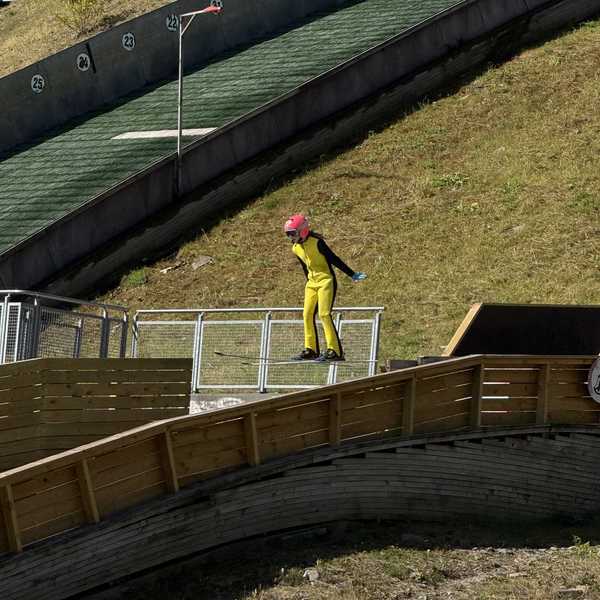
SWSA prepares to launch summer ski jumping at Satre Hill

SWSA prepares to launch summer ski jumping at Satre Hill

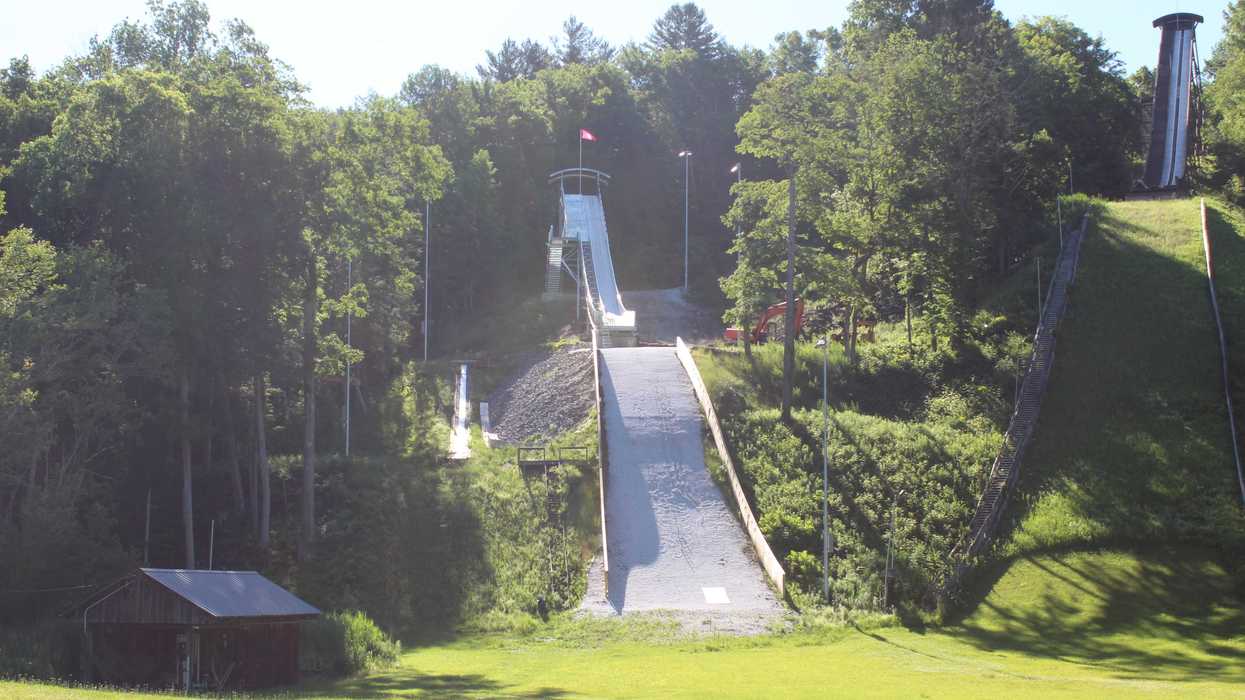
The 35-meter ski jumping hill and tower will soon be ready for summer use.

Patrick L. Sullivan

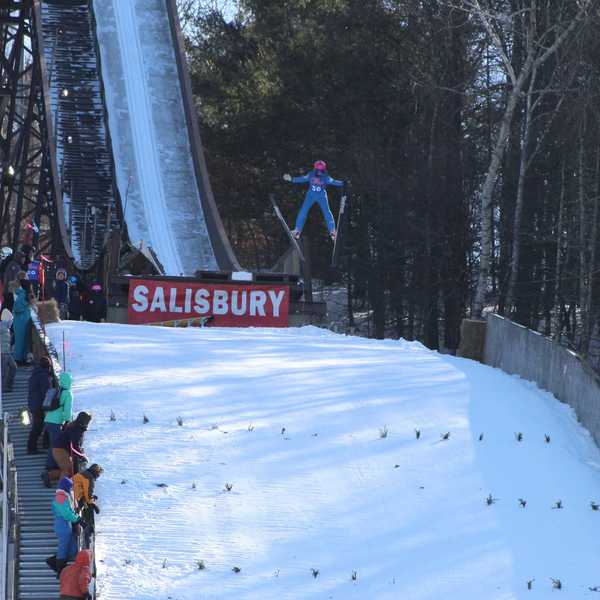
SALISBURY – For generations, Satre Hill has come alive each winter as ski jumpers soar through the cold air during Jumpfest, which celebrated its 100th year in February. Soon, however, the iconic hill may be just as busy in the summer, as new infrastructure and artificial surfaces pave the way for year-round training.

The Salisbury Winter Sports Association (SWSA) is preparing to launch summer jumping, which could transform the venue into a nearly year-round jumping destination. SWSA hopes to attract young jumpers from New England and New York to train at Satre Hill during the summer, and eventually hopes to host a summer jumping event.

SWSA president Ken Barker said the ability to practice year-round helps the athletes. “Like any other sport, we can keep them focused and in the best condition,” he said.

Barker said the artificial surfaces, made out of plastic and ceramic, feel remarkably similar to real snow. One necessary component is running water, which is used to wet the surfaces being installed on the medium, 35-meter jump.

A well drilled last week marks a milestone for the venue.

“We’ve never had running water before,” said Barker on Saturday, June 13 at the hill as volunteers prepared for the next phase of the organization’s evolution. He said it’s been talked about for years.

Though the running water will not be used for snowmaking – Barker said the current operation relies on aging cisterns while SWSA develops plans for a future pond – it will support major events and will also make summer jumping possible.

Barker had samples of ceramic and plastic materials on hand. The plastic, he said, is called a shingle and will be attached to the landing hill in rows of eight. Installing them will take SWSA volunteers just a couple of days.

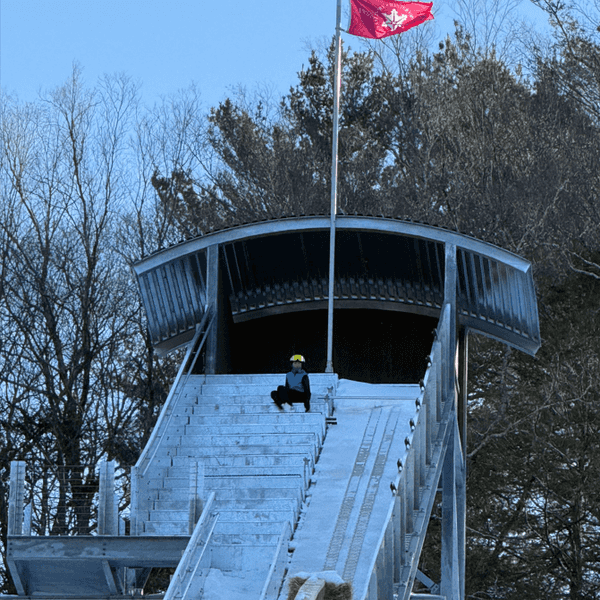
The ceramic tiles are being attached to the jump tower and must be screwed in, one at a time. Barker knows exactly how many there are – 680 – because he did the work.

He said one advantage of the ceramic tiles is that they make it unnecessary to add snow to the jump tower in the winter.

Not only will the water come in handy for off-season ski jumping, but also for big events like the Jane Lloyd Fund clambake set to take place in late July.

SWSA hopes to get its summer jumping activities underway by the end of July or beginning of August. Barker said there will likely be about two dozen participants, all youngsters from the Tri-State area who have been regular SWSA participants for years.

Latest News

Angry bees close Mudge Pond Beach

Angry bees close Mudge Pond Beach

Officials closed the Sharon town beach at Mudge Pond on Wednesday, July 15, after a fallen tree limb exposed a large beehive. The beach is expected to reopen Thursday.

Alec Linden

SHARON – The town beach on Mudge Pond closed on Wednesday, July 15, but the cause wasn’t the smoky haze drifting in from Canadian wildfires – it was angry bees.

According to Sharon’s Parks and Recreation Director Bryan Failla, a large limb fell from an old tree near the lifeguard stand overnight, exposing a hole that houses a large beehive. He said the town made the decision to close the beach Wednesday morning “out of an abundance of caution.”

Keep ReadingShow less
Millerton dressmaker forged path as early businesswoman
Mary Kisselbrack, left, and her husband, George.
Provided

If you’ve driven down Main Street in Millerton, you’ve passed the former home and shop of one of the village’s earliest female entrepreneurs. At a time when most businesses were owned by men, Mary Kisselbrack made a name for herself in the late 1800s as a well-respected milliner and dressmaker.

On April 11, 1891, train conductor George Kisselbrack purchased a 124-by-232-foot vacant lot at 54 Main St. and hired locally renowned builders Beers and Trafford to design what would become their home and Mary’s business.

Keep ReadingShow less
Wastewater project coming to fruition after decades of debate

Millerton’s business community will soon see the completion of a public wastewater system, addressing what local officials and business owners have called a major constraint on commercial development in the community for decades.

The $13.8 million project, which is expected to serve the core of the Village of Millerton and a commercial stretch of the Town of North East along U.S. Route 44, represents one of the largest infrastructure investments in the community in decades, and brings an end to calls for a sewer system that stretch back to World War II. Officials say the system will safeguard local waterways while creating a foundation for long-term economic stability.

Keep ReadingShow less
google preferred source

Want more of our stories on Google? Click here to make us a Preferred Source.

Millerton Moviehouse marks 120 years with structural upgrades

Wooden beams made from tree trunks comprise the load-bearing structure under Millerton’s Moviehouse.

Graham Corrigan

There are a handful of buildings that have stood the test of time over Millerton’s 175-year history. But if there’s one that stands out as a singular representation of the town, it’s the Millerton Moviehouse and its iconic clock tower.

Built in 1903 as a grange hall, it was soon converted into a movie theater with a second-floor ballroom. It was one of a handful of buildings that came to define the town in the following decades, standing tall across the street from the Episcopal Church and Millerton Inn, next to Terni’s, and up the hill from Millerton’s train station.

Keep ReadingShow less
Irondale Schoolhouse: a piece of living history

Ralph Fedele sits at a desk in the historic Irondale Schoolhouse, which he led the effort to relocate to downtown Millerton.

Aly Morrissey
“It was in dire straits. Right on the road, but beautiful. I remember thinking, ‘Wouldn’t that be a great building to move into the village?’” —Ralph Fedele

A one-room schoolhouse sits on Main Street along the Harlem Valley Rail Trail, offering an opportunity for locals and visitors to step inside a piece of living history.

The Irondale Schoolhouse that now sits in downtown Millerton was not originally located on Main Street. The building was first constructed in 1858 along what is now Route 22 in the Irondale section of town, defined by Irondale road and the Old Mill that still sits along Webatuck Creek. At the time, the schoolhouse was one of 14 that served the Town of North East’s children.

Keep ReadingShow less
New Water Department building expected by summer’s end

Millerton’s former Water Department building, ravaged by fire, as it awaited demolition in summer 2025.

Aly Morrissey

Nearly 18 months after a fire destroyed Millerton’s Public Works building, which housed the Highway Department and Water Department, construction is expected to begin within weeks on a new Water Department facility and pumphouse.

The new building would restore the village’s full water pumping capacity and allow officials to end the state of emergency declared after the fire. Village officials are also planning a separate Highway garage, with details of that project still being finalized.

Keep ReadingShow less
google preferred source

Want more of our stories on Google? Click here to make us a Preferred Source.

google preferred source

Want more of our stories on Google? Click here to make us a Preferred Source.