HARLEM VALLEY — “This train don’t stop here anymore.†So goes an Elton John song, and while that has been the area’s sound track since January 2009, when Dutchess County eliminated LOOP public bus routes serving the greater areas of Millerton and Amenia, there may be hope yet. Last week the county gave a local transportation task force a degree of “carte blanche†to devise a custom transportation service to serve the Harlem Valley.
The initiative is part of the county’s proposed “flex service†plan, and is the second stage of service reinstatements due later this year. The details of the first stage, fixed line routes, have yet to be set in stone, but as of now the nearest LOOP bus route would continue to be the one ending at the Metro-North train station in Wassaic.
The county’s flex service breaks the majority of the county (everything except the greater Poughkeespie area) into four service zones. Those zones have been budgeted by the county to provide additional service, outside of the established fixed routes, for an eight-hour day once a week.
What hasn’t been worked out is how to best utilize that flex service. That’s where the county is looking for community input, and where the local transportation task force, created around the time of the LOOP service route cuts, comes in.
The task force was organized by the Foundation for Community Health, a not-for-profit based out of Sharon, Conn. The task force is made up of municipal representatives from the towns of North East, Amenia, Stanford and Dover, as well as county groups, local organizations like the North East Community Center and residents.
The task force has been working for some time toward a solution to best provide local transportation to residents, regardless of whether the service comes from the county or is supported by local community groups. Since it already has that head-start, the task force will be setting the bar for other flex service zones to follow, explained Cynthia Ruiz, the county’s transit administrator.
“You’re sort of a pilot,†she explained. “You’re going to design how your service works for you, and we’re going to use that as a model for other places.â€
Ruiz, along with Poughkeepsie Dutchess County Transportation Council Senior Planner Mark Debald, attended a mid-morning task force meeting at the Foundation for Community Health’s headquarters in Sharon on March 3 to explain the flex service initiative.
The task force has hired Nelson/Nygaard, a consulting firm specializing in transportation, to assist in the creation of a transportation service to fit the county’s flex plan. Associate consultant Stephanie Denis presented the results collected thus far, of ongoing transportation studies and surveys that will assist the task force in its mission.
As Ruiz explained, there are a few parameters to work around. First, even though the county is providing a bus and driver for eight hours once a week, that driver will have to leave and return from the Poughkeepsie headquarters within that time frame, so in actuality there will only be about six hours to work within the service area.
There are basically four different types of service that the task force can use. On a fixed route the bus runs on a set course and a rigid schedule. A deviated fixed route is similar to a fixed route, but the driver can go off-route to pick up passengers as long as they travel the entirety of the scheduled route and stay on time. A point-deviated route has a few fixed scheduled time points, but is free to take any route it wants to get there. Finally, a demand-response service has no schedule or route and relies on passengers calling ahead to schedule pick-ups.
Brief transportation surveys will continue to be distributed and collected until March 23. The surveys collect information regarding what kind of transportation services local residents need and what kind of services local residents would like to see and would use if available. The goal is to collect enough data to be able to shape transportation services to best serve the community.
Local transportation doesn’t have to solely rely on the county, however, and the task force will also be looking into alternative avenues to provide transportation, including not-for-profit agencies and volunteer networks, some of which already exist now.
Funding could also be raised by local groups to extend the county’s flex service, Ruiz said. It would cost approximately $700 to cover operating costs for eight hours.
Another issue is Dover, the only municipality connected to the task force that’s not included in the same flex service zone as everyone else (it’s grouped with the towns of Union Vale, Beekman and Pawling, while the towns of North East, Amenia, Stanford, Pine Plains and Washington form the Northeast service zone). The two service zones could work in collaboration and pool resources, Ruiz acknowledged, and the service does not have to be confined inside of the respective zones, meaning buses could travel between Dover and Amenia or even across state lines. Amenia town Supervisor Wayne Euvrard pointed out that it was very important to provide transportation to Sharon Hospital, just across the Connecticut border.
Municipal representatives took copies of the transportation surveys to distribute locally. Forms can also be requested, along with pre-addressed, stamped envelopes, from the Foundation for Community Health by calling 1-800-695-7210.
The surveys have also been posted at fchealth.org and can be picked up at the foundation’s headquarters at 155 Sharon Valley Rd., Sharon, Conn., and at the NorthEast-Millerton Library.
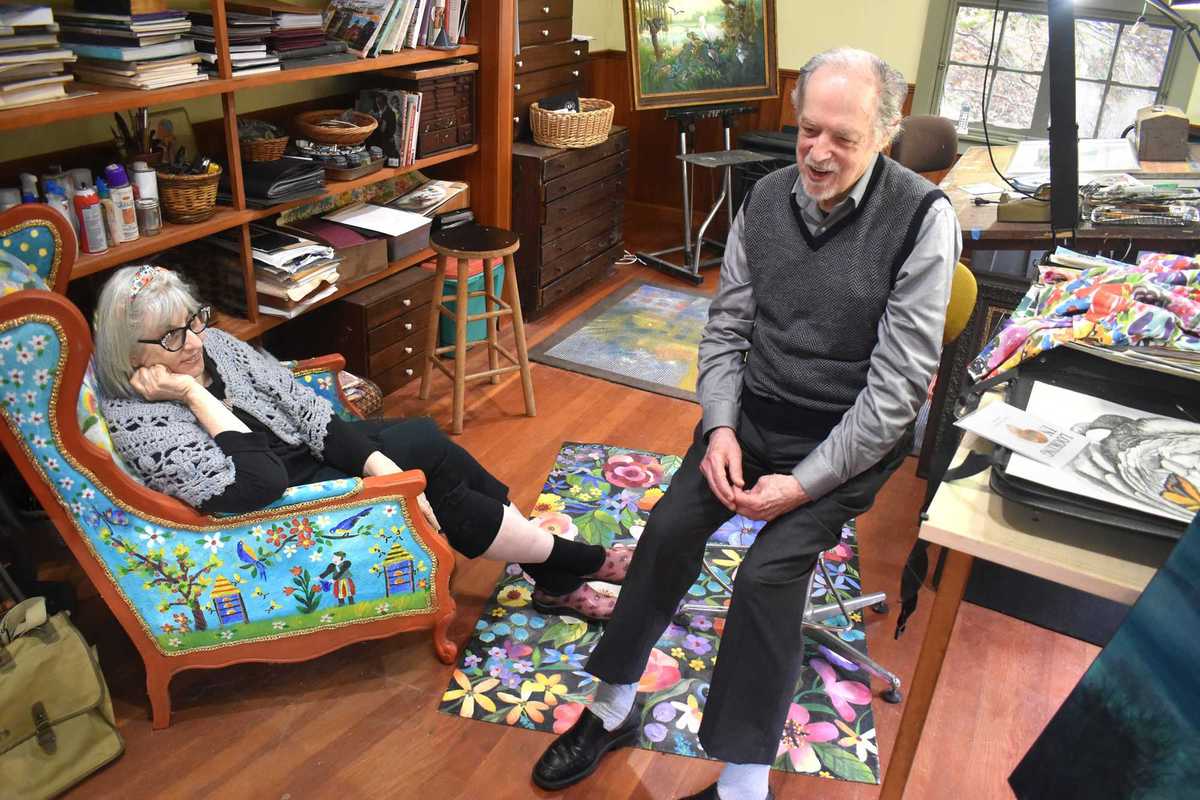
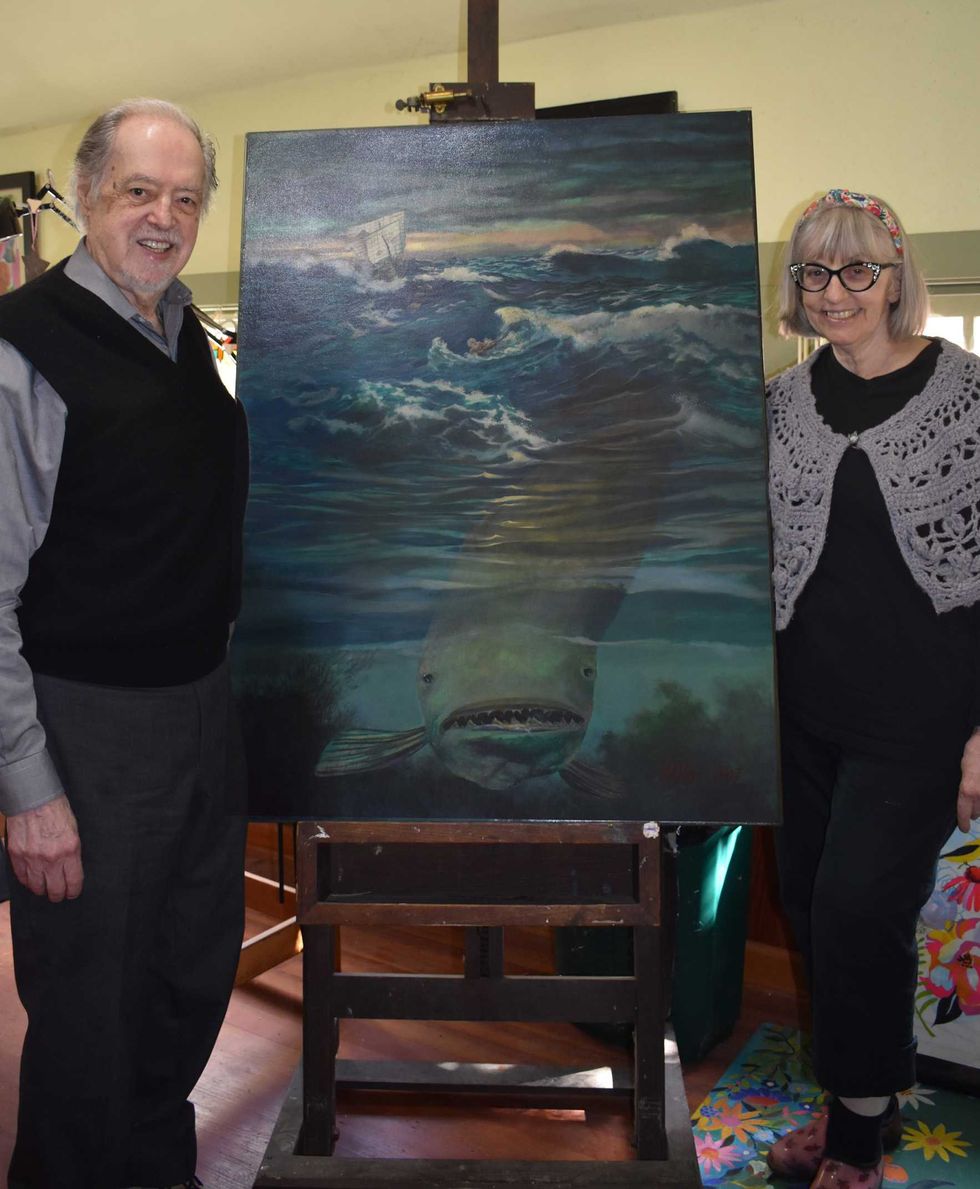 Justine and Victor Valla in their studio with a painting of Victor’s,”Jonah and the Whale.” Robin Roraback

 A ceramic vase by Kathleen Heidemann.Provided
 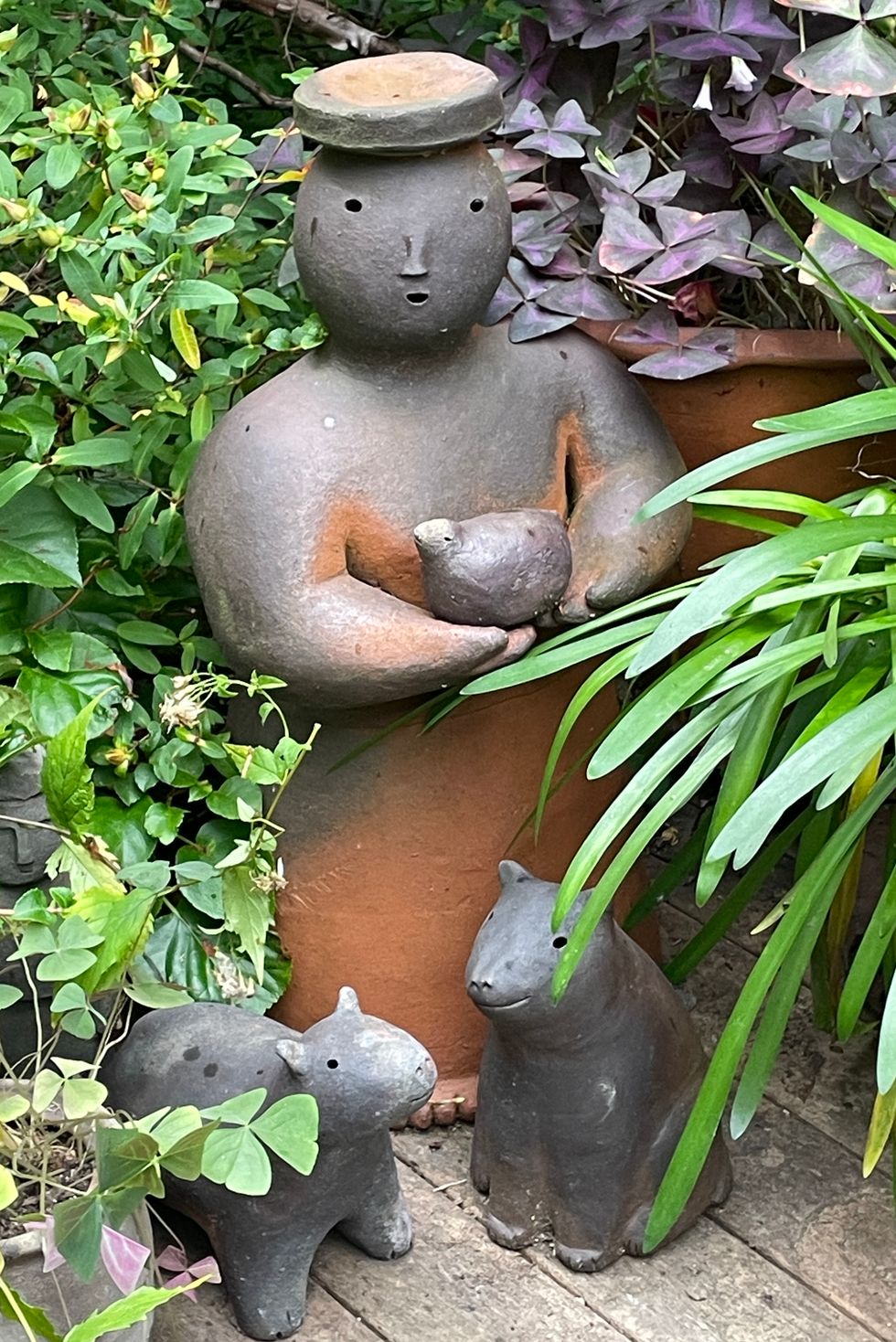 Joy Brown’s delightful ceramic sculptures.Provided