The real measure of a home? How it makes you feel

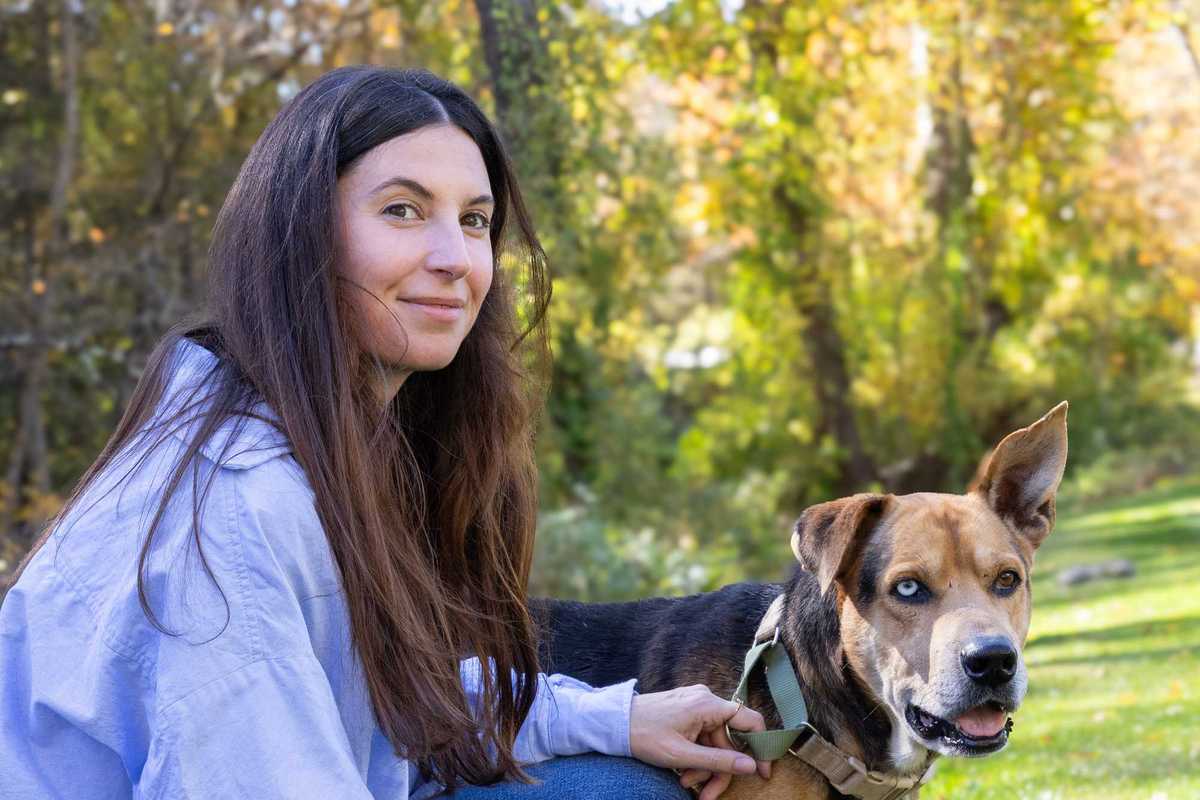
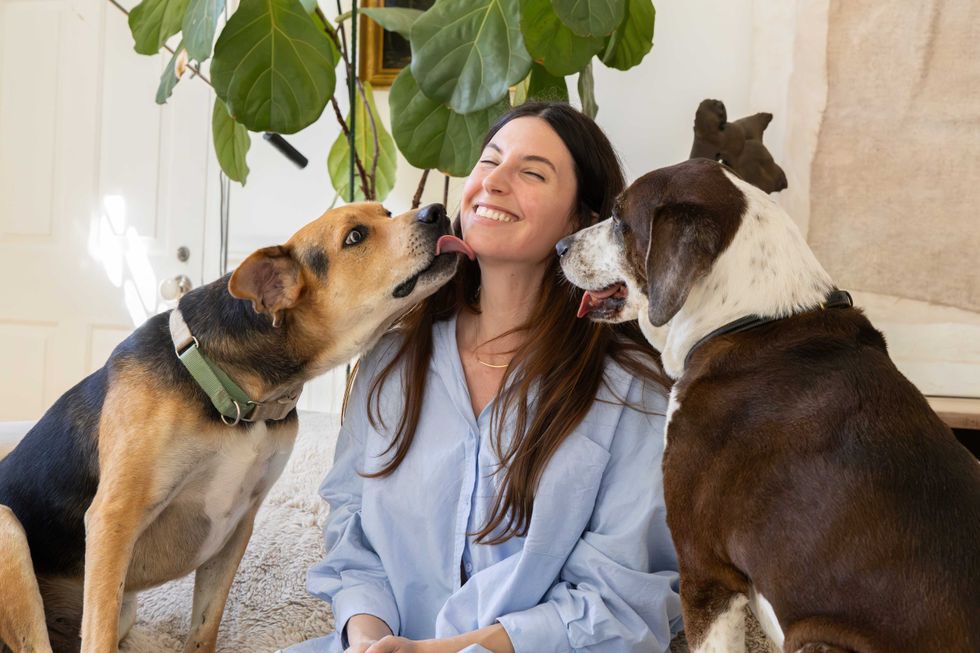
A room that felt breezy in July can seem stark in October. Adding layers — pillows, rugs, curtains — grounds a space.
Kerri-Lee Mayland

A room that felt breezy in July can seem stark in October. Adding layers — pillows, rugs, curtains — grounds a space.
They are hard to miss — eye-popping mansions so large it takes a few seconds just to drive by as your eyes try to take it all in. Commanding? Absolutely. But the measure of a home’s success isn’t square footage. It’s the feeling a space creates.
I was reminded of that during a visit to a friend’s home in Ottawa last fall. He and his wife invited us over for what turned out to be one of the most memorable evenings of the season.
Their house sits on a tree-lined street not far from the downtown center — the kind of neighborhood perfect for trick-or-treating, where you could collect a good haul of candy in a short time. There’s no room for sprawling country estates here. These city homes balance history and charm while offering something even more meaningful: warmth.
Nelson is a self-taught pizza connoisseur. We arrived to his station of homemade dough and countless topping combinations he picked up earlier that day from a nearby Italian market. His setup included a large brick oven that glowed near a red-and-white checkered tablecloth, with soft Italian music playing. The table was set beneath string lights, and the night air carried that unmistakable mix of woodsmoke and autumn chill. Neighbors drifted by — one stopped after work for a slice — and before long, Nelson and Deanna’s little backyard felt like a scene from a storybook.
At one point, Nelson said, “You’ve seen my home…it’s not huge.” I cut him off immediately. “It doesn’t matter,” I said. “It’s how a home feels — and yours is off the charts with warmth!” That night crystallized a truth I carry into my work with clients here in Litchfield County, and specifically in Lakeville, where most homes are intentionally not McMansions. Instead, they are charming cottages and rambling older homes — smaller in size but bursting with character, history and heart.
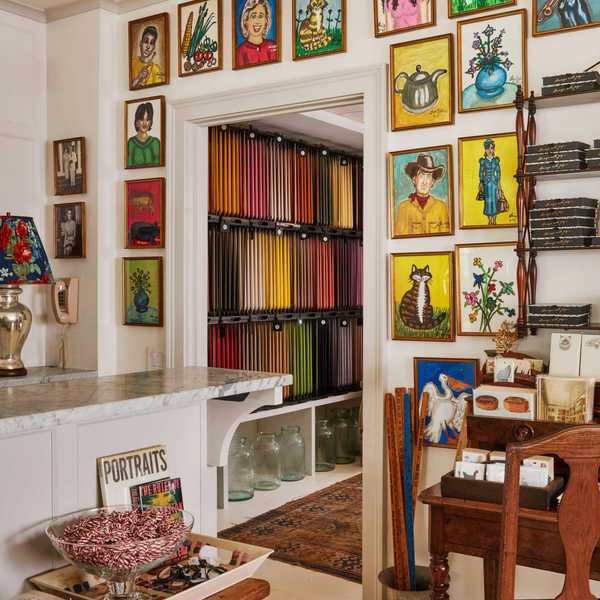
I recently worked with a family in Canaan who wrestled with this very issue. Their home brimmed with treasures from abroad — textiles, pottery, artwork and sentimental mementos too precious to discard. Each piece told a story, but together they overwhelmed the eye. By editing and layering, we allowed their favorites to shine while storing others for later rotation. The result was a home that breathed. When they hosted friends, guests noticed not the size of the house, but the warmth of its atmosphere.
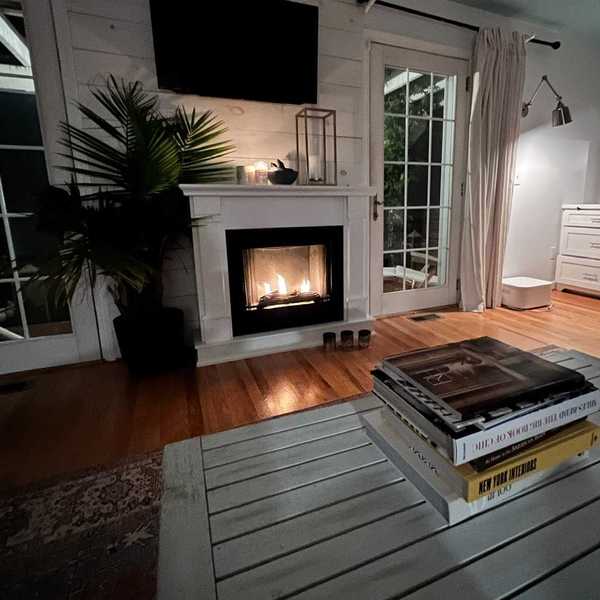
Creating that kind of feeling doesn’t require an interior designer — or a big budget, to be honest. It often comes down to intention. A well-placed lamp that softens the evening light. A textured throw across a sofa. A dining table, however small, always ready to fit one more chair. These touches whisper “welcome” in ways oversized square footage never can.
Fall is the perfect season to reassess. A room that felt breezy in July can seem stark in October. Adding layers — pillows, rugs, curtains — grounds a space. But restraint is just as important. Too many seasonal touches, and a home tips into clutter. Too few, and it feels unfinished. Somewhere in the middle lies the sweet spot, where comfort and style meet.
I often suggest what I call the “guest test.” Imagine a friend stopping by on a chilly evening. Would they feel comfortable settling in with a cup of tea or a glass of wine? If the answer is yes, you’ve likely found the balance.
Homes don’t need to impress physically. They need to express emotionally. Guests won’t remember if your bookshelf was perfectly styled, but they will remember how your home made them feel — cozy, cared for and welcome. That’s the magic.
My Ottawa friend’s city house proved it best. Under twinkling lights, with dough stretched by hand and endless laughter in the night air, it wasn’t about size at all. It was about warmth, generosity and connection — the true heart of every home. In Lakeville, that same spirit shines through smaller cottages and rambling homes, where charm, character and care create spaces people love to linger in.
Because in the end, a home isn’t measured in square feet, but in the memories it holds.
Kerri-Lee Mayland is an Emmy award-winning news anchor and designer. She lives in Lakeville.
Chris Ohmen (left) held the flag while Chris Williams welcomed Salisbury residents to a Veterans Day ceremony at Town Hall Tuesday, Nov. 11.
SALISBURY — About 30 people turned out for the traditional Veterans Day ceremony at Salisbury Town Hall on a cold and snowy Tuesday morning, Nov. 11.
Chris Ohmen handled the colors and Chris Williams ran the ceremony.
Rev. John Nelson from Salisbury Congregational Church gave both an invocation and a benediction. The latter included this:
“We pray that those who have served and those who have died will never have done so in vain/We pray that the commitment of veterans will be an abiding call to resolve our conflicts without resorting to arms/ That one day soon we may mark the war that indeed ends all wars.”

Williams began his remarks by noting that the Veterans Day speech was usually given by the late David Bayersdorfer, who died earlier this year.
“As we honor our veterans today, let’s keep in mind that service comes in many forms. Each role, each job, each post is a vital part of what makes our military the finest in the world.”
Lloyd Wallingford sang “God Bless America” a cappella, with the crowd joining in.
Eden Rost, left, shakes hands with Sergeant Nicholas Gandolfo, veteran of the Korean War.
NORTH CANAAN — Students at North Canaan Elementary School saluted servicemen and servicewomen at a Veterans Day ceremony Wednesday, Nov. 12.
Eighteen veterans were honored, many of whom attended the ceremony and were connected to the school as relatives of students or staff.
The 2nd graders sang the official song for each branch of service represented that day: Army, Navy, Coast Guard, Marines and Air Force. Special recognition was given to the Marine Corps, which was founded 250 years ago in November 1775.
Eighth graders offered speeches of appreciation. Taylor Gulotta said, "My older sister, Madison, has worked so hard to get to where she is today. She has dreamt of being in the Coast Guard since she was a little girl." She continued, "Her selflessness and bravery... is truly inspiring."

Brayden Foley spoke of his grandfather Todd Baldwin's time in the Navy. "My grandpa taught me that helping others in a fundamental way can build strong, meaningful relationship and a supportive community. I appreciate all members of the Armed Forces past and present for their bravery and their commitment to protect the freedom that we have today."
Veterans were recognized individually by Principal Beth Johnson and students presented them with certificates.
The 2nd graders closed the ceremony with a choreographed rendition of "Grand Old Flag."

When longtime arts administrator Amy Wynn became the first executive director of the American Mural Project (AMP) in 2018, the nonprofit was part visionary art endeavor, part construction site and part experiment in collaboration.
Today, AMP stands as a fully realized arts destination, home to the world’s largest indoor collaborative artwork and a thriving hub for community engagement. Wynn’s departure, marked by her final day Oct. 31, closes a significant chapter in the organization’s evolution. Staff and supporters gathered the afternoon before to celebrate her tenure with stories, laughter and warm tributes.
“We had such a fun party for her,” said AMP founder and artistic director Ellen Griesedieck. “I am excited for what is next for Amy and grateful for every moment she has invested in her work at AMP.”
Wynn, who previously led the Northwest Connecticut Arts Council, said her decision to step down came after careful reflection.
“It’s time for me to shift into the next phase of my career, which will call upon my 40-plus years of nonprofit experience to do project work,” she said. “I’ve absolutely loved my time at AMP.”

Under Wynn’s leadership, AMP expanded education programs, deepened community partnerships and oversaw key milestones in the creation of its monumental centerpiece — a three-dimensional mural stretching 120 feet long and five stories high — celebrating American ingenuity, industry and collaboration.
“Through all these years, Amy has worked with tireless enthusiasm for AMP, running day-to-day operations and guiding the overall direction of our mission,” Griesedieck said.
During Wynn’s tenure, AMP evolved from a concept into a dynamic cultural campus. She helped professionalize its structure, solidify its funding base and develop programs that drew visitors from across the state and beyond.
“The work she has accomplished, the hours of overtime she has logged, the mountains we have climbed together since that moment are many and miraculous,” Griesedieck said.
AMP also weathered challenging times, including the pandemic, which forced arts organizations to rethink audience engagement. Wynn guided the team during that uncertain period with a steady hand.
To ensure a smooth transition, AMP has brought on Renee Chatelain of RMCreative Solutions, LLC, an experienced consultant, attorney and arts administrator who previously worked with AMP on its capital expansion planning.
Chatelain will serve as interim executive director while a national search is conducted for AMP’s next leader.
“A longtime friend, Renee comes to us with a depth of knowledge on executive transition,” said Griesedieck. “As an attorney, a leader of several arts organizations and a classically trained dancer, she is particularly well-suited for this interim role.”
Though stepping down, Wynn said she will continue her work in the nonprofit field in a more flexible, project-based capacity.
“I’ll be seeking consulting projects with other nonprofits, assisting with grant work and strategic planning,” she said. “What I enjoy most is leading a collaborative effort and finding solutions to challenging problems.”

Even as AMP bids farewell to Wynn, its focus remains on the future. The next phase of development will focus on converting a second mill building into expanded programming and community space.
“The next step has got to happen,” Griesedieck said. “It’s absolutely what the Northwest Corner needs — a place for the community to congregate.”
The proposed expansion would create flexible areas for performances, workshops and public events, further establishing AMP as a cornerstone of the regional arts scene.
With community support and grants, AMP hopes to carry forward Wynn’s momentum into a new era.
“She is not leaving,” Griesedieck said. “Amy will always be here for us.”
Founded in 2001, the American Mural Project was conceived as a tribute to the American worker — a celebration of skill, creativity and perseverance. The mural, the largest indoor collaborative artwork in the world, was created with contributions from thousands of children, artists, teachers, tradespeople and volunteers nationwide.
Today, AMP offers tours, workshops, lectures and performances, all rooted in its mission: to inspire, invite collaboration and reveal the contributions people of all ages can make to American culture.
As Wynn turns the page, her legacy — from her calm, strategic leadership to the collaborative spirit she fostered — remains woven into the fabric of AMP’s story.