Nothing can wreck your day like the Connecticut Siting Council (CSC), that overarching entity with authority to run gas pipelines and high-tension corridors through our backyards, site cell towers where they don’t belong and humble once-mighty ridgelines with huge broadcast towers. This council’s review is supposed to balance “public need” with “environmental compatibility,” but environment always seems to get short shrift, not to mention property values.Connecticut stands alone in having such an agency, which is funded solely by industry fees. Industries love our model and have tried, unsuccessfully, to get other states to adopt it. So what do the other 49 know that we don’t?Litchfield County has had two recent demonstrations of the arrogance of this agency. In Falls Village at an AT&T cell tower hearing Feb. 17, CSC Chairman Daniel Caruso drummed his fingers, networked with a nearby council attorney and cut off Starling Childs, president of The Berkshire-Litchfield Environmental Council (BLEC). Cornwall experienced similar behavior last year during a cell tower hearing when Elaine LaBella from the Housatonic Valley Association (HVA) tried to talk some sense to them. That episode prompted state legislators Rep. Roberta Willis (D-64) and Sen. Andrew Roraback (R-30) to request more civil behavior from the CSC, without much effect. In Falls Village, Childs’ brief statement was made during the public’s time to speak, and in theory he could have read the phone book aloud if he’d wanted. But the chairman repeatedly hurried him along for “relevancy.” For the record, I believe Childs’ remarks were all directed toward the application. Like LaBella in Cornwall, Childs was forced to edit on his feet but admirably held his ground, which won him a round of applause.The Berkshire-Litchfield Environmental Council was founded in 1970 by Star Childs’ father, Edward Childs, and a handful of like-minded environmentalists. The reason the group formed was to stop an electric utility “pond and release” project, which would have flooded all Wangum Valley in Falls Village. The utility intended to pump water to the top of Canaan Mountain, store it temporarily, then release it downhill through huge industrial turbines to generate electricity. This would have permanently altered the Northwest Corner and created a virtual wasteland for wildlife. The project would also have destroyed the watershed of Robbins Swamp, a unique calcareous wetland now known to be critical habitat for many endangered and special concern species. Robbins Swamp hosts flora and fauna not found anywhere else on earth. Environmentally speaking, it just doesn’t get more important.AT&T’s proposed 150-foot tower on Cobble Hill sits smack in the middle of Robbins Swamp. A less appropriate site is hard to imagine. Falls Village is virtually united against it, an accomplishment in itself. The tower will be visible for many miles, dominating an area surrounded by pristine ridgelines successfully protected by BLEC in the past. Childs tried to point out that in 1970, the threat was from water, but now is from radiofrequency radiation (RF) known to affect many species, especially in wetland areas where water is conductive. He tried to cite a just a few of hundreds of wildlife studies, but Caruso cut him off.Childs certainly has the chops to address the CSC. A geologist, licensed forester and lecturer at the Yale School of Forestry, he teaches graduate students how to inventory wildlife. As an environmental expert, he’s focused on how RF couples with living systems, especially migratory birds, throughout Litchfield County. He’s also the scion of Norfolk’s 6,000-plus-acre Great Mountain Forest, now in federal conservancy thanks to the civic-minded Childs family. When will the CSC stop rubber-stamping applications rather than approving 96 out of 100 cell towers? When will the CSC protect the environment and the public first? When will the CSC expand environmental review beyond mere width of an access road and the 100-by-100-foot footprint being leased? When will the CSC assume responsibility for damage after applications are approved, rather than advising property owners to hire attorneys? When will the governor appoint a more responsive chairman? And when — oh when — will the CSC recognize the solid expertise that exists in organizations like BLEC and HVA?The CSC resists all attempts at reform and has lost public trust. Perennial legislative tweaks, which never get beyond committee, aren’t enough anymore. It’s time lawmakers revoked the CSC’s enabling legislation and replace it with a public utility review board under the DEP, with legal town partnership, and at arms length from industry. Maybe then true public interest and environmental balance will be possible again. B. Blake Levitt of Warren is communications director for The Berkshire-Litchfield Environmental Council.
Latest News
Legal Notices - September 29, 2026
Lakeville Journal
Sep 29, 2026

Legal Notice
The Zoning Board of Appeals of the Town of Salisbury will hold a Public Hearing on Application ZBA-26-2 by Christopher Lancto for a variance of Sections 304 and 300.2 of the Salisbury Zoning Regulations pertaining to a property owned by Jodi Luby located at 288 Twin Lakes Road, Salisbury, CT 06068, map 63 lot 07. The hearing will be held on October 13, 2026 immediately after the regularly scheduled business of the 5:00PM meeting. There is no physical location for this meeting. This meeting will be held virtually via Zoom where interested persons can listen to and speak on the matter. Instructions for attending this virtual meeting will be listed on the agenda and at https://www.salisburyct.us/agendas/. The application materials will be listed at https://www.salisburyct.us/zoning-board-of-appeals.... Attendance is encouraged but written comments may be submitted to the Land Use Office, Salisbury Town Hall, 27 Main Street, P.O. Box 548, Salisbury, CT or via email to landuse@salisburyct.us. The agenda, meeting instructions, and application materials may also be reviewed in the Land Use Office, Monday through Thursday between the hours of 8:00 AM and 3:30 PM. Salisbury Zoning Board of Appeals Lee Greenhouse Secretary
10-01-26
10-08-26
Warning for November 3, 2026, State Election
The electors of the Town of Kent are hereby warned to meet at their respective polling places in said town on Tuesday, November 3, 2026, for the following purposes: To cast their votes for Governor and Lieutenant Governor, State Senator, State Representative, Secretary of the State, Treasurer, Comptroller, Attorney General, Judge of Probate. Notice is hereby given that the location of the polling place for Absentee Ballot Counting, Early Voting, Same Day Registration and Election Day is: Kent Town Hall, 41 Kent Green Blvd., Kent, CT 06757 Voting tabulators will be used. The polls will be opened at six o'clock in the morning (6:00 a.m.) and will remain open until eight o'clock in the evening (8:00 p.m.). Early voting will take place from Monday, October 19, 2026, to Sunday, November 1, 2026. Early voting hours are 10:00 a.m. to 6:00 p.m. each day, except that the hours are extended to 8:00 a.m. to 8:00 p.m. on the last Tuesday and Thursday, October 27 and 29, 2026. Each early voting location will offer Same-Day Election Registration (SDR). Dated at Kent, Connecticut, this 19th day of September, 2026. Darlene Brady Kent Town Clerk
10-01-26
Legal Notice
Notice of Decision
Town of Salisbury Planning & Zoning Commission
Notice is hereby given that the following actions were taken by the Planning & Zoning Commission of the Town of Salisbury, Connecticut on September 21, 2026: Approved - Special Permit Application #2026-0329 by owner Salisbury School Incorporated, for renovation of existing dwellings and establishment of accessory apartment use in accordance with Section 208 of the regulations. The property is shown on Salisbury Assessor's Map 69 as Lot 18 and is located at 508 Twin Lakes Road, Salisbury. Approved - Special Permit Application #2026-0330 by owner Sharon Electric Company LLC, for a storage warehouse in accordance with Section 205.2 of the regulations. The property is shown on Salisbury Assessor's Map 56 as Lot 56-1 and is located at 19 Railroad Street, Salisbury. Any aggrieved person may appeal these decisions to the Connecticut Superior Court in accordance with the provisions of Connecticut General Statutes 8-8. Town of Salisbury Planning & Zoning Commission Robert Riva, Secretary
10-01-26
Legal Notice
Elections Notice In accordance with Connecticut General Statute (Sec 9-16 & 9-17) all Registrars of Voter's Offices in CT will hold a statewide to prepare the "preliminary voter list" for the November 3, 2026 Election. Following this date, these list will be available for inspection at each office. Voters may still register to vote by mail online Until October 18th and in person from October 21st through Election Day by utilizing same day voter registration during Early Voting on November 3rd. The Norfolk Voter Registration session will take place in Norfolk Town Hall, 19 Maple Ave, Norfolk CT on September 29 from 2:00pm through 4:00 pm. Any person wanting to register to vote, or update their registration, can appear in the Registrars office during these times.
10-01-26
Legal Notice
Notice of Agent Decision
Town of Salisbury CT Inland Wetlands & Watercourses Commission
Notice is hereby given that the following action was taken by the Agent of the Inland Wetlands & Watercourses Commission of the Town of Salisbury, Connecticut on September 16, 2026: Approved - Application IWWC-26-41 by Laurel Miller for/to "Install Propane Generator for emergency power". The property is shown on Salisbury Assessor's map as lot 06 12 and is known as 214 SHARON ROAD, LAKEVILLE. The owner of the property is BRADY TERRANCE + MILLER LAUREL TRUSTEES. Any person may appeal this decision of the agent to the Inland Wetlands & Watercourses Commission of the Town of Salisbury within fifteen days after the publication date of this notice. 10-01-26
Keep ReadingShow less
Classifieds - September 29, 2026
Lakeville Journal
Sep 29, 2026
SERVICES OFFERED
Hector Pacay Landscaping, LLC. Residential & Commercial. Tree service, Painting, Masonry, Stone Walls, Lawn Mowing, Gardens, Construction. 845-636-3212. CT and NY.
REAL ESTATE FOR SALE
PUBLISHER'S NOTICE: Equal Housing Opportunity. All real estate advertised in this newspaper is subject to the Federal Fair Housing Act of 1966 revised March 12, 1989 which makes it illegal to advertise any preference, limitation, or discrimination based on race, color religion, sex, handicap or familial status or national origin or intention to make any such preference, limitation or discrimination. All residential property advertised in the State of Connecticut General Statutes 46a-64c which prohibit the making, printing or publishing or causing to be made, printed or published any notice, statement or advertisement with respect to the sale or:rental of a dwelling that indicates any preference, limitation or discrimination based on race, creed, color, national origin, ancestry, sex, marital status, age, lawful source of income, familial status, physical or mental disability or an intention to make any such preference, limitation or discrimination
HELP WANTED
Carpenters Wanted :Local established company looking for qualified carpenters. Segalla's TurnKey Housing, LLC is looking for a few carpenters with varying levels of expertise to join an established team. Must be able to work well with others performing a varied list of tasks from siding and framing to finish trim. Competitive wages, 401K, paid holidays, vacation and health insurance offered. Please contact us at 860-824-0019.
Wanted: a mechanic to service my small Husqvarna Z254F zero-turn lawn mower. I'm in Lakeville. 860-435-2660.
Full-time Warehouse and Office positions available in Sharon, CT. We're looking for dependable, self-motivated individuals who are ready to work and take pride in doing a good job. Pay is $22 to $30 an hour, depending on experience. Applicants must have reliable transportation, be dependable and on time every day, be self-motivated and able to work independently, have a positive attitude and good work ethic. Interested? Call Mike or Greg at 800-245-8222 for more information.
TAG SALES – FALLS VILLAGE, CT
Yard Sale. Fri. & Sat., 10/2 &10/3, 8-1 both days. 32 Lime Rock Sta., Falls Village.





Keep ReadingShow less
Beatrice Humes Bunce
Lakeville Journal
Sep 29, 2026
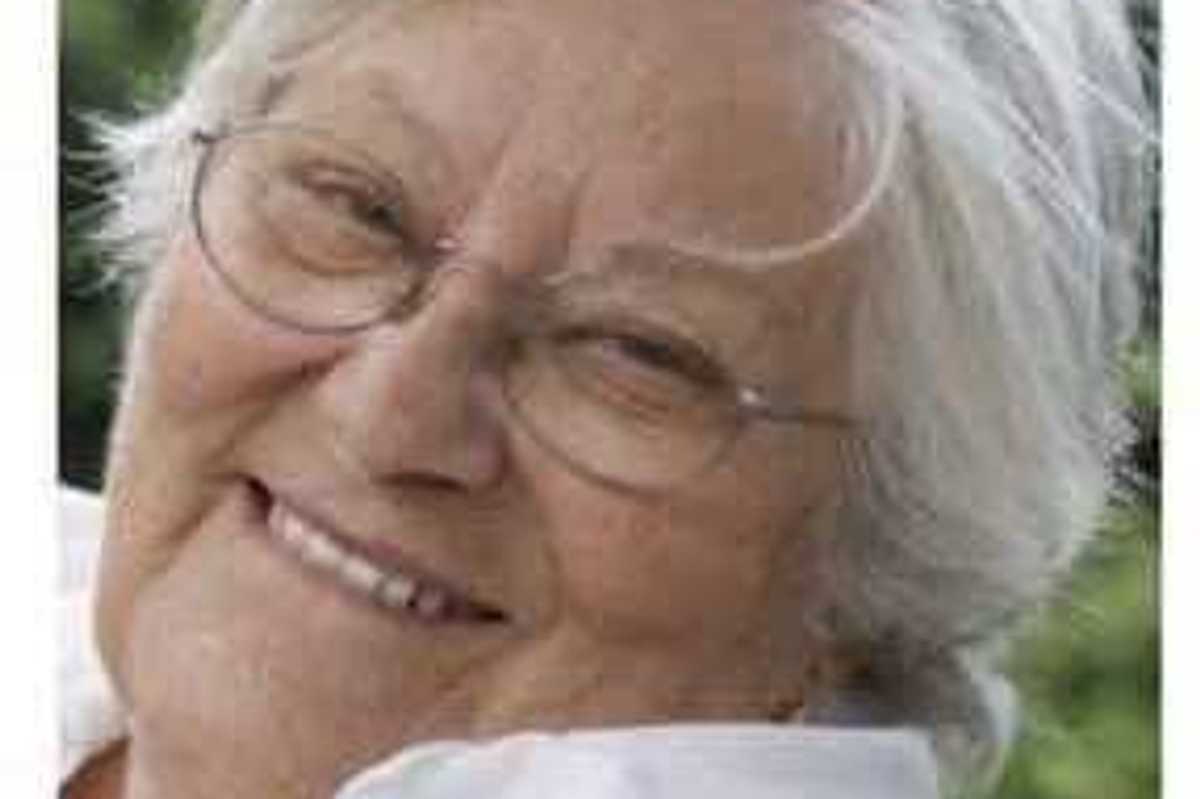
NORTH CANAAN — Beatrice Humes Bunce, 89, of Brooksville, Florida, formerly of North Canaan, Connecticut, passed away peacefully on Sept. 13, 2026.
Born on July 29, 1937, in North Canaan, to Douglas E. Humes Sr. and Claudine Goodsill Humes, Bea grew up in Clayton and graduated from Housatonic Valley Regional High School.
Bea worked as a school bus driver for Dufour Brothers and later cherished her time at home caring for her grandchildren. She loved soaking up the sun by the pool, camping at Deer Run, and attending concerts at Hunter Mountain. She was also an avid knitter, creating cherished blankets for every grandchild and great-grandchild, as well as for many dear friends.
Her grandchildren will always remember mornings with “Ne”/Gramma, especially her legendary heart-shaped waffles and Tang. She always had treats and coffee ready for friends who stopped by to visit. Family was the cornerstone of Bea’s world, and she deeply valued every friendship she made throughout her life.
Bea was preceded in death by her parents; her first husband, Thomas Bunce Sr.; and later, her second husband, Don Kerr.
She is survived by her children, Thomas Bunce Jr. (Terri), Guy Bunce (Wendy), and Claudia Bunce Dionne; her grandchildren, Adam Bunce (Tina), Lindsey Crane (Chris), Brooke Riva (Jared), William Bunce (Polina), Steven Bunce (Cortney), Mollikate Tanner (Richard) and J J McNulty; her great-grandchildren, Cooper and Annabelle, Christopher, Connor and Charlene, Elodie and Vallie, George and Mary, and Forrest and Cassie; and her brothers, Douglas Humes Jr. (Robyn) and Orville Humes (Elina).
A celebration of Bea’s life will be held on Sunday, Nov. 8, 2026, from 1:00 to 4:00 p.m. at the North Canaan VFW, 104 South Canaan Road, Canaan, CT.
In lieu of flowers, the family asks that donations be made to The Little Guild, 285 Sharon-Goshen Turnpike, West Cornwall, CT 06796.
Bea will be deeply missed and lovingly remembered by her family and friends.
Keep ReadingShow less

Want more of our stories on Google? Click here to make us a Preferred Source.
David L. Davis
Lakeville Journal
Sep 29, 2026

NORFOLK — David L. Davis, 84, of Norfolk, Connecticut, passed away peacefully on Sept. 15.
Born in Nottingham, England, David was educated at Bromsgrove School and later graduated from hotel school in Birmingham, England. His education and natural talent for hospitality became the foundation of an extraordinary career that took him from England to some of the finest hospitality establishments in the United States.
In 1964, David came to the United States to work in Hartford, Connecticut, with Sonesta Corporation. He later became head of purchasing for the renowned Plaza Hotel in New York City, where he gained invaluable experience in the world of fine hotels and hospitality.
In 1974, David embarked on one of the most memorable chapters of his career when he purchased the Stonehenge Inn in Ridgefield, Connecticut. Under his ownership, the five-star inn and restaurant became known for exceptional food, gracious hospitality, and an atmosphere that attracted a remarkable array of guests. Among those who enjoyed the Stonehenge were celebrities such as Joanne and Paul Newman, corporate CEOs, devoted lovers of gourmet food, and couples celebrating weddings and other special occasions. David took great pride in creating a place where people could gather, celebrate, and enjoy themselves.
After retiring from the Stonehenge Inn, David moved to Norfolk, Connecticut, to his wife’s family summer home. Retirement, however, lasted only about a month. True to his entrepreneurial spirit, David purchased the local pub and transformed it into an authentic English-style pub. Featuring an extraordinary selection of 153 beers, the pub became a destination for those interested in unusual and imported beers. David was, in many ways, ahead of his time, introducing patrons to the variety and character of foreign and specialty beers long before they became widely popular.
David’s adventurous spirit led to yet another unique chapter in his life. Following his time at the pub, he spent a year consulting for T. Boone Pickens, advising on the hospitality aspects of Mr. Pickens’ vast 70,000-acre ranch. It was an unforgettable adventure and another reflection of David’s broad experience and love of hospitality.
David also founded Hillhome Country Products, sharing his passion for food through a collection of specialty products. Among the most popular were his Texas pickles, fudge sauce, caramel sauce, mango chutney, English orange marmalade, and Christmas Morning marmalade. His products reflected the same creativity and attention to quality that characterized so much of his life and work.
Service to Norfolk
David’s contributions extended well beyond his professional life. After settling in Norfolk, he became deeply involved in the community and gave generously of his time and energy.
He served as President of Meadowbrook Housing and President of the Norfolk Library Associates. He was also a member of the Bishop’s Committee of the Church of the Transfiguration for 20 years, a testament to his long-standing commitment to his community and his church.
Throughout his remarkable career and community life, David was known for his entrepreneurial spirit, his appreciation for fine food and hospitality, his English heritage, and his ability to turn an idea into something special. Whether running a renowned inn, creating an English pub, advising on a Texas ranch, developing specialty foods, or serving his community, David approached life with curiosity, energy, generosity, and a willingness to try something new.
David leaves his beloved wife of 40 years, Louise Hill Davis; his four children, Brian Davis, Diana Davis, Colin Davis, and Anne Davis Lake; a predeceased son, Derek Davis, and his two step-sons, C. Warner Hotchkiss and Winthrop Hotchkiss.
David’s life was anything but ordinary. From England to Connecticut, from the Plaza Hotel to the Stonehenge Inn, from an English-style pub to a 70,000-acre Texas ranch, he created a life filled with hospitality, adventure, entrepreneurship, community service, and memorable experiences. He will be deeply missed by his family, friends, and the many people whose lives he touched along the way.
A funeral service will be held on Friday, October 2nd at The Church of the Transfiguration, Norfolk, CT at 10:30 AM.
In lieu of flowers, contributions may be made to the Norfolk Ambulance and The Norfolk Library Associates
The Kenny Funeral Home has care of arrangements.
Keep ReadingShow less
David A. Godding
Lakeville Journal
Sep 29, 2026
WINCHESTER — David A. Godding Sr., 82, of Winchester Center, Connecticut, passed peacefully at home surrounded by family and friends on Tuesday, Sept. 22, 2026. He was the loving husband of Cheryl Godding for 36 years.
David was born Oct. 17, 1943, in Sharon, to the late Leonard and Gladys (Robertson) Godding.
Dave graduated in 1961 from Housatonic Valley Regional High School. He enlisted in the U.S. Army in 1963 until his honorable discharge in 1969, having served in Vietnam.
Upon returning, Dave settled in Norfolk, with his then wife Roberta (Grith) and children. He worked for several local plumbing contractors before starting Godding Plumbing & Heating with his son David Godding Jr. For many years he was a licensed Master Plumber in Connecticut, Massachusetts, and Vermont, and retired in 2003.
David loved so many things in life. He served as assistant fire chief in Norfolk Volunteer Fire Department and devoted time as an EMT for Norfolk Volunteer Ambulance as well. He enjoyed physical activities of all kinds, including running, hiking, biking, canoeing, swimming, and played volleyball at Botelle school in Norfolk for many years. Hobbies included building construction, working on equipment, and generally coming up with a solution for any type of problem. David loved music and discovered talents for banjo and bass. He played and sang in several bands including Wild Abandon and Dark Horse, and regularly hosted popular music jams in his home. Always an animal lover, he discovered a passion for horses later in life, both riding and carriage driving. He and Cheryl raised and trained Morgan horses on their farm in Winchester, which he took great pride in.
He is survived by his wife Cheryl, his beloved children David Jr, Jennifer Hamza, and Patricia Custer; his stepchildren Julia Smith and Alan Colwell. He also leaves behind his granddaughters Ashley Errichetto and Emily Ronalter, his great grandchildren, his sister Barbara Brown, and many nieces and nephews. He was predeceased by his brother Leonard Jr. and sister Gloria Arata.
A graveside service with military honors will be held on Saturday, Oct. 3rd at 11 a.m. at the Winchester Center Cemetary on South Road in Winchester.
In lieu of flowers, memorial contributions may be made to the Norfolk Volunteer Fire Department, or an animal rescue organization of choice.
The Kenny Funeral Home has care of arrangements.
Keep ReadingShow less
James D. Gold
Lakeville Journal
Sep 29, 2026
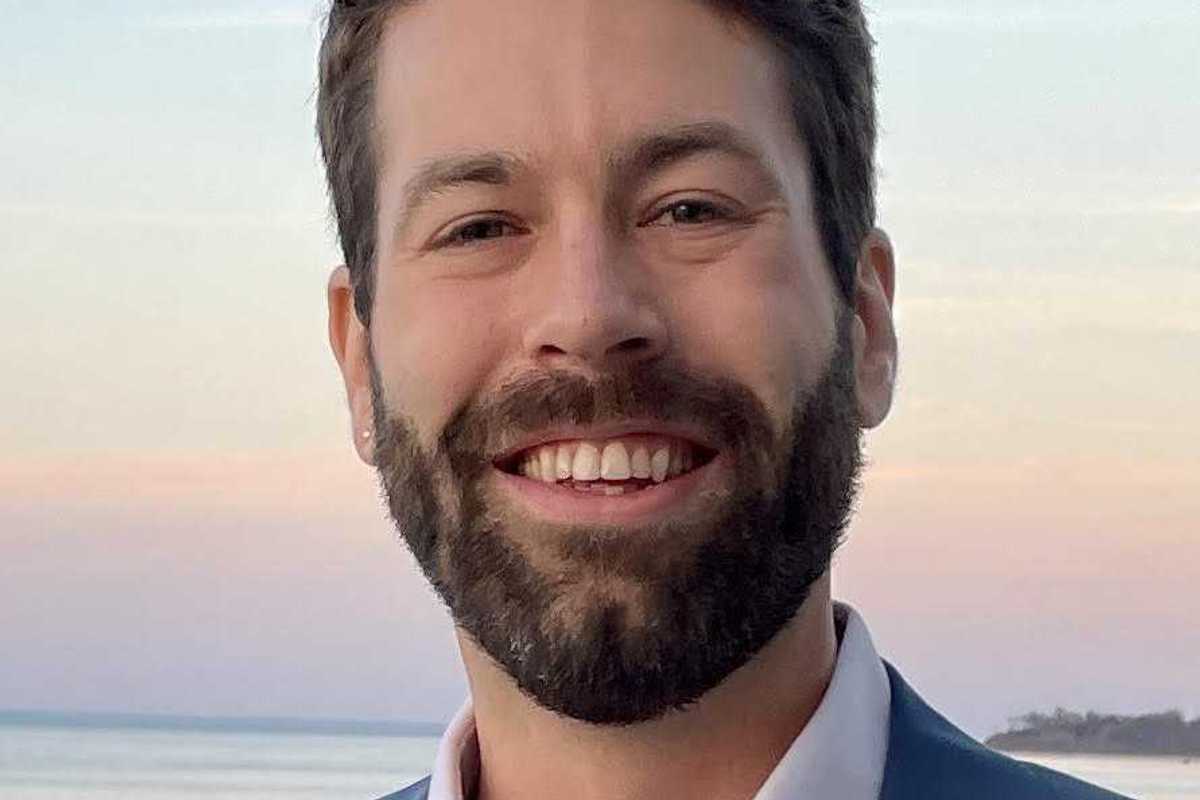
WEST CORNWALL — James D. Gold IV, age 37, of West Cornwall and Brooklyn, New York, passed away peacefully on Sept. 21, 2026 at Memorial Sloan Kettering Hospital in New York City following a three-year battle with melanoma.
James was born Sept. 11, 1989 in Boston, Massachusetts and graduated from Nashoba Regional High School in Bolton where he spent his childhood. A child with unique and diverse interests, he twice represented his elementary school in the Massachusetts State Geography Bee, performed in numerous high school drama productions and competed on the ski team. From an early age, James had a passion for imaging and drawing buildings often sketching many versions until just perfect. He attended Middlebury College in Vermont graduating with a degree in architectural design. As a junior, he studied at the Ecole Speciale d’Architecture in Paris, became fluent in French and worked on the restoration of an historic chateau.
He started his career in New York City at Masterpiece International learning the nuances of transporting fine artworks around the world. Then as an early employee of Citi Bike NYC, he designed the placement of bicycle docking stations and managed operations as it expanded its footprint across the metro area. Relocating to Connecticut, James shifted his focus to pursue his true passion for architecture and design. Honing his drafting and design skills, he worked on residential design, construction and renovation projects in the Litchfield Hills and New York. For the last two years, James was a Project Manager at New Wave Design and Contracting overseeing high end brownstone restorations in Brooklyn and Manhattan.
With a keen curiosity and interest in the world, James took every opportunity to travel to new places. He spent time in India and Nepal before college, then explored much of Europe while studying in France and vacationed in Thailand. Before his thirtieth birthday, he completed a six-month solo trip to Central America and South America. He was always planning his next journey.
James built a community of lifelong friends with whom he shared his love of life. He had a gift for weaving friend groups together and orchestrating fun, memorable experiences. He will be remembered for his kind spirit, captivating smile and infectious laugh.
He is survived by his parents Douglas Gold and Janice Garity of Cornwall, his brother Tyler Gold of Denver, Colorado, and many dear cousins, uncles and aunts.
A Celebration of Life service will be held at the North Cornwall Meeting House on Town Street on Sunday, Oct. 18, at 2 p.m. followed by a reception at Cream Hill Lake. In lieu of flowers please consider a donation to the Cornwall Volunteer Fire Dept., PO Box 180, West Cornwall, CT 06796 www.cornwallfire.org.
The Kenny Funeral Home has care of arrangements.
Keep ReadingShow less
Want more of our stories on Google? Click here to make us a Preferred Source.
loading