SALISBURY – Strong storms on July 4 blocked roads for days and left nearly the entire town without power, but they also took a less visible toll on the many miles of trails that snake through Salisbury’s woodlands, where volunteer crews continue to work to reopen paths blocked by debris.
By the end of the third week of July, trails that had been essentially impassable since the storms began to resemble their former selves thanks to the hard work of trail enthusiasts who lent a hand sawing apart tree trunks or pulling away branches.
John Landon, co-chair of the Salisbury Association Land Trust, a nonprofit that maintains walking trails on its protected lands across town, and Jim Liptack, who oversees maintenance of the Connecticut Section of the Appalachian Trail, both reported major recovery milestones last week.
Volunteers tackle Dark Hollow
Landon said the Salisbury Association focused its initial cleanup efforts on the Dark Hollow Preserve, where nine volunteers spent Thursday, July 16, clearing storm damage.
“There was a tremendous amount of damage to that preserve, as there was in many parts of town,” Landon said.
The preserve, located between Salmon Kill Road and Farnum Road, sustained the most severe impacts of any of the land trust’s protected properties.
Two of Dark Hollow’s three paths are wooded and were damaged by the storm. By the end of the day, volunteers had cleared all but one tree from the 1.3-mile Summit Trail, the longest of the walking paths. The preserve’s other woodland trail remained passable despite scattered obstacles.
While neither trail was officially closed, Landon said the volunteer effort was essential to restoring the Summit Trail to the enjoyable woodland walk residents were accustomed to.
Other Salisbury Association preserves also sustained storm damage, including the Pope Preserve off Route 44 northeast of downtown Salisbury and the Hecht Preserve off Route 112 near Wells Hill Road.
The Salisbury Association Land Trust has scheduled additional volunteer workdays on July 25 and July 31 to continue cleanup at those preserves, with more dates expected to follow.
“It’s a lot of work after a storm like this,” Landon said, encouraging anyone interested to volunteer.
Appalachian Trail reopens after cleanup
After more than a week of sawing, dragging and stacking the fallen trees and branches that blocked 12 miles of the Appalachian Trail, Liptack felt a sense of accomplishment.
“It was just a tangled mess,” he said.He said the most impacted section of the trail was a stretch that runs from about a mile south of Housatonic Valley Regional High School in Falls Village to about a mile north of downtown Salisbury.
Liptack, who helps oversee the maintenance of the Connecticut section of the trail for the Appalachian Mountain Club, said he’d seen similar damage from a tornado that touched down near the high school in 2020, but that “it was a stretch of a quarter, maybe a half mile that was devastated” during that event.
“This was 12 miles of that,” he said.
He reported that a team of 10 volunteers from the Connecticut and Western Massachusetts chapters spent over 130 hours in the woods between Wednesday, July 8, and Friday, July 17.
“We now have the trail cleared, open and ready to be used,” Liptack said on Saturday, but with a slightly altered course – some of the trees were just too large to be removed, he said, so the group built new pathways to go around them.
“I’m talking three to four feet in diameter,” he said, referring to the large trees. “We didn’t have saws that big.”
Two campsites – Limestone Springs and Belter, both in Falls Village – were impacted but have since reopened. The shelter at Limestone Springs remains closed until a dangerous tree above it is removed by a professional crew, which is scheduled to occur within the next several weeks.
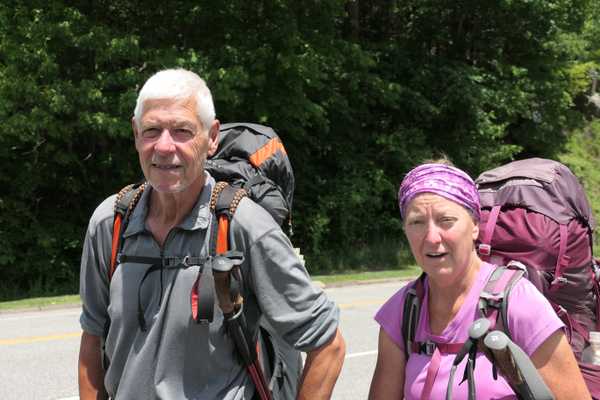
Liptack said that he was glad to have the trail back in navigable shape. He said he had heard reports from “lost, confused and bewildered” thru-hikers who were unfortunate enough to be in the wrong part of the trail at the wrong time in the days immediately following the storm.
“They described it as just blind bushwhacking through the thickest jungle – the thickest branches and trees they’d ever seen,” he said. He also had heard from several hikers who happened to be overnighting at one of the area’s campsites on July 4, saying the reports sounded “incredibly terrifying,” but luckily no injuries were reported.
Liptack said he was grateful for the team who volunteered their time to keep the trail safe and intact. “It’s a team effort,” he said. “We’re really proud of the fact that we were able to get it done that quickly because we had so many people who came out day after day.”


 Justine and Victor Valla in their studio with a painting of Victor’s,”Jonah and the Whale.” Robin Roraback


 A ceramic vase by Kathleen Heidemann.Provided
 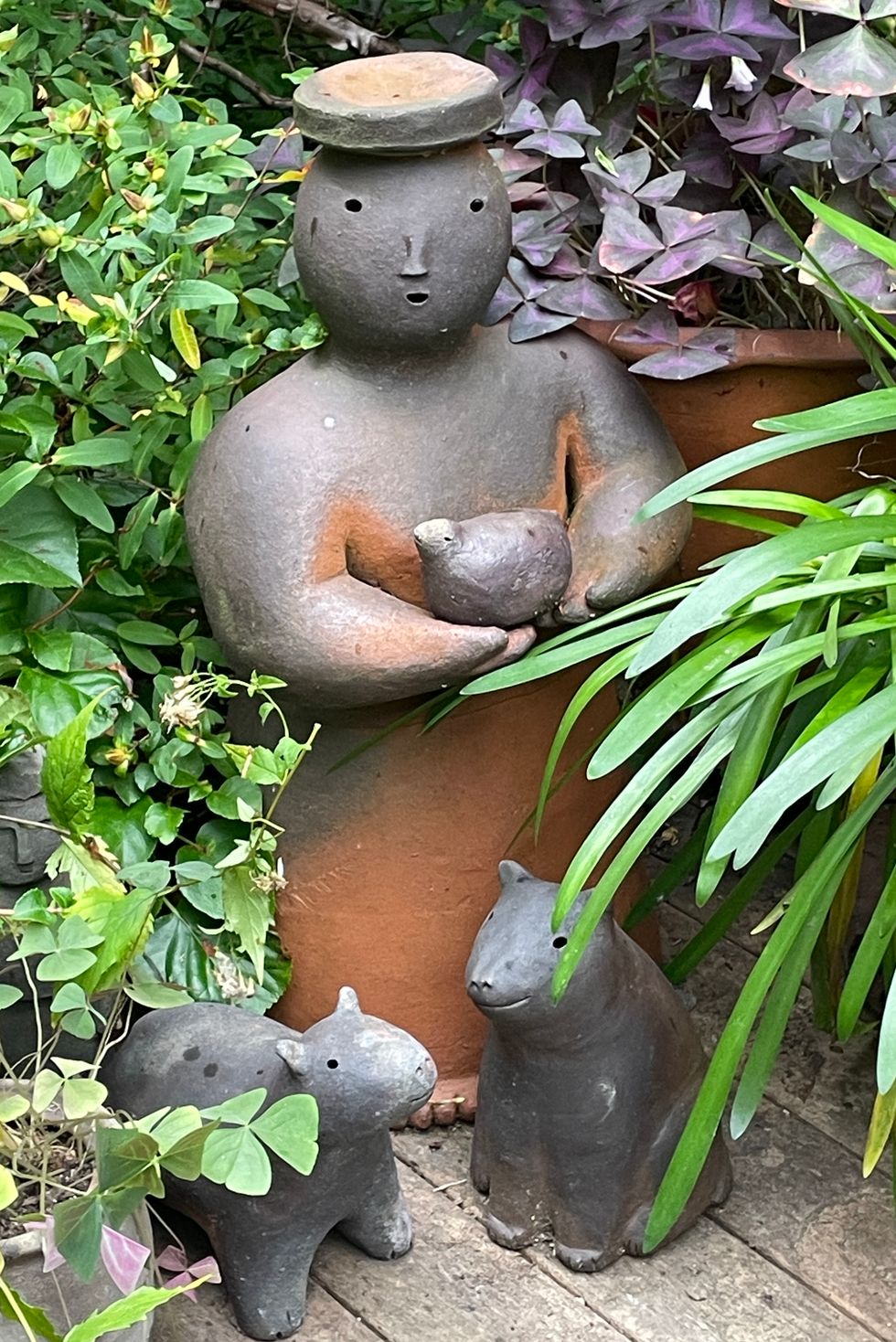 Joy Brown’s delightful ceramic sculptures.Provided

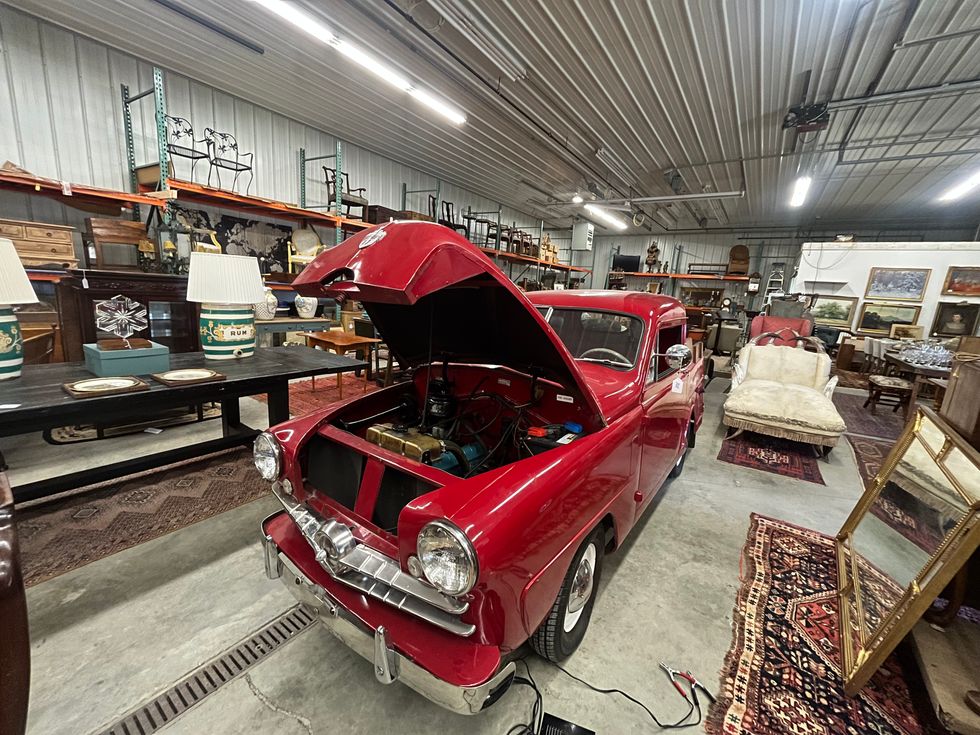 Hundreds of items at Stateline Auctions, including a candy-apple-red Crosley pickup truck.D.H. Callahan