Thank you!
Your support is sustaining the future of local news in our communities.

After punishing winter, towns confront costly road repairs

After punishing winter, towns confront costly road repairs

Cornwall highway department foreman James Vanicky, left, and David Dwyer from Seymour Sealing Service of Wallingford, check the viscosity of a layer of crack sealer during a 1.5-mile road resurfacing project on Dibble Hill Road last Friday.

Debra A. Aleksinas
After 38 years, you kind of know what’s under the roads. It’s like tree rings. You can track its history.

CORNWALL — Local road crews are tackling winter damage across the Northwest Corner, but with tight budgets, small staffs and rising costs, towns are feeling the strain as the spring repair season begins.

On a steep, narrow stretch of Dibble Hill Road, the smell of hot oil hung in the spring air as a crew worked methodically along the winding route, sealing over a winter’s worth of cracks and scars left behind by snowplows, ice and relentless freeze-thaw cycles.

Last week, working alongside private contractors, Cornwall highway department crews began resurfacing sections of the roughly 1.5-mile scenic road, applying a thick base layer of asphalt to damaged pavement before coating it with stone chips and compacting the surface — a process known as chip sealing.

Road foreman James Vanicky, who has spent more than 38 years on the job, coordinated the multi-step resurfacing process on Dibble Hill Road as crews and outside contractors worked along the hilly, winding terrain.

Vanicky said that while potholes have been relatively minimal this season, the problem has been extensive cracking on roads due to frost heaves.

“When the frost heaves settle down, salt water seeps under the pavement making it soft, and then you have traffic pounding on it, and it creates cracks,” Vanicky said.

The scale of the work is compounded by limited staffing with 62 miles of roads and only three employees.

Budget pressures are also mounting as towns move from winter operations into repair season.

“This year our numbers came in at about $75,000 for winter,” said Vanicky.“For the amount of miles that we have, that number was actually comparable to past years. But we’re kind of running on fumes right now until July 1, when the new fiscal year begins,” he said.

Even so, careful planning helped stretch limited resources.

Experience, he added, plays a critical role in deciding where to focus limited funds. “After 38 years, you kind of know what’s under the roads,” he said. “It’s like tree rings. You can track its history.”

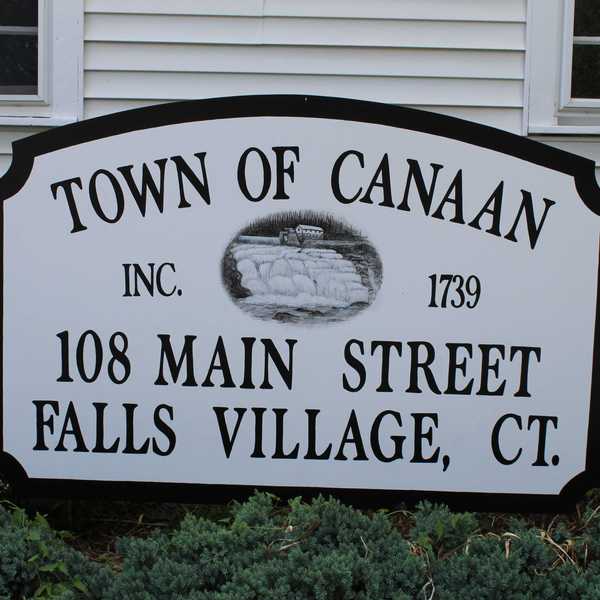
In neighboring Canaan, road foreman Tim Downs described similar conditions and budget challenges.

“The dirt roads took quite a hit this winter,” Downs said, as did his equipment. “We had a lot of truck problems and spent a lot on repairs. At one point, we were down two trucks during a heavy storm.”

In North Canaan, which has 33 miles of town roads, road officials report widespread cracking caused by frost and freeze-thaw cycles.

“This winter was pretty tough,” said Mike Simmons of the North Canaan Highway Department. “We had a lot more freezing underneath the roads, and some of them cracked quite a bit.”

Rising material costs are compounding the challenge. Salt usage alone pushed the town beyond its planned budget, Simmons said.

“Asphalt went up $5 a ton,” he added.

Crews have begun patching roads as conditions allow, but larger repairs loom ahead, including work on Sand Road and Tobey Hill Road.

“The roads took a beating. Some of the paint is coming off the roads,” said Simmons, who noted that line repainting is sorely needed.

State roads, too, have seen widespread pavement damage.

According to the Connecticut Department of Transportation (DOT), as of late March, the state has seen a sharp increase in pothole reports, with 101 reported to the DOT in the first 16 days of March, surpassing the total from the entire month of March 2025.

As towns move deeper into the spring repair season, officials say the full extent of winter damage, and its financial toll, will continue to unfold.

“We have a lot of repairs to make,” said Downs.

And, as repair work ramps up, officials warn that spring is also one of the most dangerous times of year for road crews.

Gov. Ned Lamont recently urged drivers to slow down and stay alert.
“A moment of distraction can have serious consequences,” he said.
Latest News

‘So Little to Do,’ so much to discover at James Barron Art

Curator Deborah Goodman Davis reads the Emily Dickinson poem “The Grass So Little Has to Do.” Spencer Finch’s “Following Three Bees (Zinnias)” buzzes in the background.

Photo by Natalia Zukerman

“The Grass Has So Little to Do,” on view at James Barron Art in Kent, takes its title from Emily Dickinson’s poem “The Grass So Little Has to Do,” written in 1862:

“The Grass so little has to do—
A Sphere of simple Green—
With only Butterflies to brood
And Bees to entertain—”

Keep ReadingShow less

Marina Kotchoubey is not a woodworker

Marina Kotchoubey is not a woodworker

Marina Kotchoubey at the Ian Ingersoll Cabinetmakers showroom in West Cornwall.

Photo by D.H. Callahan

After 40-something years navigating the world of custom fine furniture, Ian Ingersoll was getting ready to retire. Starting off with a little dovetail stool that he sold at a shop in West Cornwall in the 1970s, he’d grown his skill and his business into something he — and the whole town — could be proud of. Shutting down that business was not an option.

Ingersoll built Ian Ingersoll Cabinetmakers, which produced mainly classical Shaker furniture, on passion: the passion he had to make a living through creative challenges and the passion of his employees, who all seem deeply in love with their craft.

Keep ReadingShow less
A legacy of giving at Norfolk Chamber Music Festival

One hundred and twenty years ago, Carl and Ellen Stoeckel commissioned New York architect E.K. Rossiter to design The Music Shed in Norfolk, Connecticut. After nearly a decade of entertaining their friends and neighbors with the finest music of the day, they built a permanent home for their beloved Litchfield County Choral Union.

The commission and full funding of the construction was not unheard of in an era when great fortunes led to public enrichment. Railroad tycoon John D. Rockefeller was instrumental in funding institutes of higher education. Steel baron Andrew Carnegie was building libraries all over the country, and famously said that a man who dies rich is a disgrace, challenging his peers to give their fortunes back to the people.

Keep ReadingShow less
google preferred source

Want more of our stories on Google? Click here to make us a Preferred Source.

Two unique exhibitions at Geary Gallery

Henry Klimowicz with his sculpture, “Partial Pillar 1”

Photo by D.H. Callahan

On Saturday, Aug. 1, Geary Gallery opened its doors in Salisbury for two unique shows in its first- and second-floor gallery spaces. Art lovers flooded both floors over the course of the afternoon, giving the events a vibrant feeling that enhanced the importance of the art.

On the first floor is a show by Chicago-born, Colorado-based photographer Summers Moore, titled “Lobitos: Pueblo Fantasma,” or “Lobitos: Ghost Town.” The work centers around her daughter’s current hometown in Peru. Moore herself found a home away from home in Colorado in the mid-1980s and encouraged her children to seek out new places outside of their comfort zones.

Keep ReadingShow less

Writer’s retreat in the woods

Writer’s retreat in the woods

Participants in a 2024 Great Mountain Forest Woodland Academy workshop at Yale Camp.

Photo by Mike Zarfos

Great Mountain Forest (GMF) will host its first Nature Writing Retreat at the historic Yale Camp in Falls Village from Aug. 7-9, 2026. Writers of all levels are invited to draw inspiration from one of New England’s most notable forest landscapes. GMF envisions the retreat becoming an annual event celebrating writing, conservation and the relationship between people and forests.

This immersive three-day retreat reflects on the legacy of Hal Borland, the American writer and New York Times nature columnist whose work was deeply connected to this landscape. The retreat explores how wilderness shapes language, strengthens close observation and fosters environmental consciousness.

Keep ReadingShow less
From Cornwall to Rome, Adam Van Doren at Berkshire Botanical Garden

Artist Adam Van Doren and curator Donna Hassler talk to a group of visitors at the Berkshire Botanical Garden. A Stephen Proctor vessel sits to their left.

Photo by Natalia Zukerman

This summer, the Berkshire Botanical Garden in Stockbridge has hosted “Grounded in Nature: Paintings by Adam Van Doren,” an exhibition exploring the intimate relationship between architecture and the natural world.

On view for only a few more weeks in the Leonhardt Galleries, the exhibition features more than 35 watercolor and oil paintings by the New York-based artist, architect, author and Yale professor, curated by art historian Donna Hassler, director emerita of Chesterwood. The works span three distinct places that have shaped Van Doren’s artistic practice: New York City, Cornwall, Connecticut, and his travels throughout Europe.

Keep ReadingShow less
google preferred source

Want more of our stories on Google? Click here to make us a Preferred Source.

google preferred source

Want more of our stories on Google? Click here to make us a Preferred Source.