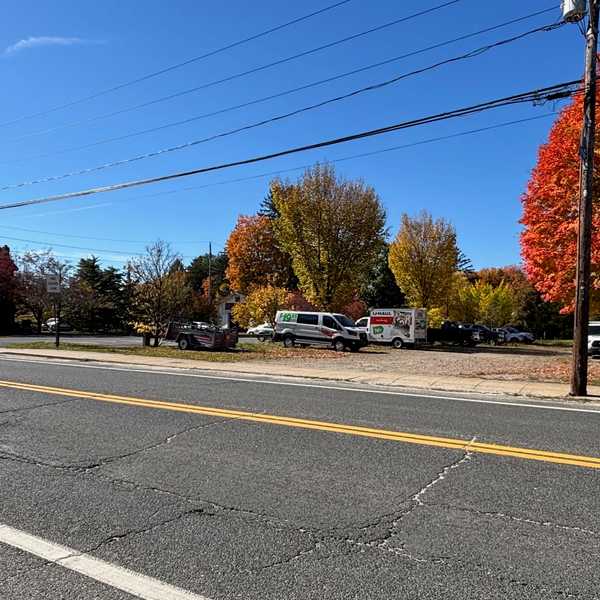
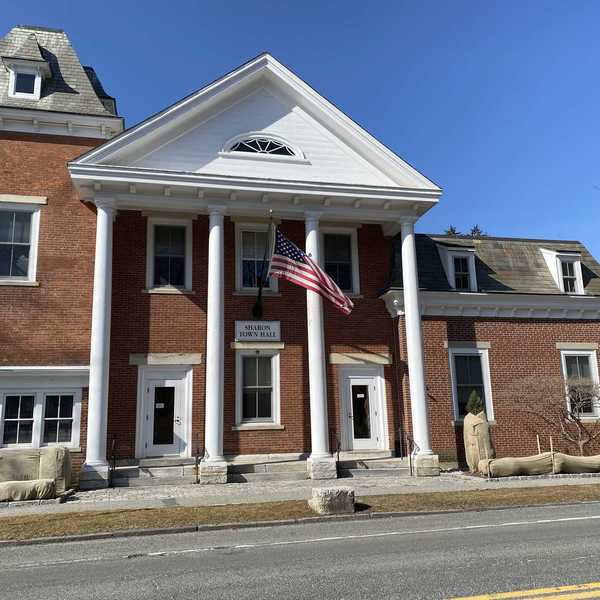
SHARON — Concrete or asphalt? That was the focus of much of the discussion at the community informational meeting Thursday, Jan. 15, about village sidewalks. Concrete appeared to be the material of choice.
Representatives from Cardinal Engineering appeared before an audience of approximately 40 residents to explain plans to rehabilitate sidewalks stretching primarily from the shopping center to Route 343 along Route 41, a distance of about two miles.
Roy Seelye, the senior project manager for the proposal, gave a detailed presentation, noting the town received $1.1 million from the state’s Transportation Rural Improvement Program (TRIP) for the sidewalk upgrade. The town would be responsible for $600,000 to cover the total cost.
The proposed upgrades call for 4-foot-wide sidewalks to replace existing sections that are in poor condition, with widespread cracking, breakage and uneven surfaces that in some areas sit below the roadway.
“Our aim is to maintain the historic character of the area,” Seelye said. “We’re rehabbing what we have. We’re not extending what we have.”
He outlined the method, which would involve excavating one foot down and filling in with bituminous (asphalt) material and crushed stone to prevent further root damage from surrounding trees that are causing the sidewalks to break. “We don’t want to remove any trees because that would have a negative impact.” He said the contractor has to hire an arborist as part of the program.
But Elizabeth Gall, who lives on Main Street, said she was concerned with the honey locust trees whose roots have cracked the sidewalks and asked why the trees aren’t going to be removed since there is a problem. “I have been injured twice on the sidewalk and I could sue. I sued last time,” she said.
First Selectman Casey Flanagan noted the sidewalks are in the state right-of-way, so if the trees die, it becomes the state’s problem. “We have to make sure the trees are OK.”
Seelye said the cost of removing a tree is $7,000.
The discussion then turned to the proposed materials, with several attendees questioning why bituminous asphalt was being recommended over concrete. Seelye said concrete would cost roughly twice as much and require a longer installation period. Using asphalt, he said, the project is expected to take approximately four months to complete.
Several echoed Meg Szalewicz’s sentiment when she said, “I’m very disappointed we’re not doing concrete.” Some suggested using concrete in the center of the Green and asphalt on the outskirts. Selectman Lynn Kearcher asked about the difference in maintenance. Seelye said it would be about the same for both.
Flanagan said the meeting was held so the selectmen could hear public comments, which they will now take into consideration before making any decisions.
Bridge update
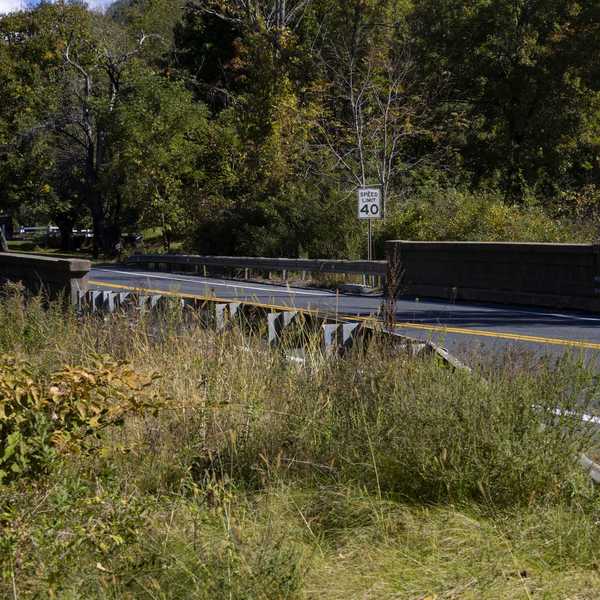
The other project discussed was the replacement of the bridge on West Cornwall Road over Pine Swamp Brook. Estimated to be built around 1900, it was last inspected in 1991, said senior project manager Gary Giroux.
Because of its rating, the bridge is eligible to be a Department of Transportation state/local bridge project with the state paying half the cost of the replacement. The new span will be 7 feet wide and 50 feet long and consist of a 14-foot by 8-foot precast concrete rigid frame with a modern metal beam rail.
“It’s a tough site to construct,” said Giroux, “so we’re going to make sure it’s done quickly with minimal disruption.” Therefore, the road will be closed for a period of three to four months. He showed a drawing outlining the two routes of detours.

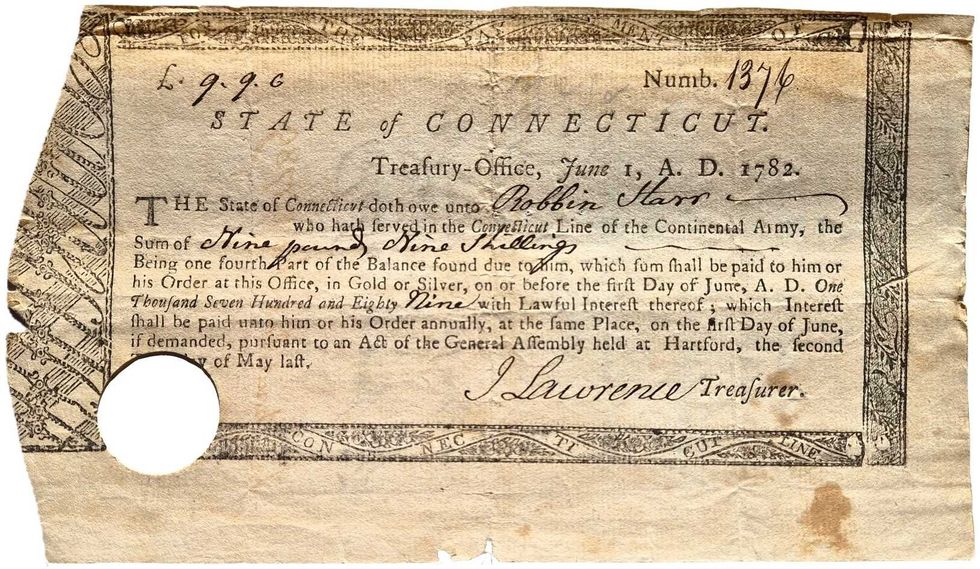 Pay Bill for Robin Starr’s service in the Continental Army.Courtesy the Alex Breanne Corporation
 John Mills speaking at Quinnipiac University.Courtesy the Alex Breanne Corporation
 Stephanie Saetta,with her rescue dog George and Blue (left), a shepherd mix awaiting his forever home.Madi Long
 Blue, a 7 year-old Shepard mix, is waiting for his forever home. Madi Long