Even as a child Donald Trump liked things big, his favorite monument being The Great Wall of China, the 3,700 mile long structure which became the inspiration for his unbuilt wall between the United States and Mexico. His Trump Tower in midtown Manhattan rises well above its neighbors to 58 stories although Trump tells everyone that it is 10 floors higher than it actually is. Back in the 1980she commissioned a design for a skyscraper along the edge of New York Harbor (never approved by NYC) that would have been the tallest in the world — even without imaginary floors. His obsession with wanting to take Greenland as his own surely had something to do with it being the world’s largest island. Trump’s guiding principle continues to be, “Bigger is Better!”
Growing up in a New York City real estate family, it was only natural for Trump to imagine how he might develop all sorts of properties. Back in 2010, Trump cornered David Axelrod, then an assistant to President Obama with a proposal for an addition to the White House of a huge ballroom. Axelrod passed the idea on to another Obama aide but nothing came of it.But by the time Trump was elected president, the idea had gestated.
Built in 1792 to the designs of architect James Hoban, the White House has undergone many additions and alterations over the years; originally not much more than a house, the White House has become a sprawling multi-building complex centered about the original structure.
This past summer, Trump decided to proceed with his idea to construct a very large new ballroom next to the East Wing of the White House. He hired an architect, James McCrery II, a designer of traditional Catholic churches, engineers ACECO and a contractor, Clark Construction.
Schematic drawings were made although very few, mostly perspective renderings showing the interior of the ballroom. Any drawings showing exteriors or how the construction fitted together on the site were not made public.Trump announced that the ballroom would be 90,000 sq. ft. and could hold 999 people, an enormous size if true; it was not. The 90,000 s.f. figure was for the entire new construction and the ballroom itself will be much smaller.Projected costs were originally said to be 200 million dollars then 250 million; and as of Oct. 23rd, they’re 300 million.My guess at this point is that the whole project will cost somewhere between half a billion and a billion dollars. Thus far, private funding is by some of the nation’s richest corporations and individuals and all these donations will be tax-deductible. The whole arrangement looks unsavory, if not actually illegal.
In presenting the project to the world, Trump said that the new ballroom would back up to the existingEast Wing but not touch it. But it became clear as workmen began demolishing the entire East Wing that he had not been telling the truth. The East Wing is gone and publicity sketches, looking from above show Trump’s Ballroom Building in its place.Certainly this had been the plan from the start.
Of the several agencies, commissions, and organizations that oversee and regulate federal construction in Washington, the National Capital Planning Commission is the one charged with approving or disapproving this project. The board’s new chairman is Will Scharf, also the White House staff secretary who hands Trump executive orders to sign.
Trump’s subordinates claim that neither demolition nor design needed federal approval, only construction did ---a false claim. But Trump has stocked the Commission with at least three of his assistants to be sure there will be no legal impediments.
It’s too early for a comprehensive assessment of President Trump’s planned new construction replacing the East Wing and more at the White House. The situation seems to be changing so much and so fast that it’s impossible to say what we will see at the end of Trump’s term when he promised us that the project will be complete. The work done so far is not reassuring. The gilding of the Oval Office, although carefully done, looks extremely self-conscious and tawdry. The major portion of the Rose Garden south of the West Colonnade was paved over last summer. The Jacqueline Kennedy Garden just south of the newly demolished East Wing was also destroyed and at least a dozen lovely very large, fragrant flowering magnolia and linden trees in the immediate vicinity were cut down.
The new construction composed of the ballroom and its ancillary facilities together with the spaces that were in the demolished East Wing need to be carefully designed to form a structure compatible with the rest of the White House and not become too large.The NCPC needs to monitor and control the design and construction to assure a good solution.
But even more important for the country than the questionable aesthetics of Trump’s new vanity project has been his seizure of powers that were never his to use. Wake up, citizens, there is likely more in store!
Architect and landscape designer Mac Gordon lives in Lakeville.

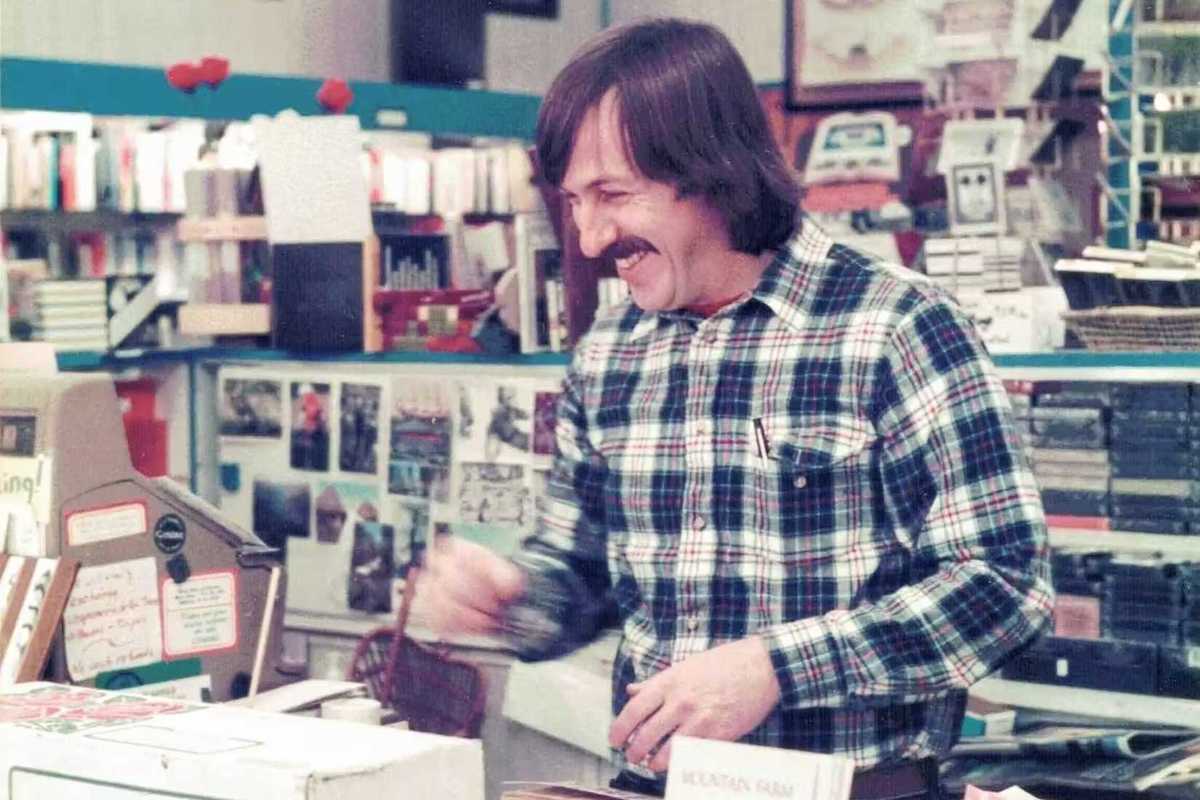
 Dick Hermans in the Oblong Bookstore on Millerton’s Main Street in 1985.Provided


 Fall storage crop harvests amid soil building cover crops at Adamah Farm in Falls Village. Janna Siller