Latest News
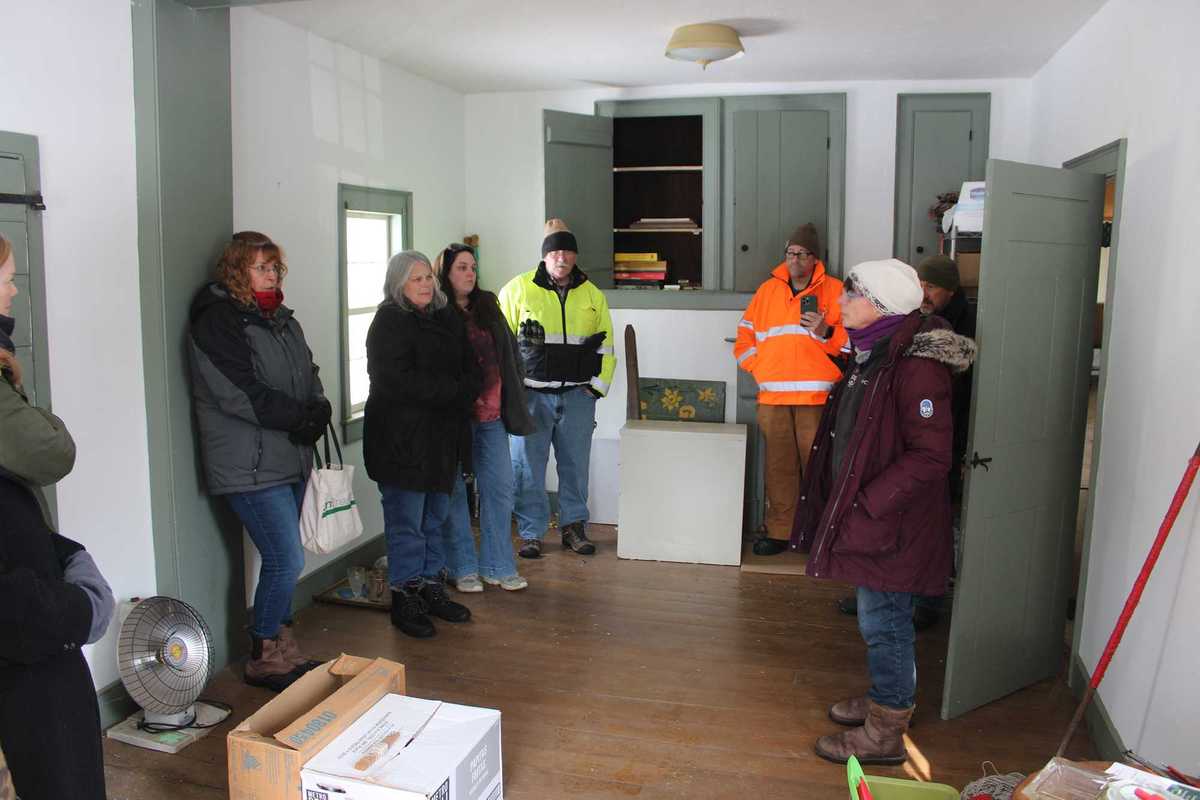
Kent Historical Society Curator Marge Smith initiated the tour of the historic Swift House in a vacant room that has been proposed as a new location for the town food pantry.
Alec Linden
The new committee’s mission statement is “to provide input and assistance to the Selectman in the redesign, redevelopment, updated construction and Americans with Disabilities Act upgrades of the Swift House.” The committee is also charged with finding avenues to sell the building if the town decides to “dispose” of the property as a municipal building.
The 18th century landmark house — located prominently next to the four corners intersection of Route 7 and Route 341 in the center of town — effectively “closed” during the COVID-19 pandemic and never reopened, though the Kent Chamber of Commerce has used several rooms for storage since. Prior to the closure, the Chamber held an office in the building, and before that the Kent Historical Society was based there before moving out in 2013. The building was a meeting place for the community and civic groups after it was restored in the 1970s, and has also had sections used as residential apartments.
The tight April 30 deadline is intended to ensure a strategy is in place in time for budget line adjustments in May, Epstein explained. The new committee, which was voted through unanimously, will include selectman Lynn Harrington, a member of the Board of Finance, and five members of the public appointed by the BOS.
Harrington emphasized that the new committee will take its responsibilities seriously. She said the findings will “have to be concrete… with facts and force behind them.”
Matt Starr, a Kent resident, was present for both the tour and subsequent meeting. At Town Hall, he said he was grateful to Kent’s leadership for inviting the public – literally – into the buildingas it works towards a solution, but that he has grown weary of the uncertainty. “There’s no plan but we’re being taxed on it,” he said.
During the 2025 round of the state’s Small Town Economic Assistance Program grants, commonly known by the acronym STEAP, the town applied for $1 million in funding to convert the first floor into several wings that would house the Social Services Department, the food pantry and event spaces, but was denied the funding.
The current draft Five Year Capital Plan includes $425,000 for rehabilitation of the Swift House, a figure that will be subject to change based on the committee’s recommendations. Voters will consider the capital plan at the May town meeting.
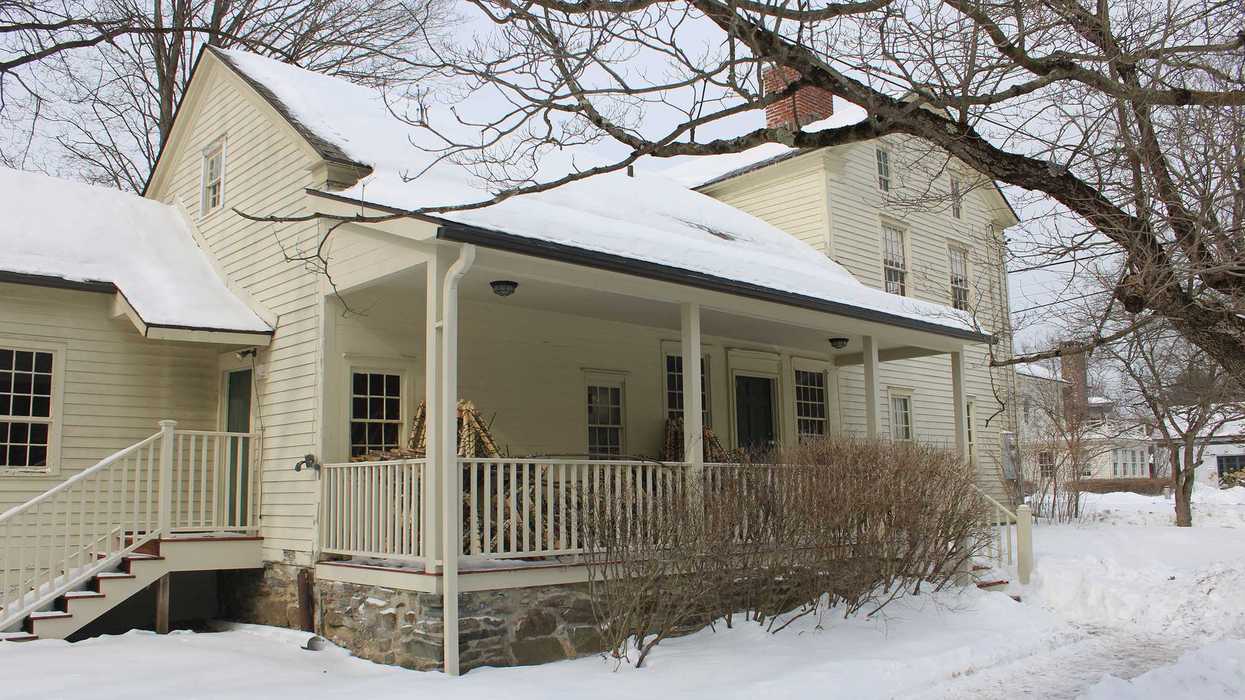 The Swift House, once a small wood-frame dwelling, was expanded several times between the mid 18th and 19th centuries and renovated in the 1970s. Alec Linden
For some, preservation is paramount
Chris Adams, new chair of the Kent Historical Society, and Marge Smith, curator for the Society, also joined the two part meeting. Both emphasized that their top priority for the building is to place a preservation easement on the deed that would prevent it from being demolished, even if it were sold. To do this, the two indicated that a strong first step toward that goal is to get the building listed on the National Register of Historic Places, which the Society is actively pursuing.
The Swift House was visited in April 2024 by officers from the State Historic Preservation Office, commonly known as SHPO. Following the visit, SHPO endorsed the effort:
“This property is an integral part of the historic center of the town of Kent and exhibits architectural quality that contributes to Connecticut’s rich historic landscape,” reads a September 2024 letter from Jenny Scofield, Deputy State Historic Preservation Officer.
Smith led the tour of the house, attended by the selectmen and eight or so members of the public, in which she highlighted the building’s unique construction.
Hunched over in the dusty, cramped cellar, she told attendees, “This is the oldest part of the building,” pointing to original stonework on the walls. “It’s a great example of early Yankee frugality,” she said, noting that subsequent owners used structurally sound components already there when imagining their own constructions.
Even today, “it has good bones,” Smith said. Career contractor and Planning and Zoning Commission member Chris Harrington, who attended the tour, affirmed that the chestnut timber frames supporting the roof are “in excellent shape.”
After the tour, Smith shared that while a place on the National Register will help the town find grant funding for renovations, there may be other ways to finance construction.
The original structure on the site was an 18- by 20-foot dwelling built by Jabez Swift, who moved to Kent in 1746 with his family. He had a brother, Nathaniel, who lived and is buried in nearby Warren and would have certainly visited the Swift House, Smith explained.
Nathaniel has a very prominent descendant, who Smith and Adams upheld is a noted preservationist: singer-songwriter Taylor Swift.
Swift is his great-great-great-great-great-granddaughter, and the two said that while far from a guarantee, they are hopeful that the family may take interest in the preservation project if they can be reached.
Aside from the popstar, another member of the Swift family is already invested in the building’s continued existence. Elizabeth Swift, originally from Lakeville and now living in Warren, is a direct descendent of Jabez and his son Heman, a prominent colonel in the Revolutionary War who grew up in the Swift House.
She attended both the tour and following meeting at town hall, saying she hadn’t been inside the ancestral home in many years.
“I’d love to see it preserved,” Swift said. “Our country doesn’t appreciate history enough.”

‘Stoned Soul Picnic’ by Taha Clayton.
Provided
Clayton describes the series as rooted in a search for these overlooked narratives. “It started with Baldwin and John Coltrane… and then it blossomed to the people of the times, the stories that get overlooked.” His subjects are people he knows or meets through everyday encounters. “It’s the models, it’s their lives. It’s us collaborating, as opposed to me putting a costume on someone,” he said.
Born in Houston, raised in Toronto and now based in Brooklyn, Clayton brings a cross-cultural sensibility to classical realism. His figures frequently appear in clothing inspired by mid-20th-century style, echoing the visual language of the 1930s through ’50s. But rather than nostalgia, he’s after something more layered, a kind of collapsing of timelines. “I’m documenting this moment,” he explains, “but I’m also challenging myths and creating new ones.”
The use of fabric is a striking element in Clayton’s work, operating on both aesthetic and symbolic levels. “I’m playing on ideas like ‘being cut from the cloth,’ ‘the thread’ of an idea,” he explained. The act of painting on cotton alone carries layered historical meaning, but he deliberately reframes it as a site of empowerment. For him, cloth/cotton signals ceremony, resilience and transformation.
 ‘Sunkiss’ by Taha Clayton.Natalia Zukerman
Clayton has an evolving and deepening relationship with this area. As an artist-in-residence at the Wassaic Project in Amenia, he said, “We were the first residency out of the pandemic, and I brought my wife and daughters. It was a two-week residency that ended up being the whole summer. It just kind of evolved and that’s how my relationship upstate has been.” His series “The Cloth” was presented at Troutbeck in Amenia in 2022 and he has returned as a featured speaker and educator for the Troutbeck Symposium, the multi-day gathering at Troutbeck where middle and high-school students present year-long research projects on under-told local and national histories. “It’s been four years I’ve been with them, so I’m like artist/mentor now,” said Clayton.
Clayton will be in residence again at Hotchkiss for the week leading up to the opening, offering students multiple ways to engage with the artist and providing a rich, hands-on experience of his practice as well as his guidance. “Taha is a remarkable artist to work with because he meets students where they are,” said Tremaine Gallery director, Terri Moore. “He listens deeply, treats their ideas with real respect and shows them that their own stories are worthy subjects. That combination of humility, rigor and generosity is rare — and it’s why students respond to him so strongly.”
 ‘Crown Maker’ by Taha Clayton.Provided
Clayton’s career has garnered international — even interstellar — recognition, including exhibitions in cities from New York to Barcelona. One of his works was selected for the Lunar Codex’s “Nova Collection” in 2024, part of an ambitious global archive designed to preserve creative works on the Moon as a time capsule of human culture. Clayton recalled the moment the capsule landed with characteristic understatement: “I’m just on the computer watching with a beer thinking, ‘Ok, this is cool.’ But, like the next day, I still had to get up and take the kids to school.”
Interspersed throughout the gallery are ceramic shields that add to the warrior-like quality of some of the subjects. The repetition of a water fountain is particularly evocative, another reclamation that amplifies history without obscuring the truth that shaped it.
Clayton describes his practice as a form of meditation, saying he feels time dissolve while working. “It’s like past and future is all happening,” he said. That sense of temporal layering resonates with the exhibition’s central idea that personal memory and collective history are inseparable. Clayton’s portraits are about recognizing and celebrating the magnitude and multitudes contained in ordinary lives, the reclamation and attention to historical detail and the carrying of history forward with incredible beauty and unwavering dignity.
“Historic Presence” will be on view Feb. 14-April 5 at the Tremaine Gallery at Hotchkiss, 11 Interlaken Road, Lakeville. An artists’ talk is scheduled Thursday, Feb. 19, at 7 p.m., followed by an opening reception Saturday, Feb. 21, from 4 to 6 p.m.

Want more of our stories on Google? Click here to make us a Preferred Source.

Bobby Grahamand Matthew Marden
Jennifer Almquist
Jennifer Almquist sat down with the couple for a conversation about design, storytelling and building a life — and business — together.
Jennifer Almquist: When did this dream begin?
Bobby Graham: This truly is a dream come true. I wanted to open this shop for more than 30 years, to create something containing all the things I’ve loved that have inspired me.
Matthew Marden: Dugazon has exceeded our expectations. Having our own business, no longer part of a large corporate structure, allows us to tell our stories and work together.
JA: What is your earliest memory that set you on your journey?
BG: My earliest memories include going to flea markets and antique shops with my mom. I still have my vast collection of wooden animals that my mom started when I was a little boy.
JA: What are your earliest memories that drew you to beauty, design and fashion?
MM: I’ve always been a visual person. I was fascinated with The Muppet Show and Sesame Street. I loved their imaginative worlds. It was the late ’70s, and I remember being oddly interested in pop culture, loving the colors and textures of the different puppets, their crazy hair or colorful fur.
JA: What were your favorite stories growing up?
MM: I grew up in Hopkinton, a small town in New Hampshire. I loved “Goodnight Moon.” I remember C.S. Lewis’ Narnia books and their combination of fantasy and reality. I was a voracious reader, drawn to the more macabre world of Stephen King. My dad read me “Watership Down.” I remember the “Madeline” books. I was terrified by the nuns.
BG: I loved books that were visual, especially a pop-up book called “The Great Menagerie,” published by the Metropolitan Museum in the ’70s. I loved “Danny the Dinosaur” and “Cloudy With a Chance of Meatballs.”
JA: What roles do family and tradition play in your lives?
BG: My mom was a homemaker in Sioux Falls, South Dakota, where I grew up, but she was from Baton Rouge. I spent three weeks every summer with my grandparents in New Orleans. It was all about food and family. In our home, Matt and I keep those traditions alive.
MM: We have been married almost two years, but we’ve been together 20 years. When we first started dating, we discovered that despite being from different parts of the country, we had much in common. Family is important to us both.
JA: Are your families supportive of your new venture?
BG: They’re so proud of us. My dad calls every day.
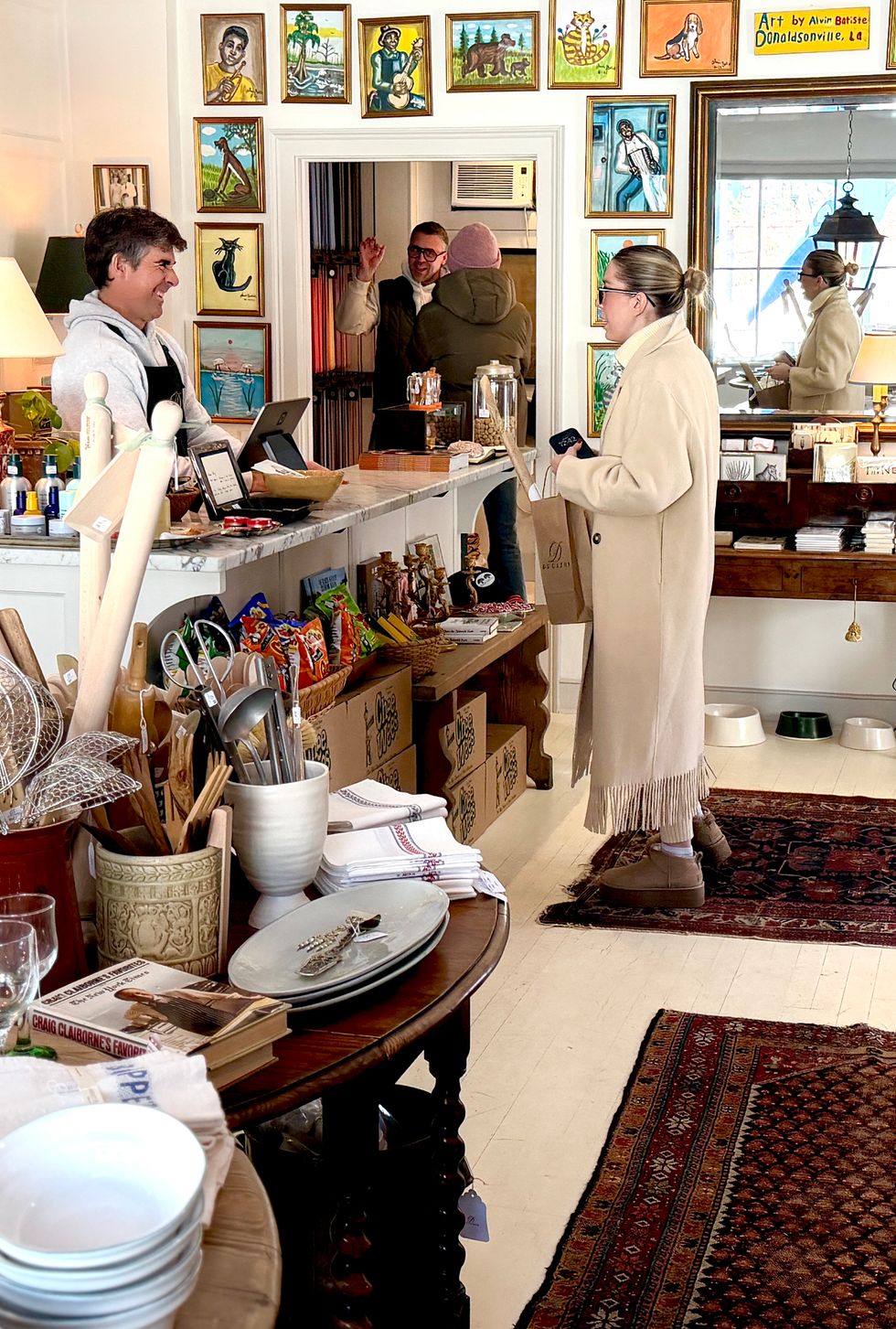 Matt and Bobby with customers at Dugazon.Jennifer Almquist
JA: Matt, what drew you to fashion as a career?
MM: I studied art history in college. For five years, I worked at a New York fashion photography gallery, Staley-Wise. I worked at Town & Country, was a fashion director at Interview, then fashion director at Details magazine, where I stayed most of my career. I became style director at Esquire.
JA: Bobby, what was your experience in advertising and publishing?
BG: I worked in banking for a couple of years using my business degree, but it just wasn’t right. I went to work at Condé Nast as a sales executive for Vogue, GQ, Vanity Fair, AD and The New Yorker.
JA: How did you meet? When did you marry?
MM: It was my first morning at Details. I noticed Bobby in the elevator. We were married in August 2024.
JA: What is your business philosophy?
BG: My business philosophy is that you work hard, you have integrity, you have fun and the money will come. There are no shortcuts in life.
MM: At Dugazon, we sell what we love.
JA: What is your most beautiful, most favorite item in Dugazon?
MM: A photograph by our friend Matt Albiani called “Lost,” shot under a pier in the summer. We had a copy in our house on Fire Island for years.
BG: My favorite item is our candle wall. I just love the way it presents visually. I love the colors.
Dugazon is located at 19 West Main Street, Sharon. For more information and shop hours, visit: dugazonshop.com.
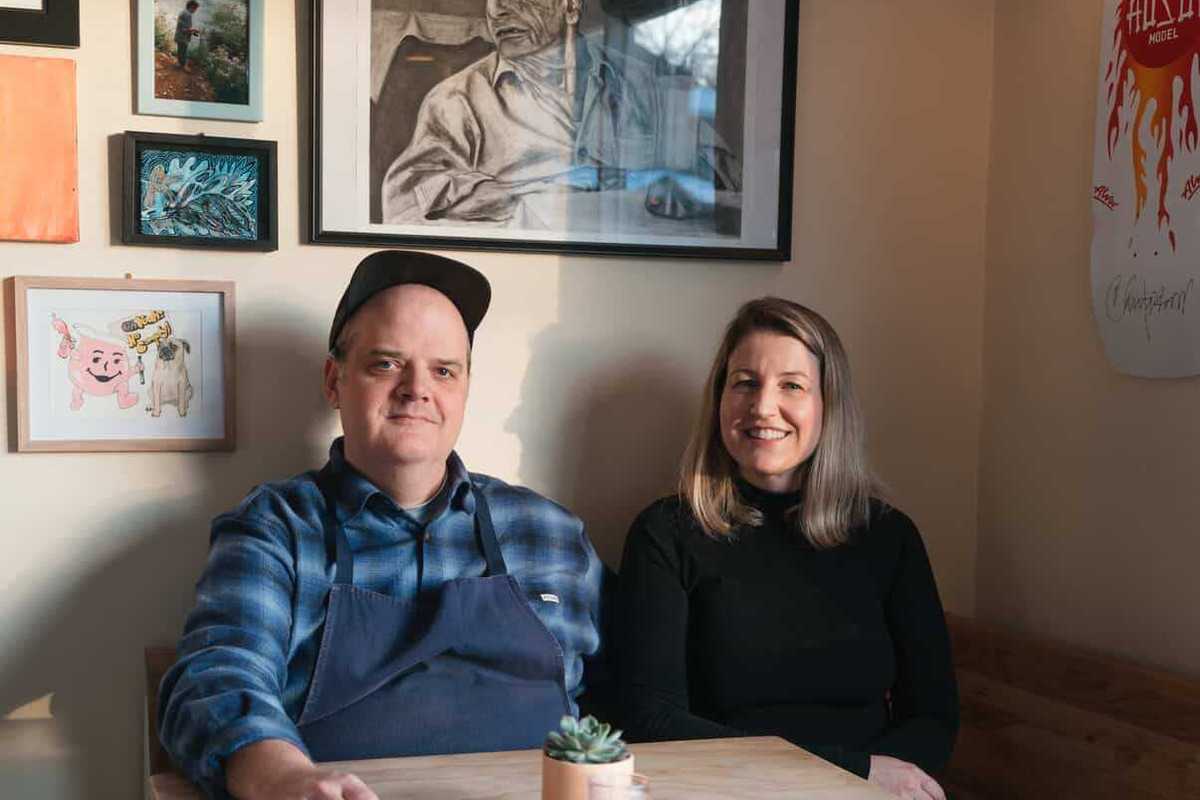
Steve and Julie Browning, co-owners of No Comply Foods in Great Barrington, have built a restaurant that reflects their skate-punk spirit and love of globally inspired comfort food.
Sara S. Wallach
They opened No Comply Foods with their unique vision. “It’s a place that we did on our own terms,” said Julie. “Despite people trying to tell us things that we needed to do to be a successful restaurant, we do the things that we want to do.” Those things include no alcohol, no tips and no reservations. “It’s a place that anybody can come into, just sit down, eat and feel welcome. A complete reflection on who Steve and I are, and who we have been. That’s what this place is.”
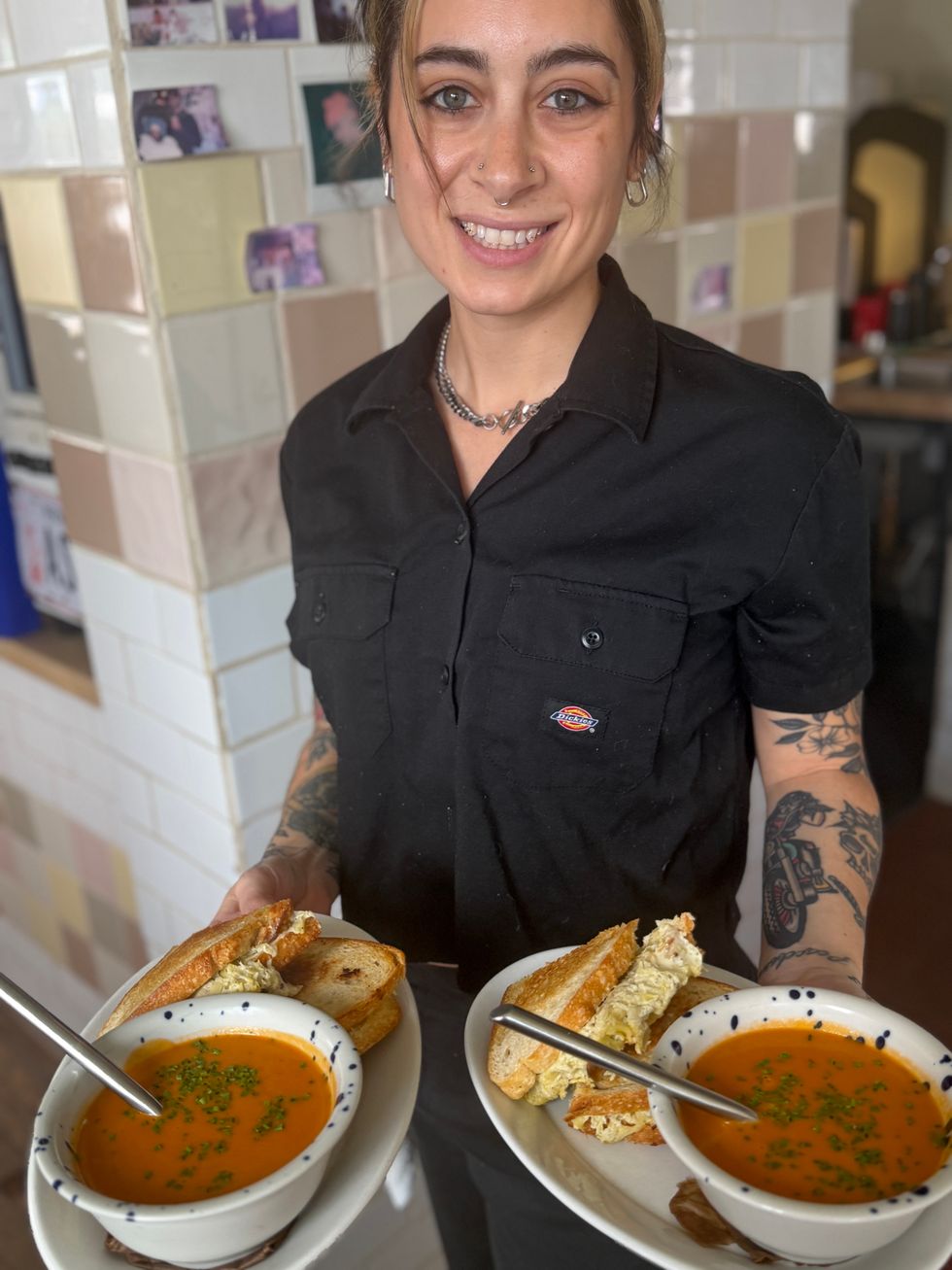 Jena Battaglia at No Comply Foods in Great Barrington, serving tomato garlic cream soup and artichoke grilled cheese sandwiches during Sunday brunch.Jennifer Almquist
Clearly, their formula is working. In its August 2025 issue, Bon Appétit Magazine named No Comply Foods one of the 14 best new breakfast spots in the U.S.
Brunch on the first warm Saturday this winter offered Turkish eggs with labneh; two sunny-side-up eggs on a Japanese sweet potato topped with chili crisp; tender soft-boiled eggs resting on steamed spinach with silky béarnaise sauce, rye toast and smoked bacon; a plate piled with buttermilk pancakes with a dollop of maple butter and circles of powdered sugar; and mugs of strong coffee. The place stayed packed for hours, every seat filled as families fresh from skiing — suspenders hanging, boots clomping -— came in for warming meals. One couple marked a post-Valentine’s moment by sharing a chocolate heart doughnut by Pastries by Hanna, a baker in Canaan, Connecticut.
 Wedge saladJennifer Almquist
Browning cooks globally influenced food with chef Dimitri Koufis, and the dinner menu changes daily. Recent offerings have included French fries with black pepper aioli; fried cauliflower with couscous, olive tapenade, orange and fenugreek yogurt; hot dogs and fries with jalapeño cheddar and special sauce; leek and mushroom pot pie with oyster mushrooms, spinach, cream and mascarpone; and rigatoni Bolognese with Grana Padano, onion soubise and herbed breadcrumbs. If you still have room for dessert, you might try an apple crostada with caramel sauce and ice cream or chocolate mascarpone mousse.
Prices are reasonable. The menu emphasizes fresh food to reduce waste, and produce is seasonally sourced from local farms. Guests can plan a party in the brightly lit upstairs space, enjoy special evening events that might include live music or comedy, or attend themed menus such as Greek Night. No Comply Foods is dog-friendly.
For hours and more information, visit: nocomplyfoods.com
Want more of our stories on Google? Click here to make us a Preferred Source.