Kent sets spring deadline for Swift House strategy

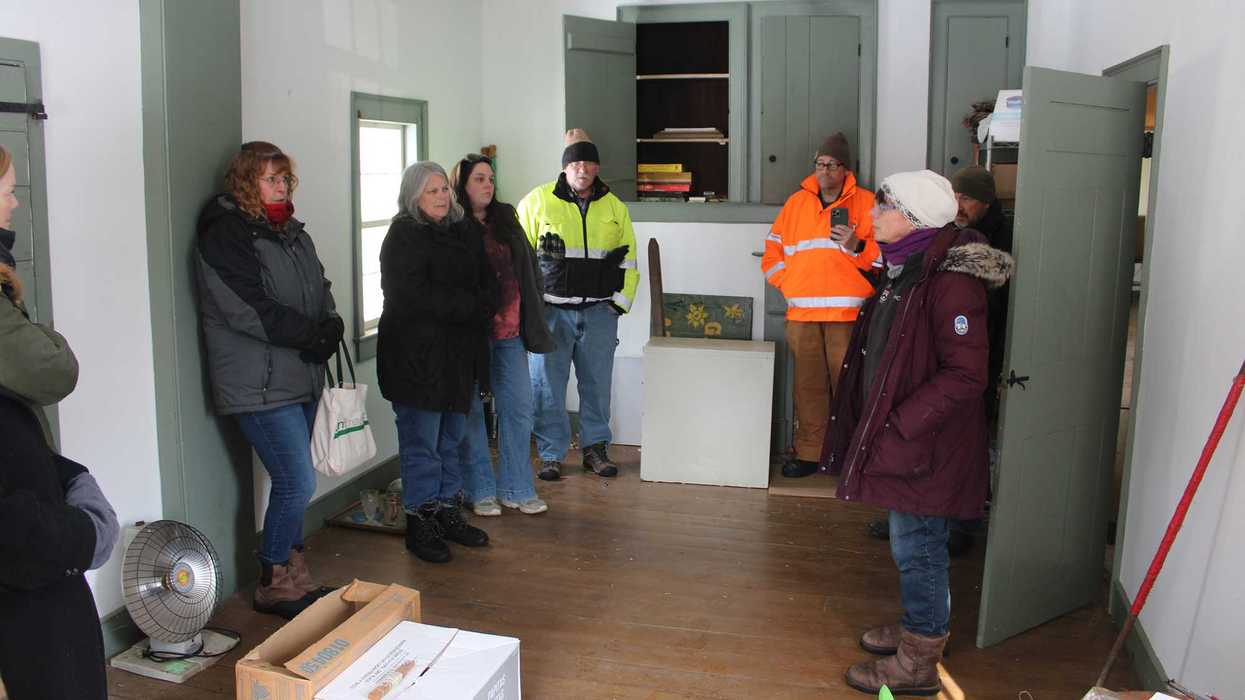
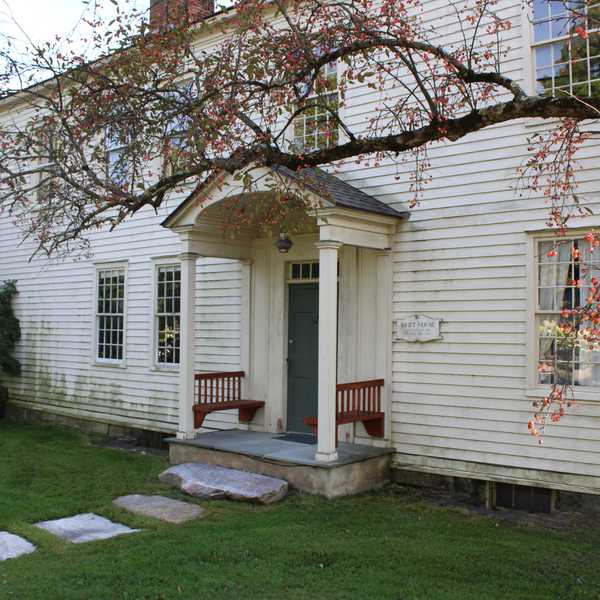
Kent Historical Society Curator Marge Smith initiated the tour of the historic Swift House in a vacant room that has been proposed as a new location for the town food pantry.
Alec Linden

Kent Historical Society Curator Marge Smith initiated the tour of the historic Swift House in a vacant room that has been proposed as a new location for the town food pantry.
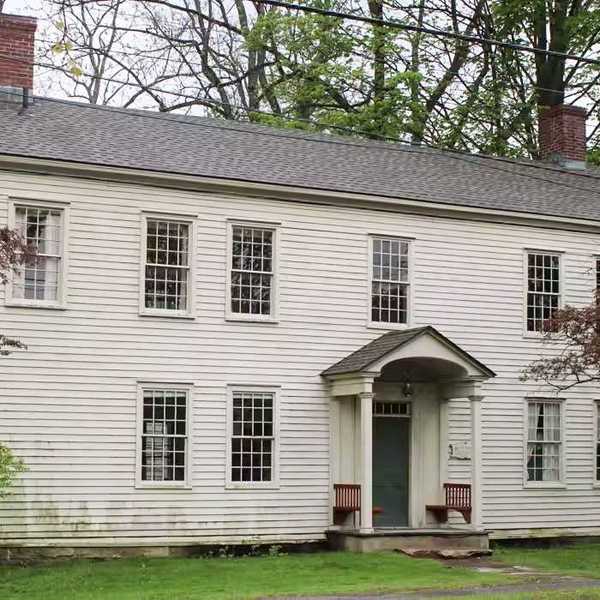
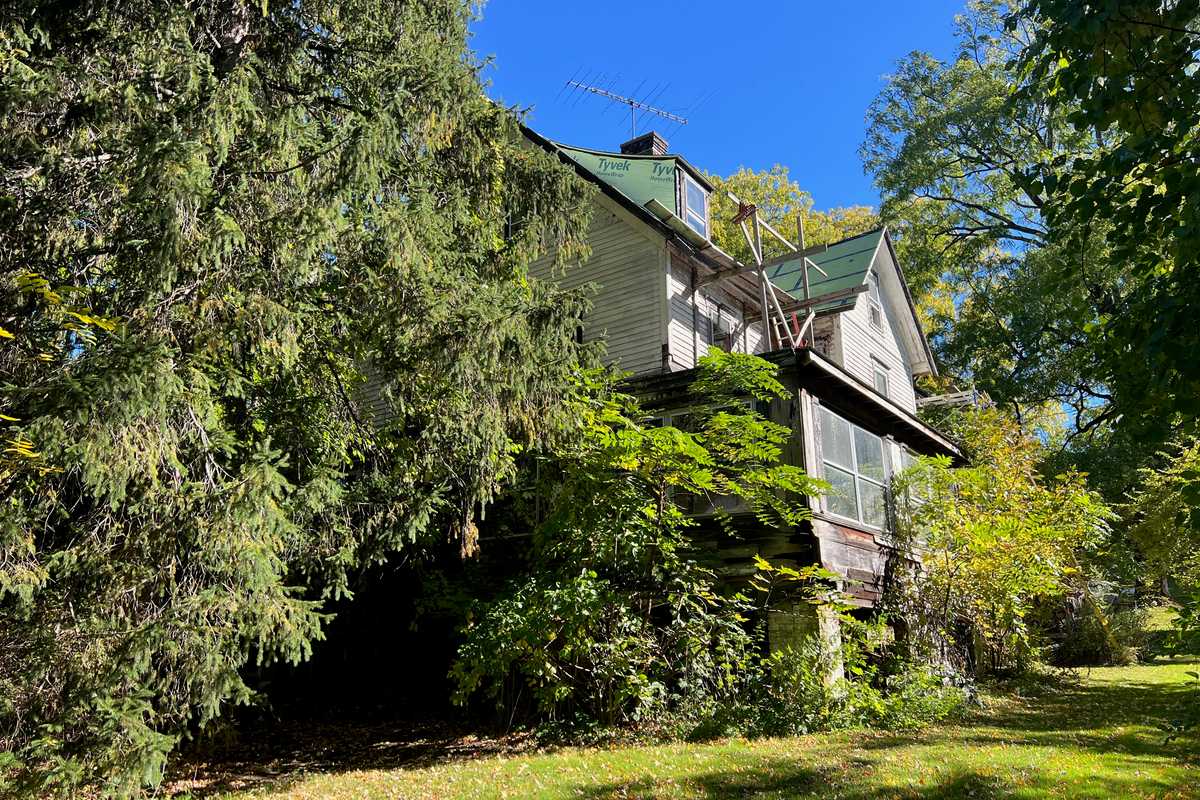
KENT — Town officials are moving to decide the future of the long-vacant, town-owned Swift House, with the Board of Selectmen setting an April 30 deadline to identify a path forward for the historic building.
During a special meeting held by the BOS after a tour of the building early Saturday afternoon, Feb. 7, both of which were open to the public, First Selectman Eric Epstein proposed that the town establish an “investigation committee” that would review options for the structure, which has been on the tax roll for years without a clear plan.
The new committee’s mission statement is “to provide input and assistance to the Selectman in the redesign, redevelopment, updated construction and Americans with Disabilities Act upgrades of the Swift House.” The committee is also charged with finding avenues to sell the building if the town decides to “dispose” of the property as a municipal building.
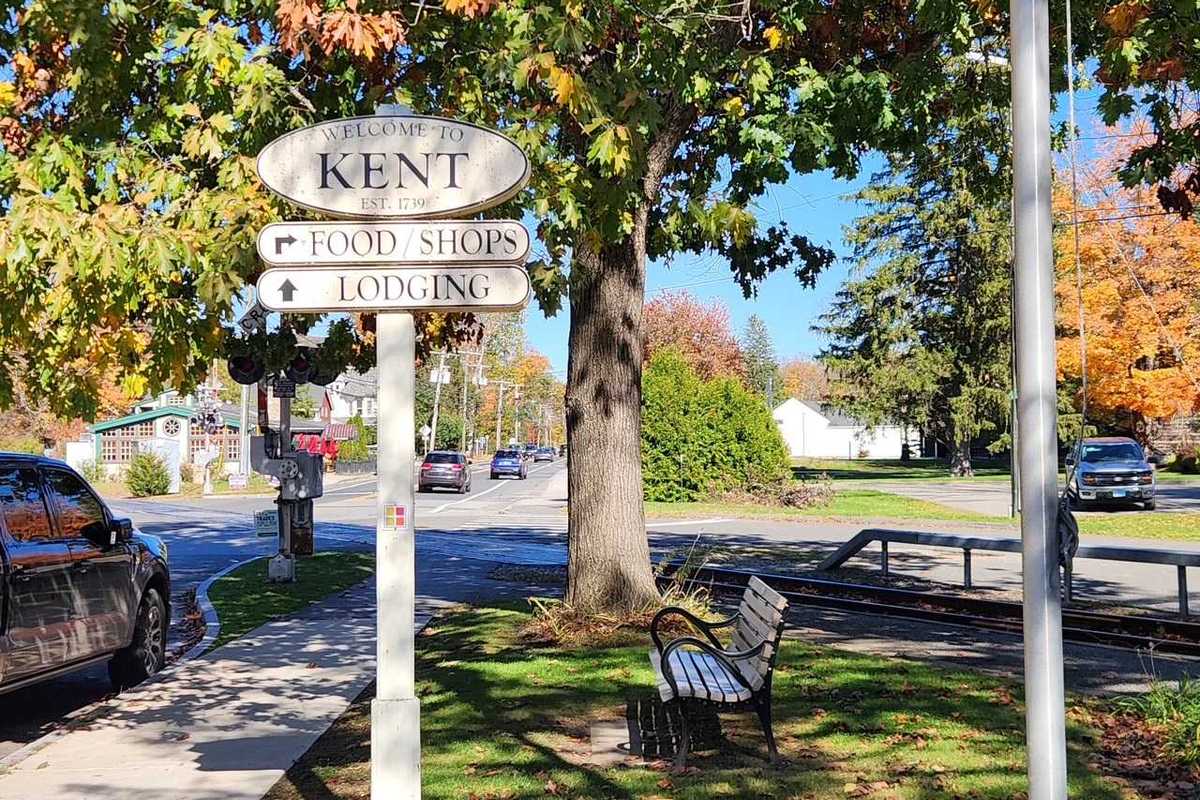
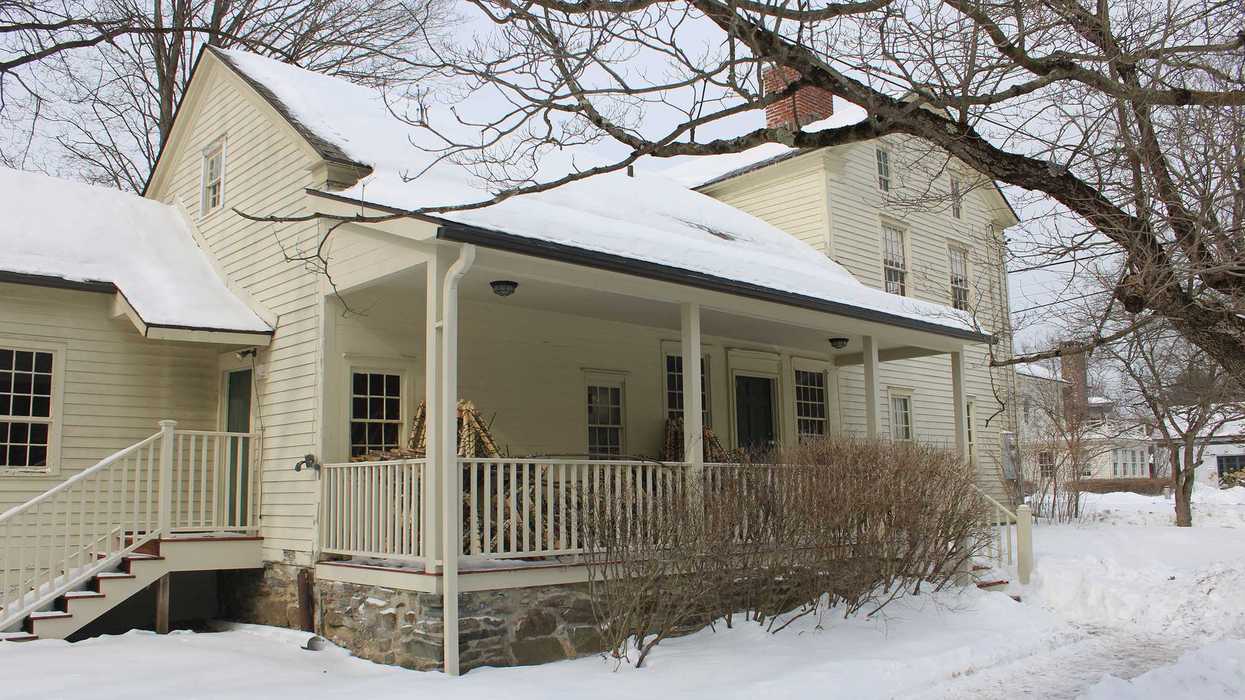
The 18th century landmark house — located prominently next to the four corners intersection of Route 7 and Route 341 in the center of town — effectively “closed” during the COVID-19 pandemic and never reopened, though the Kent Chamber of Commerce has used several rooms for storage since. Prior to the closure, the Chamber held an office in the building, and before that the Kent Historical Society was based there before moving out in 2013. The building was a meeting place for the community and civic groups after it was restored in the 1970s, and has also had sections used as residential apartments.
The tight April 30 deadline is intended to ensure a strategy is in place in time for budget line adjustments in May, Epstein explained. The new committee, which was voted through unanimously, will include selectman Lynn Harrington, a member of the Board of Finance, and five members of the public appointed by the BOS.
Harrington emphasized that the new committee will take its responsibilities seriously. She said the findings will “have to be concrete… with facts and force behind them.”
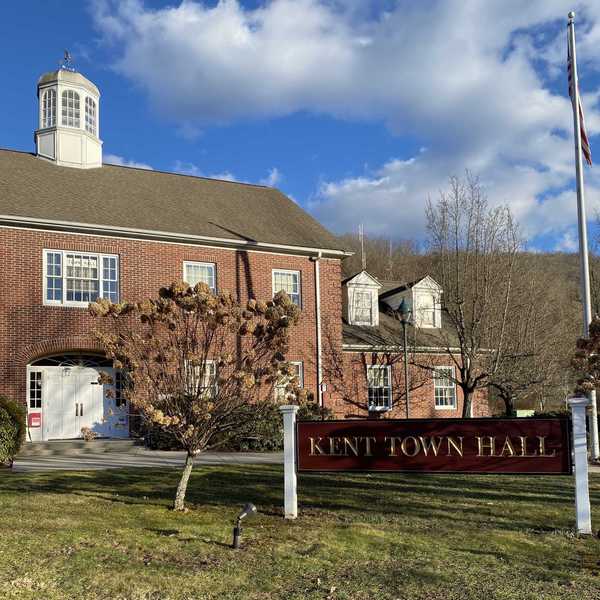
Matt Starr, a Kent resident, was present for both the tour and subsequent meeting. At Town Hall, he said he was grateful to Kent’s leadership for inviting the public – literally – into the buildingas it works towards a solution, but that he has grown weary of the uncertainty. “There’s no plan but we’re being taxed on it,” he said.
During the 2025 round of the state’s Small Town Economic Assistance Program grants, commonly known by the acronym STEAP, the town applied for $1 million in funding to convert the first floor into several wings that would house the Social Services Department, the food pantry and event spaces, but was denied the funding.
The current draft Five Year Capital Plan includes $425,000 for rehabilitation of the Swift House, a figure that will be subject to change based on the committee’s recommendations. Voters will consider the capital plan at the May town meeting.
For some, preservation is paramount
Chris Adams, new chair of the Kent Historical Society, and Marge Smith, curator for the Society, also joined the two part meeting. Both emphasized that their top priority for the building is to place a preservation easement on the deed that would prevent it from being demolished, even if it were sold. To do this, the two indicated that a strong first step toward that goal is to get the building listed on the National Register of Historic Places, which the Society is actively pursuing.
The Swift House was visited in April 2024 by officers from the State Historic Preservation Office, commonly known as SHPO. Following the visit, SHPO endorsed the effort:
“This property is an integral part of the historic center of the town of Kent and exhibits architectural quality that contributes to Connecticut’s rich historic landscape,” reads a September 2024 letter from Jenny Scofield, Deputy State Historic Preservation Officer.
Smith led the tour of the house, attended by the selectmen and eight or so members of the public, in which she highlighted the building’s unique construction.
Hunched over in the dusty, cramped cellar, she told attendees, “This is the oldest part of the building,” pointing to original stonework on the walls. “It’s a great example of early Yankee frugality,” she said, noting that subsequent owners used structurally sound components already there when imagining their own constructions.
Even today, “it has good bones,” Smith said. Career contractor and Planning and Zoning Commission member Chris Harrington, who attended the tour, affirmed that the chestnut timber frames supporting the roof are “in excellent shape.”
After the tour, Smith shared that while a place on the National Register will help the town find grant funding for renovations, there may be other ways to finance construction.
The original structure on the site was an 18- by 20-foot dwelling built by Jabez Swift, who moved to Kent in 1746 with his family. He had a brother, Nathaniel, who lived and is buried in nearby Warren and would have certainly visited the Swift House, Smith explained.
Nathaniel has a very prominent descendant, who Smith and Adams upheld is a noted preservationist: singer-songwriter Taylor Swift.
Swift is his great-great-great-great-great-granddaughter, and the two said that while far from a guarantee, they are hopeful that the family may take interest in the preservation project if they can be reached.
Aside from the popstar, another member of the Swift family is already invested in the building’s continued existence. Elizabeth Swift, originally from Lakeville and now living in Warren, is a direct descendent of Jabez and his son Heman, a prominent colonel in the Revolutionary War who grew up in the Swift House.
She attended both the tour and following meeting at town hall, saying she hadn’t been inside the ancestral home in many years.
“I’d love to see it preserved,” Swift said. “Our country doesn’t appreciate history enough.”
Lakeville Journal
Legal Notice
The Audit report for the Town of Sharon for the fiscal year ending June 30th, 2025 is on file for public inspection in the Town Clerks office during regular office hours and online at sharonct.gov.
Bianca DelTufo
Sharon Town Clerk
03-12-26
Legal Notice
The Planning & Zoning Commission of the Town of Salisbury will hold a Public Hearing on Special Permit Application #2026-0309 by owner David Mabbott for a detached apartment on a single-family residential lot and a new structure that cannot be placed in a buildable area at 1 Elman Drive, Salisbury, Map 25, Lot 12 per Sections 208, 302.5 and 302.6 of the Salisbury Zoning Regulations. The hearing will be held on Monday, March 16, 2026 at 6:45 PM. There is no physical location for this meeting. This meeting will be held virtually via Zoom where interested persons can listen to & speak on the matter. The application, agenda and meeting instructions will be listed at www.salisburyct.us/agendas/. The application materials will be listed at www.salisburyct.us/planning-zoning-meeting-documents/. Written comments may be submitted to the Land Use Office, Salisbury Town Hall, 27 Main Street, P.O. Box 548, Salisbury, CT or via email to landuse@salisburyct.us. Paper copies of the agenda, meeting instructions, and application materials may be reviewed Monday through Thursday between the hours of 8:00 AM and 3:30 PM at the Land Use Office, Salisbury Town Hall, 27 Main Street, Salisbury CT.
Salisbury Planning & Zoning Commission
Robert Riva, Secretary
03-05-26
03-12-26
Legal Notice
The Planning & Zoning Commission of the Town of Salisbury will hold a Public Hearing on Special Permit Application #2026-0310 by owner Congregational Church of Salisbury, Inc. for a use rendering more than 30% of the total lot area in impervious surfaces and retaining less than 30% of the total lot area in vegetative ground cover associated with sidewalk construction at 30 Main Street, Salisbury, Map 54, Lot 78 per Sections 403.4.c and 403.4.d of the Salisbury Zoning Regulations. The hearing will be held on Monday, March 16, 2026 at 6:45 PM. There is no physical location for this meeting. This meeting will be held virtually via Zoom where interested persons can listen to & speak on the matter. The application, agenda and meeting instructions will be listed at www.salisburyct.us/agendas/. The application materials will be listed at www.salisburyct.us/planning-zoning-meeting-documents/. Written comments may be submitted to the Land Use Office, Salisbury Town Hall, 27 Main Street, P.O. Box 548, Salisbury, CT or via email to landuse@salisburyct.us. Paper copies of the agenda, meeting instructions, and application materials may be reviewed Monday through Thursday between the hours of 8:00 AM and 3:30 PM at the Land Use Office, Salisbury Town Hall, 27 Main Street, Salisbury CT.
Salisbury Planning & Zoning Commission
Robert Riva, Secretary
03-05-26
03-12-26
Lakeville Journal
Hector Pacay Landscaping and Construction LLC: Fully insured. Renovation, decking, painting; interior exterior, mowing lawn, garden, stone wall, patio, tree work, clean gutters, mowing fields. 845-636-3212.
Gardeners needed for native plant design business: March 15- December 1st. Must be physically fit and dependable. Call for interview 347-496-5168. Resume and references needed.
Weatogue Stables in Salisbury, CT: has an opening for experienced barn help for Mondays and Tuesdays. More hours available if desired. Reliable and experienced please! All daily aspects of farm care- feeding, grooming, turnout/in, stall/barn/pasture cleaning. Possible housing available for a full-time applicant. Lovely facility, great staff and horses! Contact Bobbi at 860-307-8531. Text best for prompt reply.
PUBLISHER’S NOTICE: Equal Housing Opportunity. All real estate advertised in this newspaper is subject to the Federal Fair Housing Act of 1966 revised March 12, 1989 which makes it illegal to advertise any preference, limitation, or discrimination based on race, color religion, sex, handicap or familial status or national origin or intention to make any such preference, limitation or discrimination. All residential property advertised in the State of Connecticut General Statutes 46a-64c which prohibit the making, printing or publishing or causing to be made, printed or published any notice, statement or advertisement with respect to the saleor rental of a dwelling that indicates any preference, limitation or discriminationbased on race, creed, color, national origin, ancestry, sex, marital status, age, lawful source of income, familial status, physical or mental disability or an intention to make any such preference, limitation or discrimination.
MT RIGA LAKEFRONT CABIN: Private beach, canoe, kayaks, fishing $1,275 / Week 585-355-5245.
D.H. Callahan
Contemporary chamber musicians, HUB, performing at The Clark.
Northwestern Massachusetts may sometimes feel remote, but last weekend it felt like the center of the contemporary art world.
Within 15 miles of each other, MASS MoCA in North Adams and the Clark Art Institute in Williamstown showcased not only their renowned historic collections, but an impressive range of living artists pushing boundaries in technology, identity and sound.
MASS MoCA is known for its 20th-century holdings spread throughout a sprawling complex of industrial brick buildings. Installations by Sol LeWitt and James Turrell have permanent homes there. Just down the road in Williamstown, the Clark features masterworks by Winslow Homer, Frederic Remington, John Singer Sargent and Claude Monet.
But what visitors might not immediately associate with those established names is how deeply both institutions invest in art happening right now.
On Saturday afternoon, a panel of young artists discussed their relationships with art, identity and technology as part of MASS MoCA’s “Technologies of Relation” exhibition, which opened that evening. The artists represented a broad range of cultural backgrounds, drawing on ancestry while exploring the future of art and technology.
The work itself ran the gamut: wax relief paintings, stained glass, interactive video and sculptural installations. One immersive piece automated the traditional Armenian practice of reading fortunes from coffee grounds. Particularly striking were Roopa Vasudevan’s hand-drawn QR codes and Taeyoon Choi’s large-scale weavings of binary code.
Opening the same night was Zora J. Murff’s “RACE/HUSTLE.” Through photographs, paintings and installations, Murff explores the wide-ranging and sometimes violent implications of being Black in America today. Each piece — whether confronting the rise of white supremacy or examining stereotypes imposed on Black communities — carries razor-sharp visual commentary designed to unsettle.

On Sunday, the Clark continued the contemporary thread. A small exhibition of work by Raffaella della Olga, titled “Typescript,” features intricate patterns created using a typewriter on varied paper surfaces. The effect seems almost impossible until viewers watch a video of della Olga loading her typewriter with 140-grit sandpaper and typing in a hypnotic rhythm. Though the typewriter is considered obsolete technology, she continues to find new applications for it, completing some of the works in recent months.
Next door in the Clark auditorium, HUB New Music performed works written specifically for its unusual instrumentation: violin, cello, clarinet and flute. While that combination may not stand out to casual listeners, relatively little classical repertoire exists for it. The ensemble regularly commissions composers to expand the possibilities.
The results were striking. From the opening notes of Francisco del Pino’s “Passacaglia,” the quartet’s command and layered repetition pulled unexpected emotion from the audience.
After three pieces came the world premiere of Daniel Wohl’s “Mirage,” a roughly 25-minute work accompanied by digital blips, static and electronic textures evoking radio transmissions and UFO lore. Hearing four virtuoso musicians extract entirely new sounds from traditional instruments echoed the weekend’s larger theme: old tools made new again.
Like della Olga’s typewriter, Vasudevan’s QR codes or Murff’s charged imagery, the performances demonstrated that contemporary art often grows from familiar materials — reimagined.
The old masters will always draw visitors to these institutions. But when living artists command equal attention, this quiet corner of the Berkshires feels less like the middle of nowhere and more like a creative epicenter.
D.H. Callahan is a voice actor, creative director and trail steward. He lives with his artist wife in West Cornwall, Connecticut.

Want more of our stories on Google? Click here to make us a Preferred Source.
Aly Morrissey
Francesca Donner, founder and editor of The Persistent. Subscribe at thepersistent.com.
Francesca Donner pours a cup of tea in the cozy library of Troutbeck’s Manor House in Amenia, likely a habit she picked up during her formative years in the United Kingdom. Flanked by old books and a roaring fire, Donner feels at home in the quiet room, where she spends much of her time working as founder, editor and CEO of The Persistent, a journalism platform created to amplify women’s voices.
Although her parents are American and she spent her earliest years in New York City and Litchfield County — even attending Washington Montessori School as a preschooler — Donner moved to England at around five years old and completed most of her education there. Her accent still bears the imprint of what she describes as a traditional English schooling.
Today, she and her family call Sharon, Connecticut, home. While she still travels frequently to Manhattan, she embraces the contrast between city and countryside.
“For me, it’s all about the contrast,” she said, adding that she is friendly and curious about people here in a way that doesn’t feel natural in the city. “I want to know who you are, what you do, and why you’re here. You end up meeting these really interesting people.”
As a longtime editor in newsrooms like The Wall Street Journal, The New York Times and Forbes, Donner said she began to notice something unsettling about how stories were framed, and whose voices were missing.
“It’s just the way news is done,” she said. “It’s the DNA of what we deem newsworthy and important in mainstream media.”
The problem, she explained, isn’t that women aren’t covered at all. It’s that when women are covered, it’s often in a stereotyped way. Women are frequently framed through familiar narratives – the gender pay gap, unpaid labor, caregiving – important issues that persist, she said, but are often treated as repetitive or secondary. Meanwhile, the stories deemed front-page worthy tend to revolve around power, economics, war and politics — and men.
“If we don’t make a deliberate effort to cover women, women won’t be covered,” Donner said.
The issue isn’t unique to any outlet, she stressed. “It’s just the way news is done.”
But that DNA — who gets quoted and whose experiences are centered — has consequences.
And for Donner, that realization demanded a response.
Enter The Persistent.
Founded in 2024, The Persistent was built around what Donner calls a simple but deliberate premise.
“Women don’t get covered in the same way men get covered,” she said.
The goal isn’t to exclude men or create a siloed “women’s section.” Instead, Donner said, it’s about correcting an imbalance by putting women at the center of the story.
Describing the approach as a reframe, this means expanding who is quoted as an expert. It means spotlighting women in business, politics, culture and global affairs. It also means examining major news stories through a lens that mainstream outlets often overlook.
“What we can add,” she said of The Persistent, “is perspective.”
Now approaching its second year — a milestone that will be celebrated next month — the publication operates with an all-women team of writers, editors and illustrators based across the world. The team meets regularly over Google Meet.
“They’re awesome,” Donner said of the editorial meetings. Some of her staff are mothers, some are not. All bring lived experiences to the table. Donner has intentionally created a newsroom culture that balances rigor with support.
“If your writing doesn’t measure up, I’m going to tell you,” she said plainly. “But it’s not a battle. It’s a partnership.”
Beyond publishing stories that matter, Donner wants contributors to be seen.
“I don’t just want people to read the story and forget who wrote it,” she said. “We can do a lot better if we amplify each other.”
As a woman, Donner rejects the idea that success is finite. She wants everyone to have a slice of the pie.
“Just make the pie bigger,” she said. “Bring more seats to the table. Make it richer.”
Donner credits her “mum” for articulating what would become her professional identity.
“You are what you can’t help doing,” her mother used to say.
Today, without hesitation, Donner said she can’t help being an editor.“My identity as an editor is very strong,” she said. Editing, she explained, is less about correcting typos and more about building and shaping ideas.
“Sometimes I imagine this physical movement of cracking something open,” she gestured.
That instinct traces back to childhood. She recalls sitting in a classroom around age 10, listening to a classmate read a short story aloud. For Donner, that moment crystallized something fundamental.
“Someone else’s words made me just sit up straight in my chair and think, wow, that is so good.”
Today, whether she’s in a historic manor house in Amenia or on a Google Meet with her team across the globe, that instinct remains the same: crack the story open, elevate the unheard voice and reframe the narrative.
Natalia Zukerman
On March 7, Berkshire Opera Festival will bring “Winterreise” to Studio E at Tanglewood’s Linde Center for Music and Learning, with baritone Jarrett Porter and BOF Artistic Director and pianist Brian Garman performing Franz Schubert’s haunting 24-song setting of poems by Wilhelm Müller.
A rejected lover. A frozen landscape. A mind unraveling in real time. Nearly 200 years after its premiere, “Winterreise” remains unnervingly current in its psychological portrait of isolation, heartbreak and existential drift.
Porter, praised by Opera News for his “imposing baritone” and “manifest honesty,” has built his career on major European opera stages, including Oper Frankfurt. But recital work, he says, is closest to his heart.
“I love to recital. If I were to pick my career, I would be doing some opera and mostly recital,” he said. “I think there can be difficulty with grabbing an audience in a recital, but this is one of the greatest pieces to do so because it is so psychological, so powerful, so universally moving.”
Unlike opera, there are no sets in a recital, no costumes or lighting cues to lean on. “The singer with no sets or costumes is left to create a kind of one-man show,” Porter said. His solution is internal. “The way that I process learning something like this and having the responsibility to hold an audience without set or costumes or lights or props is to stage it in my mind. Each song has an identity.”
Schubert’s writing, Porter insists, needs no adornment. “Schubert does an amazing job at setting the scene, and for me, you don’t need anything else. I feel like anything added to it would be almost subtracting. I’d rather just see the singer and the pianist the way that Schubert intended it to be.”
At the center of “Winterreise” is the wanderer, an unnamed figure moving through snow and memory after a failed love affair. For Porter, the character is both specific and universal. “There’s so much ambiguity in the piece,” he said. “We don’t know all of the answers in the first song. We don’t really know who this person is. There are tidbits of information dropped throughout each song. And I think the tendency is to put a narrative on that and to try to connect the dots rather than embracing what it is. The ambiguity is actually where the beauty is.”
That ambiguity extends to the cycle’s ending and the encounter with the eerie hurdy-gurdy player in “Der Leiermann.” Does the protagonist die? “I think one could make that argument,” Porter said. But he resists a neat conclusion. “Death is right in front of him. Death is actually the most peaceful answer to his problem and it’s not given to him. There’s something more, a deeper level.”
Rather than a literal death scene, Porter sees a reckoning. “For me, he’s not granted the easy way out. He has to sort of come to terms with being nothing and having no real skill as a songster or a poet or a wanderer.” The winter landscape, he suggests, mirrors the psyche: “The winter is sort of the mirror of his heart.”
In shaping the emotional arc across all 24 songs, Porter leans into uncertainty rather than resolution. “What I relate to in this piece is that in life, you don’t know what’s going to happen. And you don’t know the next day. Even in tragedy—especially in tragedy—there’s so much question.”
Porter performed Gounod’s “Faust” at BOF in 2024 with Garman conducting but this will be the first time the two will be collaborating with Garman at his instrument. “I love making music with Brian,” said Porter. “I’m a huge fan of his musicianship. I think we’re sort of bitten by the same bug that Schubert is, and so I was super honored that he asked me to do this with him.”
For tickets, visit berkshireoperafestival.org
Sally Haver
Christine Gevert, artistic director, brings together international and local musicians for a season of rare works.
Crescendo, the Lakeville-based nonprofit specializing in early and rarely performed classical music, will close its 22nd season with a slate of spring concerts featuring international performers, local musicians and works by pioneering composers from the Baroque era to the 20th century.
Christine Gevert, the organization’s artistic director, has gathered international vocal and instrumental talent, blending it with local voices to provide Berkshire audiences with rare musical treats.
“The biggest event of this part of our season is our April 25 and 26 concerts, with the US premiere of ‘A Jewish Cantata’ and the iconic ‘Misa a Buenos Aires,’” said Gevert. “The composer, an internationally renowned musician, will come and share the podium with me.”
Among the other season highlights are concerts showcasing the works of two trailblazing female musical innovators, Francesca Caccini, the early Baroque composer, poet and singer; and Wanda Landowska, the 20th-century virtuoso who single-handedly brought the harpsichord back from obscurity. Also not to be missed is the May 30 concert, Bach’s Motets in Concert, featuring all six of Johann Sebastian Bach’s surviving motets, sung by four eight-part double choruses and accompanied by period instruments, widely considered the pinnacle of Baroque choral music.
For a schedule of concerts and tickets, visit crescendomusic.org

Want more of our stories on Google? Click here to make us a Preferred Source.

Want more of our stories on Google? Click here to make us a Preferred Source.