Latest News
Annual cricket match raises record $7,570 for SVAS
Patrick L. Sullivan
Aug 12, 2026
LAKEVILLE — With funds finally tallied, organizers of the annual charity cricket match at Community Field announced the game raised $7,570 for the Salisbury Volunteer Ambulance Service on Saturday, June 27, more than twice the amount raised last year.
Club captain David Shillingford attributed the increase largely to support from sponsors, including local companies like B. Metcalf Paving, Elyse Harney Real Estate, Grasslands Dessert Cafe, Fern and Lakeville Books and Stationery, as well as national or global companies with local ties, like goodapple, Integrum, Capstone and Gooding Christie’s.
Ben Gore, a co-organizer of the match, said that while no players needed the services of SVAS this year, the event offered an opportunity to support the organization’s work within the community.
“We are hugely grateful for the generosity of our sponsors and the amazing work of SVAS’s all-volunteer team throughout the year,” Gore said. “We look forward to doing it all again in June 2027 with even more sponsors.”
Keep ReadingShow less
Readers enjoy farm-fresh bites at Scoville Memorial Library
Patrick L. Sullivan
Aug 12, 2026
Tomatoes, honey and preserves from Salmon Kill Farm are paired with bread during a library reading Aug. 8.
Patrick L. Sullivan
SALISBURY —Sungold tomatoes, fresh bread, honey and preserves proved tough competition for story time at the Scoville Memorial Library on Saturday, Aug. 8.
Bridget Lawrence-Meigs, farm manager at Fairfield Farm at The Hotchkiss School, arrived with tomatoes, honey and preserves from Salmon Kill Farm. She was joined by Jude Alexis and Anita van de Ven of Black Crust Bakery, and Children’s Services Coordinator Lyla DeRisi and a handful of youngsters who seemed more interested in sampling the goodies than in reading a story.
Three kinds of bread were paired with the tomatoes, honey and preserves, along with a little maple syrup that snuck into the mix, making for some innovative combinations.
Lawrence-Meigs said the tomatoes were grown in the greenhouse at Fairfield Farm. She cautioned they had not been individually washed, which didn’t seem to bother anyone.
Once the snacks were finished, the youngsters settled in for a reading as DeRisi read Janie Bynum’s “Otis,” about a pig who eschews the mud and prefers to stay clean.
The fastidious Otis has some trouble finding friends among the mud enthusiasts of his acquaintance, but it works out in the end.
Keep ReadingShow less
Rail history comes to life during revived Railroad Days in North Canaan
Ruth Epstein
Aug 12, 2026
Connor Maher peers out from the 1953 locomotive built for the Boston and Maine Railroad. He was part of a group that saved the car from being salvaged. It stopped by North Canaan’s Railroad Days this weekend on its way to a permanent home at the Danbury Railway Museum.
Ruth Epstein
NORTH CANAAN – Trains chugged into North Canaan Saturday for Railroad Days, delighting rail enthusiasts and visitors who simply enjoy the sights and sounds of the rails.
Visitors strolled the grassy area behind Canaan Union Depot, taking in the trains on display, while some ventured up steep steps to tour open cars.
Railroad Days began in the 1960s as a way to celebrate Canaan’s railroading heritage. The depot, built in 1872, became a focal point at the intersection of the north-south Housatonic Railroad and the east-west Connecticut Western Railroad. The Victorian structure helped fuel the town’s growth.
Eventually, it housed commercial enterprises until 2001, when it was heavily damaged by an arson fire. The town rallied to have it restored. Today, the depot houses railroad and accordion museums on the premises.
The Railroad Days celebration has ebbed and flowed over the years, but recently the town’s Events Committee revived the event with a stronger railroad presence.
One train that captured a lot of attention Saturday was the locomotive built for the Boston-Maine line in 1953 by EMD, a branch of General Motors. Connor Mahar of Madbury, N.H., and Mike Labouliere of Berlin, N.H., who work in the railroad industry, were there to explain its significance.
“It served a long life in freight yards to carry local freight in the Boston area,” Mahar said. “Then up to three years ago, it was used on a short line railroad in Pittston, Pennsylvania.”
The two share a passion for trains — Mahar owns one caboose and Labouliere owns two — and when they learned in the fall of 2023 that the locomotive was going to be scrapped, they dove into action to save it. They joined forces with others, calling themselves Team 1127, the number on the train. With help from individuals and groups, they were successful in reaching the goal of $65,000 needed to save it. The car will now have a home at the Danbury Railway Museum.
Both men said their love of trains began in their childhoods, fueled by their fathers.
“Railroads always had their own appeal,” Mahar said. “They’re often forgotten by preservationists who mainly concentrate on buildings. People forget they are the backbone of the country.”
Labouliere added, “They are still the most efficient way to move items.”

PJ Bailly, operations manager and rain master of Housatonic Railroad, was primarily responsible for gathering the participants for the event. Among those represented were the Danbury Railway Museum, Berkshire Scenic Railroad, Friends of the Valley in Essex, New Haven Technical Society, Naugatuck Railroad, Connecticut Operational Life Services, a Roger Williams train and the Falls Village-Canaan Historical Society.
The Housatonic Railroad recently purchased the Canaan Union Depot and is housing most of its operations there. The freight line extends from Pittsfield to Danbury, with a branch going east to Derby, covering a total of 50 miles in Connecticut and 36.5 in Massachusetts.
Bailly said Housatonic Railroad is working on new initiatives, including purchasing more EPA-efficient engines and upgrading its fleet. The railroad has bought five engines in the past two years and also plans to clean up the rail yards on Route 7 south of town.
“Housatonic aims to partner with, and cooperate with, the community,” Bailly said. “We’re trying to reach out. We’ll be offering a Hazmat training session in the near future and are planning other programs. We’re here today not just to show trains, but to support the town. It deals with us every day, so we’re trying to give back.”
The railroad also has job openings in several areas, and Bailly encouraged interested people to apply.
Keep ReadingShow less

Want more of our stories on Google? Click here to make us a Preferred Source.
Growing the next generation of local journalists
Lakeville Journal
Aug 12, 2026
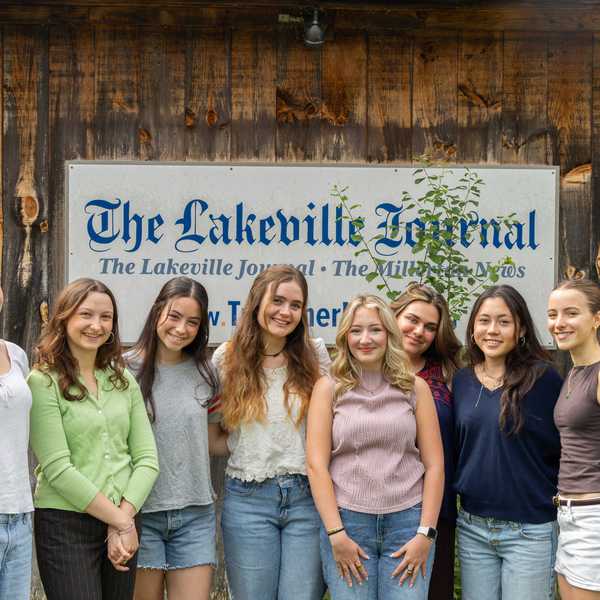
Every summer, our newsroom becomes more than a place where stories are written—it becomes a classroom, a workshop, and, we hope, the starting point for future careers in local journalism.
This year, eight interns joined The Lakeville Journal and The Millerton News for an intensive six-week experience that immersed them in community reporting. Three were high school students attending Housatonic Valley Regional High School, The Hotchkiss School and Loomis Chaffee School. The remaining five were college students from Ithaca College, Marist University, the University of Connecticut, Loyola University and Northwestern University.Although they arrived with different backgrounds and varying levels of journalism experience, they all shared a connection to the Northwest Corner of Connecticut or neighboring Dutchess County and a curiosity about the communities most call home.
Rather than watching from the sidelines, the interns became part of the newsroom. They covered local events, interviewed residents, wrote feature stories, attended meetings, and worked alongside our editors and reporters as they learned how local journalism comes together—from the first interview to the final edit. Along the way, they discovered that reporting is equal parts preparation, persistence, curiosity and listening.
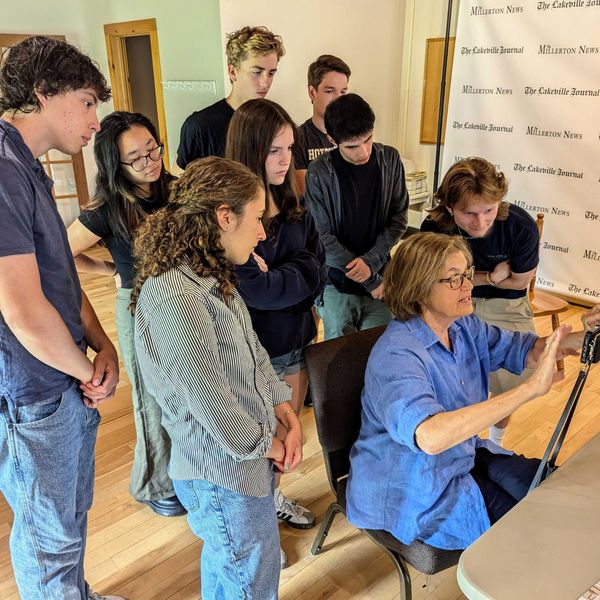
Their education extended well beyond reporting assignments. Throughout the summer, community leaders and media professionals volunteered their time to lead weekly workshops on subjects that every journalist should understand.
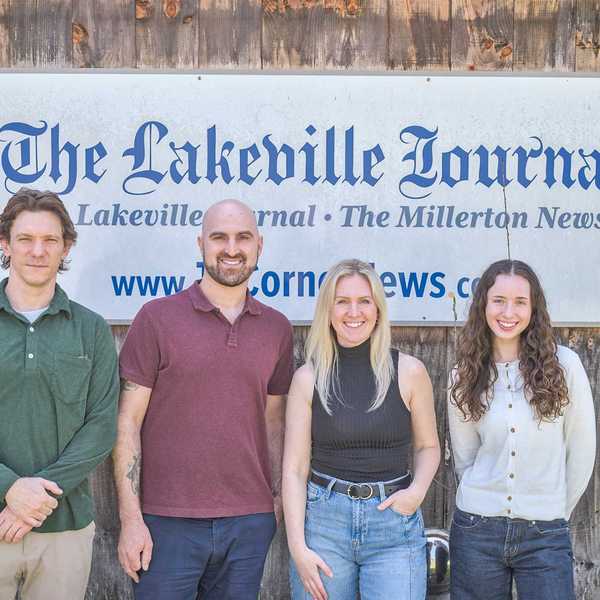
Attorney and LJMN Media Inc. board member Devereaux Chatillon explored media law and intellectual property. Veteran photographer Anne Day shared practical techniques for creating stronger images, even using a smartphone. Francesca Donner, former gender editor at The New York Times and founder of The Persistent, challenged the interns to think critically about female representation in journalism. Compass editor Natalia Zukerman discussed the art of interviewing, while our news editors Christian Murray, Aly Morrissey and Nathan Miller offered practical lessons in reporting, feature writing and the newsroom process.
Perhaps the greatest lessons, however, came from simply being out in the community.
Several interns told us they now pay far more attention to what’s happening around them than they did before the program. Others said the experience pushed them beyond their comfort zones, whether that meant approaching strangers for interviews or covering busy public events. One intern joked about discovering “there can be a lot of drama over a tennis court,” a reminder that every community has stories waiting to be uncovered. Another described the experience as “breaking the bubble”—seeing familiar towns through fresh eyes and recognizing the people and issues that shape everyday life.
This week, each intern shares what they learned during the summer on pages B1 and B2.
Programs like this depend on people who know that local journalism matters. We are deeply grateful to the William and Mary Greve Foundation and individual donors for their generous support of this year’s summer internship program. We also welcomed one intern through our partnership with Marist University, another investment in developing future journalists.
That investment couldn’t be more important.
Strong communities need strong, reliable local reporting and coverage of town halls, school boards, housing, healthcare, environmental issues, local businesses, sports, and the countless stories that rarely make national headlines but shape daily life here.
The newsroom will feel a little quieter when they head back to school, but we have every reason to believe we’ll be hearing from many of them again.
Keep ReadingShow less
Let's hear it - August 13, 2026
Lakeville Journal
Aug 12, 2026
This Week
With summer reading programs, including the Children’s Summer Reading Program at Scoville Memorial Library, wrapping up for the season, we’re curious about what our community has been reading.
What book has been your favorite summer read and why did you like it?
Send your responses to social@lakevillejournal.com by Monday, Aug. 17 at 10 a.m. or comment on Facebook or Instagram.
We’ll publish a selection in next week’s paper.
Last Week’s Question
Do you support speed cameras in our communities? Why or why not?
“Well, speed cameras, I understand the privacy concerns and it is a legitimate worry. Maybe we can pass legislation requiring warrants for governmental entities using the images for anything other than traffic citations. But speed limits are there for a reason, saving lives being a significant one. It is probably not a bad idea to encourage adherence and I can’t think of a better way to do so than by fines. I am a big believer in sin taxes — they are good way to generate needed revenue for our localities, and they are a tax of choice, not of obligation. That being said, if I am driving down the road, my blinker not flashing from a turn I made two weeks ago, not hogging the middle, keeping the traffic flowing, the authorities should be clasping me on the shoulder, murmuring, “Well done, elderly gentleman, well done!” Not handing me a ticket. Whatever, it’s fine. Just, just that simple justice demands, when somebody pulls out suddenly in front of me from Jackson Road and proceeds all the way to West Cornwall at some 15 to 20 miles below the limit, well, they should get nailed too.”
— Peter Demy, West Cornwall
“No. It’s an invasion of privacy and we never voted for it.”
— Rich Devman
“Protecting kids in school zones is something everyone can agree on. The question is whether we want more automated government surveillance or real law enforcement. Speed cameras may catch some speeders, but they also create privacy concerns, reduce due process, and can become revenue generators rather than safety tools. If a town truly wants safer roads, invest in better road design, visible police patrols, and stricter penalties for reckless drivers—not a network of cameras watching law-abiding citizens. Government should prove these cameras are about safety, not money, and keep them limited, transparent, and accountable.”
— Cluckers Farm
“Speeding cars is a problem on my tiny street. Too many of my neighbors seem to feel they’re at Lime Rock race track. If not speed cameras, maybe speed bumps. No one likes those either but they’re not invasive. Better yet—just slow down for god’s sake!!”
— Anita Holmes
“As we used to say in East Germany: “Stasi ‘raus!””
— Matthias Weiss
Keep ReadingShow less

Want more of our stories on Google? Click here to make us a Preferred Source.
loading


Tom Carley