NORTH CANAAN – Voices from Revolutionary War times welcomed guests to Cemeteries in Falls Village and North Canaan Sunday, June 14, as part of the towns’ continuing 250th anniversary celebration of the Declaration of Independence.
At Grassy Hill Cemetery in Falls Village, members of the Falls Village-Canaan Historical Society dressed in period costumes, gave biographical information about residents who served in the armed forces and on the home front.
Throughout the presentations, the guides reminded visitors that at the time of the Revolution, the current towns of North Canaan and Falls Village were one town, called Canaan.
Johanna Mann spoke about Thomas Judd (1754-1846). Born in Danbury, Judd enlisted in 1775 and served in New York City, Fort Ticonderoga and Canada. He also participated in the 40-day siege and capture of Fort Saint Jean in Quebec in 1775.
Judd returned to Danbury and civilian life, only to rejoin to the army in April 1777 after the British burned the town.
He settled in Canaan in 1802.
Judy Jacobs, dressed as Betsy Ross, told the story of Major John Webb (1756-1829). A member of Gen. Horatio Gates’ staff, Webb was present for two major events: the difficult winter of 1777-78 in Valley Forge, Pennsylvania, when Gen. George Washington’s troops were struggling with food shortages and freezing temperatures, and at West Point in 1780 when British spymaster John Andre was captured trying to get back to the British lines after a meeting with American tractor Benedict Arnold.
Webb moved to Canaan in 1794.
Bill Beebe had several ancestors buried at Grassy Hill. “There are 45 Beebes buried here, and I’ll be the 46th.”
Beebe spoke in front of the headstones of Lt. Asahel Beebe (1731-1806), Capt. Daniel Beebe (1744-1821) and Isaac Beebe (1972-1833).
He noted that Asahel Beebe had 24 children, many with similar names.
At Mountain View Cemetery in North Canaan, Bunny McGuire took on the role of Abigail Burrall Lawrence, the widow of Nehemiah Lawrence, a member of the Lawrence family that settled in Canaan. In 1778, the Connecticut General Assembly appointed him captain of the
North Company of the Canaan Alarm Company, which was not a regular military unit. Its members were charged with responding immediately when danger threatened.
“If an alarm was raised, they were to leave their homes, farms and businesses and march at once,” said Lawrence’s widow.
Pat Graf, speaking as Mary Rood, wife of Mariner Rood, Jr., described a town meeting held on Christmas Day 1780, when the citizens of Canaan elected Mariner to “class” the town.
That role carried great responsibility, she explained. “The town had to be assessed and organized so that men, provisions and resources could be fairly apportioned for the war effort.
Canaan may have been a rural community, but it was not insignificant in the war efforts. Farms supplied food to the Continental Army, iron furnaces produced materials essential to the war, and from the beginning of the revolution, the people of Canaan had shown strong support for the cause of American independence.



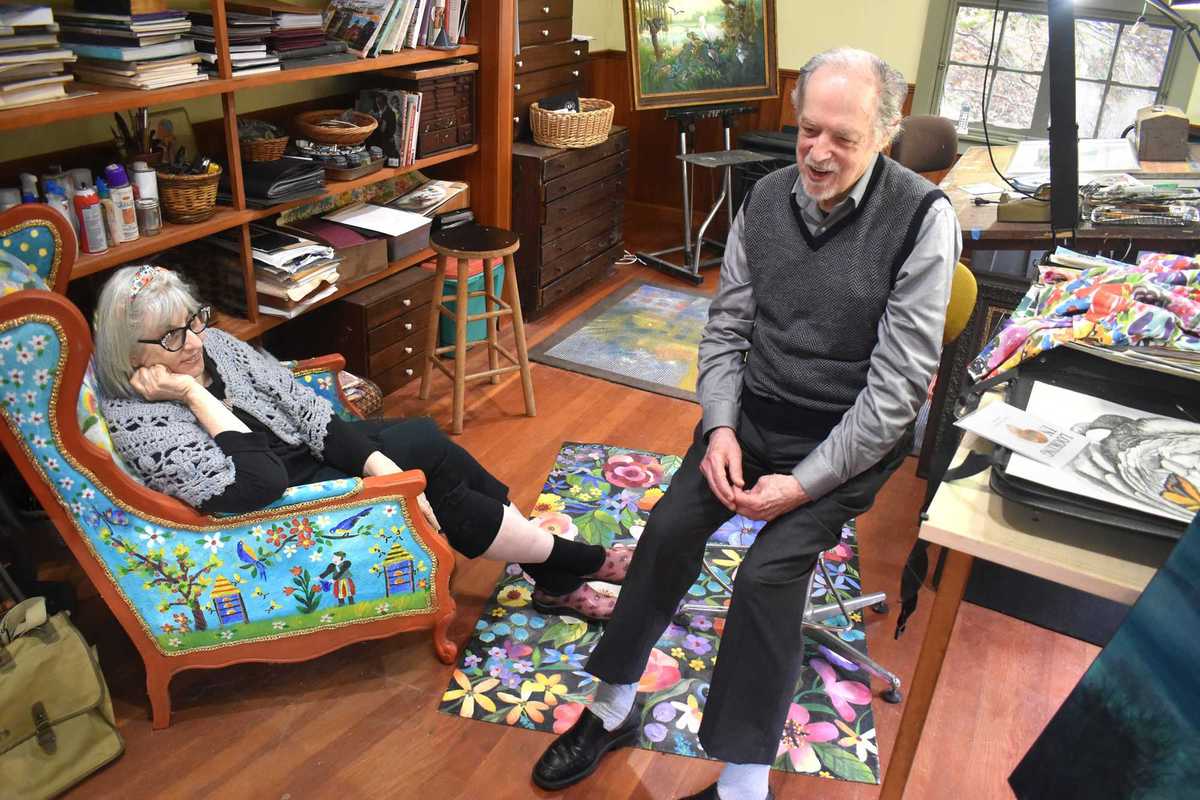
 Justine and Victor Valla in their studio with a painting of Victor’s,”Jonah and the Whale.” Robin Roraback



 A ceramic vase by Kathleen Heidemann.Provided
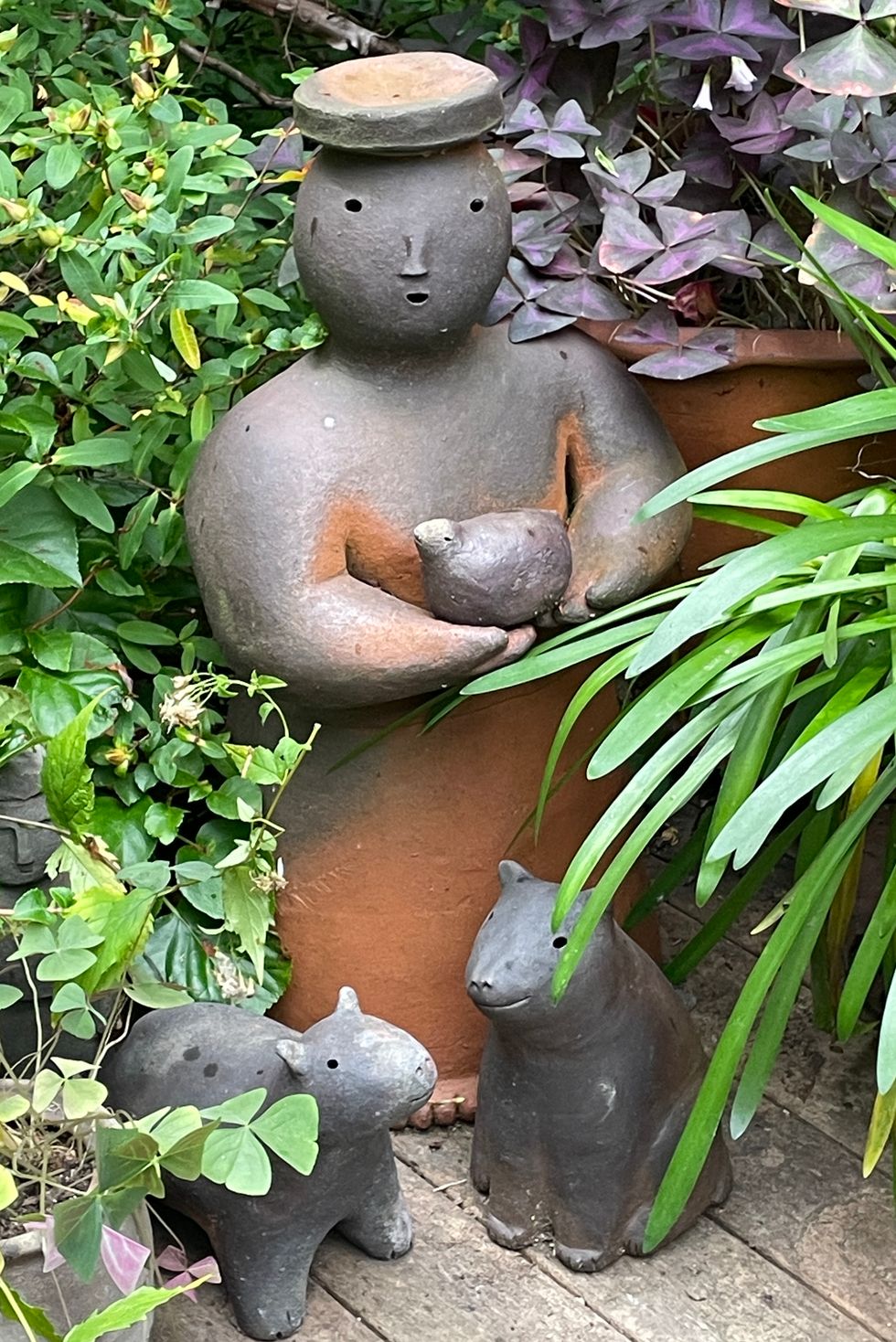 Joy Brown’s delightful ceramic sculptures.Provided