The college-age generation is grappling with inflation, increasing housing prices, climate change, and now mass corporate layoffs. In a world where geopolitical turmoil is increasing, the ground beneath their feet is shifting. Many believe their future is bleak.
My nephew, Joey, just got married. His wife lives with her parents, and he lives with his. While he makes good money as a pharmacy manager at a national chain drugstore, neither he nor his wife can afford even a down payment on a house in Long Island. They are moving in with the wife’s parents. Joey’s sister is also married with two children. They also live with their parents. Welcome to the American dream turned nightmare for almost 70 million young Americans.
The typical age range of Gen Z is 1997 to 2012. They are the demographic cohort succeeding Millennials and preceding Generation Alpha. They are the most racially and ethnically diverse generation in America, with 48% being non-white.
Almost all of this generation is highly active on social media. Almost 60% are planning to pursue a college education. They are just as likely to identify as Republicans, Democrats, or Independents. As such, the present populist upheaval the U.S. is undergoing takes an inordinate toll on them. It may be why 91% of Gen Zers report experiencing symptoms of stress and anxiety.
While Wall Street opened the year celebrating the promise of a bright future, thanks to AI. Opinion leaders predict that artificial intelligence, robots, and space, among other technological breakthroughs, will dramatically reshape the way the world works. For college grads, all they see is a no-fire, no-hire labor market where unemployment among workers ages 20 to 24 continues to rise. It is now to 5.3% and even worse for those younger than that.
The National Association of Colleges and Employers predict the entry-level hiring crisis will worsen this year, rating job prospects as poor or at best fair. At a recent gathering of employers at the Yale School of Management, 66% admitted they planned to cut jobs or freeze hiring.
With an economy that is expected to grow by 3% in 2026, one would have expected the opposite reaction, but then you would not be reckoning with the impact of artificial intelligence on the job market. Potential employers are concerned and uncertain about how AI might reshape the workforce over the next few years, and rightfully so.
Most analysts believe that many white-collar positions, especially at the entry level, will be replaced by technological advancement. Underscoring that concern, many corporate giants, including Amazon, UPS, Target, and Google, announced layoffs affecting more than 60,000 jobs. And to many, that is just the tip of the iceberg.
Faced with taking fast-food jobs at minimum wage and lacking work experience in their hoped-for professions, 3 in 5 Gen Z workers are looking elsewhere for a job with some kind of reasonable future. Almost half of these young workers believe the blue-collar jobs may offer better long-term security than corporate work in the technology fields. The top sectors pursued by Gen Z include plumbing, automotive repair, construction, and electrical work.
I happen to agree with that belief, but unfortunately, Gen Z applicants face the same barrier to entry in their white-collar arena—lack of experience. Many job applicants, regardless of industry, are now required to have at least 3 years of experience and up to 5 years before being considered.
The lure of six-figure salaries in the blue-collar area is attracting more Gen Zs to vocational schools. However, what many conveniently forget is that earning that kind of take-home pay requires years of experience, a substantial investment in personal tools and equipment, and serious wear and tear on the body.
As I write this, in the next room, a 65-year-old builder I’ll call Scott, who is going in for his second knee replacement next month, is building another room in our condo. Assisting him is a young GenZer. There is a constant stream of chatter as Scott talks through his drywalling process. His helper listens intently. They seem eager to learn and ask questions as they work. He did the same when he placed the struts and erected the wall.
For several years, Scott has been involved in a local high school program that teaches vocational school grads his business, while they gain on-the-job experience and a paycheck. Scott and others like him are providing a solution one day at a time. He is one answer to the dilemma facing this struggling generation. This country needs more Scotts to hire and teach a young workforce in need.
Next week, I will highlight one area where many Gen Xers have found an alternative to home ownership. It holds risks but doesn’t cost an arm and a leg to get involved.
Bill Schmick is a founding partner of Onota Partners, Inc., in the Berkshires.Bill’s forecasts and opinions are purely his own and do not necessarily represent the views of Onota Partners, Inc. (OPI).

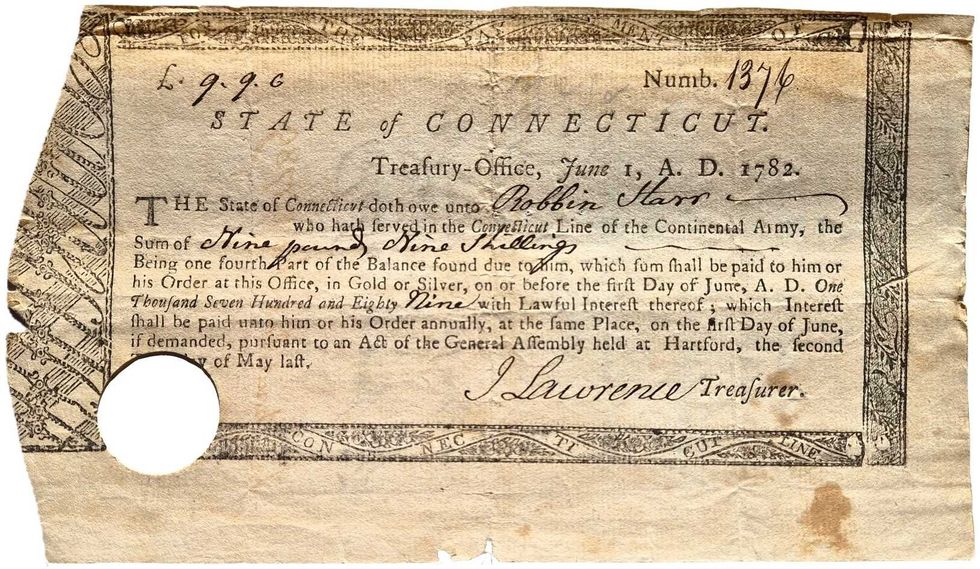 Pay Bill for Robin Starr’s service in the Continental Army.Courtesy the Alex Breanne Corporation
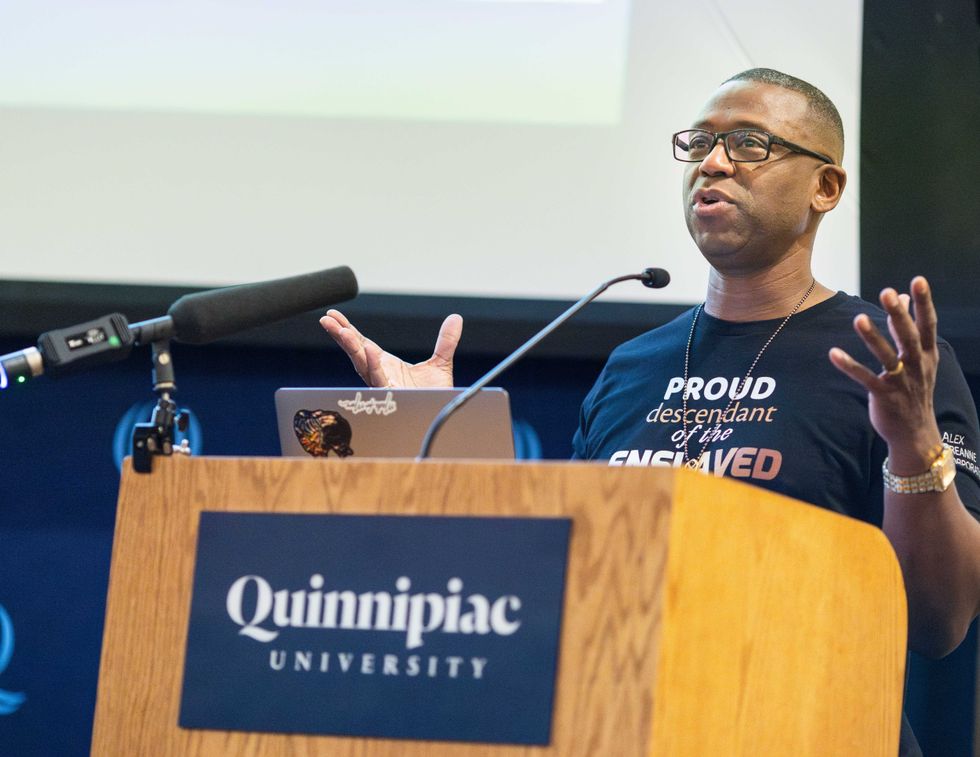 John Mills speaking at Quinnipiac University.Courtesy the Alex Breanne Corporation
 Stephanie Saetta,with her rescue dog George and Blue (left), a shepherd mix awaiting his forever home.Madi Long
 Blue, a 7 year-old Shepard mix, is waiting for his forever home. Madi Long