Genealogist explains challenges uncovering Revolutionary-era records

Genealogist explains challenges uncovering Revolutionary-era records

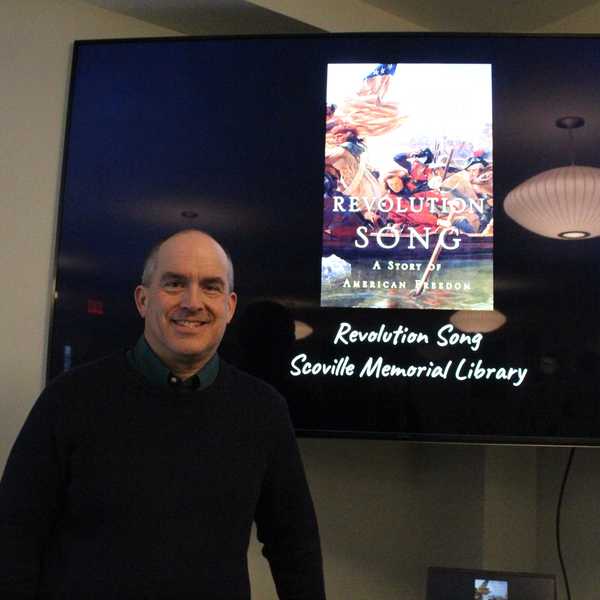
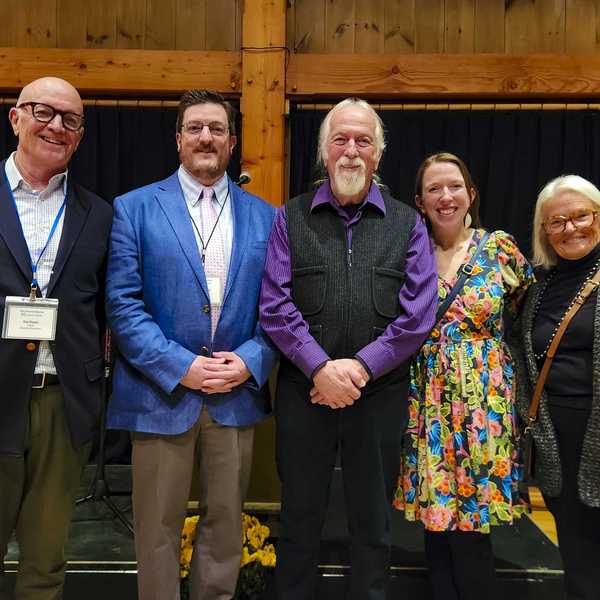
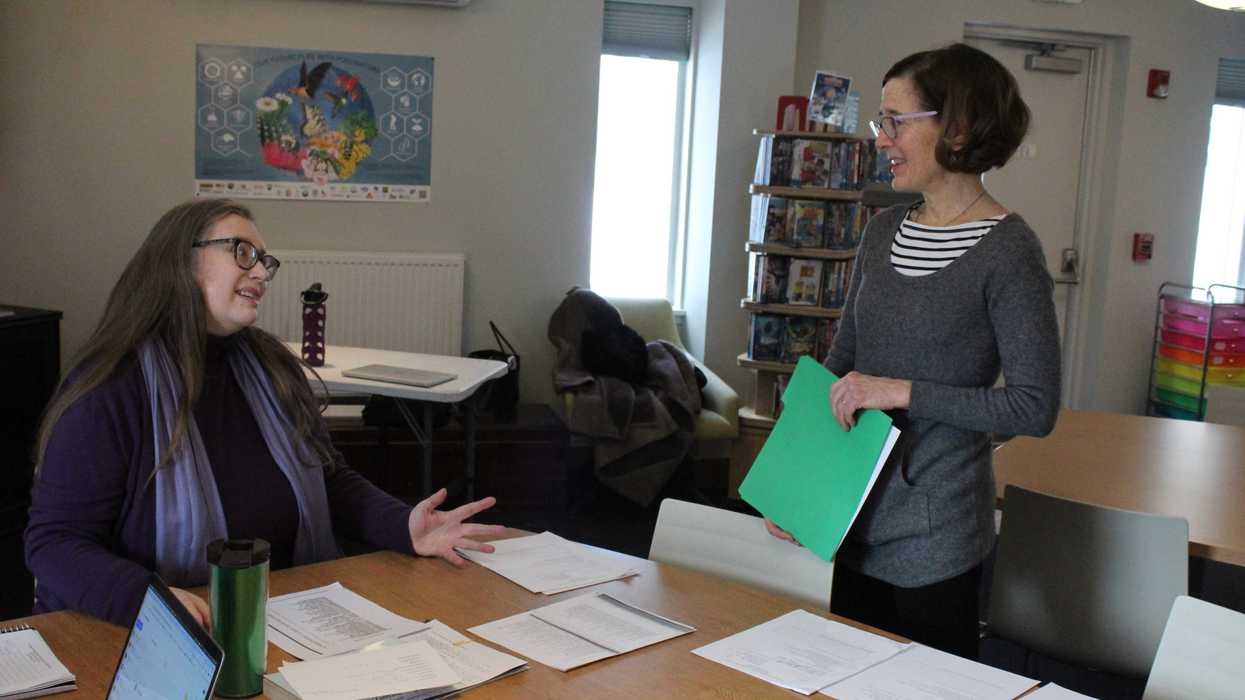
Jane Sellery, left, and Karen Vrotsos discussed genealogy practices at the Scoville Memorial Library Thursday, Jan. 29.

Patrick L. Sullivan

Genealogist Jane Sellery guided seven researchers through the challenges of tracing Revolutionary War–era Salisbury residents during a program at Scoville Memorial Library on Thursday, Jan. 29.

The session was the second in a series tied to Salisbury READS, a community reading program centered on “Revolution Song” by Russell Shorto. The program is sponsored by the library and the Salisbury Association Historical Society.

Participants researched individuals whose gravestones are located in the cemetery behind Salisbury Town Hall, uncovering firsthand the complications that often arise in historical records.

Tracy Flynn of Salisbury researched Jacob Davis — who was also known as Jacobus Davis — and found that even basic identification can be difficult. In addition to variant spellings, Flynn discovered what appeared to be two men with the same name, likely father and son. One Jacob Davis lived from 1737 to 1797, while the second lived from 1762 to 1841, spanning the Revolutionary War period and beyond.

Sellery said such confusion is common. Birth and death dates can be hard to read on worn gravestones, and even when legible, the dates do not always match written records.

Census records present additional challenges.

Sellery noted that the 1900 census is often off by one year, depending on whether a person was born before or after June 1. Wording also matters: a record stating someone was “in the 68th year” means the person was 67 at the time.

The 1890 census is largely unavailable due to a warehouse fire in St. Louis that destroyed most of the records.

Other obstacles include inconsistent name spellings — such as “Hayes” and “Hays” — difficult handwriting, and records written in foreign languages or alphabets. Sellery said artificial intelligence can help in some cases, such as translating images of documents written in the Cyrillic alphabet.

Addressing immigration records, Sellery said the popular belief that officials routinely Anglicized immigrants’ names is largely inaccurate. Facilities such as Ellis Island relied on passenger manifests from incoming ships, which did not always match later naturalization records.

“It wasn’t, ‘Okay, we’re going to make you Green,’” Sellery said.

She added that some immigrants intentionally changed or concealed their identities, while others adopted American-sounding names to assimilate. In the 1920s, name changes became more common amid fears of prejudice, a trend that reversed in the 1930s and 1940s.
Latest News

In remembrance:
Tim Prentice and the art of making the wind visible
In remembrance: Tim Prentice and the art of making the wind visible

There are artists who make objects, and then there are artists who alter the way we move through the world. Tim Prentice belonged to the latter. The kinetic sculptor, architect and longtime Cornwall resident died in November 2025 at age 95, leaving a legacy of what he called “toys for the wind,” work that did not simply occupy space but activated it, inviting viewers to slow down, look longer and feel more deeply the invisible forces that shape daily life.

Prentice received a master’s degree from the Yale School of Art and Architecture in 1960, where he studied with German-born American artist and educator Josef Albers, taking his course once as an undergraduate and again in graduate school.In “The Air Made Visible,” a 2024 short film by the Vision & Art Project produced by the American Macular Degeneration Fund, a nonprofit organization that documents artists working with vision loss, Prentice spoke of his admiration for Albers’ discipline and his ability to strip away everything but color. He recalled thinking, “If I could do that same thing with motion, I’d have a chance of finding a new form.”

Keep ReadingShow less
Laurie Fendrich and Peter Plagens:
A shared 
life in art 
and love

Laurie Fendrich and Peter Plagens at home in front of one of Plagens’s paintings.

Natalia Zukerman
He taught me jazz, I taught him Mozart.
Laurie Fendrich

For more than four decades, artists Laurie Fendrich and Peter Plagens have built a life together sustained by a shared devotion to painting, writing, teaching, looking, and endless talking about art, about culture, about the world. Their story began in a critique room.

“I came to the Art Institute of Chicago as a visiting instructor doing critiques when Laurie was an MFA candidate,” Plagens recalled.

Keep ReadingShow less
Strategic partnership unites design, architecture and construction

Hyalite Builders is leading the structural rehabilitation of The Stissing Center in Pine Plains.

Provided

For homeowners overwhelmed by juggling designers, architects and contractors, a new Salisbury-based collaboration is offering a one-team approach from concept to construction. Casa Marcelo Interior Design Studio, based in Salisbury, has joined forces with Charles Matz Architect, led by Charles Matz, AIA RIBA, and Hyalite Builders, led by Matt Soleau. The alliance introduces an integrated design-build model that aims to streamline the sometimes-fragmented process of home renovation and new construction.

“The whole thing is based on integrated services,” said Marcelo, founder of Casa Marcelo. “Normally when clients come to us, they are coming to us for design. But there’s also some architecture and construction that needs to happen eventually. So, I thought, why don’t we just partner with people that we know we can work well with together?”

Keep ReadingShow less