‘Guys and Dolls’ draws big crowds for HMTS

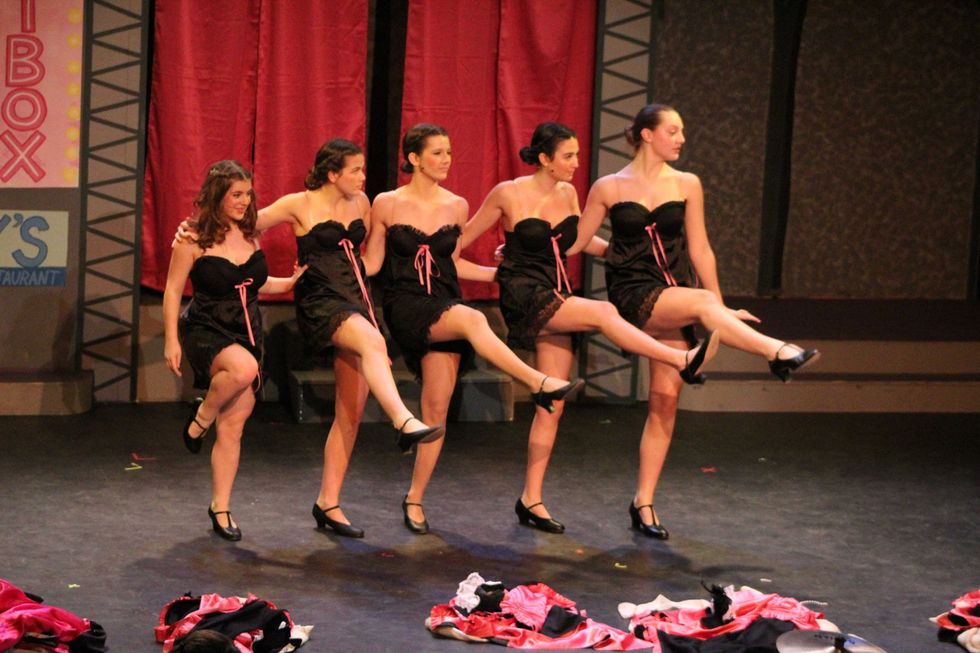
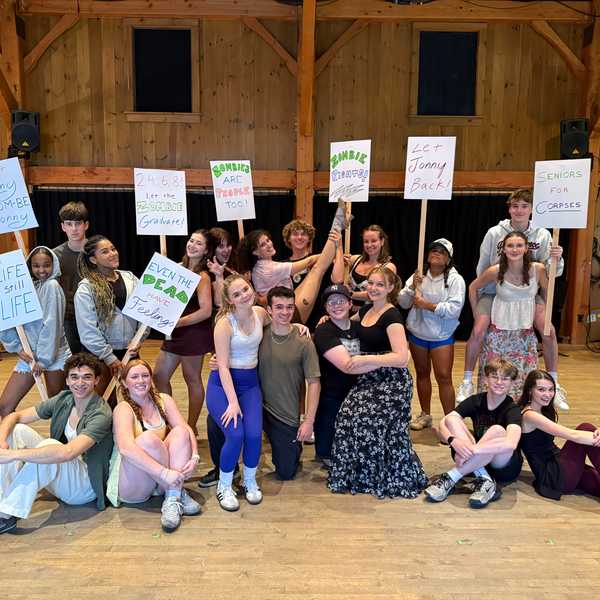
Cast members perform during Housatonic Valley Regional High School’s production of Guys and Dolls.
Patrick L. Sullivan


Cast members perform during Housatonic Valley Regional High School’s production of Guys and Dolls.
FALLS VILLAGE — Housatonic Valley Regional High School’s Musical Theatre Society drew enthusiastic audiences with its production of “Guys and Dolls” across four performances last week, March 19–21.
Elizabeth Forbes played the lead role of Sarah Brown on Friday evening, March 20, and at the Saturday matinee on March 21.
Meanwhile, Sara Ireland took on the part during the Thursday and Saturday evening performances.
Victoria Brooks delighted audiences as Miss Adelaide, and Richie Crane brought comic relief to his portrayal of Nathan Detroit.
Jackson Olson gave a strong performance as the unflappable Sky Masterson, keeping a straight face amid the chaos of crap games and nightclub fights. Alex Wilbur and Aiden Krupa also earned plenty of laughs as Nicely-Nicely Johnson and Benny Southstreet, respectively.
Sydney Howe, appearing in multiple roles, displayed notable talent and stage presence throughout.
The show was co-directed by Christiane Olson and Tom Krupa, with choreography by Amber Cameron.

Dee Salomon
A partially mowed meadow in early spring provides habitat for wildlife while helping to keep invasive plants in check.
Love it or hate it, there is no denying the several blankets of snow this winter were beautiful, especially as they visually muffled some of the damage they caused in the first place.There appears to be tree damage — some minor and some major — in many places, and now that we can move around, the pre-spring cleanup begins. Here, a heavy snow buildup on our sun porch roof crashed onto the shrubs below, snapping off branches and cleaving a boxwood in half, flattening it.
The other area that has been flattened by the snow is the meadow, now heading into its fourth year of post-lawn alterations. A short recap on its genesis: I simply stopped mowing a half-acre of lawn, planted some flowering plants, spread little bluestem seeds and, far less simply, obsessively pluck out invasive plants such as sheep sorrel and stilt grass. And while it’s not exactly enchanting, it is flourishing, so much so that I cannot bring myself to mow.
I have doubts:If I mow in the spring, would I kill all the overwintering insects? If I mow after the first frost, as suggested in a 2017 paper by the esteemed Kim Stoner, Ph.D., on the Connecticut AgriculturalExperiment Station website, would I lose the seed heads of yarrow, rattlesnake master and black-eyed Susan that birds are supposed to feed on in the winter?Paralyzed by indecision, I have not been able to bring myself to do even a partial cut.
I took a poll at a recent party attended by horticulturalists, environmentalists and garden experts. There was a consensus that early spring is indeed the best time to mow — early, before the ground-nesting birds like woodcock start nesting.I then called Mike Nadeau, whom I consider a meadow master of the Northwest Corner, and he concurred, following the Xerces Society meadow-mowing guidelines: mow in early spring when dandelions are in bloom.
“Xerces Society says this is the time most insects have hatched out of hollow stems and is between bird migrations.”
Nadeau’s experience has borne this out.
“I stress not to mow in fall because a dormant meadow is a haven for winter critters of all ilk.Birds use dormant plants for nesting materials, eat seeds, refuge — not to mention the other mammalian life that benefits from a meadow. An argument that has worked for me to discourage fall mowing is to describe a dormant meadow, with its myriad seed heads and foliage, as kinetic sculpture, especially with snowfall.It’s a beauty all its own.”
Nadeau mows a third to a half of a meadow each year, ideally using a flail mower, which chops vegetation into small pieces, helping foliage to resprout. The unmowed portion is left as a refuge for the animals that get evicted from their homes in the mowed area.
Stoner agrees with Mike to divide up the meadow and mowing different sections at different times. And she validates my mowing trepidation.
“There’s no perfect time. Any time you mow, you will be disturbing the habitat of some creature. If you don’t mow, you will have invasive plants creeping in, and eventually you will have trees,” she said.
“Best thing is to think about what your goals are — what creatures do want to encourage in your meadow? Then set the time of mowing to protect and enhance the habitat for those creatures.”
Additionally, Nadeau suggests that mown paths should be rerouted at least every two years to prevent rhizomatous grasses from establishing, which can grow into meadow edges and look unsightly. And the window is short:
“It’s too late to mow when spring birds arrive in earnest and new meadow growth is taller than 6 inches.”
Lights Out!
One of my favorite meadow benefits are the hundreds of fireflies that emerge in June. I am grateful for the lack of artificial light from neighbors (save for one house across the river with a persistent outside night light), so these creatures can shine brightly — and securely.
The organization DarkSky International relays the effect outdoor lights can have on fireflies: an almost 50% decrease in flashes per minute, which affects courtship behavior and mating success, according to two studies they cite on its website,darksky.org.
There, you can also get the lowdown on the devastating effects even one outdoor light can have on birds, amphibians, insects and mammals.The organization provides educational materials that explain the issue, making it easier to bring it up to neighbors and friends — which I will soon try with the house across the river.
Dee Salomon ungardens in Litchfield County.
Elena Spellman
Kathy Reisfeld
In a barn on Maple Avenue in Great Barrington, Kathy Reisfeld merges two unlikely worlds: wealth management and yoga, teaching clients and students alike how stability — financial and emotional — comes from practice.
Her life sits at an intersection many assume can’t exist: high finance and yoga. One world is often reduced to greed, the other to “woo-woo” stretching. Yet in conversation, she makes both feel grounded, less like opposites and more like two languages describing the same human need for stability.
On one floor of her barn are yoga mats and the steady rhythm of breath. On the other are computer screens, market charts and conversations about retirement plans and portfolio diversification. For Reisfeld, founder of Berkshire Wealth Group in Great Barrington, these are two sides of a single practice.
“At the end of the day, you’re just dealing with people,” she said. “Whether we’re talking about financial stability or mental stability, it’s kind of all the same thing.”
Reisfeld has spent nearly 30 years in finance, building a client-centered advisory practice that eventually led her to go independent. But her relationship with money began long before her career.
When her mother became ill during Reisfeld’s childhood, finances tightened. It wasn’t poverty, she said, but it was constrained enough to teach her how money — or its lack — can dictate the terms of one’s life. That lesson took on a deeper meaning as she watched her mother remain in a difficult marriage without full financial independence. “Money represented autonomy,” she said. “Freedom.”
In college, Reisfeld initially majored in physics, drawn to systems and structure. But an economics class shifted her direction. Markets, she realized, were systems too — not only mathematical, but deeply human.
After graduating, she landed an internship with a financial adviser and gradually discovered a profession that combined curiosity, problem-solving and relationship-building.
“The more I learned, the more I kind of wanted to get involved,” she said.
Over time, she realized she wasn’t interested in chasing predictions; she was interested in guiding people through uncertainty.
Over nearly three decades, she has watched the industry evolve. It has moved, she believes, from selling products to offering advice — a shift toward aligning compensation with clients’ best interests.
She’s candid about the stereotypes that cling to finance: that it’s driven by greed and full of money-hungry people. Those people exist, she said, but they aren’t the majority.
“It’s kind of like the few bad apples ruining it for everyone.”
At its best, she believes, the work is quieter and more meaningful than its reputation suggests.

Yoga entered her life in 2001, when she was living in New York City and training as a marathon runner.
“I was, like, very anti-yoga,” she admitted with a laugh.
But once she tried it, something shifted. A workshop with Nancy Gilgoff, the first American woman to travel to India to study Ashtanga yoga, “blew my mind open,” she said, revealing yoga as something far larger than poses or stretching.
What began as a physical complement to her running became a doorway into something deeper.
“Ashtanga means eight limbs,” Reisfeld explained. “The physical practice is just the entry point.”
The overlap she sees between yoga and investing is patience. Both practices demand discipline through fluctuation — the ups and downs, the good days and bad days, and the willingness to keep showing up.
In yoga philosophy, she points to the stilling of the mind. In investing, that becomes tuning out the noise — the headlines that spike fear or euphoria, the endless predictions that feel authoritative and rarely land cleanly.
After almost three decades in a traditionally male-dominated industry, Reisfeld has learned to move comfortably in rooms where she was often one of the few women present.
Asked what it was like starting out as a woman in finance, she smiled.
“The lines for the restroom were shorter.”
The humor reflects her temperament. She began her career at 21, and mentorship was not always easy to find. But finance, like yoga, rewards consistency. Ultimately, she built her business through steady growth.
For Reisfeld, yoga is fundamentally about integration. Money is no exception. It shapes how we live, the choices we make and the freedoms we have. Ignoring it doesn’t make it disappear. It only makes it harder.
Now rooted in the Berkshires, advising clients and teaching yoga classes from the same barn, Reisfeld’s work feels less like two careers and more like one philosophy.
When asked what she hopes people feel after spending time with her — whether reviewing a portfolio or finishing a yoga session — her answer is immediate.
“More confident,” she said. “Less stressed. More optimistic about their future.”
For more information or to book an appointment, visit berkshirewealthgroup.com
Kathy Reisfeld, Branch Owner
250 Maple Ave, Great Barrington, MA 01230
845-263-3996
Securities offered through Raymond James Financial Services, Inc. Member FINRA/SIPC.
Berkshire Wealth Group is not a registered broker/dealer and is independent of Raymond James Financial Services, Inc.
Investment advisory services offered through Raymond James Financial Services Advisors, Inc.
Elena Spellman is a Client Service Associate at Berkshire Wealth Group
Robin Roraback
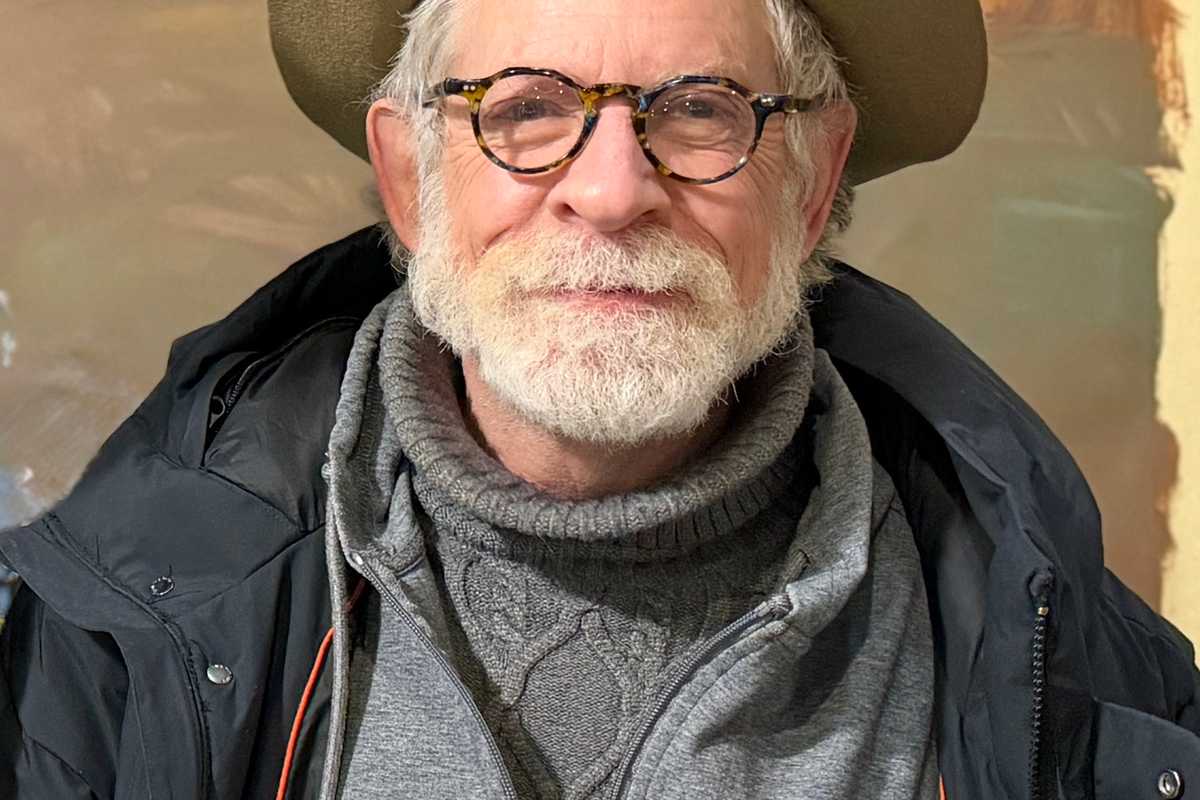
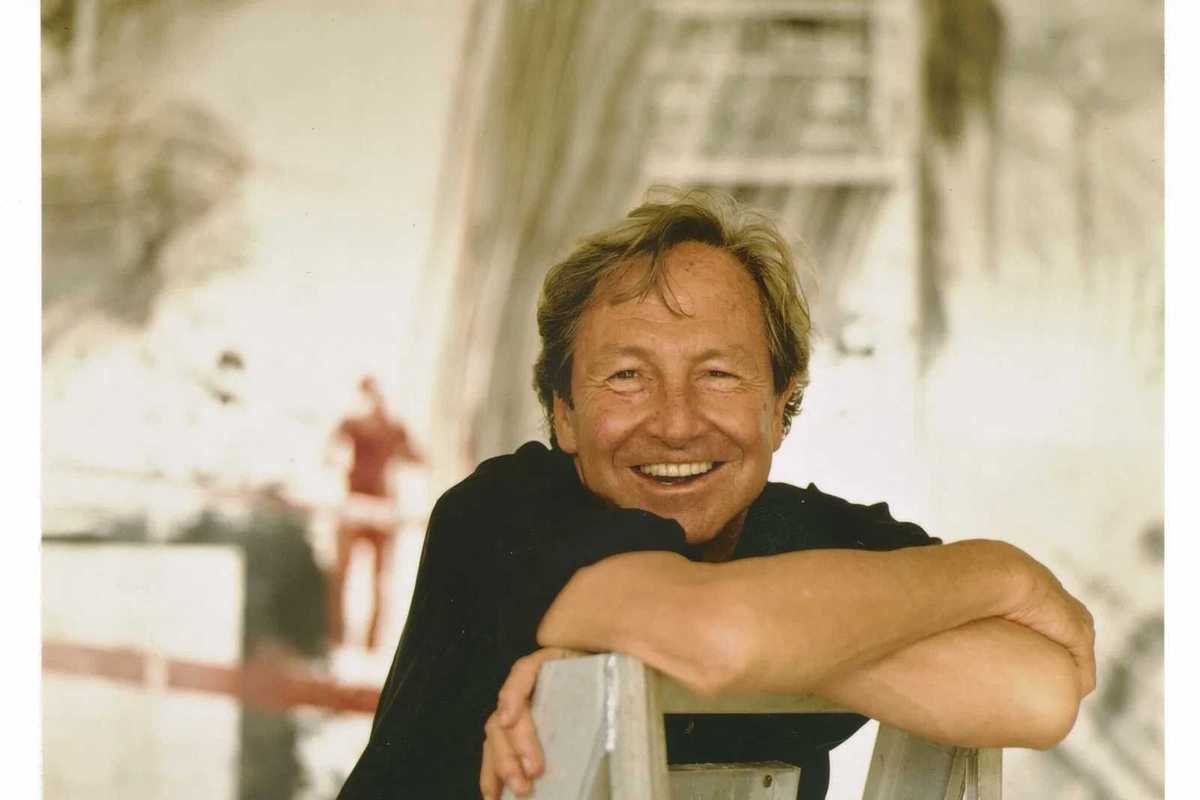
Yonah Sadeh, Falls Village filmmaker and curator of David M. Hunt Library’s new VideoWall.
The David M. Hunt Library in Falls Village, known for promoting local artists with its ArtWall, is debuting a new feature showcasing filmmakers. The VideoWall will premiere Saturday, March 28, at 6 p.m. with a screening of two short films by Brooklyn-based documentary filmmaker and animator Imogen Pranger.
The VideoWall is the idea of Falls Village filmmaker Yonah Sadeh, who also serves as curator. “I would love the VideoWall to become a place that showcases the work of local filmmakers, and I hope that other creatives in the area will submit their work to be shown,” he said.
After the screening of the two films, “Mail Myself to You” and “Circle, Circle Square,” Pranger and Sadeh will discuss filmmaking and answer questions.
Of Pranger, Sadeh said, “She has a strong visual voice as a director, and both of these films are great examples of a blend of documentary and experimental filmmaking.”

Pranger described her approach to filmmaking. “I have always approached the visual arts from an interdisciplinary, multimedia perspective.” This approach was a reason why animation was particularly appealing to Pranger as she began exploring the possibilities of filmmaking.
“I particularly fell in love with the tactility of hand-drawn and painted animation and the ways in which it can be used in tandem with analog 16-millimeter film. Stop-motion animation holds the unique power to bring inanimate objects to life, something that became crucial to my practice of archival documentary filmmaking. I appreciate the sense of play that is encouraged in the medium of animation and find great joy in exploring new avenues and possibilities within the medium,” she continued.
At the core of Pranger’s films, she hopes to capture the joy and intimacy of human connection that blossoms through engagement with material and creative process.
After the opening event, the films will remain available to view at any time on the VideoWall screen in the library stacks. “The screen will always be on and ready for anyone to use,” Sadeh said. The installations will last three to four months.
Sadeh added, “Each installation will begin with a public screening at the library, followed by a talkback with the filmmaker.”
Filmmakers can contact Sadeh at huntartwall@gmail.com for information about submitting films for consideration. Visit huntlibrary.org/art-wall for a schedule of ArtWall and VideoWall events, which are free and open to the public.

Want more of our stories on Google? Click here to make us a Preferred Source.
Cheryl Heller
A bowl full of stones.
There’s a bowl in my studio where pieces of the planet reside. I bring them home from travels, picking them up not for their beauty or distinction but for their provenance. I choose the ones that speak to me — the ones next to pyramids, along hiking trails, on city sidewalks or volcanic slopes.
I like how stones feel in my hand: weighty, grounding. I don’t mind them making my pockets and suitcase heavier. The bowl is about the size of an average carry-on. It has been years since it was light enough for me to lift.
They’re not specimens. I’m not a scientist comparing igneous with sedimentary, or metamorphic with minerals or meteorites. I don’t know slate from quartzite, or schist from basalt or gabbro. They aren’t memories either, because I can’t tell by looking at them where they’re from. They sit quietly beside me in whatever moment I’m occupying.
They’re not souvenirs from places, like coffee mugs or snow globes. They are the places themselves.
The planet has reorganized itself in my bowl. Melbourne nestles next to the Hebrides. The streets of Roma in Mexico City rub elbows with Vatican City, Rome. Eastern Tibet sits on top of Machu Picchu; New Delhi is now close to Detroit. Cappadocia has finally met Capri. Mustique knows Morocco, and they both lie on the beaches of southern France.
These stones have witnessed the fall of civilizations, the birth and death of infinite beings, tectonic upheavals and the creative destruction of fire and ice.
Who touched them before me? Inca, Maya, Trojans? Warriors, slaves or yaks? Blue-footed boobies in the Galápagos or a slithering Costa Rican fer-de-lance? Was one of them used to stone a blasphemer in ancient Greece?
It’s not as if the place where I live needs more stones. In New England we’ve been blessed with an imposing population of glacial erratics — characters dragged here by the last Ice Age and left to sit silently in the woods for the past 16,000 years. The stones themselves, I’ve learned, are more than a billion years old.
The most ancient rocks known to us are more than four billion years old. Others are practically new, formed continually as tectonic plates shift along seabeds or lava cools along volcanic slopes. And while individual rocks vary wildly in age, the substance of rocks — atoms of silicon, oxygen and iron —is far older than the Earth itself, forged in ancient stars before our Milky Way existed.
Perhaps my bowl is filled with stars.
I recently stood before an exhibit of Aboriginal art called “The Stars We Do Not See.”The artists are descendants of the oldest continuous civilization on Earth, at 350,000 years. Their past is not distant or inaccessible to them; they understand time as a cycle and live in relationship with everything on earth and sky, including stones.
The title of the show was inspired by the late Yolŋu artist Gulumbu Yunupingu, who painted the night sky on bark. She spoke about the “stars behind the stars” — all there is to learn and appreciate beyond what we can see.
Deep in the woods on the hill above our house in Norfolk sits a giant marshmallow-shaped rock, one of the billion-year-old ones. At some point, someone leaned a ladder against it — a standing invitation to a new perspective.
How can we know the things that are invisible, the stars behind the stars? How can we feel connected to what came before us and sits silently around us, too slow for our impatient eyes to see?

Every once in a while, someone leans a ladder against a rock so we can’t miss it. Most of the time, we’re on our own.
I sometimes joke with my younger sister that when I die, she and our nieces can divide up whatever I leave behind, including the handbag she has had her eye on for years. But who will see and care about a bowl of rocks too heavy to lift and too silent about their value to be appreciated?
This is for you, Lynn, Stacey, Katie and Rose.
I hope you keep the planet in my bowl together.
It might be, after all, my small and only lasting intervention in the world.
Cheryl Heller is a designer, educator and business strategist who pioneered the field of social design and founded the first social design MFA program at the School of Visual Arts. She lives in Norfolk.
Lakeville Journal
Historian Russell Shorto joins local educators Peter Vermilyea and Rhonan Mokriski for a conversation about Shorto’s “Revolution Song” on March 27 at the Salisbury Forum, marking Salisbury’s commemoration of the 250th anniversary of the Declaration of Independence. The event begins at 7:30 p.m. at Housatonic Valley Regional High School. Register at salisburyforum.org
Patrick L. Sullivan
Bill Beebe, left and Denny Jacobs hard at work making maple syrup at Whiting Brook Farm.
FALLS VILLAGE — Denny Jacobs dipped a metal spoon into boiling maple sap that was slowly turning into maple syrup.
He held the spoon up horizontally and watched as the thick liquid dribbled off.
“It’s not done until the last drop stays on the spoon,” he said. “That’s what the old-timers told us.”
The Jacobs family — Denny, Judy and their son Dave — along with Bill Beebe and a couple of dogs, were busy Saturday morning, March 21, at their Whiting Brook Farm on Undermountain Road maple syrup operation.
Judy Jacobs had a covered skillet perched on the side of the evaporator. In it were hot dogs and kielbasa, cut in slices and simmering in maple sap.
The Jacobs operation was one of six Falls Village sugaring concerns participating in a statewide maple syrup showcase weekend, with visitors traveling between farms to see each operation in action.
Matt Gallagher and his son Connor were boiling away at a much smaller apparatus at the Gallagher home, also known as Acer Creek Farm, on Canaan Mountain Road.
Matt Gallagher said he had one big tank just off Canaan Mountain Road which collected sap via tubes from 24 taps, plus another 73 taps and buckets on trees.
Jody and Jean Bronson, ofUndermountain Road, also had a smaller system running and a steady stream of visitors.
Bronson said they prefer a more robust, darker syrup than the amber colored variety that is the unofficial standard, and Jean Bronson had samples ready for visitors.
The amount of sap needed to produce syrup varied considerably. Denny Jacobs said the Whiting Brook Farm ratio was between 50 and 55 gallons of sap to one gallon of syrup. Bronson and Gallagher had 35-to-1 and 30-to-1, respectively.
Bronson, a retired forester, said altitude and whether trees are wild or farmed both make a difference.
Back at Whiting Brook, Denny Jacobs and Beebe, watching the hydrometer and the spoon, decided it was time for a “draw.” A clean five-gallon bucket was positioned under the tap, and the hot, dark syrup filled the container.
Then it was time for the initial filtering.
Jacobs was proud of his innovative filter mechanism. A conical filter made of a thick, felt-like material was suspended between the legs of an upside-down kitchen stool, with another five-gallon bucket beneath.
Jacobs simply poured the hot syrup out of the first bucket into the filter. The syrup slowly seeped through. “We finish it on the stove at home,” said Judy Jacobs.
Also participating in the maple weekend were Lou Timolat and Eric Carlson at Saw Mill Syrup on Route 7, Kent Allyn on Music Mountain Road, and Adamah Farm on Johnson Road, each operating from their own sugarhouse or farm.
The Falls Village maple syrup makers are hosting an event on the town Green on Saturday, April 25, co-sponsored by the town’s Recreation Commission. There will be demonstrations and, of course, maple syrup for sale.

Want more of our stories on Google? Click here to make us a Preferred Source.

Want more of our stories on Google? Click here to make us a Preferred Source.