NORTH CANAAN — When the state-of-the-art, federally qualified health center (FQHC) welcomes patients in early June, it will usher in a new era for healthcare in the state’s rural Northwest Corner, one that health advocates are hailing as critically needed and long overdue.
State Rep. Maria Horn (D-64) put it this way: “The new regional healthcare center for the Northwest Corner will act as a catalyst on our rural healthcare crisis, becoming one of the most necessary and exciting projects in the history of our region.”
The multi-level North Canaan facility on East Main Street marks the realization of a decades-long effort by Community Health & Wellness Center (CHWC), aided by a coalition of community partners, to address what CEO Joanne Borduas described as a “healthcare desert” in the Northwest Corner.
Residents living in healthcare deserts, also referred to as medical deserts, may face inadequate access to primary, emergency, mental health, and dental care as well as a lack of public transportation and public health services, Borduas noted.
“Rural towns are often isolated” and have a disproportionately higher population of older adults over 65, who are more likely to require care for chronic conditions, she said.
“Access to services is important for overall disease prevention, life expectancy, quality of life and overall population health.”
A report by the American Medical Association revealed that while overall mortality for Americans has been decreasing, mortality rates for rural residents between 25 and 64 years old have risen by about 12 percent.
A lone primary care doctor
“Access to health care has been a challenge for decades,” said Borduas, a problem that is exacerbated by a critical physician shortage.
North Canaan, she noted, has only one practicing primary care physician, and there are no free-standing urgent care centers in rural Northwest Corner, forcing some patients to travel a distance to receive emergency care.
“Think about it. Sharon Hospital is the only Connecticut hospital in the Northwest Corner and there is only one primary care provider [in North Canaan]. The ability to access a hospital for emergencies and to have a local primary care provider are real concerns for rural communities.”
To make matters worse, attracting and retaining physicians in rural communities has been a major challenge for decades, and this phenomenon is hardly contained to Northwest Connecticut.
A 2023 survey of physicians by the Association of American Medical Collages found that 68 percent of newly graduated doctors preferred to work in hospitals than jobs in family practices which are more common in rural areas. In addition, only 4 percent had a desire to work in a community of 25,000 residents or fewer.
Additionally, according to the Center for Healthcare Quality and Payment Reform, 104 rural hospitals have closed since 2005 and across the country, 600 more are at risk of closure.
‘Pockets of affluence’ hide the need
The launch of the new regional health center marks a culmination of decades of effort among community partners.
The request to build an FQHC to serve the Northwest Corner began decades ago when the need for mental health services rose.
In 2017, Borduas joined forces with Nancy Heaton, President and CEO of the Sharon-based Foundation for Community Health (FCH). They applied for Health Resources and Services Administration (HRSA) grants to build a new access point but didn’t meet the benchmark for low-income needs.
“There are a lot of pockets of affluence here that obscure the need…the numbers got skewed,” recalled Borduas. “Two years later, the Foundation for Community Health said, ‘We will help you with what you need,’ so we started looking at property.”
FCH played a pivotal role, contributing $1.3 million for the property purchase and project needs, along with an additional $650,000 for start-up costs, adding to a $3 million bond secured with the help of Horn from the state of Connecticut toward construction.
FCH also awarded CHWC a multi-year, $75,000 grant aligning with their mission to invest in health, well-being and equity of the community.
Additional funding partners include Sharon Hospital/Nuvance Health which pledged a multi-year, $650,000 gift to include $300,000 in funding and an additional $350,000 of in-kind services.
Berkshire Taconic Community Foundation contributed $155,000 including $40,000 from its fund for the Northwest Corner to support physician recruitment and strategic planning for a new fundraising and development program which CHWC officials said will be “critical to expanding and sustaining the health center.”
“Now here we are making the vision, and the ask, a reality,” noted Borduas.
FCH’s Heaton noted that the new regional health center could not have come at a better time.
“Yes, I have been thinking about, and working on bringing the health center into the Northwest Corner, and North Canaan specifically, for nearly 20 years, but with the current primary care and other healthcare provider shortages, it is needed now more than ever.”
“For that reason,” she said, “I am even more excited about looking forward and seeing the positive impact the center will have on increasing access to a full range of healthcare and prevention services for our rural communities.”
Working with Medicaid
In March, Borduas, on behalf of CHWC, gave testimony before the Connecticut General Assembly’s Human Services Committee in opposition to Section 5 of House Bill 5373: An Act Concerning Various Revisions to Human Services Statutes, which makes it harder for health centers and other providers to obtain reasonable rates for the state’s HUSKY Medicaid program.
Borduas noted that approximately 59 percent of CHWC’s patients are on HUSKY.
Since the pandemic, said Borduas, the face of those who need Medicaid has changed significantly. They are friends and neighbors, seniors and young adults, co-workers and young families.
“You could be standing by anyone in the grocery store who just lost their job and the only way to make it work is to get on Medicaid, there is no shame in that.”
Looking to the future
The original vision for the North Canaan facility had included plans for onsite laboratories, a pharmacy and dental services, but wetlands restrictions caused CHWC to “pivot our plans” and downsize the facility, said its CEO.
“We will focus on mental health and primary care to start with. Dental services will go to our Winsted location, lab services and imaging will go to Sharon Hospital, and Walgreens will handle pharmacy. We do whatever we can do to collaborate and build community relations that benefit our patients,” said Borduas.
Although currently no urgent care centers exist in the Northwest Corner, they can be beneficial in rural communities as another point of access, because they can fill a need for urgent services when primary care offices are not open. She cautioned that urgent care centers “should not be a replacement for establishing care in a primary care office, where continuity is better handled.”
A needs assessment in about six months will “determine the utilization of our services. People keep asking me about dental and urgent care, they are the next things on the list of priorities to address. We can’t do everything at once,” she explained.
But for now, she said, the state-of-the-art regional health center, which is being unveiled this weekend with a ribbon cutting ceremony on Friday (May 10) and an open house on Saturday (May 11), “is answering the call to a rural crisis.”
The vision is to build on what the community needs, said CHWC’s CEO. “Everyone has a right to health care. It should not be a privilege. If you keep people well, that will keep your communities healthy.”
About Community Health & Wellness Center
In 2002, CHWC was established on Migeon Avenue in Torrington at a former community grocery store, and in 2009 it became a federally qualified health center (FQHC), which makes services available to all regardless of ability to pay, and accepts regular commercial insurance, the uninsured, sliding scales and payment plans.
In 2014, the CHWC launched a 24,000-square-foot renovation to expand services, add 21 exam rooms, 10 dental operatories and behavioral health service.
Today, CHWC has a network of centers in Torrington, Winsted, and as of this week, a new regional health center for the Northwest Corner based in North Canaan, which will serve approximately 17,000 residents in North Canaan and surrounding towns of Cornwall, Falls Village, Norfolk, Kent, Lakeville, Salisbury and Sharon.
In addition, CHWC has nine other satellite locations in Torrington schools, a food bank partner and on April 29 launched its school-based health centers in three of the Region One schools.
CHWC, which is one of 17 FQHC’s in Connecticut, serves 24 towns with a combined population of 143,648, with low income comprising 26,365, or 17%, and is the only comprehensive FQHC in the Northwest Corner.
Office hours are Monday through Friday, 8:30 a.m. to 5 p.m. For more information, or to schedule an appointment for either primary care or mental health services starting in early June, call (860) 362-5101.

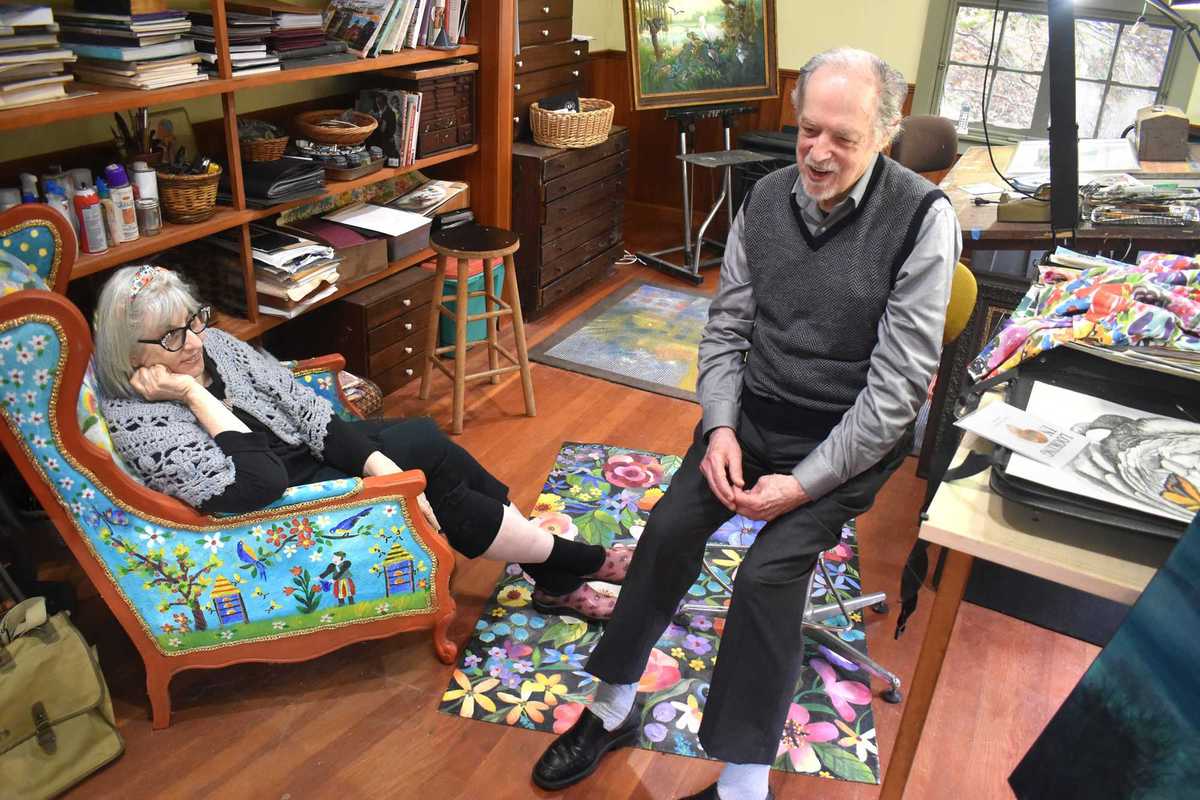
 Justine and Victor Valla in their studio with a painting of Victor’s,”Jonah and the Whale.” Robin Roraback


 A ceramic vase by Kathleen Heidemann.Provided
 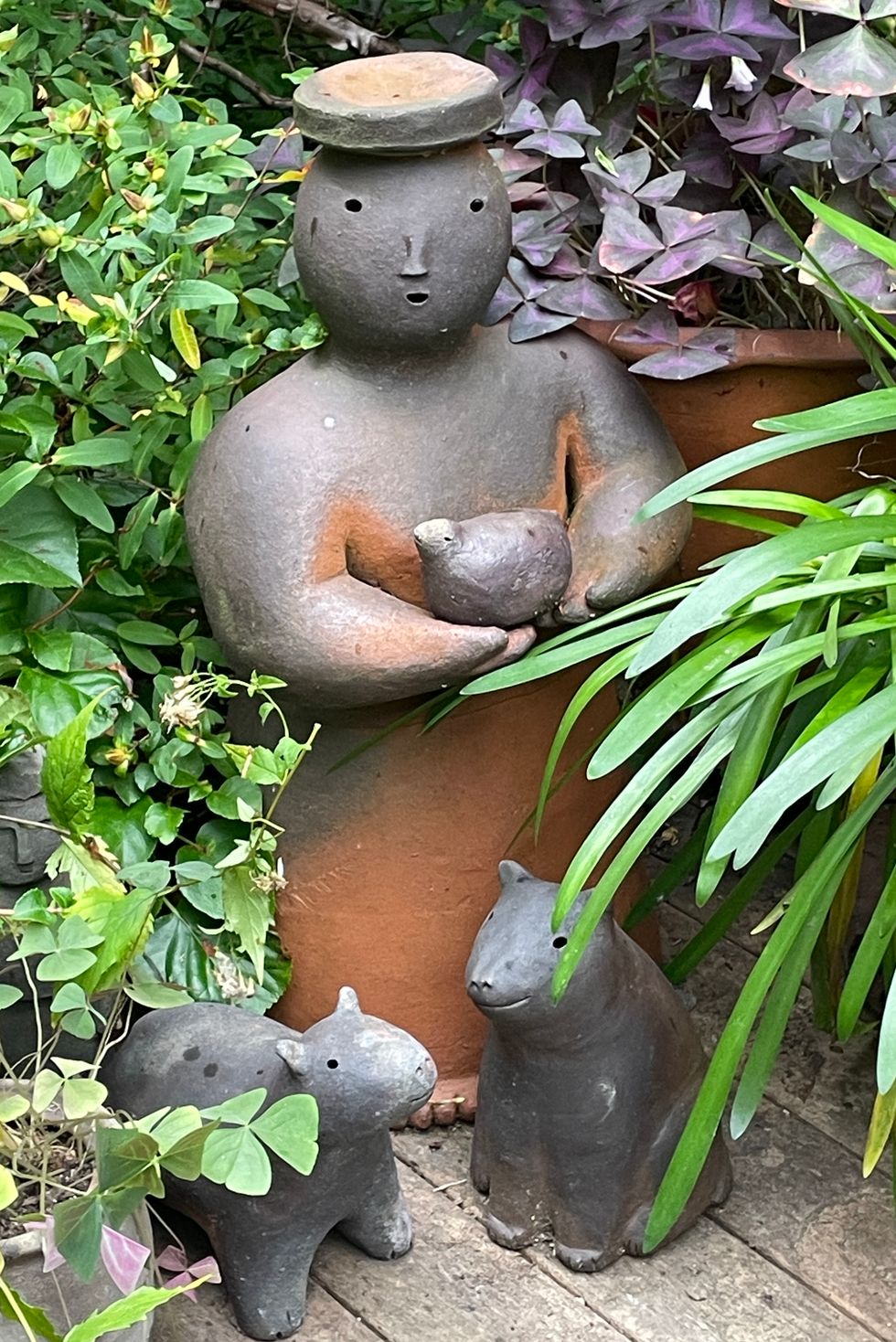 Joy Brown’s delightful ceramic sculptures.Provided