Thank you!
Your support is sustaining the future of local news in our communities.

Millerton owes its name to a transient engineer

Millerton owes its name to a transient engineer

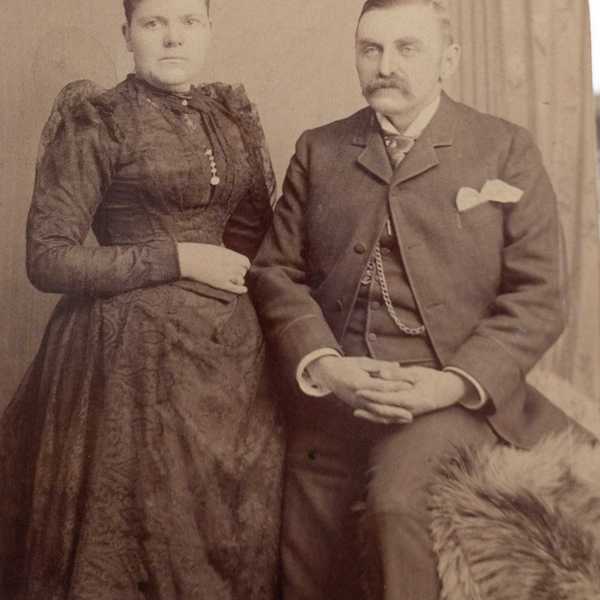
Sidney G. Miller, the engineer that helped build the railroad through Millerton, is the village’s namesake but never lived there.

Courtesy North East Historical Society

The arrival of the railroad in the Town of North East in 1851 is heralded as the moment Millerton came into being — ushering in a boom period for the area that transformed it from a sparsely populated farming community into a hub of commerce.

That moment was brought about by Sidney Greene Miller and his associate civil engineers in their work as contractors for the New York and Harlem Railroad. After his work, Millerton quickly grew from an insignificant hamlet in North East to the center of the town’s activity within just 25 years.

The railroad’s contribution to the area’s growth, along with Miller’s reported congeniality, as described in a 2001 history of the village produced by the North East Historical Society, led village founders Alexander Trowbridge, Col. John Winchell, Walter Wakeman, Platt Paine and soon-to-be Connecticut Governor Alexander Holley to name Millerton after the civil engineer when it was officially formed in 1875.

But little is known about Miller, beyond the findings uncovered by the North East Historical Society and some investigative work by Sarah Hermans, an amateur historian who grew up in Millerton.

Hermans said public documents on him are sparse, although she found enough to roughly map out his life from records available online.

Miller was born in New York City in 1817, where he was raised by Sylvanus Miller. An obituary for Miller when he died in 1900 said his father, Sylvanus, was a judge, and census records list his profession as “lawyer.”

Miller became a civil engineer, serving as a partner of Morris, Miller and Schuyler when that company was contracted to expand the New York and Harlem railroad north from New York City to Albany. Records show Miller lived in New York City in the early 1850s when the Millerton stop was built, but he didn’t stay in the city long.

Census records indicate Miller left New York State within the decade. He, his wife and three children moved to Westport, Connecticut, in 1854 and then to Virginia in 1856. There, Miller and his wife, Sarah Williamson, had three more children.

Miller and his family were forced out of their home in Alexandria, Virginia, when the United States Army seized the house to use as a hospital during the Civil War.

By 1870, the family had moved to Savannah, Georgia. Documents from Miller’s life are limited, but records indicate that building railroads led him to move frequently. Within just 10 years, Miller and his family, now including a grandson, were recorded as living in Chatham Township in New Jersey in 1880.

Miller did return to New York City at some point before his death in 1900, as shown by death records and an obituary published in The New York Times.

Miller was buried in Green-wood Cemetery in Brooklyn.

Hermans said her research on Miller began by accident while she was researching a friend’s family history. She said she thought Miller would have been a local before she started researching, but soon found out he never even lived in Millerton.

“I was delighted and shocked to find out that he was actually a ‘city person,’” Hermans said.
Latest News

New pool and poolhouse expected to open next year

A rendering of the planned pool and poolhouse shows a shallow, ramped entrance allowing access for people with disabilities.

Illustration Provided

Plans for the long-awaited community pool and poolhouse at Eddie Collins Memorial Park are moving into the construction phase, with village officials aiming to open the facility by summer 2027.

The Village Board of Trustees hopes to hold a ceremonial groundbreaking in July as part of Millerton’s 175th anniversary celebration. With contracts for electrical, plumbing and mechanical work now approved, construction is expected to begin in August.

Keep ReadingShow less
Documentary film about railroad resurfaces after 40 years

Filmmaker Philip Milano of Dover Plains holds the Scotch U-matic cassette containing his original 1970s documentary about the Harlem Valley Transportation Association.

Aly Morrissey

Long before the bustling Harlem Valley Rail Trail hosted runners, walkers and cyclists, a historic railroad ran through Millerton, connecting rural towns to New York City. The eventual dismantling of the railroad was met with criticism and pushback from residents.

That chapter of local history comes alive in a resurfaced documentary film that had been tucked away in an attic in Dover Plains for more than 40 years.

Keep ReadingShow less
Millerton’s early days brought huge change to the community
Courtesy U.S. Library of Congress

The Village of Millerton was founded a decade before the Civil War during a time when railroads were transforming rural economies, the nation was expanding westward and tensions over slavery were mounting.

The first 25 years of Millerton reflected that era of rapid change, characterized by an almost overnight transformation from farmland to being a railroad hub.

Keep ReadingShow less
google preferred source

Want more of our stories on Google? Click here to make us a Preferred Source.

Kingston Guards bring baseball back to the basics

The Kingston Guards and the Bovina Dairymen

Schuyler Meyer
These aren’t your standard gym rats trying to relive their high school or college glory.

The Kingston Guards are playing ball the way it used to be played. To be specific, they’re playing baseball by the rules of 1864, the last full season before the Civil War. To them, it’s a purer form of the game, devoid of constant rule changes and all that pesky equipment like gloves, helmets and catchers’ masks. Sure, there are umpires, but they’re really there more to settle arguments than make actual calls.

The whole game feels less aggressive and more friendly. In fact, many of the players on the Guards and other teams in the vintage baseball scene came from softball leagues that had simply become too competitive. These aren’t your standard gym rats trying to relive their high school or college glory. More often, they’re history buffs looking for something a little more athletic than the synchronized marching of Civil War reenactments — though, to be fair, some of them are still Civil War reenactors.

Keep ReadingShow less
Hotchkiss Library of Sharon’s Book Signing Weekend returns

Hotchkiss Library’s Book Signing Weekend draws readers of all ages

Stephanie Stanton

For more than a quarter century, the Hotchkiss Library of Sharon has been connecting readers with some of their favorite authors at its signature Summer Book Signing Weekend, returning for its 28th year July 31 through Aug. 2.

The weekend is one of the library’s biggest fundraisers, attracting a wide range of book fans from across the region, as well as out-of-towners who make it a point to be there. Authors represent every corner of the literary world, from children’s books to nonfiction, poetry to historical fiction and even cookbooks. They also come from all over the country, though there is an emphasis on authors local to the area.

Keep ReadingShow less

More than coffee at Best Damn Espresso

More than coffee at Best Damn Espresso

Owners Asio and Angela Highsmith

Provided
Coffee means community, It’s a big part of the hospitality vision that my wife and I want to bring to the world.
— Asio Highsmith, Co-owner

Asio Highsmith, co-owner of the bright red espresso truck in Great Barrington, greets patrons with the kind of warmth and energy that can change the trajectory of a day. There is laughter, conversation and a genuine sense of connection. And the coffee is amazing. It’s clear that Best Damn Espresso’s popularity has as much to do with people as it does with espresso.

Despite becoming one of the Berkshires’ most recognizable small brands, its owners maintain a surprisingly low profile, focusing more on their craft than on self-promotion. “We didn’t move up here to be on Front Street,” said Highsmith. “We came because we love nature and wanted to start a new chapter of our lives.” That chapter began after years spent in New York City.

Keep ReadingShow less
google preferred source

Want more of our stories on Google? Click here to make us a Preferred Source.

google preferred source

Want more of our stories on Google? Click here to make us a Preferred Source.