On Sept. 2 of this year, a fishing boat propelled by an outboard motor was attacked by a missile from an American helicopter overhead. The boat was demolished as were nine of its 11-member crew. Two members of the crew remained alive, floating in the water. Within a few minutes, the helicopter returned with another missile to kill the two survivors.
The U.S. government reported the incident saying that it was an authorized attack intended to stop the importation of banned drugs into the U.S. by a “narco-terrorist” nation, in this case Venezuela. This incident was not an isolated event and was followed by dozens more over the next few months. President Trump spoke enthusiastically about the attacks, describing them as a part of our “war on drugs” and indicated that they might well be followed by future attacks on land. He seemed oblivious to the law that only Congress has the right to declare war and had not done so.
In the many lethal attacks on small boats that followed, no proof was ever offered that they were carrying drugs; the boats,their crews and any cargo were destroyed. Some experts have suggested that the Sept. 2 boat with its crew of eleven men wouldn’t have had space for a regular shipment of drugs.
In his many remarks on the matter, the President claimed that most of the illicit drugs entering the country, especially fentanyl, the most dangerous, were coming in by sea from South and Central America; actually, fentanyl largely arrives by land from Chinese sources via Mexico. The small boats in the Caribbean were probably transporting cocaine, if any drugs, with most of it going to other countries. Were President Trump really so distressed by cocaine traffic into the U.S., why would he have just issued a pardon to the former Honduran President who had recently been sentenced here for operating a very large international cocaine drug trafficking business?
Combating the international drug trade is an excuse for other Trump ventures south of the border. Perhaps it’s exercising military power in the mode of the Monroe Doctrine. Many notable observers (including The Lakeville Journal’s columnist Bill Schmick’s article Dec. 4, 2025) think that taking control of Venezuela’s enormous fossil fuel reserves might be Trump’s main goal.
But overthrowing Maduro’s government and controlling a replacement Venezuelan government might be very difficult for Trump toto manage. The U.S. boarding and takeover of a giant Venezuelan oil tanker left us wondering if war might be around the corner, even more so if Trump decides to attack Columbia which he has threatened as well. Staytuned!
Most commentators of late have been focused on the second strike of the Sept. 2 attack where the two helpless individuals floating alive in the sea were killed. According to numerous military experts such a killing would be illegal in either a civilian or military context. If so, the question remains: who is responsible? Admiral Frank Bradley, the Commander of the overall mission?Secretary Hegseth?, the officer firing the missiles? Someone else?
As the recent video by six members of Congress made clear, a member of the military is not obliged to follow an illegal order; it’s right there in the Uniform Code of Military Justice But is a private in the Army going to tell a high ranking commanding officer that he won’t follow the officer’s order, that it’s illegal?
In this case nobody seems to want to take the responsibility. Hegseth, who has lately gone out of his way to demonstrate his machismo, recently told a gathering of military officers at Quantico that “it was time to take the gloves off .”
Perhaps because he remains invulnerable to legal discipline because of his Supreme Court grant of immunity,President Trump has been lately left out of the public discussion regarding responsibility for the Sept. 2 attack and the killings. But this whole conflict, with its two dozen attacks and more than 82 killings of supposed “enemy combatants” is Trump’s doing. Like Hegseth he may not have been right there in the attack helicopter to give the order to fire.But he planned the overall campaign while letting subordinates receive any blame.
President Trump’s use of the military in the Caribbean has much in common with his sending of troops into American cities. Describing several of our foremost cities as “war zones”, he has used his own inaccurate characterizations of Washington, Chicago, Portland, Los Angeles and other cities as justification for sending in troops that the mayors and governors of these places have told him were, not needed and not wanted. In both the Caribbean and in U.S. cities, Trump has concoctedridiculous excuses for illegal and provocativeincursions. Our cities are not “burning to the ground” as Trump publicly claimed to be the case.
We are on the wrong track if we continue to view the Sept. 2 attack as a military matter focused solely on the killing of the two men in the water. The Pentagon has admitted to more than 22 similar attacks on small boats and suggested that they killed at least 80 individuals.
What we know so far, prior to a serious Senate investigation, is that SecretaryHegseth, Admiral Bradley and possibly others all have much to answer for; and so does President Trump who initiated and set in motion this whole shameful enterprise.
Architect and landscape designer Mac Gordon lives in Lakeville

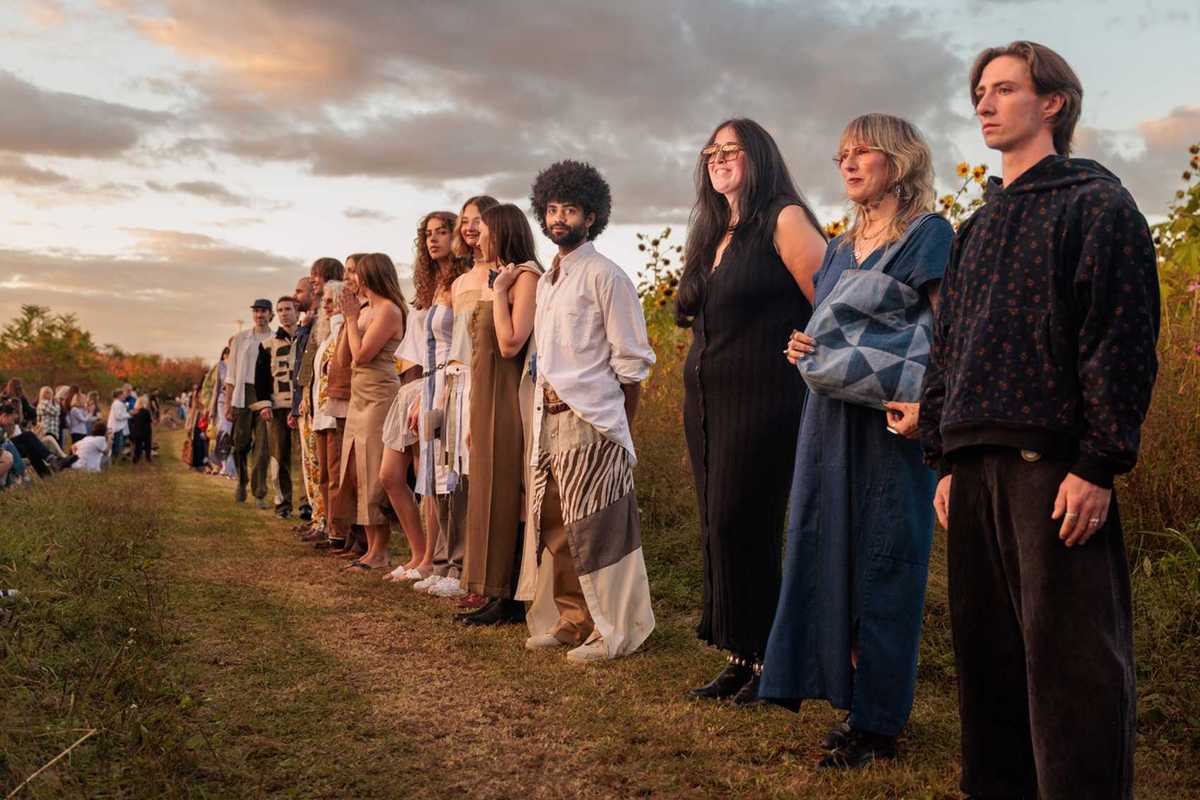
 Models walk the organic runway at HVSFW. Ilan Harel
 Susan Schneider, owner of Shandell’s, creates a variety of products with marbleized surfaces in her Ashley Falls studio.L. Tomaino


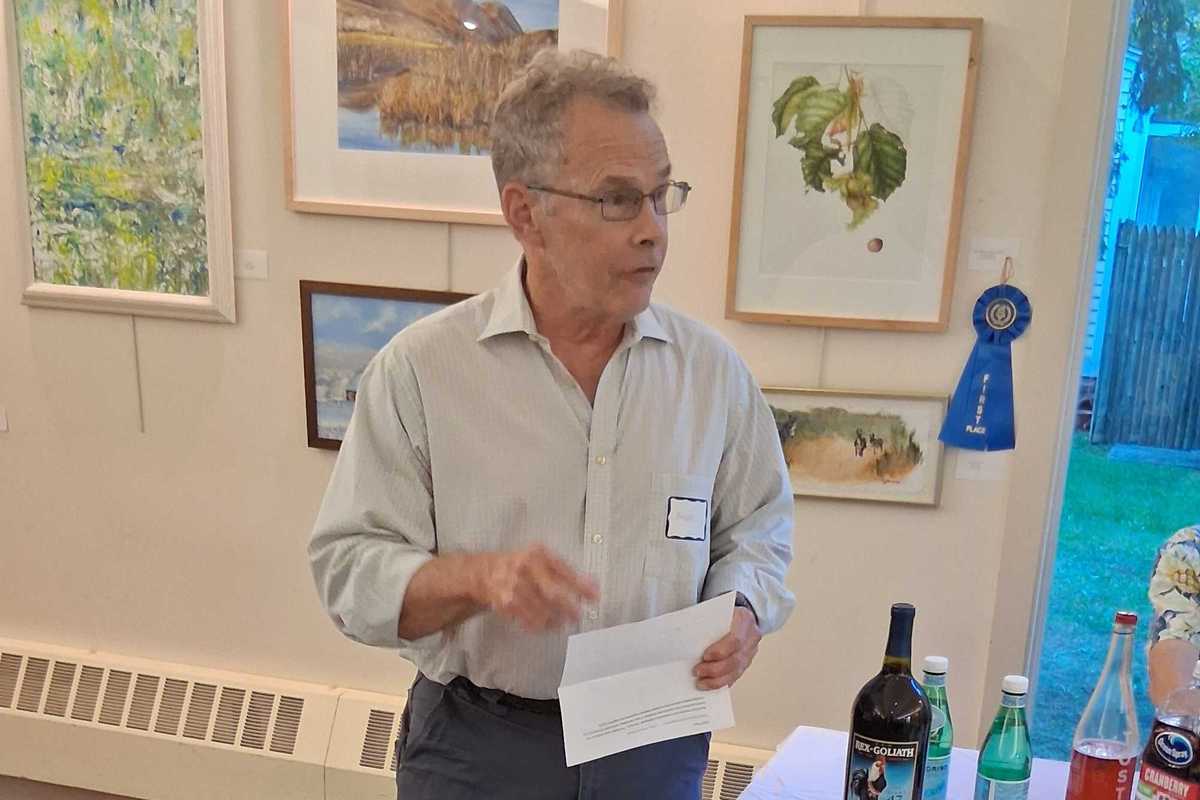 Roger McKee naming the winners with the first place entry over his left shoulder. Patrick L. Sullivan
 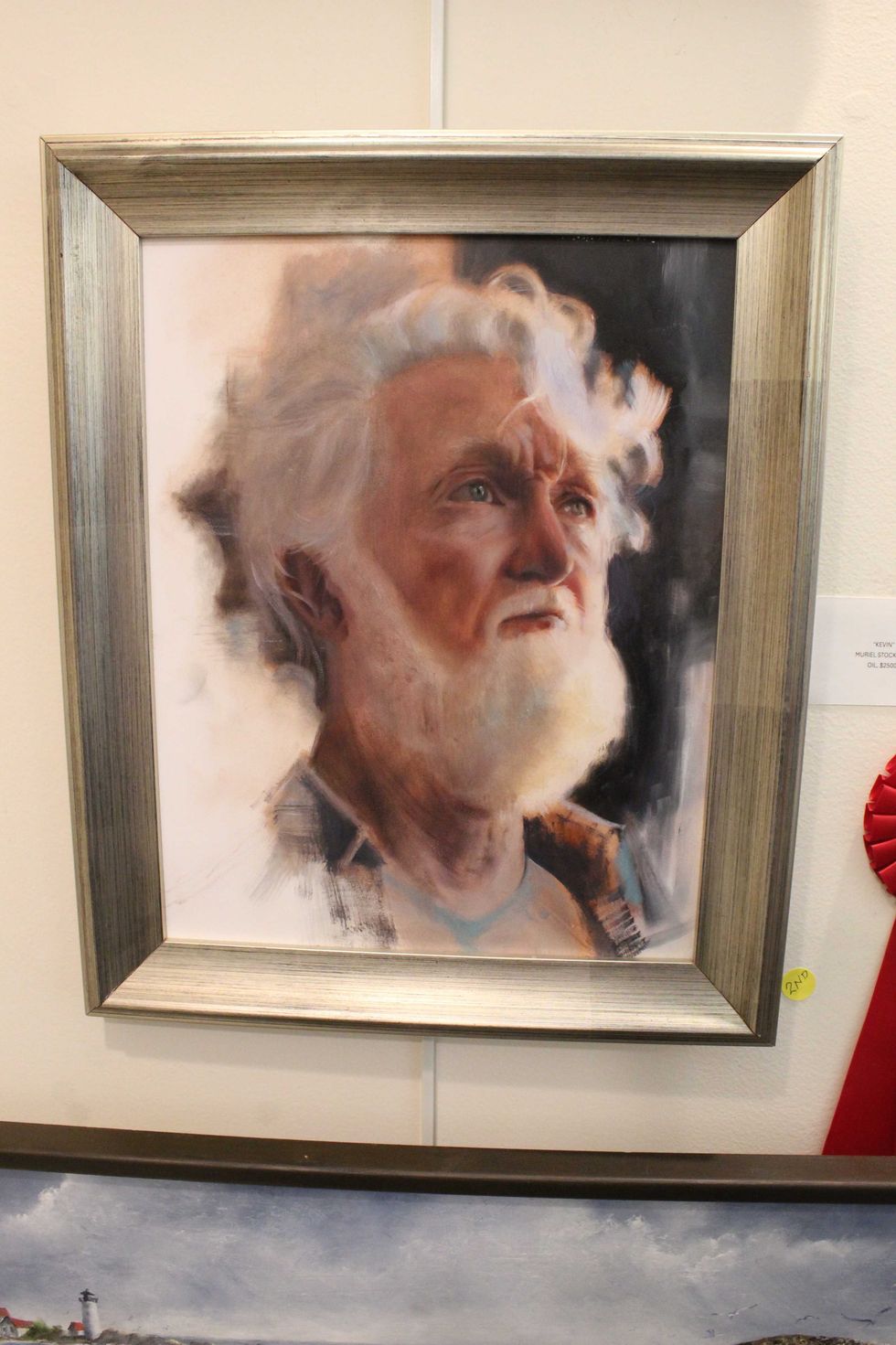 Muriel Stockdale’s “Kevin” took second place in the juried art show at Trinity Episcopal Church.Patrick L. Sullivan