On April 12, Pope Francis described the mass killings of Armenians by Turks (www.wsj.com/articles/armenia-marks-centenary-of-mass-killings-during-ott...) that took place in 1915 as the “first genocide of the 20th century.” In the U.S. press, the claim was widely taken on faith as factual, even though on secular matters the pontiff does not claim infallibility. It was The Guardian that quickly pointed out that the Armenian genocide was not the first of its kind in the mass-murderous 20th century. Something terrible had happened well before 1915 in the German protectorate of South West Africa, now Namibia. And so, ironically, as Germany sets an example to other EU countries by welcoming refugees seeking refuge from the horrors of war, it is being compelled to confront a dark episode in its colonial past.
On July 6, representatives of six German NGOs and a Namibian politician sought to hand a petition titled “Genocide is Genocide” to German President Joachim Gauck. Signed by more than 2,000 German public figures, including members of the German national parliament, the petition called on the government to accept “historical responsibility” for the genocide perpetrated against the Herero and Nama people starting in 1904. President Gauck declined to meet the petitioners.
Two days later, the German newsweekly Die Zeit carried an opinion piece by Norbert Lammert, president of the Bundestag, in which Lammert stated bluntly that Germany had waged a “race war” and a committed “genocide” in Namibia. “There were tens of thousands of Herero and Nama victims,” he wrote, “not only through fighting but also illness and targeted killing through allowing people to die of thirst and hunger. Others died in concentration camps and in slave labor. Just as the Turkish government bears responsibility for the way it deals with the genocide against the Armenians, we are also responsible for addressing this history.”
Ida Hoffman, a Nama and a member of the Nama Genocide Committee, pointed out that President Gauck had recently acknowledged the Armenian genocide of 1915 but not the Germans’ own genocide in Namibia. The year 1915 was, incidentally, the year Germany surrendered the protectorate to the Republic of South Africa.
The revolt of the Herero and, subsequently, of the Nama — both of them pastoralist peoples, with huge herds of cattle who had been converted to Christianity by Lutheran missionaries — was prompted by the colonists’ theft of their land and cattle and general arrogance and brutality.
The Herero revolt began in January 1904. In a letter to the then-commander of German troops in South West Africa, Chief Maherero explained what had driven him to take up arms: “You know how many Hereros have been killed by white people … with rifles and in prisons. And always when I brought these cases to Windhoek [the capital], the blood of the people was valued at no more than a few head of small stock.” For his part, Kaptein Witbooi, head of the Namas, in a letter to a magistrate in the British enclave of Walvis Bay, cited the inhuman punishments inflicted on his people by the German colonists: “[The German] has … beaten people to death for debt. He stretches people on their back and flogs them on the stomach and even between the legs, be they male or female, so Your Honor can understand that no one can survive such a punishment.”
Before the Hereros went to war, Chief Maherero issued an unusual order. “We decided,” an under-chief testified under oath, “that we would wage war in a humane manner and would kill only the German men who were soldiers, or who would become soldiers … and not young boys. … The missionaries, too, were to be spared, and they, their wives, and families, and possessions were to be protected by our people from all harm.”
Although the Herero warriors greatly outnumbered the German troops, the Germans had modern rifles, abundant supplies of ammunition, machine guns, and artillery. The conflict lasted seven months, culminating in the Battle of Waterberg.
In October 1904, after the Germans routed the Hereros at the Battle of Waterberg, General Lothar von Trotha issued what became known as the extermination order. It read, in part: “All the Hereros must leave the land. … Any Herero found within the German borders with or without a gun, with or without cattle, will be shot. No women and children will be allowed in the territory.” Survivors of the battle were driven into the waterless wastelands to the east, and wells along the border were poisoned to make sure that those who sought to return to their native land would die.
“The grim execution of this order over the following months,” writes historian John H. Wellington, “… makes a horrifying record of inhuman butchery, which drew loud protests from the people of Germany itself.” And, in due course, from German colonists, who urged that male Hereros and, subsequently, Namas be spared so they could serve as slaves, and women spared to be used as sex slaves. Before the revolt, there were an estimated 80,000 Hereros in the German protectorate, and 20,000 Namas. A post-war census found a mere 15,000 Hereros and fewer than 10,000 Namas.
In “The Rulers of Belgian Africa: 1884-1914,” L.H. Gann and Peter Duignan of the Hoover Institution put the barbarity of the German soldiers in general, apart from that of General von Trotha, in context, writing that, “for all their ruthlessness, [they] were no more brutal against the Herero than the Australians had been in their treatment of the Tasmanians [or] than the Americans … in their conduct toward the Indians. …”
Jon Swan is a poet, translator and journalist who lives in Yarmouth, Maine. He was senior editor of the Columbia Journalism Review from 1974 to 1994. After traveling to Botswana and Namibia, where he visited battle sites, he wrote a long article on the Namibia genocide that appeared in “MHQ: The Quarterly Journal of Military History” under the title “The Final Solution in South West Africa.”
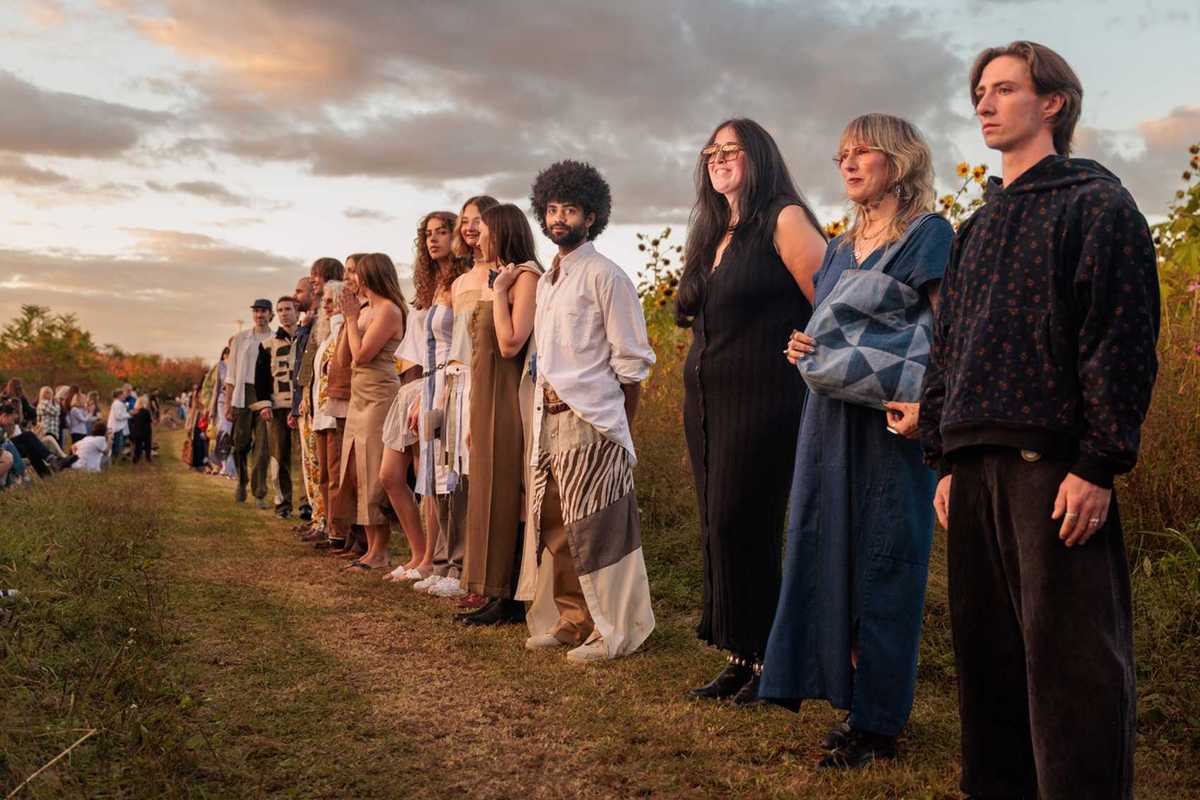
 Models walk the organic runway at HVSFW. Ilan Harel
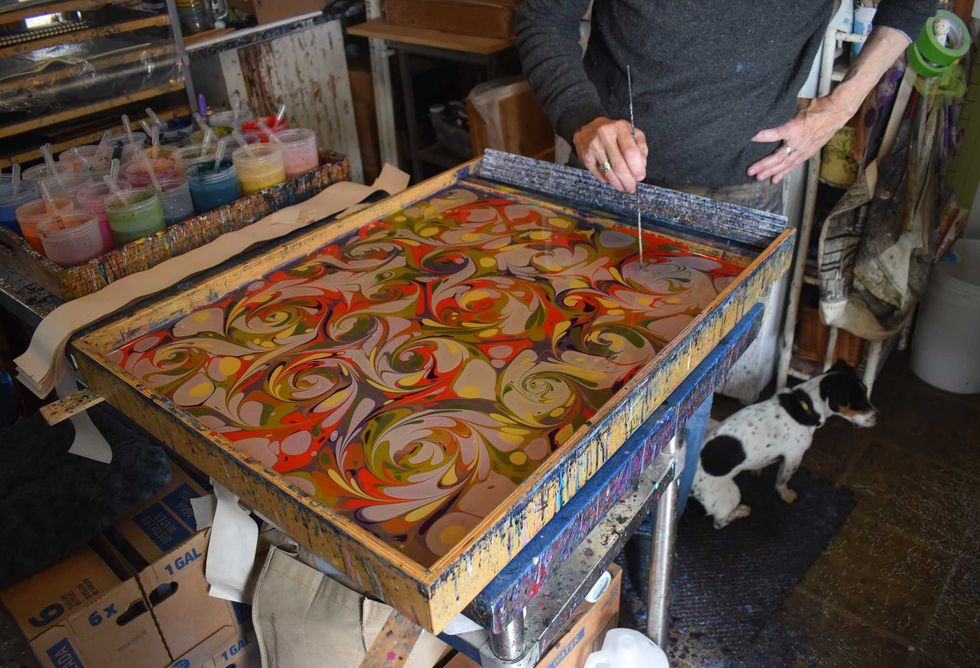 Susan Schneider, owner of Shandell’s, creates a variety of products with marbleized surfaces in her Ashley Falls studio.L. Tomaino



 Roger McKee naming the winners with the first place entry over his left shoulder. Patrick L. Sullivan
 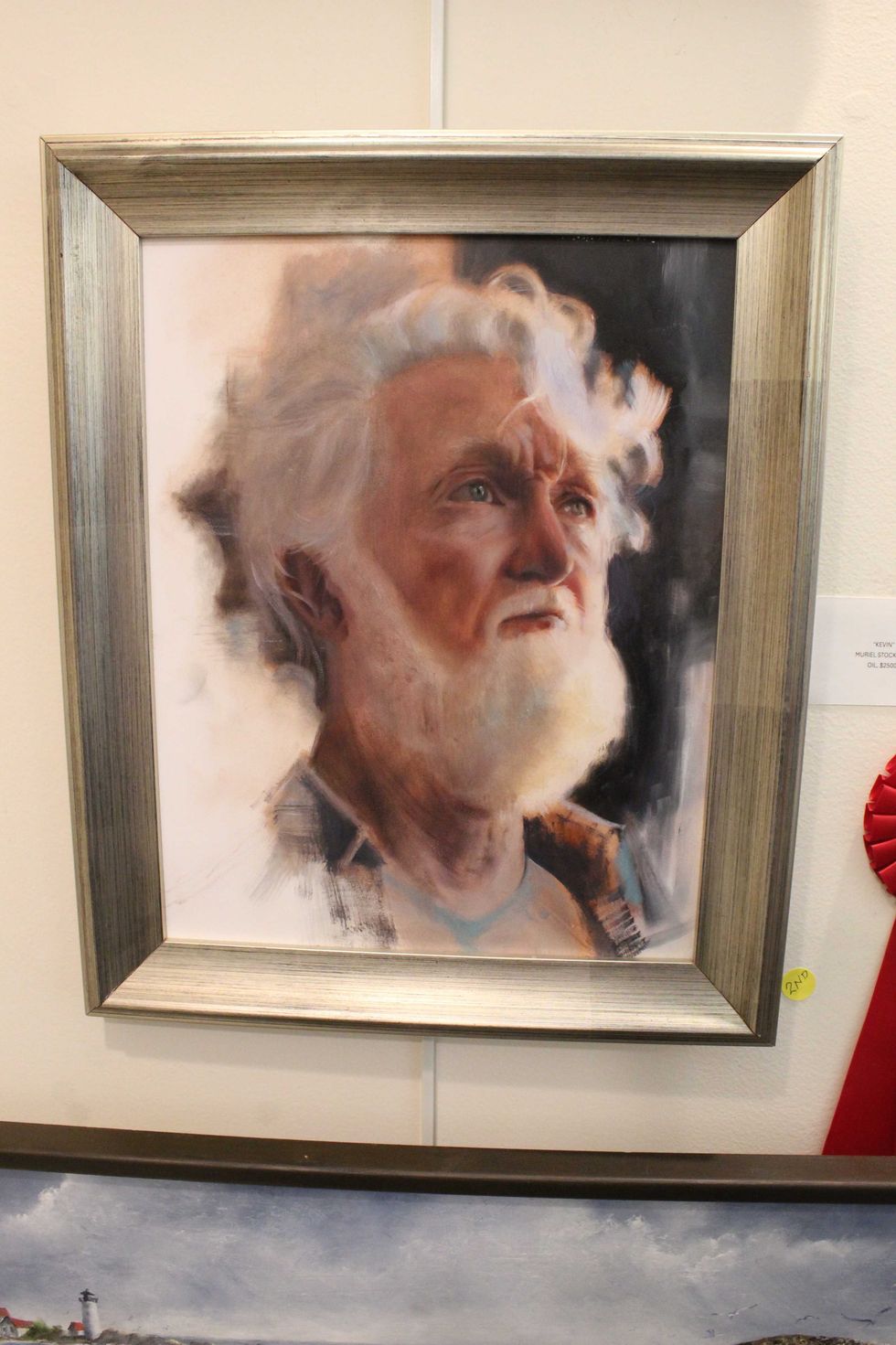 Muriel Stockdale’s “Kevin” took second place in the juried art show at Trinity Episcopal Church.Patrick L. Sullivan