Priscilla Rudd Wolf


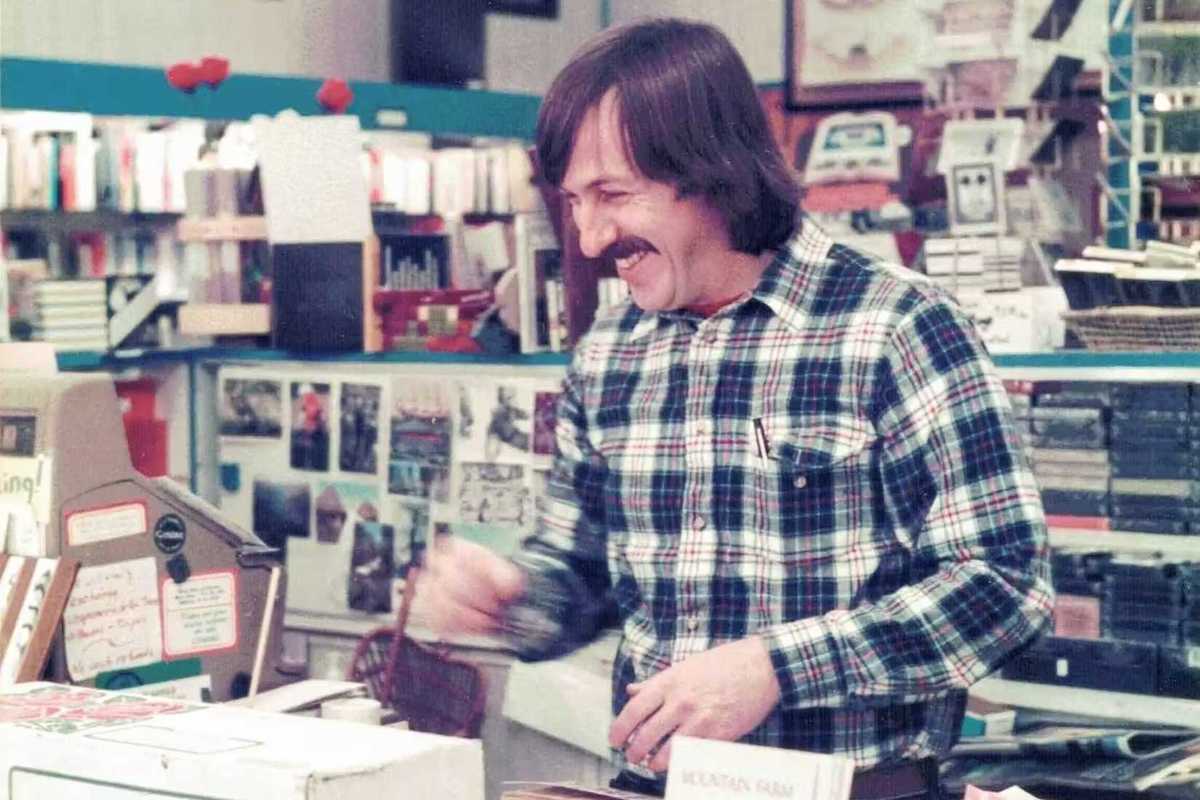
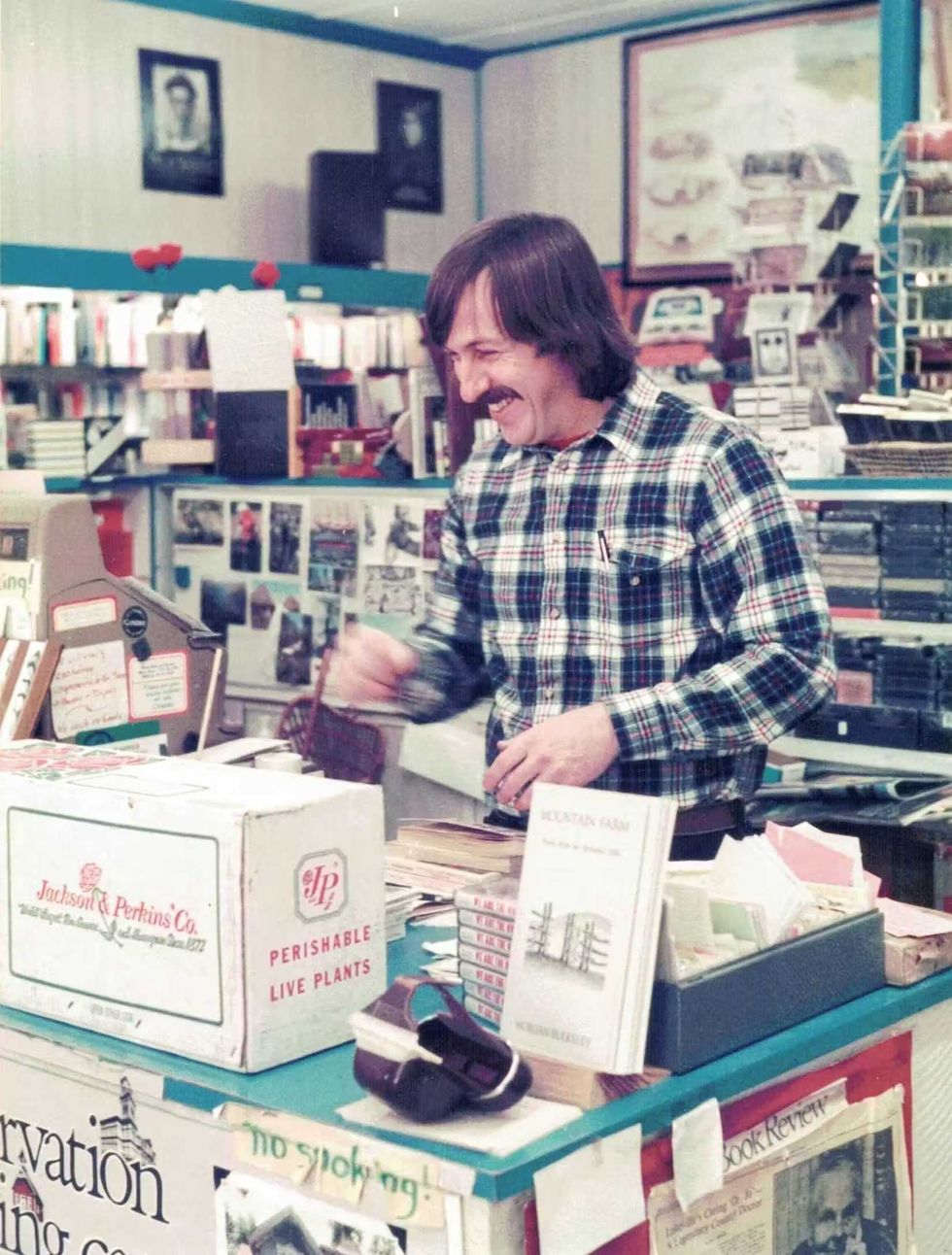
LAKEVILLE — Priscilla Rudd Wolf was born in Norwalk, Connecticut on May 29, 1946, the youngest daughter of Roswell Hopkins (“Hop”) Rudd and Josephine (“Jo”) Bauman. She was six years younger than her closest sibling, Eve, and had two older brothers Ben and Roswell. Priscilla, affectionately known as Prissy, and then only as Pris, when she had any say about it, grew-up as a dorm kid at Salisbury boys’ school, not an easy feat for a girl in the 1950s. By about age 12, her main goals in life were to (1) become a cheerleader, and (2) make her way onto American Bandstand; Jo wisely sent her off to Walnut Hill, an all girls boarding school, at age 14. Over the years, Pris gave mixed reviews of her boarding school days, but she always recounted fondly her summer visits to Block Island with her best friend, Jeannie Smith, and summer days at home in Lakeville. She loved sunbathing on the back porch of Hop and Jo’s lake house which was in clear view of Hop’s summer camp for boys where Peter Wolf was a counselor one summer. The rest is history with interludes along the way.
Priscilla pursued her love of literature at the University of Pennsylvania. She graduated in 1968 and started teaching 2nd Grade in Cornwall, Connecticut. Despite her “small town” upbringing, Pris was constantly surrounded by music, especially Jazz, thanks to Hop’s love of the drums, and her oldest brother Roz, who would go on to become an avant-garde Jazz trombonist. She was deeply influenced by the folk and rock music of the 60s and the social revolution sweeping the country at that time. She ventured to Canada and reconnected with Peter in Montreal. The precise details of how, when and where the romance bloomed remain murky—some say the decision to marry came one night from a Oudji Board—and on Nov. 28, 1970, Pris and Pete married and eventually made their way to New Brunswick, Canada, where they settled in a farm house in the middle of a potato field.
Their first daughter, Jessica, was born in Bath, New Brunswick, on June 1, 1976. Soon after, Jo became sick and Pris returned to Lakeville to be with her mom. Peter stayed behind in Canada with their 3 dogs: Farley, Dizzy and Gracie. Just before Christmas 1976, Pete was awoken by the dogs in the middle of the night to find the house burning down around him. He managed to escape with the dogs and two bags of clothes he grabbed on his way out the door. By the time the fire brigade arrived, the house had burned to the ground.
Peter and the dogs traveled to Lakeville to join Pris and infant Jess, who were living in Hop & Jo’s house on the lake. Sarah was born on Feb. 10, 1978. Back in her hometown and with two young daughters, Priscilla embraced her role as mom and home maker. On May 28, 1984, Zach was born. Pris and Pete fostered a home of unconditional love and acceptance. There was plenty of time for play, creativity and reading. Pris spent countless hours reading to her kids, and while TV was not allowed, the best movies were: anything featuring Ginger Rodgers and Fred Astaire, musicals, and the finest cinema (Priscilla’s favorites): Tootsie, Hopscotch, and Romancing the Stone, to name a few. Priscilla found her professional home and a community of friends at the Indian Mountain School where, following in her mother’s footsteps, she began working as a tutor for students with learning disabilities. She went back to school for a master’s degree in education and became head of the tutoring department and librarian. She would go on to develop what became the “Learning Center.” During her 30-year career at IMS, she shepherded generations of students through learning challenges and trained colleagues to do the same. She had endless patience for her students, many of whom were new English speakers or struggled with learning differences. All of them found acceptance, support, humor, and encouragement in the tutoring room with Priscilla. Her colleagues found a mentor, a skilled skit writer and performer for faculty roasts (stage name Prisca Fontain), a yoga instructor, a walking partner, and a loyal friend.
In her free time, Pris rarely sat down. She discovered yoga in her 50s and became an instructor. She loved to dance, to garden, to float in the lake atop Mount Riga and to take long walks. She was a devoted mother and grandmother who gave her grandchildren, as she had her children, the gift of constant, unconditional love and acceptance.
In March 2019, Priscilla was diagnosed with ALS, a disease she refused to succumb to and kept at bay by sheer force of will. Peter never left her side, becoming her primary caretaker and providing the constant love and support he had brought to their marriage for 55 years. She died peacefully in her home on May 24, 2026, five days before her 80th birthday. Her family is grateful to the friends and caretakers who stayed by her side throughout her devastating illness and to those who remember her as vivacious, funny, and always full of love.
Priscilla is survived by her brother, Ben Rudd, her husband of 55 years Peter, and their three children, Jessica, Sarah and Zachary, her son-in-law Carlos Fierro, and her grandchildren: Benjamin, Joesphine, and Emilia Fierro-Wolf.
A celebration of Priscilla’s life will be held at the Salisbury Congregational Church on Aug. 29 at 4 p.m.
If you wish to make a donation, please go: alsunitededct.org
Patrick L. Sullivan
This fish took a Wooly Bugger in basic black, with rubber legs. Always get the rubber legs.
Largemouth bass are not picky eaters. When engaged they usually dive and tug. Once in a while they leap. They are easily discouraged, however, and after a minute or two come meekly to the net.
Every August I shift gears and head to the ancestral HQ with no electricity, minimal plumbing and a warm-water lake chock-full of largemouth bass, not to mention smallmouth, perch, pickerel and panfish. The largemouth are the main attraction.
I used an antique rowboat for years. Then a canoe, which was awkward to manage solo, especially when the wind picked up.
Then I hit on a succession of inflatable pontoon and belly boats, powered by oars and/or swim fins, and there I have remained.
Did I forget to mention that no motors are allowed on this lake? Well, no motors are allowed, and it’s no good arguing that a small electric trolling motor couldn’t possibly hurt anything. Ask me how I know this.
It’s a quiet, rejuvenating few weeks. The phone gets enough signal on one end of the deck to receive messages and maybe make a call if the wind is right. If something comes up, it’s only 15 minutes to so-called civilization.
When not fishing, I read, visit assorted cousins, listen to baseball on the AM radio and/or stare blankly into the middle distance.
Bassing with a fly rod in still water is a different game than chasing trout in streams.
A medium-fast-action rod, 8 to 10 feet, in line weight 7 or 8 is the starting point. The flies are big, and the wind is constant, so the angler needs some power, tempered with a bit of finesse.
I usually bring two rods. One is rigged with a floating line with a heavy front taper for turning over surface flies such as poppers.
The other has either a sink-tip or intermediate line. The lake is not all that deep, and the Woolly Buggers, Clousers and other streamers are heavy. The idea is to stay out of the vegetation while getting close to where the lunkers are hunkered down.
I use short nylon leaders, 7.5 feet with 1X tippet out of the package, and modify them constantly with additional sections of fluorocarbon tippet, snaps and droppers.
Surface action is usually minimal during the day unless it’s overcast. The lake runs east-west, so the angler can track the midmorning and late-afternoon shadows and work those areas.
Or the angler can wait until about 6:30 p.m., when things start to pick up.
Or get out there at the crack of dawn, which is best if surface action is the goal.
For subsurface fishing, some experimentation is required to find the right combination of flies, leader and sink rate. The angler also has to decide whether to troll.
There are a few places where a dry-dropper rig is appropriate, the dry being an extremely buoyant popper with a piece of stout fluorocarbon tippet tied to the bend of the hook and something heavy and wiggly at the end, like a stonefly nymph with rubber legs. (Always get the rubber legs.)
If this sounds like a bobber, it’s because it is. Don’t tell anyone. The purists don’t like it.
A net with a long handle is necessary. There is no leverage when sitting in what amounts to a floating chair.
I do not bring my phone for fish pictures. I will drop it into the depths. Ask me how I know this.
Instead I bring a small point-and-shoot camera. These get lost too, but perversely I have better luck keeping the cheap gear safe than the expensive items.
Sunscreen is applied liberally and frequently. After 50-odd years of being outside, I now have to visit the dermatologist every so often to have my face edited, and I don’t enjoy it.
A baseball cap does nothing for the ears and neck. I have a hat with a wide brim and a vented top, so it doesn’t get too hot. It looks stupid, but this is an acceptable risk.
Finally, a word about the quarry. Largemouth bass are not picky eaters. When engaged they usually dive and tug. Once in a while they leap. They are easily discouraged, however, and after a minute or two come meekly to the net.
Smallmouth, not so much. These aren’t especially big, but every smallie I’ve ever met thought it was much bigger than it actually was. Expect acrobatics.
Perch usually grab my fly when I don’t want them to.

Panfish are everywhere. They are extremely cooperative. Chasing sunnies is a good way to get a newcomer started.
And then there are the pickerel. These are nasty fish. Very antisocial. I keep a pair of long-handled pliers handy to get the fly out of their mouths safely while admiring the large number of very sharp teeth. They will bite the pliers. Do not use your fingers. Again, ask me how I know this.
Upon release, it’s not unusual to observe the pickerel hanging around a few yards away, glaring and plotting hideous revenge.
So this is the August routine, occasionally leavened with a scramble into a brook trout stream if conditions allow.
It’s peaceful. Kind of boring, in a good way.
And then in the fall the game shifts back to rivers and streams for trout.
Natalia Zukerman
Broadway is going way off Broadway when it heads outdoors for The Festival at Hutton Brickyards in Kingston Aug. 14-16, transforming the Hudson River waterfront into a three-day celebration of show tunes, stars and sing-alongs. The inaugural event features an all-star lineup including Audra McDonald, Kelli O’Hara, Renée Elise Goldsberry, Brian Stokes Mitchell and dozens more, along with a 30th anniversary celebration of the musical “Rent” featuring original cast members.
Hutton Brickyards is a former 19th-century brickyard transformed into a historic riverfront hotel and event destination spanning 100 acres along the Hudson. Beyond the nightly concerts, festivalgoers can expect campfire sing-alongs, dance parties, master classes, costume contests and a marketplace highlighting Hudson Valley food, drinks and artisans.
Three-day passes and more information are available at BroadwayFest.com.
Natalia Zukerman
The Crandell Theatre in 1948.
Originally built as an “atmospheric theater,” the Crandell was designed to transport audiences beyond the walls of the auditorium. Its sloped floor, proscenium arch, orchestra pit and balcony seating reflected the grandeur of early 20th-century movie palaces.
Crandell Theatre in Chatham has spent a century bringing stories to the big screen, and this December the historic theater will celebrate its 100th anniversary with a yearlong tribute to the films, filmmakers and community members who have helped keep it alive.
The celebration continues Sunday, Aug. 23, with a special screening of Martin Scorsese’s “The King of Comedy,” presented as part of the theater’s 100th Anniversary Series by Bill Kramer, CEO of the Academy of Motion Picture Arts and Sciences. Kramer will introduce the 1982 film, a darkly comic exploration of celebrity, obsession and the pursuit of fame.
The 100th Anniversary Series invites industry leaders and film experts to share movies that have influenced them and continue to inspire new generations of audiences.
“The King of Comedy” is a fitting selection for a theater whose own story is rooted in the enduring power of cinema. Built in 1926 by Chatham native Walter S. Crandell, the theater opened on Christmas Day of that year with the silent film “Michael Strogoff.” Designed by Glens Falls architect Louis L. Wetmore in the Spanish Renaissance style, the freestanding building quickly became a beloved fixture on Main Street.
Originally built as an “atmospheric theater,” the Crandell was designed to transport audiences beyond the walls of the auditorium. Its sloped floor, proscenium arch, orchestra pit and balcony seating reflected the grandeur of early 20th-century movie palaces. Sound equipment was added in 1929, allowing the theater to transition from silent films to “talkies.”
Over the decades, ownership changed hands, but the theater remained a gathering place for generations of moviegoers. In 2010, following the death of longtime owner Tony Quirino, the theater faced an uncertain future. Community members rallied to save it, with the Chatham Film Club raising approximately $600,000 to purchase the building and complete critical repairs.
The Crandell reopened as a nonprofit community theater in July 2010. In 2018, the organization officially adopted the theater’s name, bringing together its film programming, preservation efforts and annual FilmColumbia Festival under one mission: preserving the theater as a cultural anchor for Chatham and the surrounding region.
A major restoration and modernization project was completed in 2025, bringing the historic theater up to current standards while preserving its architectural character. The renovation included updates to the auditorium, projection systems and building infrastructure.
For former board member Carol Sadlon, the upcoming centennial represents both a celebration of the theater’s history and a testament to the community that has protected it.
“It has been an honor to serve on the Board of the extraordinarily unique Crandell Theatre, celebrating its 100th birthday this December,” Sadlon said. “Renovating the not-for-profit community theater has been a labor of love and commitment for all involved.”
Sadlon noted that the theater’s creation in 1926 reflected the optimism of the era, and that the same spirit continues today.
“Walter S. Crandell, successful Wall Street investor and native son of Chatham, built the 500-seat theater for a community of 3,000 people,” she said. “Thanks to an equally optimistic group of people, the Chatham Film Club, who purchased the theater in 2010, and a very generous community, the theater lives on to continue entertaining for future generations.”
The Crandell Theatre’s 100th Anniversary Series screening of “The King of Comedy” will take place Sunday, Aug. 23, at 4 p.m.
For tickets and more information, visit crandelltheatre.org.

Want more of our stories on Google? Click here to make us a Preferred Source.
Natalia Zukerman
MOMIX is one of the featured performers at this year’s Arts Connected fundraiser on Aug. 29.
The Northwest Connecticut Arts Council will celebrate the region’s vibrant arts community with Arts Connected 2026, its annual fundraising event, on Saturday, Aug. 29, from 5 to 8 p.m. at Buck’s Rock Camp in New Milford.
More than a fundraiser, Arts Connected is designed as a celebration of the artists, performers and organizations that make the Northwest Corner’s cultural landscape thrive. Guests can enjoy live music and performances, a curated gallery of artwork by regional artists, local food and drinks, and opportunities to connect with fellow arts supporters. Tickets include hors d’oeuvres, an open bar and all entertainment.

The evening will feature live plein air painting by artists from Plein Air Litchfield, performances by Our Culture Is Beautiful (OCIB), fire performer Cinderfella, and Susan Becker Aziz’s monumental humpback whale puppet, originally created for Paul Winter’s “Missa Gaia.” Guests will also have the opportunity to purchase artwork from a curated exhibition, with proceeds supporting the Arts Council’s mission to strengthen and promote the arts throughout Northwest Connecticut.
This year’s honorary host committee includes Meryl Streep, Diane von Furstenberg, Tim Daly, Téa Leoni, Maria Horn, Patti LuPone, Jack O’Brien, Sam Waterston and Paul Winter. Creative cocktail attire is encouraged, and attendance is limited. The event is open to guests 21 and older.
For more information or to purchase tickets, visit artsnwct.org
Robin Roraback
Once I get all the colors in, they change. Who knows? I might consider more radical colors and then bring it back a little.
— Robert Cronin
Renowned painter Robert Cronin of Falls Village celebrated his 90th birthday with an exhibition, “Robert Cronin: New Paintings,” at the Hunt Library in Falls Village which opened Aug. 8 and will be on view through Sept. 11.
Cronin paints most days in his home studio. He keeps his work fresh by trying new things and has had different phases of work, including figure paintings, paintings on paper, a modular, circle and enclosure series of paintings, as well as a tinplate sculpture series.
Cronin said he never expected to pursue art as a career. He started out at Boston College pursuing another degree but, luckily for him, flunked out and enrolled at the Rhode Island School of Design.
At first, he thought he’d pursue industrial design. But once he was immersed in drawing and painting, he realized he had a natural talent for it. “I fell in love with basic stuff. I had never owned a set of paints.” While at RISD, “In 1958, I instinctively fell into abstract work.”
After graduating from RISD and working for a time as a cleaner at Massachusetts General Hospital while painting whenever he could, he was awarded a full scholarship to an MFA program at Cornell University, along with a living stipend.
He went on to teach for 18 years at various schools, including Brown University, Bennington College and the School of the Worcester Art Museum, which he said he enjoyed the most. “I love my memory of that more than academic places. Whether Brown or a certificate program like Worcester, when you’re good, you’re good.”
After leaving Worcester in 1980, he moved to New York City to pursue his art career. He found success and exhibited his work in several galleries in New York City and around the world.
In 1990, Cronin moved to Connecticut, settling in Falls Village, where he left his tinplate sculpture phase behind and concentrated on painting again.
He explained his current approach to painting. “Everything in this show,” he said, “had a preliminary drawing. Most of my life has been starting from scratch, with no preliminary drawings.”
He makes many small sketches. “One out of 20 drawings may become a painting.” He enlarges the sketch on a copier, transfers it using a grid and paints it on a 16-by-20-inch canvas.
“Once I get all the colors in, they change. Who knows? I might consider more radical colors and then bring it back a little.”
Of starting a new painting, he said, “You don’t know what you are getting into, but it’s terrific.”
To learn more about Cronin and his work, visit robertcroninart.com.
The exhibition will be on view at Hunt Library in Falls Village through Sept. 11. Cronin will give an art talk Thursday, Aug. 13 at 5:30 p.m.
Allison Gollenberg
The Litchfield County Clipper runs between Thomaston and Torrington.
Every Sunday until the end of August, passengers can ride back in time on the Litchfield County Clipper, a scenic train running between Thomaston and Torrington on the county’s only passenger rail line.
The train, operated by the Railroad Museum of New England and the Naugatuck Railroad, follows the Naugatuck River through Mattatuck State Forest and along the Thomaston Dam, making it the only railroad in the country that operates over the face of an active dam. For $26.50 passengers can ride all day, boarding or disembarking at any of the train’s three stops, which include two stops in Torrington and one in Thomaston.
Scott Becker, chair of the Celebrate 30 Committee at the Railroad Museum of New England, said he hopes the project increases local tourism and helps people appreciate the cities as they have in the past.
“The railroad is not just a tourist railroad or heritage railroad. It links the two towns, just like it did in 1849, 177 years ago,” Becker said. “History is repeating itself. The railroad was always an economic development generator.”
In Torrington, there are stops at Market Street Creatives, an artisan market housing 230 vendors, and the newly restored Railroad Square, a short walk from the city’s downtown. Some local businesses offer passengers discounts if they bring their ticket.
Market Street Creatives opened in August 2025, in the building that housed Turner and Seymour Manufacturing Co. from 1870-2009. Owner Eric Royer wanted to create a space that gave small businesses a chance to showcase their work without expensive, long-term rental commitments.
“I had a big manufacturing company in town. I just got tired of it,” Royer said, “When I turned 50, I decided I wanted to start a business that was going to make a difference locally, in our community. I wanted to be able to help small businesses start and grow.”
The market recently partnered with the railroad museum, even programming and installing its own departures board to keep visitors apprised of the train’s whereabouts. Royer said it’s brought in a good bit of business.
“It brings in a couple hundred people over the weekend,” Royer said. “No other vendor market around that I know of has train access.”
Railroad Museum of New England Board of Trustees Vice President and Volunteer Coordinator Craig Czarsty said planning for the Litchfield County Clipper started back in December and was inspired by the revitalization projects happening in Torrington.
Today, the railroad offers scenic excursions, but for more than a century after opening in 1849, it was a vital transportation corridor, carrying passengers, mail and freight. The line stretched from Bridgeport to Winsted and even offered express service to New York City. Clock manufacturers, including Seth Thomas, relied on the railroad to ship their products.
“One of the things that’s fascinating to me is that more clocks were made in the Naugatuck Valley than anywhere else,” Becker said, referring to Thomas’ company, Ansonia Clock Company and Waterbury Clock Company. “You had all these clock companies, and they had to get their clocks to market, and the railroad was central to the whole thing.”
All that came to an end in 1955, though, after hurricanes Connie and Diane flooded much of the region. The floods wiped out sections of the railroad, destroyed factories and washed away the local manufacturing industry.
“That’s why they built Thomaston Dam, so that if they had future storms, they’d be able to keep the storm surge from going down the river into those towns,” Becker said. “It’s interesting, the river brought life to the area for manufacturing, but also, when the hurricane came, it caused a lot of devastation. Hurricanes really ripped the heart out of Connecticut’s manufacturing.”
Becker, who’s been involved with the museum since 1984, has seen the Thomaston station grow from a burnt-out building beside an overpass to the scenic attraction it is today.
Passenger service to the Thomaston station ended in 1958, and the building had various uses before being partially destroyed by arson in 1993. The museum purchased and restored it in 1996 and 1997.
The museum runs various seasonal trains, including an autumn colors train, a holiday train and a tequila train, which Czarsty said is very popular. Last year, he said, their holiday trains saw 27,000 visitors in about a month.
While the Naugatuck Railroad’s employees restore and maintain the trains, the museum is a nonprofit and train service is run entirely by volunteers.
On Sept. 26, the museum will celebrate 30 years in Thomaston, operating special trains all weekend in commemoration, including a newly restored locomotive from the New Haven Railroad. Becker said the past 30 years wouldn’t have been possible without volunteer and community support. It’s expensive to run a rail line, Czarsty said, and fundraising keeps it all chugging.
For more information and train schedules, visit rmne.org/excursions/countyclipper

Want more of our stories on Google? Click here to make us a Preferred Source.

Want more of our stories on Google? Click here to make us a Preferred Source.