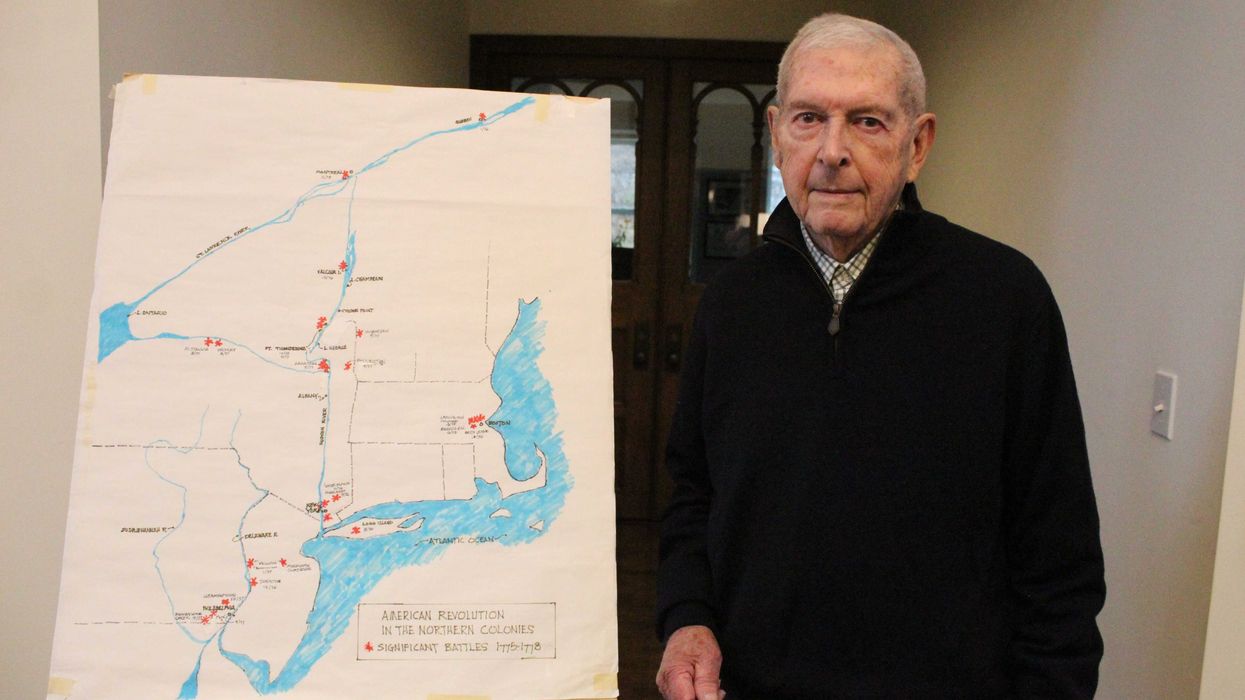
SALISBURY — In a region rich with Revolutionary War history, Tom Key, a self-described “redneck engineer,” offered residents a deeper look at some of the lesser-known events of the American Revolution during a talk at the Scoville Memorial Library on Sunday, Nov. 9.
The program was part of an ongoing series tied to author Russell Shorto’sbook “Revolution Song.” Copies are available at the library, and Shorto is scheduled to appear in person on March 27 with local teachers Peter Vermilyea and Rhonan Mokriski through the Salisbury Forum — a group well-known for its public discussions on history, politics and culture.
Key focused on the Revolution’s early stages in the northern colonies, outlining events that shaped the era in New England. He described the tense buildup to April 18, 1775 — the night of Paul Revere’s famous ride — noting that colonists around Boston were already stockpiling munitions while British General Thomas Gage watched from the city, “getting nervous.”
According to Key, the colonists expected a British march of roughly 1,000 soldiers toward Lexington. When the troops advanced, the colonists fired and retreated, setting off the skirmishes that led to the start of the war. As the British continued toward Concord, American fighters harassed them using what Key described as “guerrilla” tactics — an approach that would define New England’s early resistance.
With no reinforcements nearby, the British pulled back toward Boston. “That’s when it got vicious,” said Key. American snipers targeted the retreating troops, causing casualties and demoralizing the redcoats.
Back in Boston, Key said, the Americans “tightened the noose” by constructing a redoubt or temporary fortification on Breed’s Hill — the precursor to the more widely remembered Battle of Bunker Hill. Built overnight, the fortification heightened British frustration.
“Gage sent three waves against the colonials, into coordinated fire,” Key said. “It was a killing field.”
But the tactic was effective. By the last wave, the colonials were out of ammunition and were overrun by the British.
Key then shifted to Benedict Arnold, a figure with ties throughout New England.
Arnold participated in the siege of Boston before proposing the capture of Fort Ticonderoga on Lake Champlain. After that accomplishment, Arnold launched an ambitious attack on Quebec.
Key explained that Arnold began the expedition in September 1775 with 1,100 men, traveling up the Kennebec River in Maine before attempting a grueling march through the wilderness. The mission quickly faltered amid brutal weather and supply shortages. At one point, Key said, Arnold “saved the day” by buying a herd of cattle from a Frenchman so his troops could eat.
Reinforced by Gen. Richard Montgomery, Arnold pressed on and attacked Quebec City on Dec. 31, 1775. Montgomery was killed, Arnold was badly wounded, and the assault failed.
Arnold went on the following year to fight a series of naval actions on Lake Champlain that were ultimately unsuccessful but did delay the British advance to the south.
When asked why Arnold defected in 1780, Key said Arnold had accumulated a long list of grievances, beginning with not being paid.
His reputation had been challenged, leading him to request a court martial to clear his name. “Remember, a court martial wasn’t always a bad thing,” Key said.
Arnold also resented the personal and financial costs of leadership, was embittered by his wounds, and was grieving his wife’s death. While administering Philadelphia, Key added, “he lived it up, more like a Tory” than a committed revolutionary.
“Hurt feelings? Money? Opportunist?” Key asked. “But not a coward.”
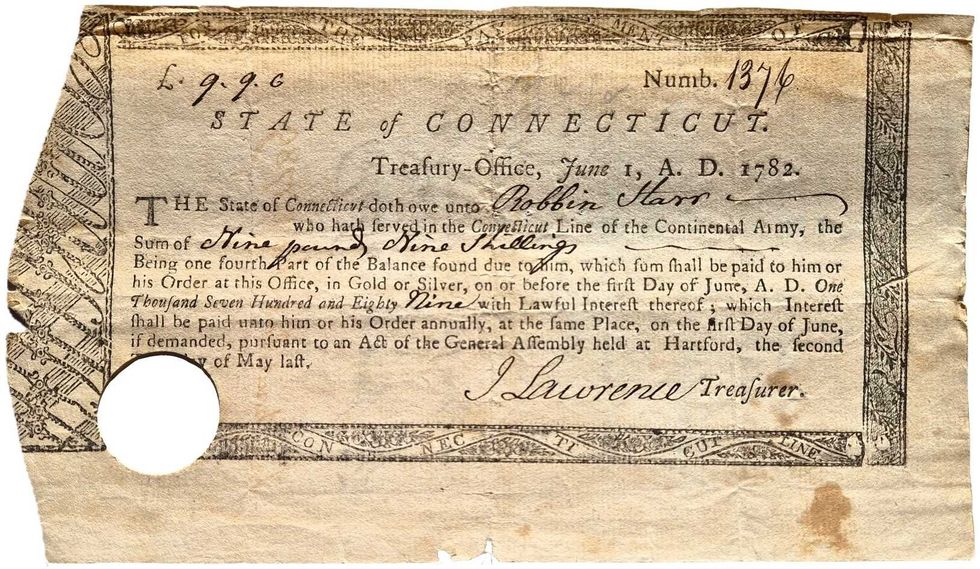 Pay Bill for Robin Starr’s service in the Continental Army.Courtesy the Alex Breanne Corporation
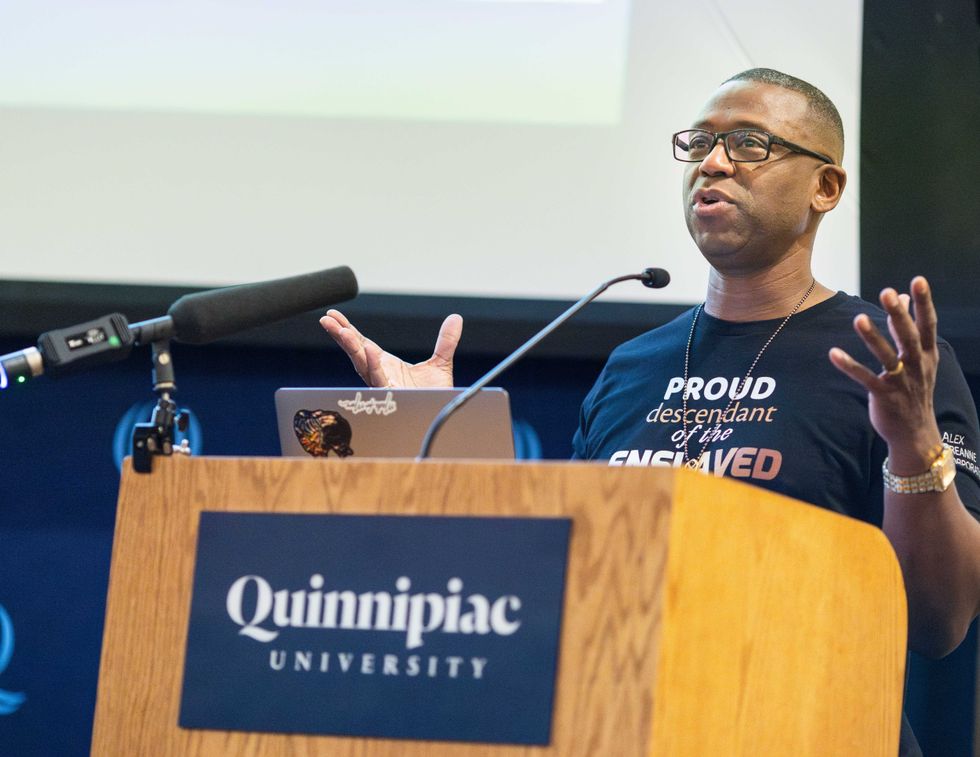 John Mills speaking at Quinnipiac University.Courtesy the Alex Breanne Corporation
 Stephanie Saetta,with her rescue dog George and Blue (left), a shepherd mix awaiting his forever home.Madi Long
 Blue, a 7 year-old Shepard mix, is waiting for his forever home. Madi Long