SHARON – The threat of invasive species emerged as a key concern during a recent discussion on conservation and farmland preservation, as town officials and representatives from seven local groups and organizations worked to shape recommendations for Sharon’s Plan of Conservation and Development (POCD)on Wednesday, May 27.
The meeting marked the second of three public discussions focused on priorities identified through a town survey earlier this year for the state-required plan, which guides land use and growth. The current plan was adopted in 2006 and must be updated every decade. An April 22 meeting focused on economic development, and housing will be the focus of the final session in June.
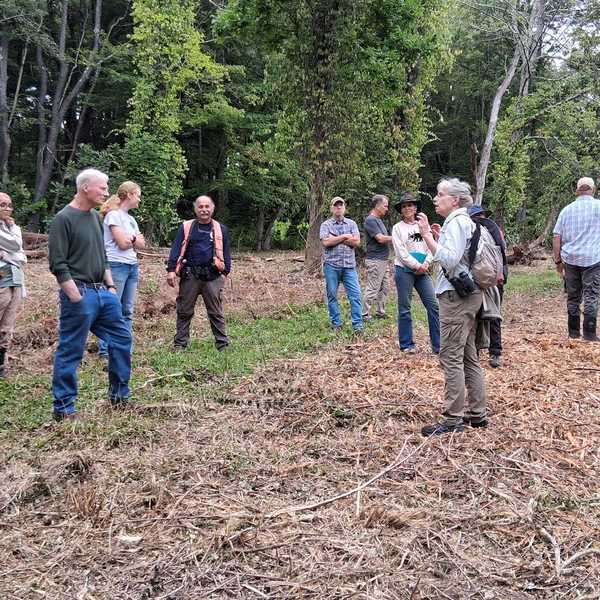
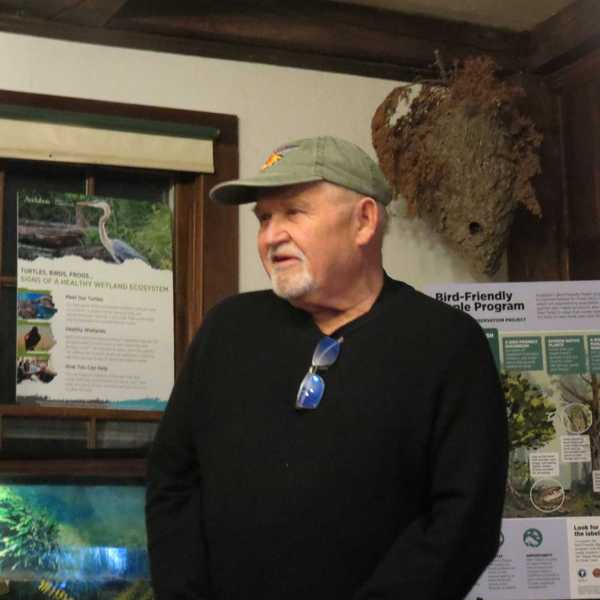
“I don’t think we can overemphasize the importance of invasives,” said Michael Dudek, secretary of the Inland Wetlands Commission and the land and buildings manager at Sharon Audubon Center. “More things come in every year,” he added, “and we’re not just talking about plants – we’re talking about insects.”
In addition to common invasive shrub plants like Japanese barberry, multiflora rose and burning bush, which can overtake the understory, and climbing vines like oriental bittersweet, tree diseases resulting from bugs have become a primary invasive threat in New England’s forests.
The eastern hemlock has been under attack for decades by a pest called the hemlock wooly adelgid, while beeches, one of the Northeast’s most common forest trees, are now existentially threatened by beach leaf disease caused by invasive nematodes. The spotted lanternfly is also capable of inflicting ecological and agricultural damage.
Sharon Energy and Environment Commission member Michael Nadeau said that there are steps to take at the municipal level to help mitigate the spread of destructive invasives, pointing at the Town Garage’s road materials stockpiles.
“It is riddled with invasives,” he said of the facility, noting that contaminated salt and sand can spread the plants to vulnerable locations. “The easiest way to control invasives is to prevent them,” he said.
Several participants also advocated for updates to the town’s online conservation and land protection resources. Robin Zitter, horticulturalist and member of the IWC, called for an update of the Natural Resources Inventory, a 94-page document compiled by the Conservation Commission in 2005.
Zitter pointed specifically to documenting and mapping out vernal pools, which are transient ponds that flood each spring and dry by summer. They serve as a vital breeding habitat to several amphibian species, Zitter said, and are at risk from development.
Janell Mullen confirmed that the Conservation Commission had also indicated a desire to update the Natural Resources Inventory.
Zitter also asked for updated mapping that would be easily available online to both town commissions and members of the public, which was echoed by Sharon Land Trust Executive Director Carolyn Klocker.
Mullen said one of her priorities is to create a single online database of maps for both commissions and residents alike. Resources could range from Sharon Land Trust trail maps to the Historic District map, which is currently only available as a physical document at Town Hall.
Several in attendance directly addressed how the town’s zoning regulations might guard its resources. Resident Carol Flaton expressed a desire to see ridgeline protections explicitly stated in town code.
David Moore, speaking on behalf of the Mudge Pond Association, suggested the establishment of a Mudge Pond overlay district that would establish site-specific restrictions around the lake.
“Mudge Pond is a huge asset to this town,” he said. “It’s increasingly apparent how at risk water bodies in Connecticut are right now.”
The next planning session, which is open to the public, will take place at Town Hall at 4:30 p.m. on Wednesday, June 24, and will focus on housing.



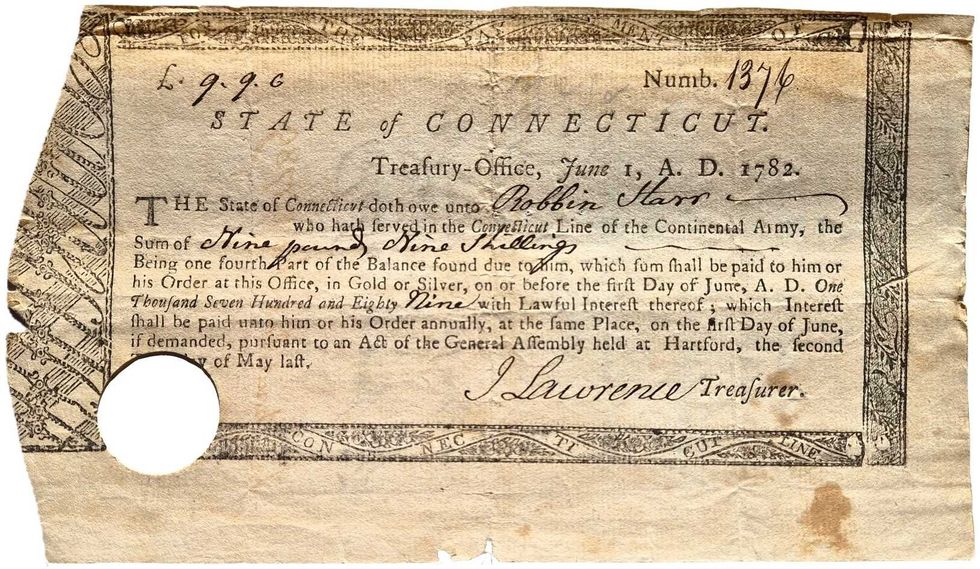 Pay Bill for Robin Starr’s service in the Continental Army.Courtesy the Alex Breanne Corporation
 John Mills speaking at Quinnipiac University.Courtesy the Alex Breanne Corporation
 Stephanie Saetta,with her rescue dog George and Blue (left), a shepherd mix awaiting his forever home.Madi Long
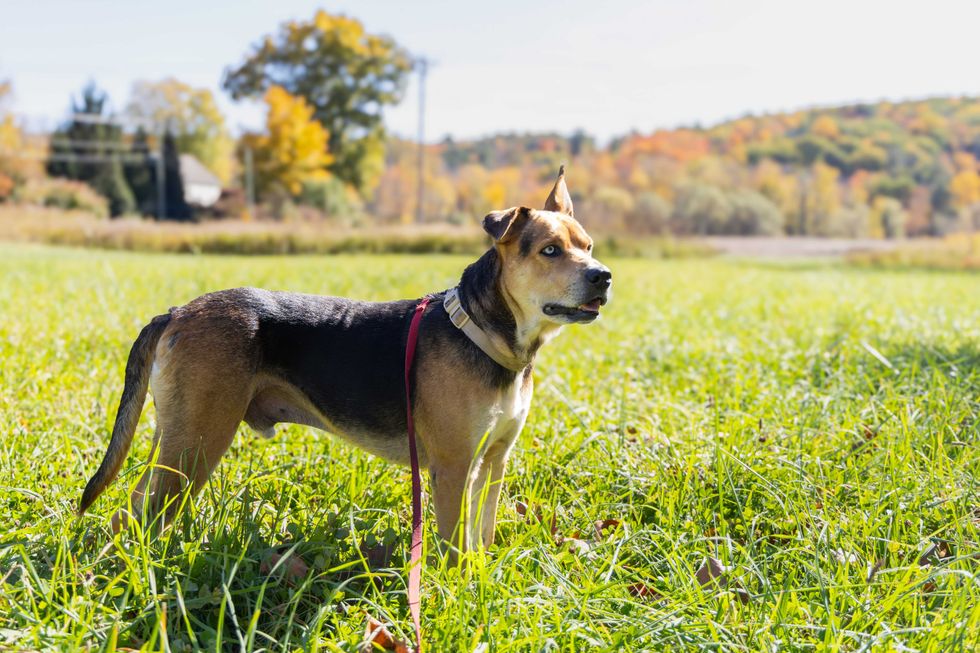 Blue, a 7 year-old Shepard mix, is waiting for his forever home. Madi Long