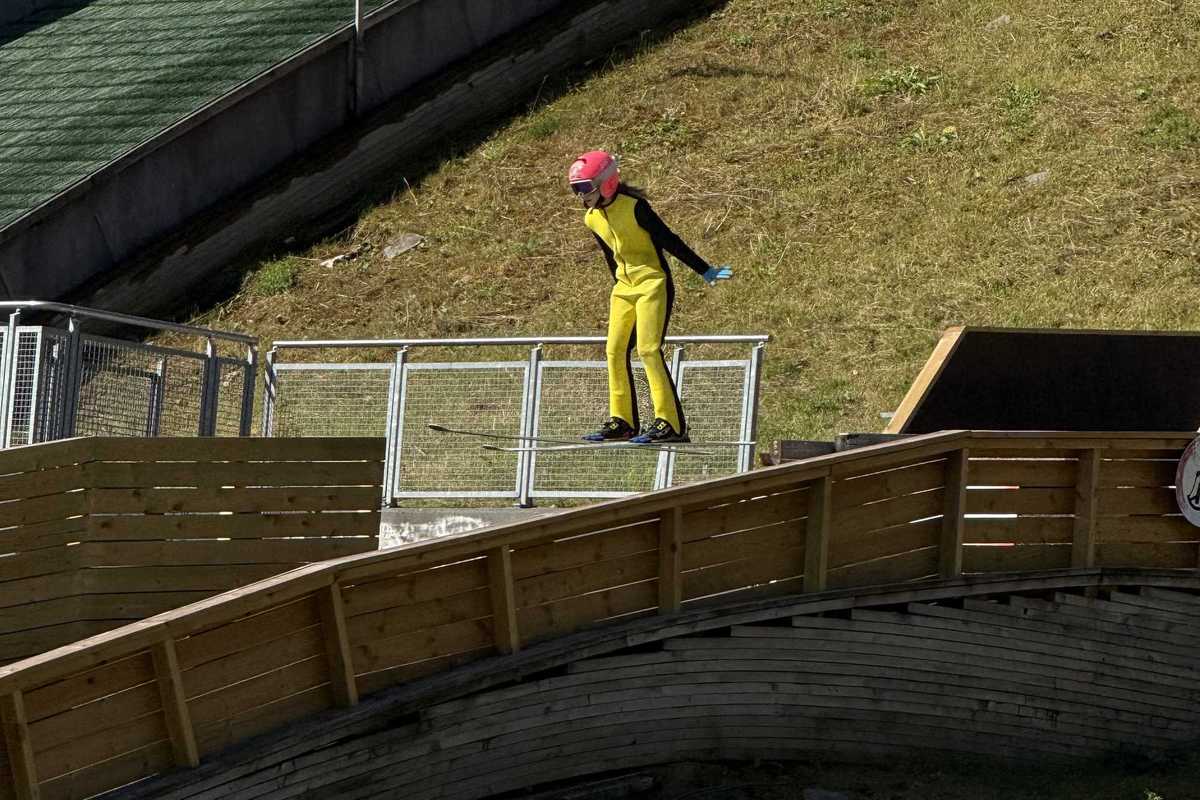
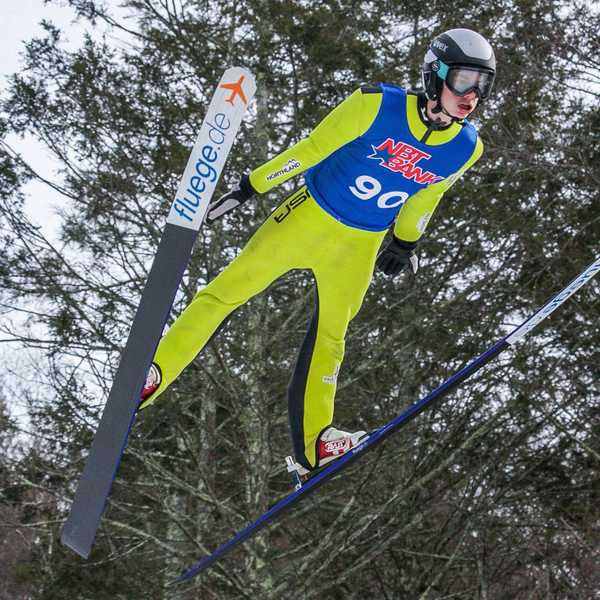
Winter may be competition season for ski jumpers, but much of their development takes place during the summer, when athletes train without snow on metal inruns and water-slicked artificial landing surfaces.
Members of the Salisbury Winter Sports Association traveled from Alaska to Norway, Slovenia, and Austria this summer to train on unfamiliar hills and refine their ability to adjust to different speeds, surfaces, weather conditions, and hill configurations.
The traveling group included Caleb Bodwell, Camden Hubbard, Oona Mascavage, Charlotte Milner, Imogen Milner, Aerin Sheil, Henry Sheil, Islay Sheil, Wyeth Taylor, and Gus Tripler.
Bodwell traveled to the Karl Eid Ski Jumping Complex in Anchorage, as well as Fox River Grove, Illinois.
“It was amazing getting to jump the K65 at midnight while it was still bright and sunny out,” Bodwell said of his experience in Alaska.
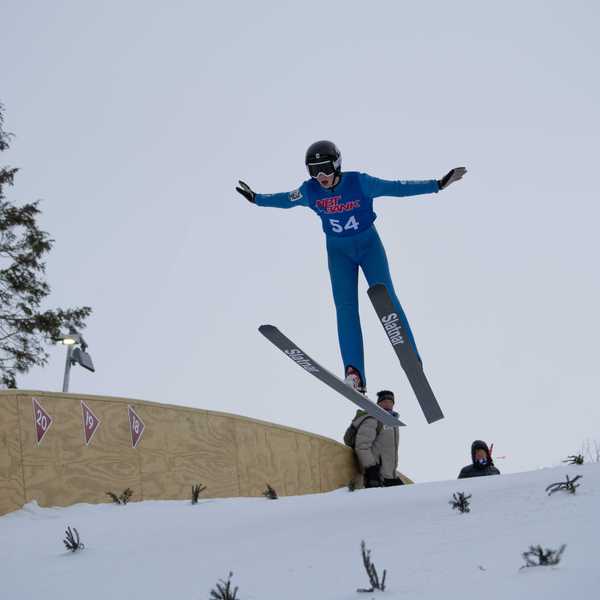
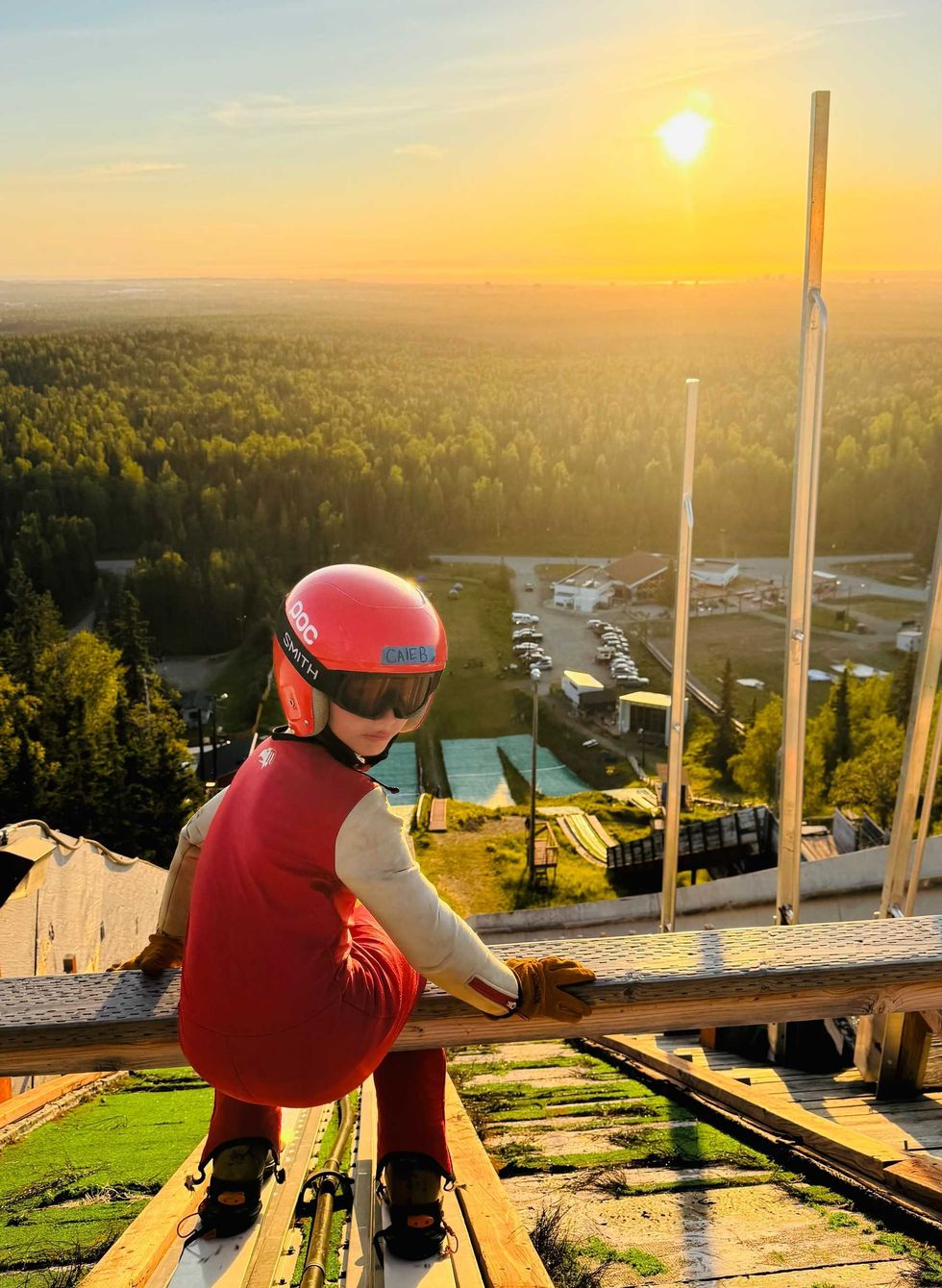 SWSA’s Caleb Bodwell ready to jump off the 65 meter jump at the Karl Eid Ski Jump Complex in Anchorage, Alaska at midnight.Keith Bodwell
His development has accelerated since SWSA added a 36-meter hill to its complex at Satre Hill, giving young jumpers another step between the association’s smaller training hill and its largest jump.
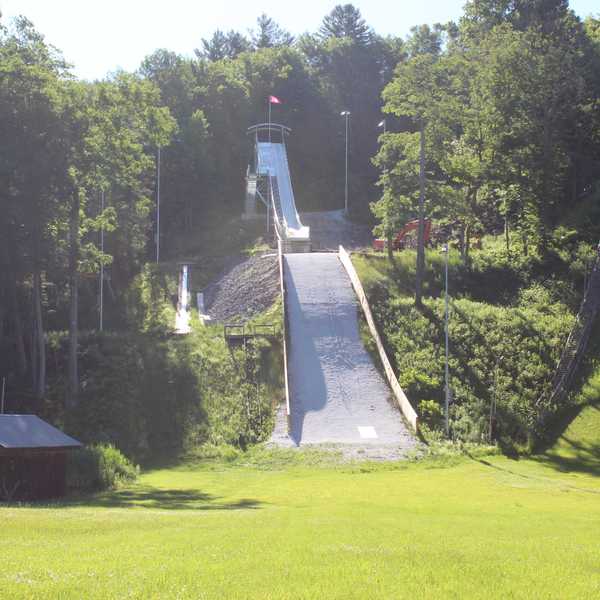
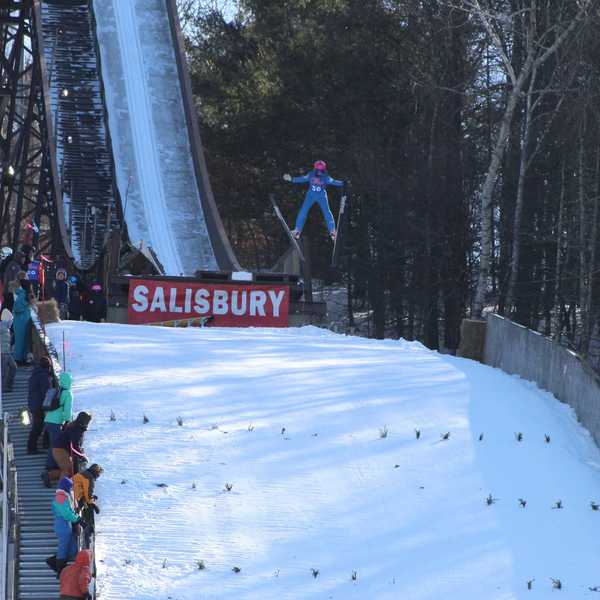
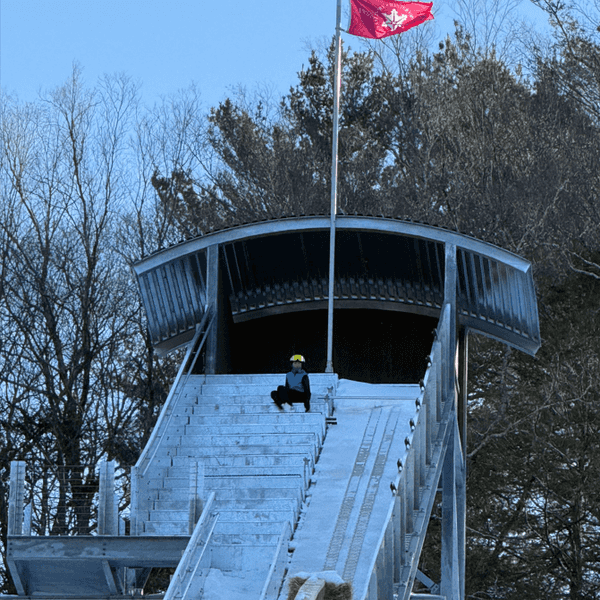
Ski jumps are commonly identified by their K-point, or construction point, which marks a designated location in the landing area and is used in scoring. Satre Hill has 20-, 36-, and 65-meter jumps. By comparison, the largest officially sanctioned ski jump in the United States is the 134-meter hill at Utah Olympic Park in Park City.
Mascavage and Milner were among the SWSA athletes who traveled to Norway to train at the Holmenkollen Ski Jump Camp. Like other summer ski-jumping facilities, the hills are equipped with artificial surfaces that allow athletes to train without snow.
SWSA coach Seth Gardner accompanied the group and guided the athletes through the week of training. The experience allowed the jumpers to test themselves on new hills while training in a country with a deep ski-jumping tradition.
Islay Sheil traveled even farther, training on summer ski-jumping hills in Slovenia and Austria as she works toward earning a place on the junior national team, which can provide a pathway to higher-level international competition.
Despite spending months away from home, Sheil said the experience has been enjoyable.
Summer training is especially important in a sport that requires athletes to adapt quickly. While snow covers the landing hills during the winter, summer facilities generally use artificial surfaces kept slick with water. Changes in hill size, speed, wind, and equipment can require jumpers to make immediate adjustments.
SWSA has supported ski jumping in northwestern Connecticut for more than a century. Its best-known event is Jumpfest, held each February at Satre Hill.
The association also maintains ties with the New York State Ski Education Foundation. Salisbury athletes frequently travel to Lake Placid to train with experienced coaches and former Olympic ski jumpers, including Jay Rand and Salisbury’s Larry Stone.
Traveling to training camps and competitions can be costly, particularly for families whose athletes must make repeated trips to reach suitable jumping facilities. SWSA raises money throughout the year to maintain its hills and help offset some of those expenses.

 A ceramic vase by Kathleen Heidemann.Provided
  Joy Brown’s delightful ceramic sculptures.Provided

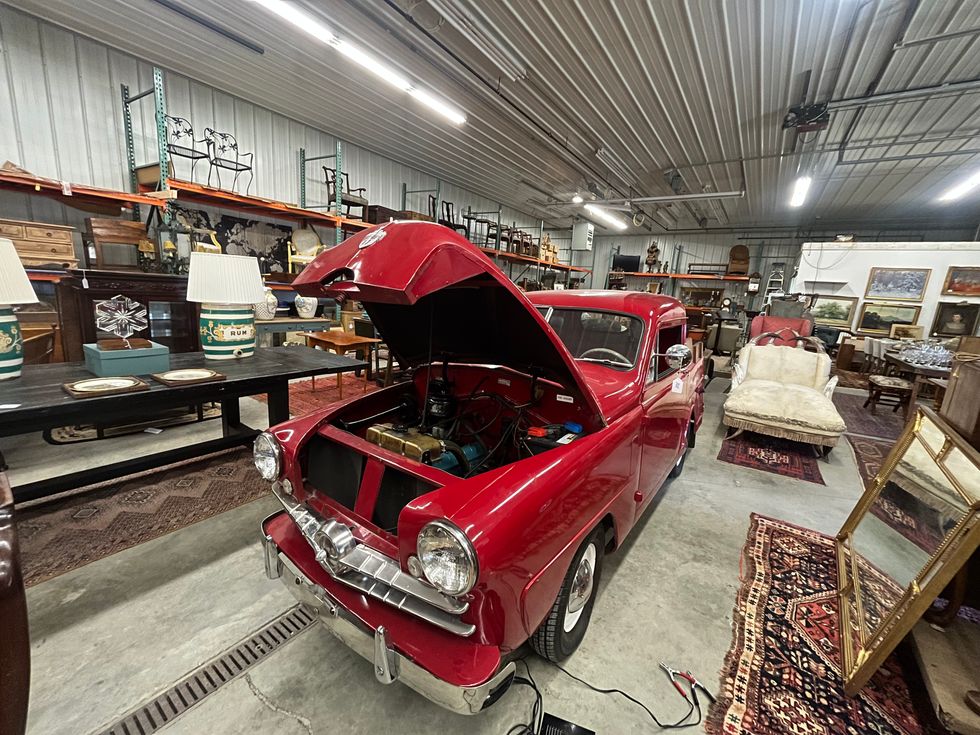 Hundreds of items at Stateline Auctions, including a candy-apple-red Crosley pickup truck.D.H. Callahan