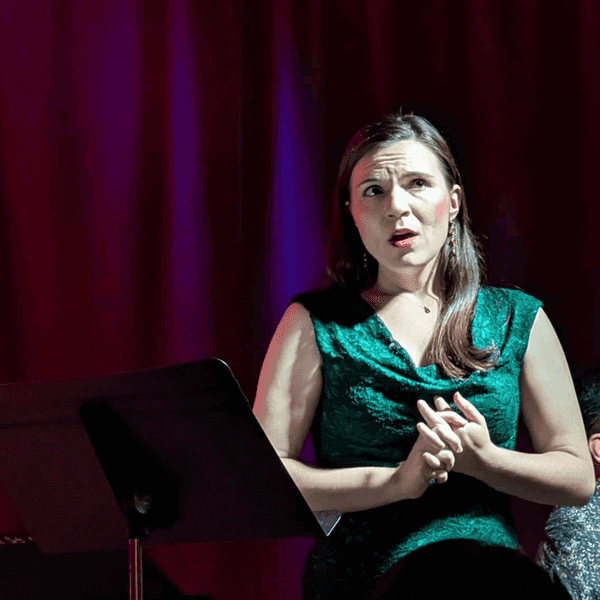
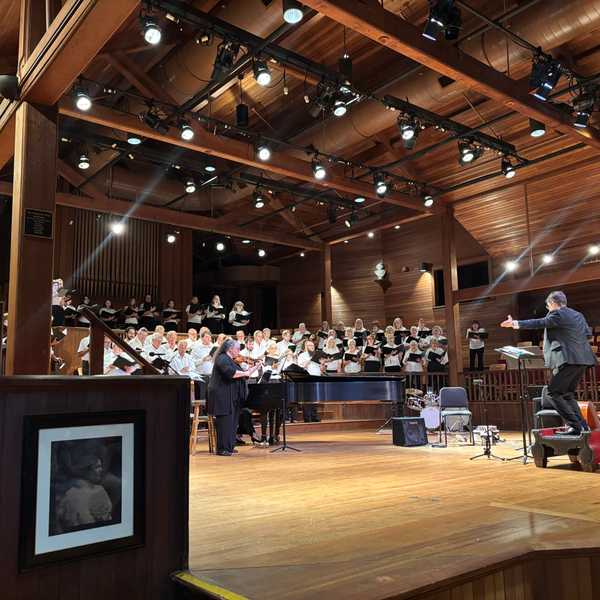
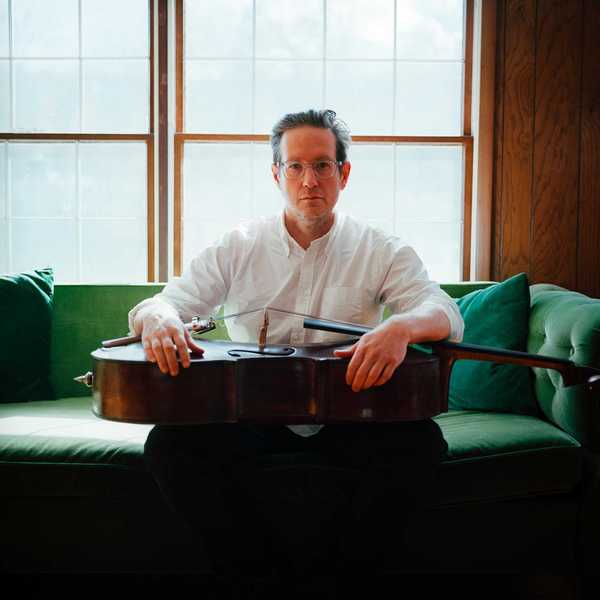
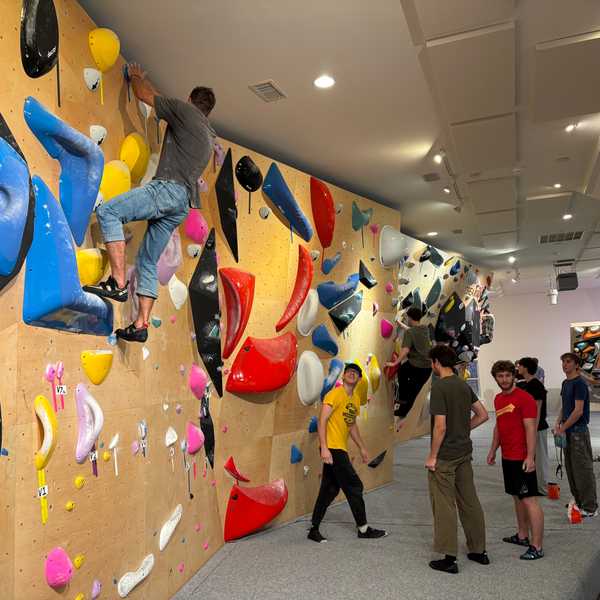
Founded by acclaimed percussionist Michael Burritt, the ensemble of former students brings contemporary percussion to life with driving rhythms, lyrical passages and virtuosic performances. The program features Burritt’s original compositions alongside modern works. 7:30 p.m. Tickets thestissingcenter.org

Latest News
Art and Design in Kent
D.H. Callahan
Nov 23, 2026
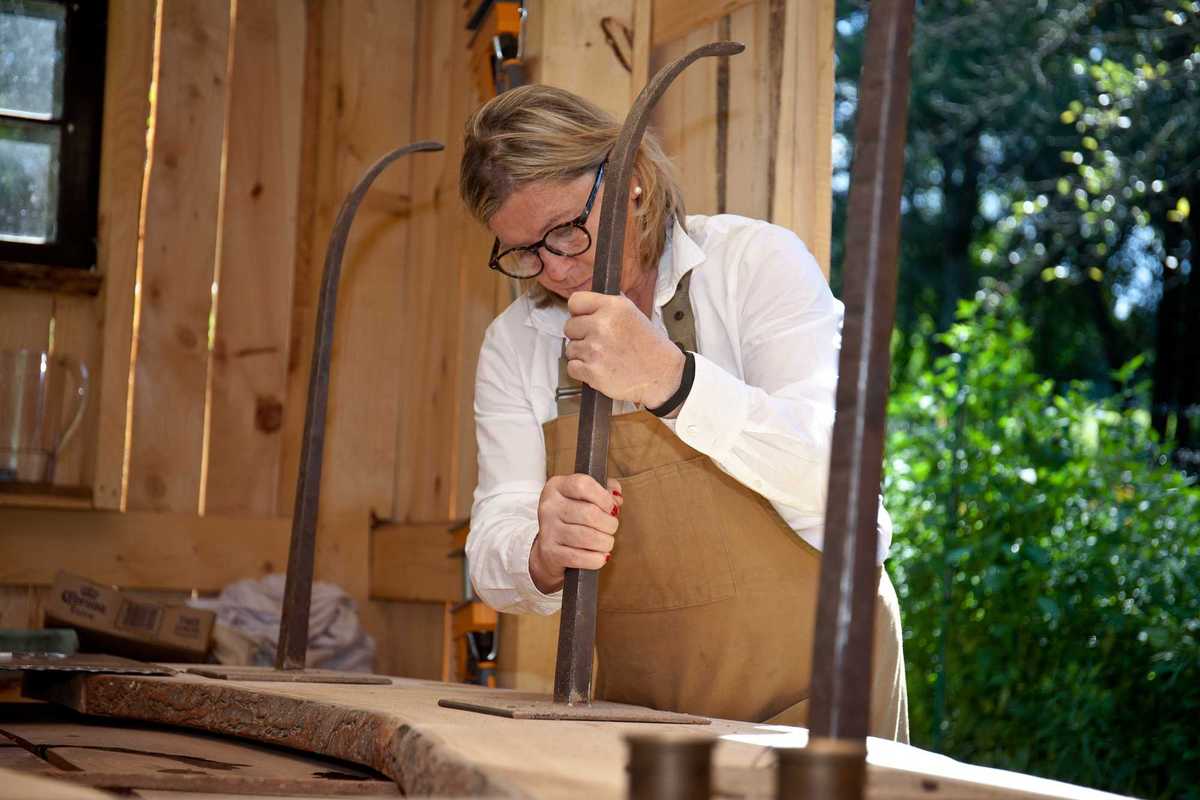
Elizabeth Place is a woodworker who specializes in burl and live-edge work.
Provided
Kent, Connecticut, is firmly establishing itself as a notable fine art hub, with five dedicated galleries and seemingly an opening every other weekend. But while those galleries feature art from around the country and the globe, the Kent Art and Design Show is turning its eye back on the arts community in the Northwest Corner itself.
Organized by local artists Ellen Corsell, Alison Palmer and Elizabeth Place, the juried show brings together 15 artists and craftspeople from the region, blending functional crafts with fine art. The three organizers spend much of their time scouting talent at galleries and craft shows throughout the area. With two shows a year, that’s a lot of artists to wrangle.
Their goal is to find a good blend of functional crafts and fine art to cover a wide range of artistic representation. For this show, they have 15 artists and artisans exhibiting their work.
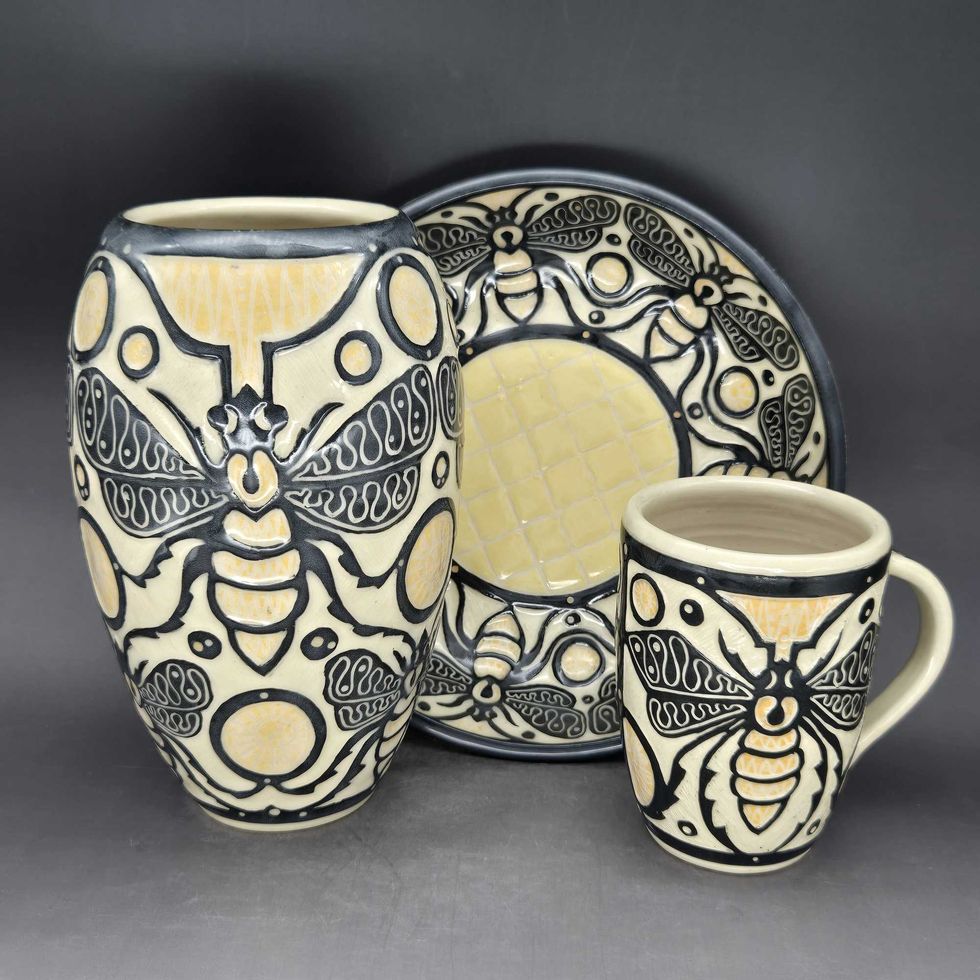
One of the organizers, Alison Palmer, is a ceramicist who specializes in fostering talent in other artists. As a leading member of the Clay Way weekend and the owner of a studio in Kent that hosts a variety of workshops, Palmer seems to be an inspiration for a whole army of artists.
Cornwall-based painter and crafter Magaly Ohika has works that range from abstract paintings to hand-designed lampshades and even stuffed figures inspired by her Puerto Rican cultural background.
Munya Avigail Upin has been making fine jewelry for over 50 years. Beyond her own work, she has taught at the Haystack Mountain School of Crafts, Penland School of Craft as well as a variety of universities.
Margaret Lent is a fiber artist who started out knitting clothes for her barbies as a little girl and hasn’t slowed down, making limited-run and one-of-a-kind garments for her studio, Margaret Lent Handwovens.
It’s hard to pin down exactly what Barbara Graham makes, but it’s easy to tell how full of creativity each piece is, be it a painting, a sculpture or maybe a children’s book.
Northwest Corner native Judish Secco makes photographs that look like paintings, bringing an otherworldly feeling to common scenes with her precise framing and use of contrast.
Elizabeth Place is a woodworker who specializes in burl and live-edge work. She also paints the duck decoys made by her husband, Kevin Place, which are also featured in the show.
Danielle Mailer is a multidisciplinary artist who makes murals and sculptures and is collaborating with the Nutmeg Conservatory to help design the ballet costumes for the company’s 2027 production of “El Colibri.”
Former photographer and graphic designer Deborah Seidman pivoted to ceramics after experimenting with clay in a class 20 years ago and has been exploring the world of ceramics ever since.
Jill Scholsohn’s anthropology background fuels the funky pieces of jewelry which she makes with stones and inspiration from her travels around the globe.
Susan Randel uses a loom to knit her colorful and sometimes whimsical pillow cases and wall art.
Woodworker Robert Pearl specializes in deconstruction, taking fallen trees and limbs from his property, and turning them into works of fine art.
Lina Wilder is a metalsmith and jeweler who specializes in ancient and traditional metalworking practices to create jewelry, plates, bowls and other vessels.
In another life, Michael Sciulli designed shoes for some seriously big brands. Today, he makes stylish, functional knives that are perfect for life in the forests and fields.
Dale Wolfield spends much of his time on the water or in the woods of the greater Hudson Valley area, collecting inspiration for his detailed and disciplined functional stoneware.
The show takes place on Saturday and Sunday, Nov. 28 and 29, at the Kent Community House, and is sponsored in part by the Kent Chamber of Commerce.
Keep ReadingShow less
David Strathairn brings “Peter and the Wolf” to life at Stissing Center
D.H. Callahan
Nov 23, 2026
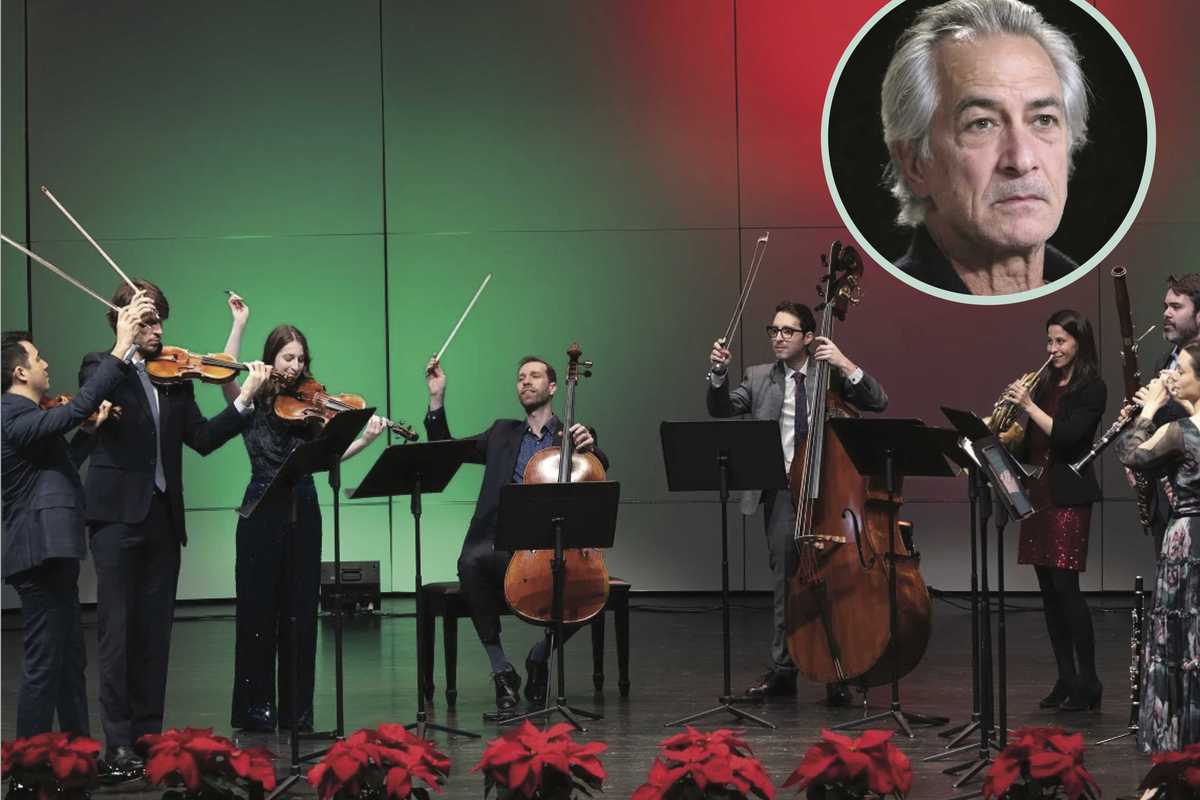
David Strathairn narrates “Peter and the Wolf” with the Frisson Ensemble at Stissing Center.
Provided
“Peter and the Wolf” is an enduring work of musical theater that has managed to teach children about classical music in a playful, if not dramatic, way for 90 years. On Saturday, Nov. 28, The Frisson Ensemble will bring the Russian educational classic to life at Stissing Center in Pine Plains with the help of Oscar-nominated actor David Strathairn.
Created to help children learn the parts of the orchestra, as well as the power of different sounds and musical modes, the symphonic tale for children, as it’s classified, has helped generations of curious kids fall in love with music.
The idea for the work came in 1936 from Natalya Sats. At the young age of 20, Sats was appointed to lead the Central Children’s Theatre in Moscow following the departure of the theatre’s first director, who refused to bow to the political demands of the emerging Soviet Union.
The Children’s Theatre was a point of pride for Russian and then Soviet artists, including composer Sergei Prokofiev, who frequently attended performances with his children. Sats enlisted Prokofiev to bring her idea to life, hiring Nina Sakonskaya to write the libretto, or story and lyrics, for the orchestral work.
Prokofiev was already a cosmopolitan success with worldly tendencies that extended beyond the borders of politically volatile Russia. He wrote librettos in French. He drew inspiration from Italian literary classics. He even performed his own works in New York City, something remarkably rare for a Russian at the time.
With the fall of the Russian Empire, however, Prokofiev began to focus his efforts on Russian themes. He composed works based on great Russian authors, including his opera “The Gambler,” based on the short novel of the same name by Fyodor Dostoyevsky.
“Peter and the Wolf,” too, has many deep Russian and Soviet cultural themes, like man’s triumph over nature and the counterproductive stubbornness of the non-Bolsheviks, represented by Peter’s grandfather and the bassoon.
Representation is the name of the game when it comes to “Peter and the Wolf.” To help children learn the parts of the orchestra, Prokofiev assigned instruments and musical themes to the characters in the story. The light and airy instruments are the protagonists and usually play more whimsical or uplifting themes. Peter’s famous tune played by the strings. The dark and discordant tones are reserved for the old and the evil.
One of the most important instruments is the voice of the narrator. Prokofiev didn’t like the original story written by Sakonskaya, so he rewrote it all to fit his music and vision. This gave the narrator an outsized role, leading the tone of the orchestra and introducing the children to all its parts. Sats was slated to narrate the piece herself at the 1936 premiere alongside the Orchestra of the Moscow Philharmonic Society, but fell ill and had a substitute fill in. It wasn’t until her first performance that the work gained the sort of reception it deserved.
Sats would also miss out on her chance to perform when “Peter and the Wolf” came to the United States in 1938, as she had been sent to the Gulag following the execution of her lover, a former Soviet Red Army general.
Since then, the narrator’s role has been taken on by such memorable performers as Viola Davis, David Bowie and even Frankenstein’s Monster himself, Boris Karloff. Strathairn, an alumnus of Williams College, has captivated audiences for decades with memorable performances in film and television projects like the “The Sopranos,” “L.A. Confidential,” “The River Wild,” “A League of Their Own” and “Good Night and Good Luck,” for which he received a best actor Oscar nomination in 2006.
Strathairn will lead the New York City-based Frisson Ensemble. Featuring musicians who have played on stages like Carnegie Hall, Frisson is known as “the classical group that does it all.” The ensemble can expand or contrast to fit a performance’s programming. This allows it to stay small and nimble for certain performances, whittling its numbers down for piano trios or string quartet performances. But when it comes to Frisson’s acclaimed rendition of “Peter and the Wolf,” the ensembale expands to a robust 10-piece group.
For tickets to “Peter and the Wolf,” visit thestissingcenter.org.
Keep ReadingShow less
Dreams, memory and healing in the art of Francie Lyshak
Natalia Zukerman
Nov 23, 2026
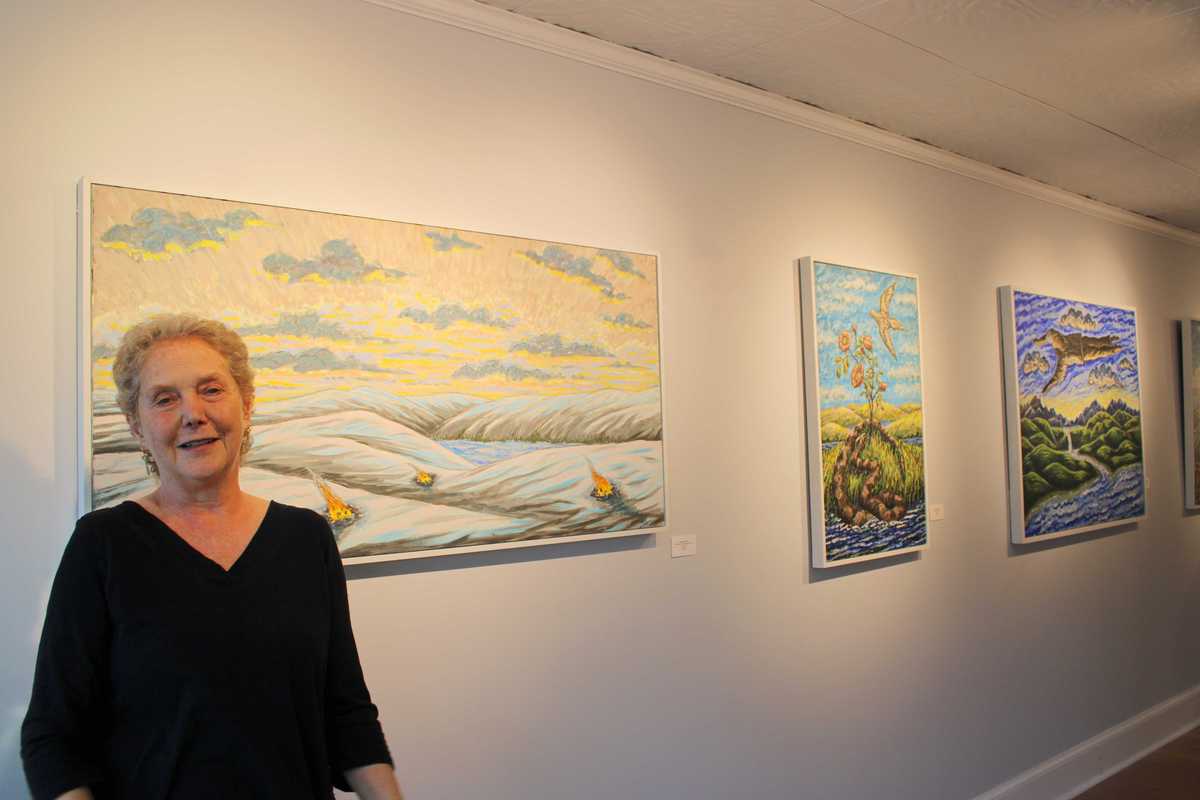
Artist Francie Lyshak at her exhibition “Dreamscapes” at Mad Rose Gallery in Millerton.
Natalia Zukerman
Dreams often bring to the surface what our waking minds work hard to conceal. For artist Francie Lyshak, the strange and sometimes unsettling imagery of dreams became a language through which she could explore her inner life, confront buried memories and ultimately find a path toward healing.
Her exhibition, “Dreamscapes,” at Mad Rose Gallery in Millerton, revisits an earlier chapter of her career, bringing together recently unearthed, large-scale oil paintings filled with symbolic animals, mysterious landscapes, dolls, toys and figures navigating worlds that feel both fantastical and hauntingly familiar.
Lyshak, who grew up in Detroit before finding her way to New York City’s East Village art scene in the 1970s, was part of a vibrant community of artists, performers and outsiders. Theater became a significant influence on her work.
“They’re all a little bit like theater,” she said of the paintings. “It’s like a shot of one scene in a psychological, emotional life of being human.”
Some of the compositions recall mise en scéne, the staged tableaux popular in the Victorian era, with figures, objects and landscapes carefully arranged to suggest a larger story. But rather than telling a complete narrative, Lyshak captures a single emotionally charged moment, inviting viewers to imagine what came before and what might happen next.
And though the exhibition’s title suggests dreams, Lyshak explained that the paintings weren’t necessarily drawn from actual dreams. Rather, they emerged from ideas, memories and emotional states she was trying to understand.
In “Snowscape with Signposts,” a thinly dressed woman stands alone in a snowy landscape. Fires mark her path, and a glorious sunset suggests the possibility of something beyond her immediate circumstances.
“Conditions are not good, but it’s not a hopeless situation,” Lyshak said. “And there’s maybe a future.”
Trained as both a fine artist and an art therapist, Lyshak has long understood symbolism as a language for expressing what words often cannot. Lyshak is open about her history of childhood abuse and how the process of uncovering those experiences profoundly shaped her imagery. She is equally clear about art’s capacity to illuminate hidden emotional states and create pathways toward healing, transformation and renewal.
Today, Lyshak’s paintings have evolved from richly populated narrative scenes into restrained, textured, monochromatic abstractions, open fields of color and gestural marks. Yet the emotional inquiry remains. Seeing these earlier paintings together again has been unexpectedly affirming.
“I feel I accomplished something by seeing them like this,” she said.
More than anything, she hopes viewers recognize something of themselves in the work.
“We’ve all been afraid, maybe of different things,” she said. “I hope that someone will walk in here and feel a connection, and connecting is a good thing for us.”
“Dreamscapes” is on view at Mad Rose Gallery in Millerton through Jan. 31.
Keep ReadingShow less

Want more of our stories on Google? Click here to make us a Preferred Source.
Sue Foley and the women who changed guitar history
Natalia Zukerman
Nov 23, 2026
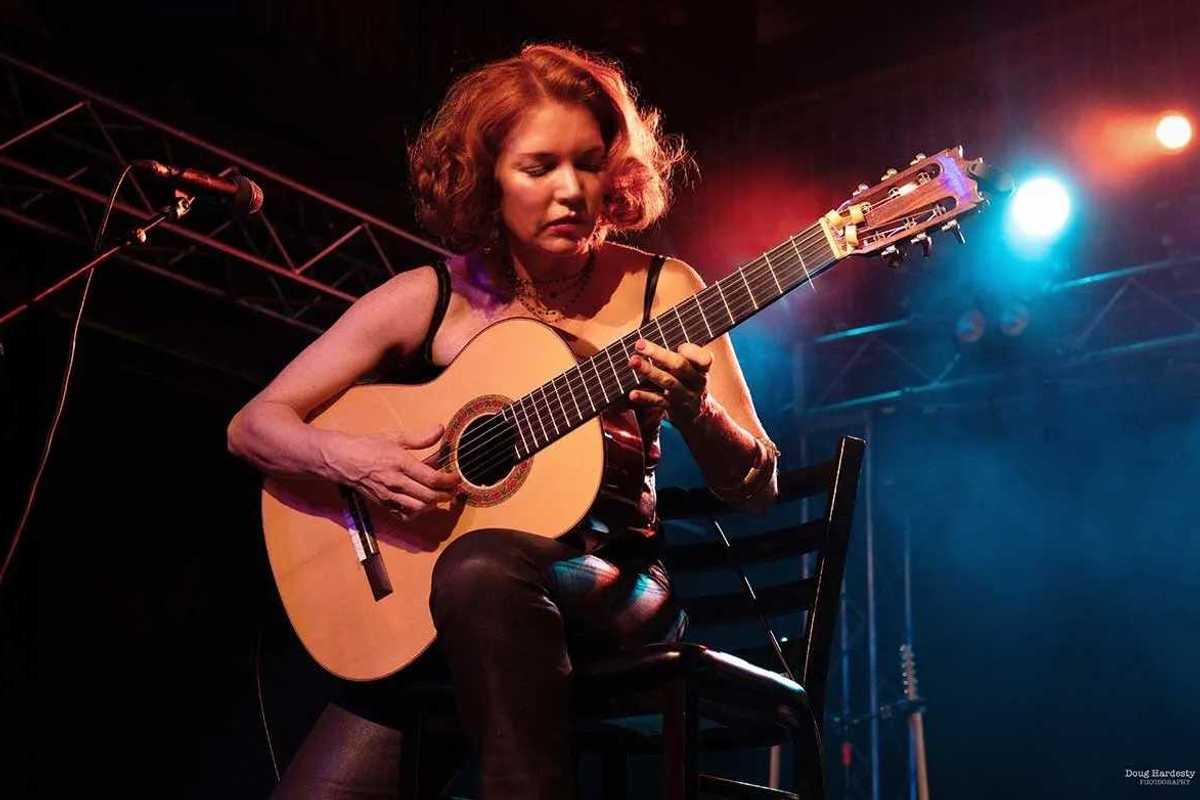
Blues guitarist Sue Foley plays Infinity Hall Friday, Dec. 4
Doug Hardesty
On Friday, Dec. 4, blues guitarist, singer and songwriter Sue Foley will perform at Infinity Hall in Norfolk. Compass editor Natalia Zukerman interviewed Foley in March 2025 about her work and her latest project, “One Guitar Woman,” in which Foley honors the women who helped shape guitar history. The interview originally appeared in the May-June issue of Acoustic Guitar magazine.
Here is an edited version of the interview.
NZ: Tell me about the flamenco guitar you played on this album. Did you just come across it, or did you know the luthier?
SF: I actually went on a pilgrimage to Paracho, Mexico — a fantastic town in the mountains of Michoacán. It’s a dream for guitar players! You drive in, and there are guitar shops everywhere, builders on every street and people walking around with guitars. You can visit workshops and talk to the luthiers, which I did. It was a really special experience.
NZ: Did it take time to adjust from your trusty Telecaster to this nylon-string guitar?
SF: I’ve been playing Spanish-style nylon-string guitars for a couple of decades, so I’m pretty comfortable switching. The neck is wider, but a lot of right-hand principles transfer between the Tele and nylon-string. I do a lot of open right-hand playing and use a thumbpick, so the transition feels natural. There’s a lot of nuance and tone variation — whether you play with your fingertips, the edge of your nail or a pick.
NZ: Were many of the songs on “One Guitar Woman” already in your repertoire?
SF: It took time to develop them. I’d been working on this project in different forms for years — it actually started as a book I’m still trying to finish. Everything took on a life of its own, and when the album happened, I was ready. But getting to that point took a long time.
NZ: Wow. What’s the book project?
SF: It’s a collection of my interviews with women guitarists, which I started in 2001. It’s had several offshoot projects, but for some reason, the book has taken the longest to finish. This record isn’t based on those interviews. When thinking about how to represent that study as a musician, I turned to the historical pioneers because I’m a traditional artist.
NZ: I understand that getting a Memphis Minnie record when you were 16 was a pivotal experience. Was that what first exposed you to the pioneers?
SF: It really was. I think we take for granted now that there are thousands of great women players, but that’s been an evolution. There was a time when there were none. Then there was one. Then Sister Rosetta Tharpe. Where did Memphis Minnie get the idea that she could go play guitar like a man and run around? Nobody did that in the ’30s. You could count them on one hand. I find it fascinating — what their lives were like, but also their mindset. What kind of person thinks that far outside the box? To me, it’s not just about gender — it’s about people who were different in a really cool way.
NZ: Your whole family played guitar, but it was all boys, right?
SF: Yes, my dad and my brothers. When I was a kid, there weren’t many women playing. I’d always notice, “Hey, there’s one,” and it made me think, OK, I can do this, too. Having my family play made it natural, but seeing another woman doing it really stuck with me.
NZ: Absolutely. Representation matters. Do you mentor any younger women players?
SF: Not directly, but I guess this is my way of doing that.
NZ: Your rhythmic sense is rock solid. The original recordings of these songs really move, but your versions feel very grounded. Did you practice with a metronome?
SF: With the Maybelle Carter stuff — especially the Carter scratch — I practiced with a metronome. When working on my solo show, I find all my tempos and practice with them to lock them in. When you’re solo, there’s no safety net — you’re on a tightrope. Strong rhythm is key. Thanks for noticing!
NZ: Did you write “Maybelle’s Guitar” specifically for this record?
SF: I wrote that a few years ago while touring. I had started on the book, interviewing and then researching the past, which I’d already kind of been doing my whole life but started doing with a lot more depth. And then I ended up back in school. I don’t have an undergraduate degree, but I jumped into a master’s program at York University in Toronto. I’m kind of a natural researcher, so I thought university would be OK. I went in for composition, and “Maybelle’s Guitar” was one of my songs that I’d written. I focused on pioneering women guitar players and was studying Lydia Mendoza and Memphis Minnie, and that grew into my Ph.D. So these are all offshoot projects from my Ph.D. I just don’t talk much about the academic side because I don’t want to sound like a chin-scratching academic [laughs].
NZ: Speaking of influential women in guitar history, you mention a Charo performance in your liner notes that had a big impact on you. Do you remember what it was?
SF: Yeah, it was probably a variety show from the late ’60s or early ’70s. Charo was the first woman I ever saw really play guitar. I grew up with her and always loved her. In this video, she comes out in a tuxedo, her hair is full and beautiful — it just struck me. We took her for granted because she was everywhere, but when you really consider her artistry and ability, it’s astounding. She was way ahead of her time.
NZ: You say her entertainment value overshadowed her talent. Do you think that was just sexism in how she was portrayed?
SF: She put it all out there and was unapologetic about it. Even now, she still wears short skirts and bounces around on Instagram — but she’s also incredibly serious about her playing.
NZ: You’ve spoken about a responsibility to bring this music into the present. Do you feel that putting your own spin on it is another way of honoring these artists?
SF: Absolutely. As a blues artist — especially a traditional one — I interpret a lot of other people’s work. But you still have to find your own way. You have to be honest with the material and make it your own. That’s key to playing older music.
NZ: Were there any women you wanted to include on this record but didn’t have space for? Any chance of a part two?
SF: I don’t know about a part two. Right now, I just want to finish my book — I actually have to deliver it this year. And honestly, I’d like to focus on myself for a while. There were artists I would’ve loved to include, like jazz guitarist Mary Osborne, but that would’ve required an ensemble, which didn’t fit this solo album. At a certain point, I just needed to finish it. But there’s still plenty of material out there — definitely a lot of meat on the bone.
NZ: Do you ever feel haunted by these musicians, or are they leaving you alone?
SF: Not haunted — honored. I love introducing people to these artists. At shows, I get folks who’ve never heard of them, sometimes just because they have a theater subscription. They come up afterward saying, “Wow! I had no idea. This is amazing.” And now they know who Memphis Minnie is — which they should! She’s important.
I do feel a bit haunted by some of the women I interviewed for my book, though. I’ve been carrying their stories for over 20 years, and some have passed away. In that sense, I’m traveling with ghosts. I’m excited to finally deliver the book and, in a way, put those stories to rest — make sure they land where they’re supposed to.
To read the whole interview and bonus tutorial, visit acousticguitar.com.
Sue Foley will perform with GA-20 at Infinity Hall in Norfolk on Friday, Dec. 4, at 8 p.m. For tickets, visit infinityhall.com.
Keep ReadingShow less
Bunny Williams celebrates “Decoration” at 100 Main
D.H. Callahan
Nov 23, 2026
On Saturday, Nov. 28, Bunny Williams will sign copies of her new book, “Decoration” at 100 Main in Falls Village.
D.H. Callahan
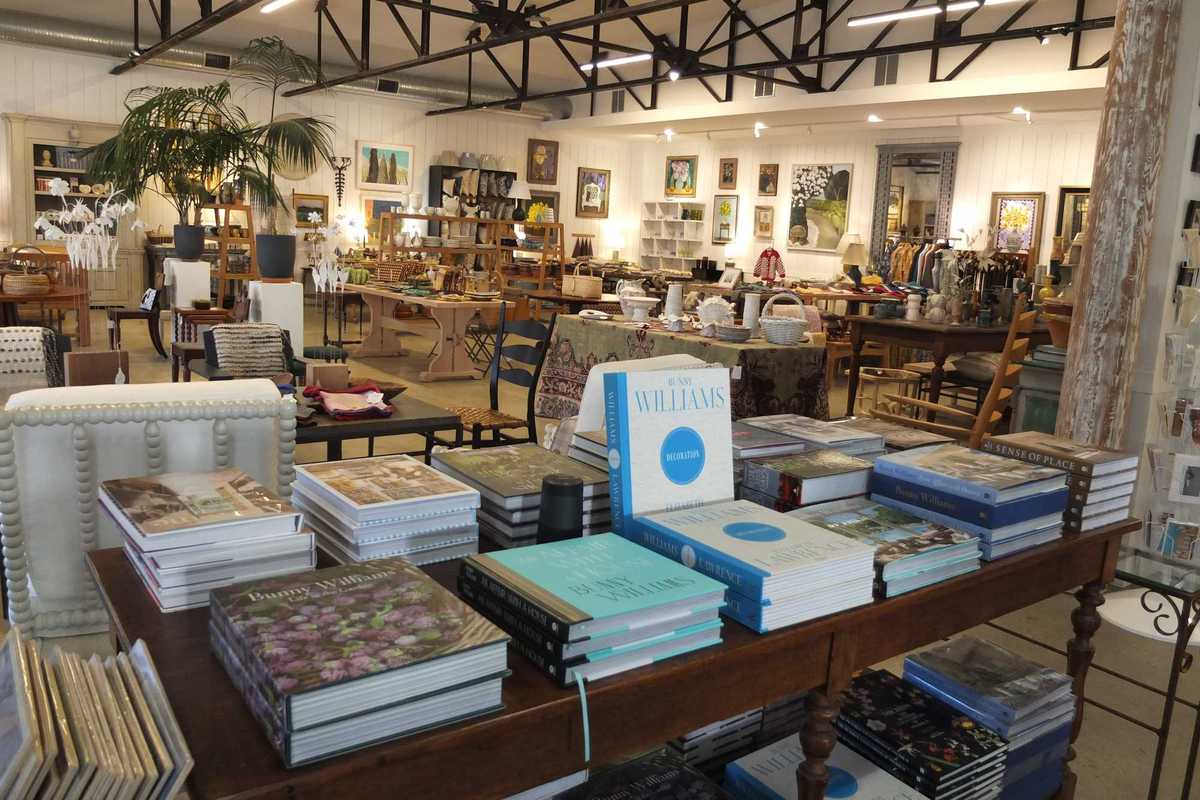
Bunny Williams is a giant in the interiors — and let’s face it, exteriors — world as well. With decades of experience, Williams has built a formidable interiors brand, Bunny Williams Home. She is the founder of Trade Secrets, one of the most buzzed-about garden events in the country. Her boutique, 100 Main in Falls Village, showcases local artists and artisans alongside nationally recognized brands and hand-selected antiques. She has published several books about her work which can be found on some of the most prestigious coffee tables around.
On Saturday, Nov. 28, many corners of the Bunny Williams world will converge at a book signing and art opening event at 100 Main.
Williams will be on hand to sign copies of her new book, “Decoration,” which she co-wrote with collaborator Elizabeth Lawrence. All of Williams’ books make perfect gifts for the interior decorating and gardening lovers in your life. “Decoration” only came out this past September, so there hasn’t been a major holiday opportunity to give the book as a present. With the signing event falling on Small Business Saturday, all the pieces of the puzzle are there for you to put together.
“Decoration” works not just as a visual feast for the eyes, as many interiors books can, but as a candid look into the processes of these two esteemed design world professionals. They write about their approach to collaboration with clients, architects and designers, their philosophy behind the choices they make and some of the lessons they’ve learned from their storied careers.
Alongside the signing will be an art opening featuring works by an artist who happens to be one of Williams’ gardeners, Kari Englehardt. Englehardt is obsessed with the power of plants. Through her mixed-media works, she highlights the roles plants can play as “record-keepers, raconteurs, and reflections of our own civilization.” She draws inspiration from academic research into botany and environmental issues, and has earned a certificate in botanical art and illustration from the New York Botanical Garden. Using a variety of materials, including wax, pollen, resin, rust and soil, she looks to create “a dialogue on the importance of plant life within our shared biosphere.”
The whole event also works as a way to encourage the community to shop local for the holidays. Though Williams is an internationally known name in the interior design world, most of the artisans whose work she stocks at 100 Main are not. The shop features unique ceramics, carefully crafted leatherwork, kitchenware, jewelry, furniture and even children’s clothes and toys from New England- and New York-based artisans, and all of it fits into the Bunny Williams aesthetic. So if you have someone in your life for whom “Decorations” is a perfect gift, there’s good chance you’ll find even more at 100 Main.
Keep ReadingShow less
Festival of Lights
Lakeville Journal
Nov 23, 2026
Provided
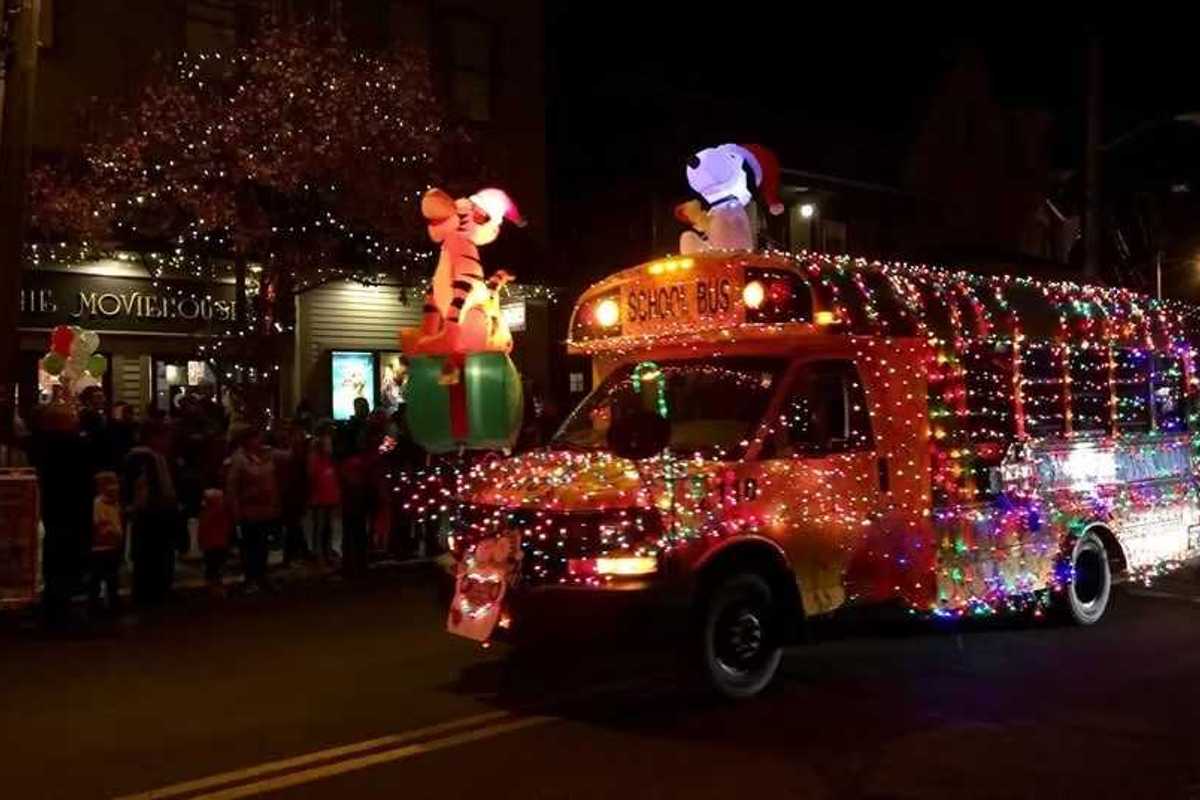
Millerton kicks off the holiday season with its annual Festival of Lights on Friday, Nov. 27, featuring a free screening of “Elf” at The Moviehouse, children’s activities, treats, caroling along Main Street and the illuminated parade at 5 p.m. Festivities continue Saturday, Nov. 28, with a farmers market and gingerbread house decorating. More information at visitmillertonny.com

Want more of our stories on Google? Click here to make us a Preferred Source.
loading