Attorneys present arguments in North Canaan ballot case

A decision in the case of Jacquier vs. Camardi is expected by Friday, Sept. 26.
Photo by Riley Klein


A decision in the case of Jacquier vs. Camardi is expected by Friday, Sept. 26.
NORTH CANAAN — Should two Democratic Town Committee candidates be included on the November ballot despite errors in the endorsement paperwork?
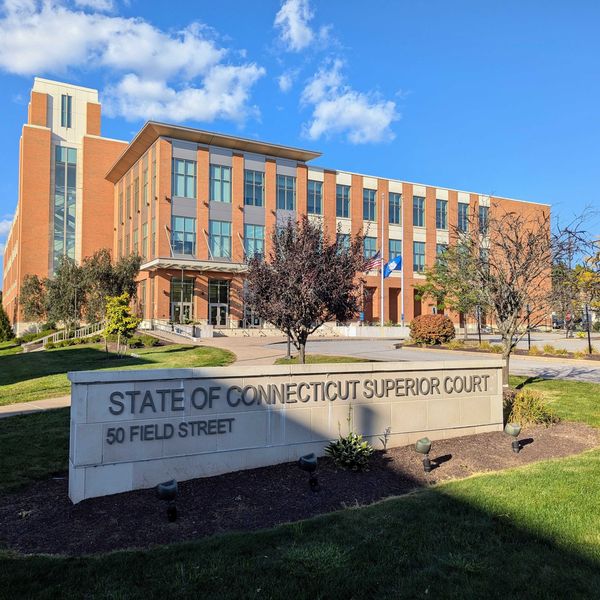
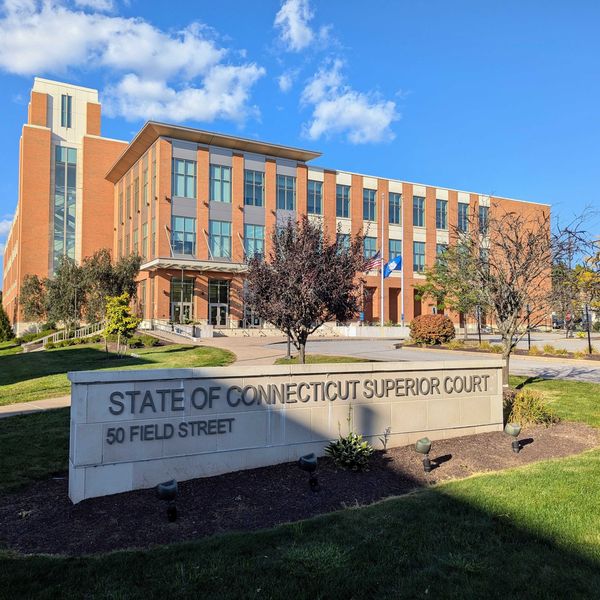
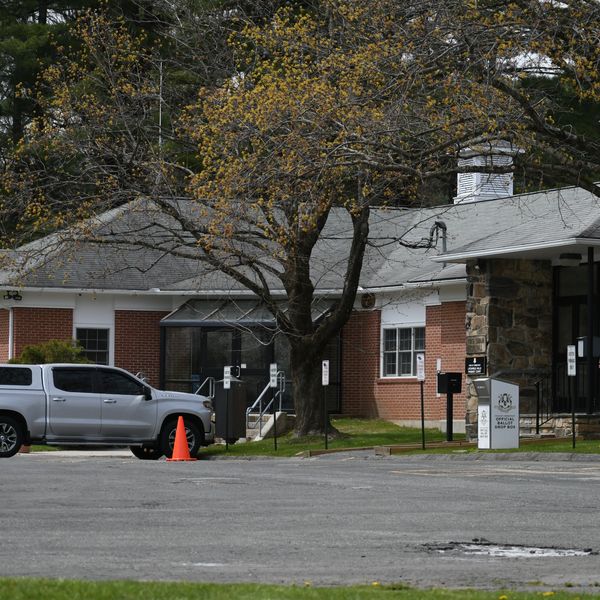
That is the question Judge Ann E. Lynch faces in the case of Jacquier vs. Camardi. Lawyers for each side submitted written arguments to Torrington Superior Court on Friday, Sept. 19.
Both briefs address the matter of substantial compliance — as opposed to strict compliance — with election laws.
On July 22, the DTC nominated Jean Jacquier to run for Town Clerk and Carol Overby to run for Board of Finance, but neither candidate included the office or term on the official endorsement slate. Upon review, Connecticut Secretary of the State Election Officer Heather Augeri stated the slate was invalid and she advised Marilisa Camardi, acting Town Clerk and defendant in this case, to remove the candidates from the ballot.
Plaintiffs Jacquier and Overby did not deny that the endorsement slate was submitted with missing information. Attorney John Kennelly argued that they should be included on the ballot because they achieved substantial compliance with the law.
“At first glance, the statutory language in C.G.S. 9-391 appears to be mandatory. However, our State Supreme Court has recognized that voters (in this case caucus voters and ultimately the voters of North Canaan) should not be disenfranchised for minor violations of even mandatory election statutes,” Kennelly’s brief states.
In conclusion, Kennelly urged the court to require Camardi to include Jacquier and Overby on all ballots pertaining to the Nov. 4 election.
Camardi’s attorney Thomas Gerarde argued, “strict compliance is required such that neither the election official nor the Court can excuse a candidate’s inadvertent noncompliance.”
Gerarde stated the plaintiffs have not had any rights violated and their request for relief should be denied. “The omission of the Plaintiffs from the ballot as Democratic Party-Endorsed Candidates comports with the law and is a result required by law.”
Judge Lynch is expected to make a ruling by Friday, Sept. 26.
Jean Jacquier, North Canaan’s current Town Clerk, has been elected four times as a Republican. Following a legal dispute with First Selectman Brian Ohler (R) she vacated her office in Town Hall and has not returned since February 2025. In July she was endorsed by the DTC to run for Town Clerk.
Camardi is Jacquier’s part time assistant and has been filling in as acting Town Clerk since February. Camardi is not running for office.
The Republican Town Committee candidate for Town Clerk this year is Krysti Segalla.
Carol Overby is one of two DTC candidates for Board of Finance. The other is Emily Bottum.
The RTC candidate for Board of Finance is John Jacquier.
Also on the North Canaan ballot this year will be three questions asking voters to decide if the positions of Town Clerk, Tax Collector and Treasurer should be elected or appointed. Currently all three positions are elected. If voters choose to appoint these positions moving forward, the change would take effect at the end of the next term for each official.
Jennifer Almquist
Cartoonist Barry Blitt created a design for a limited edition T-shirt for Northwest Connecticut Arts Council fundraiser.
A drawing by Barry Blitt is recognizable from a distance simply for his line quality and hint of watercolor. Known for his scathing political cartoons, this longtime cover illustrator for the New Yorker has leaned his shoulder in to support the NWCT Arts Council and its Aug. 29 fundraiser at Buck’s Rock Camp in New Milford. Blitt created a design for limited-edition T-shirts that will be available for sale at the event and online at artsnwct.org.
David Remnick, editor of the New Yorker since 1998, called Blitt “One of the greatest political cartoonists of our time.” A native of Canada, Blitt won a Pulitzer Prize for editorial cartooning and has created more than 100 covers for the New Yorker since 1992. Perhaps most memorable is his 2008 iconic fist bump between Barack Obama and Michelle Obama, “The Politics of Fear.” A quarter century of his sketches and drawings are collected in “Blitt: In One Eye and Out the Other,” published by Penguin Putnam. He has created books for children, including “George Washington’s Birthday” and “Once Upon a Time, the End, (Asleep in 60 Seconds).”
When asked about his method, Blitt replied, “You’re trying to get a drawing that looks improvised and fresh, you know? Usually the first drawing I do, I’m not happy with it and I’ll go to a second one or I’ll redraw it several times … But the line becomes labored, so it always really is the first one. It’s probably some kind of Zen thing where you’re not worrying too much or you’re not overthinking it. There’s nothing like an improvised fresh line that’s there the first time you do it. First thought, best thought.”
Given two small prompts by the NWCT Arts Council, Blitt conjured up a fanciful tree in the landscape of the Litchfield Hills, with three artists painting at easels up in the branches. He hand-lettered the banner and reimagined the Arts Council’s logo as hand-painted, with a bit of sky and landscape peeking through. Blitt’s simple depiction of painters in the tree evokes the full spirit of the Council. For 23 years, the NWCT Arts Council has supported artists and creativity in the Northwest Corner of Connecticut. It promotes arts events, maintains an arts calendar, guides individual artists toward grants and funding, housing and studios, and connects the vast network of creative people who live and work in Litchfield County.
Blitt once revealed: “If you’re asking me what I love, it’s that point where I’m just scribbling and trying to make myself laugh and trying to outrage myself.”
Blitt may be best known for skewering politicians and pundits, yet he can also create magic with a child’s eye.
Natalia Zukerman
Stories take many forms — poems, novels, songs, stand-up routines, films, visual art and even the pages of a community newspaper. The inaugural Rough Notes Festival, presented by Kinderhook Books Aug. 28-30, brings writers, performers, artists and readers together for a weekend devoted to the many ways stories are created, shared and transformed.
The three-day festival opens Friday, Aug. 28, with comedian, author and Oscar nominee Tig Notaro at Van Buren Hall. Following her sold out performance, Notaro will talk about writing and the creative process with actor and comedian Lauren Weedman, known for her work on the HBO series “Hacks.”
Saturday’s program begins with “I Too Dislike It: Why Poetry Endures,” a conversation moderated by poet Mark Wunderlich and featuring Michael Dumanis, Monica Ferrell and Vermont Poet Laureate Bianca Stone. Later, Temim Fruchter moderates “Queering the Queer Memoir,” with Eliot Glazer, Henry Hoke, Chloé Caldwell and Hugh Ryan.
At 2 p.m., writer and director Nadia Conners leads “The Afterlife of Art,” a discussion with novelists Peter Cameron and Sigrid Nunez about what happens to creative work after it leaves its creator’s hands. “The Unreliable Past,” moderated by former Tin House editor Rob Spillman, follows at 3:30 p.m., with authors Amitava Kumar, Jayne Anne Phillips and Francine Prose considering memory as both a source of inspiration and an unreliable narrator.
The weekend also has plenty for young writers and music lovers. Saturday morning’s free Typewriter Project invites children to create a community newspaper using vintage typewriters, inspired by Kinderhook’s 1950s-era youth newspaper, The Bugle. At 1 p.m., 11-year-old upstate New York singer-songwriter Lulu Grey performs on the Bank lawn.
That evening brings an intimate conversation and live music with singer-songwriter Natalie Merchant, who will discuss songwriting, storytelling and the creative process with Sarah LaDuke, former WAMC producer and executive director of Folk Alley.
Sunday shifts toward the practical craft of writing. Workshops include Richard Mirabella on starting a novel, Emily Nemens on the narrative power of friendship and Thomas Grattan on using objects to develop character, conflict and setting. Olivia Muenter and Casey Scieszka will discuss the spaces and communities that make creative work possible in “A Place for the Work.”
Visual art is also part of the festival, with “Re-Scripting,” an exhibition at September Sometimes (4 Hudson St., Kinderhook) featuring Mara Baldwin, Jane Bustin, Nicole Cherubini, Taylor Davis, Shanekia McIntosh and Cauleen Smith. The artists’ works incorporate written language through collage, painting, sculpture and vinyl.
Presented by Kinderhook Books, the festival takes its name from a 19th-century Kinderhook broadsheet and celebrates a community with a long tradition of storytelling. Through conversations, performances, workshops and art, The Rough Notes explores the journey from first idea to finished work — and the ways stories continue to change once they enter the world.
For the complete schedule and ticket information, visit theroughnotes.com
D.H. Callahan
When the 1931 horror classic “Frankenstein” plays with live musical accompaniment at the Stissing Center on Saturday, Aug. 29, it will open with a warning. A handsomely dressed man will step into the spotlight to warn the audience about the thrilling and horrifying tale to come. Then, it’s off to the graveyard.
“Frankenstein; or, The Modern Prometheus” was written in 1818 by English author Mary Shelley. A summary is comically unnecessary, as the story itself has become one of the most important pieces, not just of horror writing, but of the history of literature. A scientist playing with the finite constraints of life and death, alongside the themes of prejudice, acceptance, and the dangers of mob rule continue to capture generation after generation in ways that seem consistently fresh and relevant.
In 1931, audiences were treated to an early era cinematic masterpiece by director James Whale. The theatrical release was an instant hit, winning praise from the public and critics alike.It would soon spawn sequels, spinoffs, and spoofs including “Abbott and Costello Meet Frankenstein,” “The Bride,” which was released earlier this year, and even Andy Warhol’s attempt, known as “Flesh for Frankenstein.” Notably, Mel Brooks’ comedic reinterpretation,“Young Frankenstein,” has, itself, become a timeless classic of Hollywood history.
Whale was not the first director tapped by Universal Studios to bring Frankenstein to the silver screen. Originally Robert Florey, who was best known for “The Cocoanuts” starring the Marx Brothers, was chosen to direct. His slapstick approach saw Frankenstein as more of a killing machine than the misunderstood portrait of humanity depicted in Shelley’s novel. This may have scared off the original monster, Bella Lugosi, who’d recently killed at the box office for Universal as Dracula. Though the exact reason is still a source of debate, the studio gave the project to Whale, who cast a relatively unknown Boris Karloff to play the monster.
Karloff had played a range of roles in over 80 films before Frankenstein, which would throw him into the public’s collective knowledge and nightmares. His image became an icon itself, still just as relevant today as it was when the film was released. Last October, a painting by Rob Zombie showed at his art show at the Morrison Gallery in Kent, Connecticut focused on Karloff’s face.
The film was released without a soundtrack. For Grammy-nominated composer Michael Shapiro, this provided an exciting challenge. In 2001, thanks to a commission from The Chappaqua Orchestra, Shapiro created a lush, emotional score intended to be played under the original dialogue.
Audiences loved the way the music brought the film to life. While there are multiplearrangements made for a variety of instrumental configurations, the performance at the Stissing Center will be a world premiere for string quartet and piano. The vibrant Argus Quartet, once tapped as the Graduate Resident String Quartet at the Juilliard School, will play the new arrangement with pianist and Steinway Artist Steven Beck. The composer Michael Shapiro himself will be there to conduct the group.
But the musicians won’t be the only ones on stage. In a special appearance for this world premiere, Sara Karloff, Boris’ daughter will be in attendance to participate in an interview before the screening. The Stissing Center asks that audience members leave their pitchforks at home.
For more information and tickets to the performance, visit thestissingcenter.org.

Want more of our stories on Google? Click here to make us a Preferred Source.
D.H. Callahan
Rauschenberg in his Captiva studio.
In 1953, Dutch-American abstract expressionist painter Willem de Kooning was at the height of a career rarely reached by artists during their lifetimes.
That was the year a young Robert Rauschenberg brought him a bottle of Jack Daniel’s and proposed something audacious. He wanted to erase one of the famous artist’s drawings. De Kooning got it. He didn’t like the idea, but he understood the assignment, and started rifling through archived works for a drawing that he would “miss,” and one that would be difficult to erase. Rauschenberg spent the next month making it disappear.
The resulting work sent the art world into a tailspin, claiming artistic blasphemy. The act, they claimed, was nothing but hostility toward agreed upon artistic greatness. Rauschenberg didn’t see it that way, but he let them say what they needed to say.
He thoroughly enjoyed challenging the art establishment. While he loved the acts of drawing and painting, it seems that to him that technical artistic proficiency was secondary to bold new ideas.
For Rauschenberg, this was just one stop on a wild artistic ride that saw inventive works created across six decades until his death in 2008. Other career milestones include a 23-foot-long tire print, which he made with composer John Cage; the 190 panels and sculptural elements collectively known as the “The 1/4 Mile or 2 Furlong Piece”; and a whole new medium melding painting and sculpture that he referred to as his “Combines.”
Along for a good stretch of the ride were Jane Coats Eckert, founder and owner of Eckert Fine Art in Washington Depot, Connecticut, and Jonas Stirner, who now runs the Stirner Modern gallery in Easton, Pennsylvania. On Saturday, Aug. 29 the two will come togetherat the Washington Art Association & Gallery at 5 p.m. to discuss their time with Rauschenberg as friends, dealer, and studio assistant and collaborator.
Eckert first met Rauschenberg when she moved to Captiva Island, Florida in the mid 1990s. Although she was aware of the artist’s presence on the island, the two didn’t meet until some time after her arrival. Eventually, the two would become close, with Rauschenberg giving Eckert some pieces to sell. “He certainly didn’t need to sell anything,” she recalled, as he was already internationally celebrated.
Stirner worked as a studio assistant for Rauschenberg for over a decade. He tells of an incredibly supportive mentor, who was kind to all, and unnecessarily generous with his resources. When Stirner got the job, he was, by his own account, wonderfully underqualified, which was exactly what Rauschenberg was looking for. With artistic students working on their masters and PhDs hounding him for a job, Rauschenberg instead chose people who wanted to work with their hands. Stirner was a bartender at the time, and wasn’t aware of the level of success his new employer had already achieved.
Rauschenberg took both Stirner and Eckert around the world to big museum and gallery openings. In 1998, they both accompanied him to Frank Geary’s Guggenheim Bilbao in Spain, where his show would be the first retrospective at the new Museum. Back home in Florida, Eckert even staged a joint exhibition with works by both employer and employee, something Rauschemberg was honored to be a part of.
Together, the two gallerists have the experience to paint quite the picture.
To hear their stories about Rauschenberg at WAA on Aug. 29, get tickets at washingtonartassociation.org.
Lakeville Journal
Cellist and composer Christopher Hoffman brings his solo project “Rex” to the Grace Note at Stissing Center in Pine Plains on Friday, Aug. 28, inspired by artist and ornithologist Rex Brasher, who created more than 1,200 watercolors of North American birds on his 116-acre estate in Amenia. Hoffman moved into Brasher’s former home in 2023 and composed and recorded the 13-track album there, using acoustic and electric cello to evoke Brasher’s world without literally reproducing birdsong. Hoffman’s performance draws on his work in jazz, experimental music and film, including collaborations with Henry Threadgill, Yoko Ono and Martin Scorsese. Tickets at thestissingcenter.org
Lakeville Journal
The following information was provided by the Connecticut State Police at Troop B. All suspects are considered innocent until proven guilty in a court of law.
Distracted driver crash
James Coughlin, 38, of Falls Village was driving on Warren Hill Road on Aug. 10, just east of the intersection with Route 7 in Cornwall Bridge, when he collided with a parked landscaping trailer and pickup truck. He stated the cause of the crash was that he looked at his phone and away from the road. Coughlin was uninjured, but his Nissan Rogue SV was damaged and had to be towed from the scene. He was issued with a written warning for distracted driving.
Failure to yield crash
Just after noon on Aug. 15, Marcie Aiuvalasit, 77, of Taconic was attempting to turn left onto Lakes Road from Route 44 in Salisbury. As she made the turn, an oncoming Ford F150, driven by Andrew Klein, 37, of New Marlborough, Massachusetts, was unable to stop in time and collided with the rear of her Subaru Crosstrek. Aiuvalasit was issued with a written warning for failure to yield to oncoming traffic. No injuries were reported from the incident, and both vehicles could be driven from the scene.
Failure to grant right of way crash
At approximately 12:20 p.m. on Aug. 18, George Neal, 83, of Colebrook was driving west on Route 44 in North Canaan when a Toyota Highlander, driven by Peter Handlowich, 85, of Ashley Falls, pulled out into the roadway from Allyndale Road after stopping at the stop sign, causing a collision. Neither Handlowich, Neal or Neal’s passenger were injured in the incident, and both vehicles could be driven from the scene with minor damage. Handlowich was issued a written warning for failure to grant right of way at an intersection.
Traffic stop leads to fake name arrest
Just after 5:30 p.m. on Aug. 18, troopers conducted a traffic stop near the intersection of Route 41 and Route 112 in Lakeville for a driver who allegedly didn’t obey a stop sign. During the stop, troopers determined the driver had offered a fake name, and determined that he was actually Andre Summers, 37, of Millerton. He was placed under arrest and transported to Troop B for processing, and was ultimately charged for failure to obey a stop sign, criminal impersonation and interfering with an officer or resisting. He was released on a $2,500 cash bond and is scheduled to appear at Torrington Superior Court on Sept. 1.
Domestic disturbance arrest
At approximately 7 p.m. on Aug. 21, troopers were dispatched to an address on Foote Avenue in North Canaan on the report of an active domestic disturbance. Troopers spoke with both involved parties and, after investigating, arrested Benjamin Sumner, 29, of North Canaan for disorderly conduct and took him into custody at Troop B. He was unable to post his $10,000 cash bond and was transported to New Haven Correctional Center until his arraignment at Torrington Superior Court on Aug. 24.
The Lakeville Journal will publish the outcome of police charges. Send mail to P.O. Box 1688, Lakeville, CT 06039, Attn: Police Blotter, or send to editor@lakevillejournal.com.

Want more of our stories on Google? Click here to make us a Preferred Source.

Want more of our stories on Google? Click here to make us a Preferred Source.