Party nominees take legal action to remain on North Canaan ballot

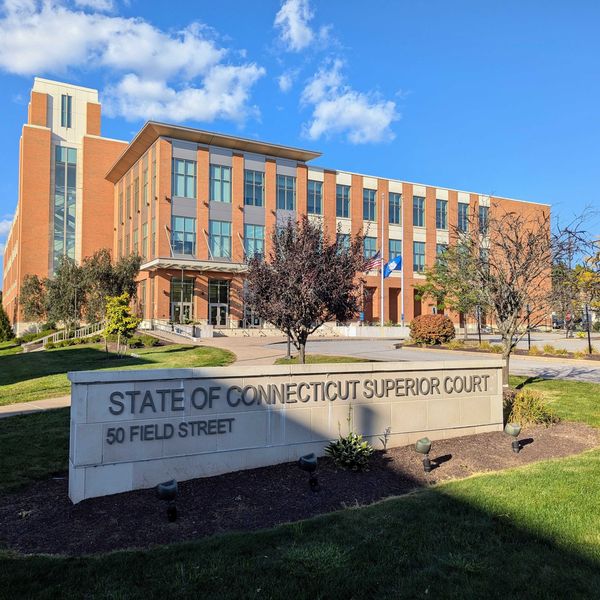
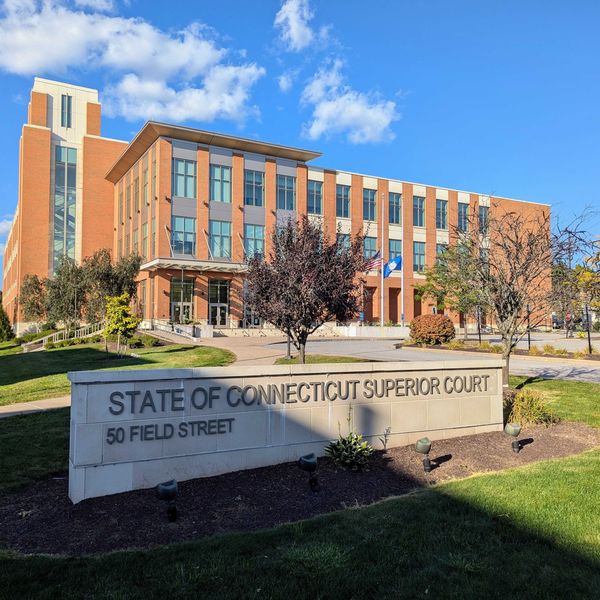
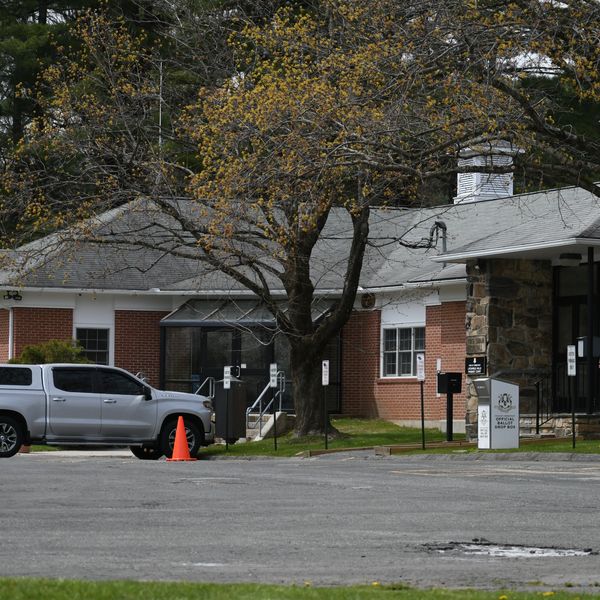
The case of Jacquier vs. Camardi is expected to continue at Torrington Superior Court the week of Sept. 15.
Photo by Riley Klein

The case of Jacquier vs. Camardi is expected to continue at Torrington Superior Court the week of Sept. 15.
NORTH CANAAN — A pair of Democratic Town Committee (DTC) candidates are seeking legal recourse to ensure they are included on the ballot this November despite errors on the party endorsement slate.
Plaintiffs Jean Jacquier and Carol Overby brought the case against defendant Marilisa Camardi to Torrington Superior Court, which held an evidentiary hearing Friday, Sept. 12. Testimony from both sides aimed to explain the situation to Judge Ann E. Lynch.
At the July 22 DTC caucus, Jacquier was endorsed as the party’s candidate for town clerk and Overby was endorsed to run for Board of Finance.
The next day, DTC chair and caucus secretary Chris Jacques filed the full endorsement slate and State Election Enforcement Commission (SEEC) documents to Assistant Town Clerk Marilisa Camardi. But the slate was missing information: Jacquier and Overby were not assigned to a specific office or term.
"I am a rookie at this," Jacques said on the witness stand. "I suppose I just didn't look at it closely enough."
Jacquier testified that she was not wearing her glasses while filling out her information on the official endorsement slate and “made a clerical mistake.”
Overby was not called as a witness.
Camardi testified to noticing on July 24 that the form was missing information and, after cross referencing the accompanying SEEC documents, filled in the blanks herself. It was established during the hearing that making clerical corrections on forms is within proper protocol for a town clerk.
On Aug. 7, however, First Selectman Brian Ohler alerted the Secretary of the State’s (SOTS) office that the original document was incomplete. (Ohler was not present at the Sept. 12 hearing.)
SOTS Election Officer Heather Augeri reviewed the slate as it was originally submitted. Per the filing, she responded that the endorsements were not properly certified and therefore void. Augeri advised Camardi remove both nominees from the ballot.
Jacquier testified that since the Aug. 7 correspondence she has had several phone calls with Augeri, who she described as a friend. Jacquier said Augeri relayed the same message to her: “She said it’s not valid.”
Camardi is the acting town clerk in North Canaan, though she is technically Jacquier’s part-time assistant. Jacquier is the current, four-term elected town clerk but has not reported to work since February following a dispute between her and the first selectman. “I did not resign. I did not quit. I just left,” Jacquier testified. “I couldn’t stand the turmoil.”
Plaintiff attorney John Kennelly said the SOTS office has no statutory authority to rule on issues relating to municipal party endorsements. Kennelly claimed that as the acting town clerk, Camardi is the sole individual responsible for finalizing and certifying the town election ballot.
Kennelly asserted that if Camardi was informed through the SEEC documents of which offices Jacquier and Overby were endorsed for, then Augeri’s advice should be ignored and the two candidates should be eligible to run in November.
Camardi said she was waiting to finalize the ballot until the court makes its decision.
After nearly three hours of testimony, Judge Lynch referenced a similar case, Airey vs. Feliciano (2024), in which Connecticut Supreme Court ruled to reject an improperly signed petition sheet. Lynch requested briefs from each attorney by Monday, Sept. 15, and planned to continue the hearing that week.
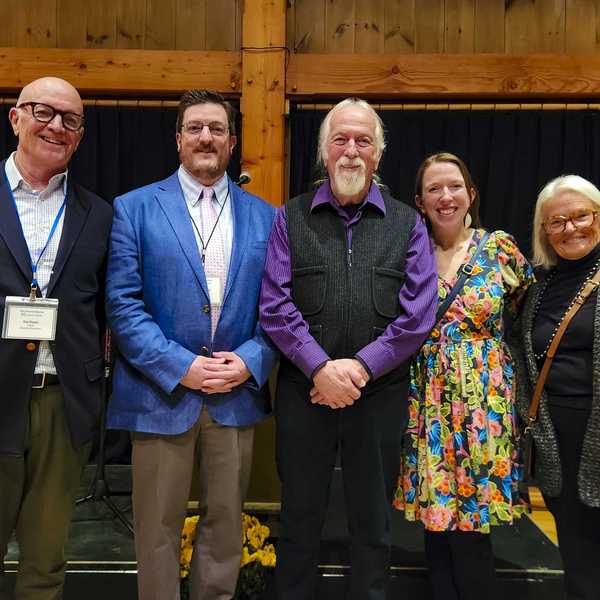
Grant Bogle, center, poses with his Louis and Elaine Hecht Follow the Forest Award with Julia Rogers, left, and Tim Abbott, during HVA’s 2025 Annual Meeting and Holiday Party.
SALISBURY — From the wooded heights of Tom’s Hill, overlooking East Twin Lake, the long view across Salisbury now includes a rare certainty: the nearly 300-acre landscape will remain forever wild — a milestone that reflects years of quiet local organizing, donor support and regional collaboration.
That assurance — and the broader conservation momentum it represents — was at the heart of the Housatonic Valley Association’s (HVA) 2025 environmental awards, presented in mid-December at the organization’s annual meeting and holiday party at The Silo in New Milford.
Salisbury conservation advocate Grant Bogle, who serves as president of the Twin Lakes Association (TLA), was among those honored, recognized for his pivotal role in helping secure Tom’s Hill and the adjacent Miles Mountain as part of a sweeping, multi-state land protection effort.
He was honored with The Louis and Elaine Hecht Follow the Forest Award, named for longtime conservation leaders Lou and Elaine Hecht. The award celebrates individuals who advance a collaborative vision for protecting connected wildlife habitat across the Housatonic Valley and beyond.
“I think it is tremendous for Salisbury and for the watershed,” Bogle said. “There’s a lot more that we are thinking about and able to do now, and it wouldn’t have happened without the Sheffield Land Trust and HVA.”
A ‘once-in-a-generation’ success
The annual award highlighted the work of the Cooper Hill Conservation Alliance, a partnership of eight conservation organizations, a realtor and a local farming family that together conserved more than 1,200 acres in Ashley Falls, Mass., and Salisbury.
“This is a once-in-a-generation environmental success,” said Julia Rogers, HVA’s conservation director, noting that the scale of the project — and the speed with which it came together — depended on trust, persistence and cooperation among many partners.
Kathy Orlando, executive director of the Sheffield Land Trust, was recognized for her leadership
in helping form the alliance and for seeing an opportunity to expand the protection of Massachusetts farmland by including two large, ecologically significant parcels just over the state line in Connecticut.
Orlando was quick to deflect praise.
“This is about all the volunteers and the committees of those eight organizations,” she said. “There is no way that I could have done what I did without these partners. It is really everybody’s time, energy and effort — and their networking — that makes all of this possible.”
Bogle and the Salisbury parcels
Equally essential to the project’s success, HVA leaders said, was the work of Bogle, who helped bring together private donors and shepherd critical land deals in Salisbury at a pivotal moment.
Bogle was honored for his role in securing 560 acres of vulnerable and highly visible properties — Tom’s Hill and Miles Mountain — that anchor the Connecticut side of the Cooper Hill landscape.
Leaders of the Salisbury Association Land Trust said Bogle’s behind-the-scenes work helped make the project feasible at a critical moment, as development pressure mounted and funding timelines tightened.
“Grant understood both the urgency and the opportunity,” said Lisa Pastore, executive director of the Salisbury Association Land Trust, which helped secure public and private funding for the Tom’s Hill acquisition. “By bringing private donors to the table early, he helped create the momentum that allowed public and philanthropic funding to follow,” she said.
Working alongside two groups of private donors, Bogle helped assemble pledges and negotiate purchases while the Salisbury Association Land Trust pursued state, federal and additional private funding.
Tom’s Hill, nearly 300 acres overlooking East Twin Lake, is now permanently protected. Miles Mountain, another key parcel, is slated for conservation ownership in 2026.
For Bogle, the impact goes well beyond individual properties.
“What makes Tom’s Hill and Miles Mountain so important is how visible they are to the community,” Bogle said. “When people look up and know that land is protected — not just for today, but permanently — it changes how you think about Salisbury and its future.”
“I think it is tremendous for the watershed,” he said. “There’s a lot more that we are thinking about and able to do now, and it wouldn’t have happened without the Sheffield Land Trust and HVA.”
HVA Executive Director Tim Abbott said Bogle’s work exemplified the spirit of the Follow the Forest initiative, which seeks to protect a continuous woodland corridor stretching from the Housatonic Valley through eastern New York and north to Vermont and Canada.
“Although HVA is defined by a watershed, we are not limited by it,” Abbott said. “We are also interested in all the organizations we work with who care deeply about helping achieve great, lasting conservation.”
The Follow the Forest collaborative now includes more than 50 organizations working across municipal and state boundaries — an approach that HVA leaders say is increasingly critical as development pressure and climate change reshape the region.
Honoring a lifetime of leadership
Also recognized during the evening was Rebecca Neary, president of the Warren Land Trust and a longtime HVA board member, who received the Charles Downing Lay Environmental Leadership Award.
Named for HVA’s founder, the award honors an individual whose influence on conservation in the region is both broad and enduring.
“It’s a lifetime achievement superhero award,” Abbott said, “and Rebecca Neary, an indomitable champion of community-based and strategic land conservation, embodies that spirit and depth of impact.”
Neary said HVA’s emphasis on collaboration has reshaped how local land trusts approach their work.
“HVA has been instrumental in getting all of us to think more collaboratively with one another because we are in service of the same mission,” she said. “That is HVA’s overarching vision, and what it works diligently with its incredible team to achieve. It’s my great honor to be a part of that organization and to serve this incredible cause.”
Municipal elections across Northwest Connecticut in 2025 largely left the status quo intact, returning longtime local leaders to office and producing few changes at the top of town government.
With the exception of North Canaan, where a two-vote margin decided the first selectman race, incumbents and established officials dominated across the region.
In North Canaan, Democrat Jesse Bunce narrowly defeated Republican Brian Ohler by just two votes. The result, which required a recount, marked the only contested change in first selectman among the Northwest Corner towns. North Canaan also recorded the region’s highest voter turnout, with 53.5% of registered voters casting ballots, ranking 10th statewide.
In Cornwall, voters re-elected Democrat Gordon Ridgway, who ran unopposed for his 18th term as first selectman and has served in office for 34 years. In Salisbury, voters again returned Democratic First Selectman Curtis Rand, also unopposed, electing him to an 11th term and extending a long period of continuity in town leadership.
Falls Village voters re-elected all three members of the Board of Selectmen, keeping cross-endorsed First Selectman Dave Barger (D/R) in office alongside Selectman Chris Kinsella (D) and Selectman Judy Jacobs (R).
In Sharon, voters returned First Selectman Casey Flanagan (D) and re-elected selectmen Lynn Kearcher (D) and John Brett (U), maintaining the town’s existing governing board.
Kent was the only other town to see a change in first selectman, though not through a competitive race. Democrat Eric Epstein was elected first selectman in an uncontested race, succeeding Marty Lindenmayer, who did not seek reelection after being in office for just one term. Kent voters, however, approved a local referendum banning recreational cannabis dispensaries.
Turnout across the Northwest Corner remained high despite the limited number of contested races. Kent recorded 47.7% voter participation, followed by Falls Village at 44.2%. Sharon, Cornwall and Salisbury each posted turnout slightly above the statewide average of about 40%.
Election officials described Election Day as orderly, aided by early voting and new state-issued voting tabulators.
In post-election discussions, however, local registrars raised concerns about the administrative burden of expanded early voting, saying the state’s 14-day mandate was too long and strained small towns’ finances and staffing.
The Boards of Selectmen across the six towns in Region One now consist of 11 Democrats, five Republicans, and two unaffiliated members. Compared with the previous term, Republicans increased their numbers by two, while unaffiliated members declined by two.
A boater prepares to launch from O’Hara’s Landing at East Twin Lake this past summer, near the area where hydrilla was first discovered in 2023.
SALISBURY — After three years of mounting frustration, costly emergency responses and relentless community effort, 2025 closed with the first sustained signs that hydrilla — the aggressive, non-native aquatic plant that was discovered in East Twin Lake in the summer of 2023 — has been pushed back through a coordinated treatment program.
The Twin Lakes Association (TLA) and its coalition of local, state and federal scientific partners say a shift in strategy — including earlier, whole-bay treatments in 2025 paired with carefully calibrated, sustained herbicide applications — yielded results not seen since hydrilla was first identified in the lake.
The arc of the problem
The Connecticut River strain of hydrilla at East Twin Lake, first detected near O’Hara’s Landing Marina, is an unusually robust variant that quickly triggered emergency removals, diver searches and spot treatments, as TLA officials scrambled to contain fragments capable of rapidly sprouting into new beds.
By 2024, the cost of fighting the invader had grown significantly, straining both community and association budgets as managers moved from isolated spot treatments to serial applications and broader planning efforts. Monitoring and repeated partial treatments that year helped prevent larger outbreaks but failed to eliminate the plant.
“It became pretty clear that the Whack-a-Mole strategy wasn’t going to work,” said George Knoecklein of Northeast Aquatic Research, the TLA’s limnologist.
A strategic pivot in 2025
Drawing on lessons from earlier seasons, TLA leaders and limnologists adjusted their approach in 2025. Instead of reactive, site-by-site responses, the association began the season with a planned, sustained dosing of the northeast cove of East Twin Lake and the lake’s full littoral zone beginning in late May, maintaining low, permitted concentrations of the systemic herbicide fluoridone throughout the growing season.
Operationally the work involved close tracking of application tracks, repeated water sampling to confirm target concentrations, and diver-assisted surveys in deeper water to find any remaining pockets.
The payoff: hydrilla retreated in 2025
By mid-summer and into early August, field surveys and association updates reported a dramatic decline in visible hydrilla within the lake.
At the TLA’s annual August meeting, association leaders described the season as “the first good news we’ve had in three years,” while cautioning that the victory is fragile and requires continued monitoring and rapid response to any new fragments or regrowth.
At the annual meeting, it was announced that the final two planned applications of the herbicide Sonar would not be needed. The slow-release pellets currently in the water are expected to remain effective, reaching the target duration of 120 days.
TLA officials reported that East Twin Lake is closer than ever to achieving a functional eradication of the invasive plant infestations.
They emphasized, however, that this progress has been made possible through continued funding, permitting, and close coordination with state partners. The success of this effort could also provide valuable insights for addressing similar challenges in other lakes affected by the Connecticut River strain.
Why this year’s approach mattered
Several elements distinguished the 2025 season: an earlier start to herbicide applications, sustained low-level dosing, frequent monitoring, and data-driven coordination among the TLA, its limnologist, state and federal agencies, and contractors.
The payoff came at a price: three years of repeated interventions had driven lake management expenses sharply higher, and the 2025 season required continued fundraising and justification to town and state stakeholders.
The wider use of herbicides in waterways remains controversial in some quarters, and TLA officials stressed that the treatments used in East Twin were done under state permits with scientific oversight — and that results would be shared cautiously as case studies for other affected lakes.
What comes next
TLA and partners made clear the 2025 results are cause for cautious optimism, not celebration.
The next steps include diver-assisted surveys of deepwater areas to check for any surviving turions or isolated plants; continued low-level surveillance and rapid spot treatment to snuff out any reappearance and sharing methodologies, and monitoring data with neighboring lake groups and state programs to refine best practices for tackling the Connecticut River strain.
The lake association’s Fall newsletter reported that while treatment costs are expected to be moderate in 2026, “the heightened level of surveillance will continue.” The TLA predicted $400,000 will be spent on lake management next year.
By the end of 2025, what began as an emergency discovery in East Twin in 2023 had evolved into a test case for a new, more intentional treatment model. The TLA and its partners achieved the first season in which hydrilla substantially receded in the lake — a breakthrough that shows the combination of early action, sustained dosing and disciplined monitoring can work against this particularly aggressive strain.
That success, however, comes with an explicit rider: vigilance, funding and science-backed management must continue if the Twin Lakes are to remain hydrilla-free.
Housatonic Valley Regional High School's boys varsity basketball team won the Berkshire League/Connecticut Technical Conference Holiday Tournament for the second straight year. The Mountaineers defeated Emmett O'Brien Technical High School in the tournament final Dec. 30. Owen Riemer was named the most valuable player.