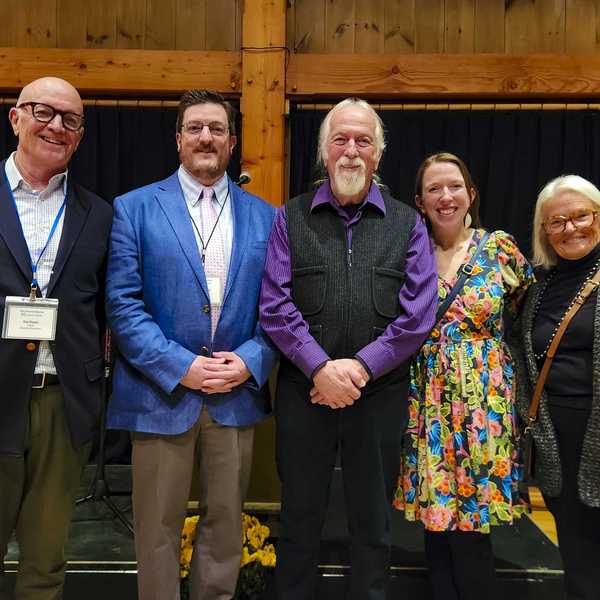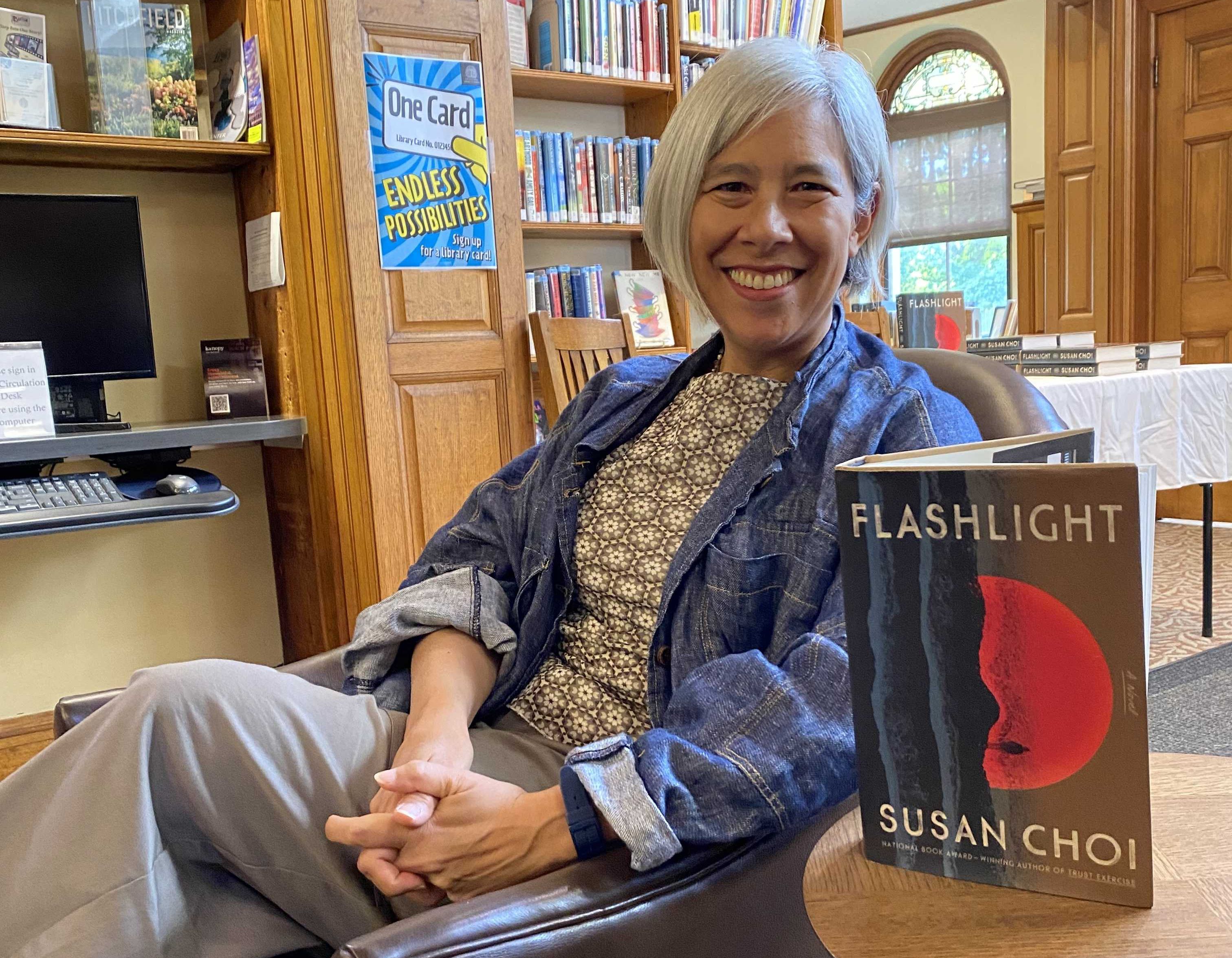
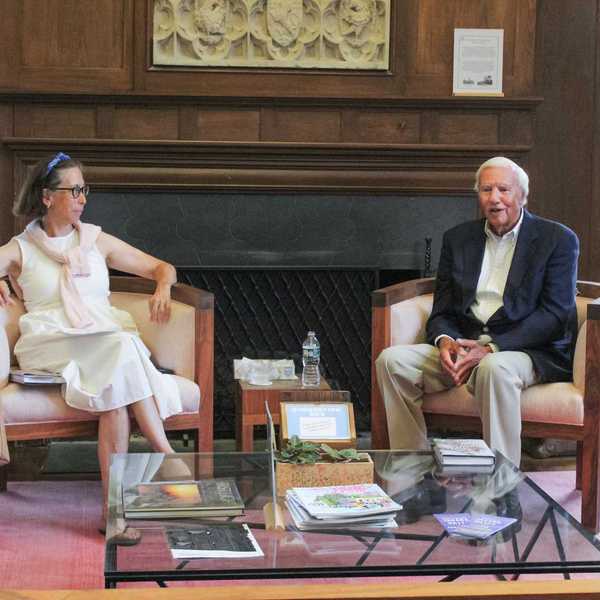
A rare opportunity to engage with the studied, meticulous process through which a recognized, award-winning author turns a core idea into a full-length work was the order of the day when the Hotchkiss Library of Sharon invited Susan Choi to speak on Saturday, Sept. 27. The program kicked off the Fall Author Series planned by the library, with two more authors scheduled for October and November.
A winner of the National Book Award, Choi based her talk on her recently published work, “Flashlight,” and the happy news that it has moved from the longlist to the shortlist for a Booker Prize.
“We’ll just be here together,” was the tone set by Choi in the informal talk. She spoke without notes and welcomed audience questions in conversation.
Choi began by reading an excerpt from the very beginning of her book —what had once been a short story published in The New Yorker. A father disappears. The story unfolds over time, memories, and the culture of nations, examining mysteries and catastrophe, all acting in concert to impact characters over decades.
“How memories shift over time” was something Choi said her book explores.
“It was challenging,” Choi said of the writing process and the research involved in depicting 1970s Japan, not yet westernized. “Mysterious things had happened in that era,” she said.
“I was interested in how long these things had gone unexplained and whether the characters who populate the narrative would come to understand those real mysteries,” Choi said.
“How lives are formed by circumstances we don’t understand” was an idea that invited exploration as Choi wove her narrative.
A background as a professional fact-checker informs and influences Choi’s meticulous research and writing process, with a strong emphasis on historical accuracy.
“If we are exploring our shared human history, I can’t get it wrong,” Choi said.
Next up in the Fall Series at the library is Peter Kuper, insect illustrator, who will describe his creative process that led to “Insectopolis: A Natural History.” The talk is scheduled for Sunday, Oct. 5, at 4 p.m.
The final program in the series will feature Aleksandra Crapanzano speaking about her cookbook, “Chocolat: Parisian Desserts and Other Delights,” and offering a cooking demonstration on Sunday, Nov. 16, at 4 p.m.
Advance registration is advised and can be made on the library’s website: www.hotchkisslibraryofsharon.org
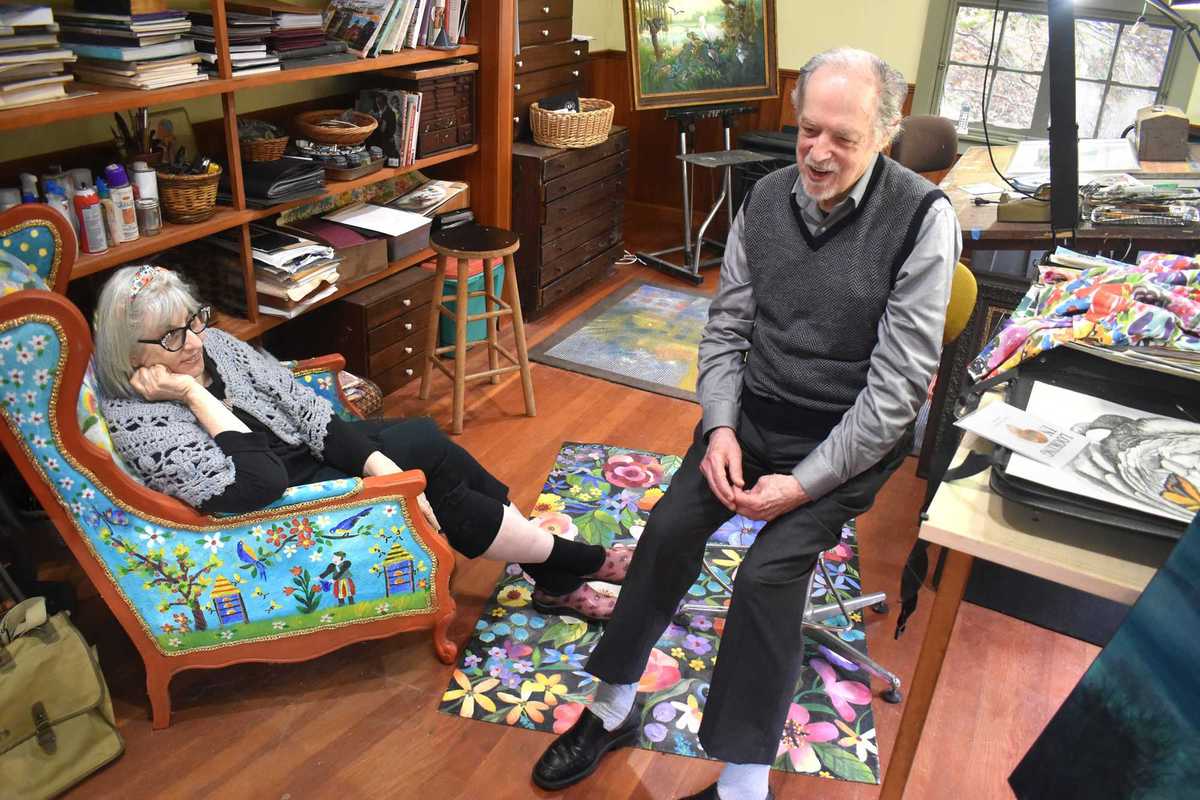
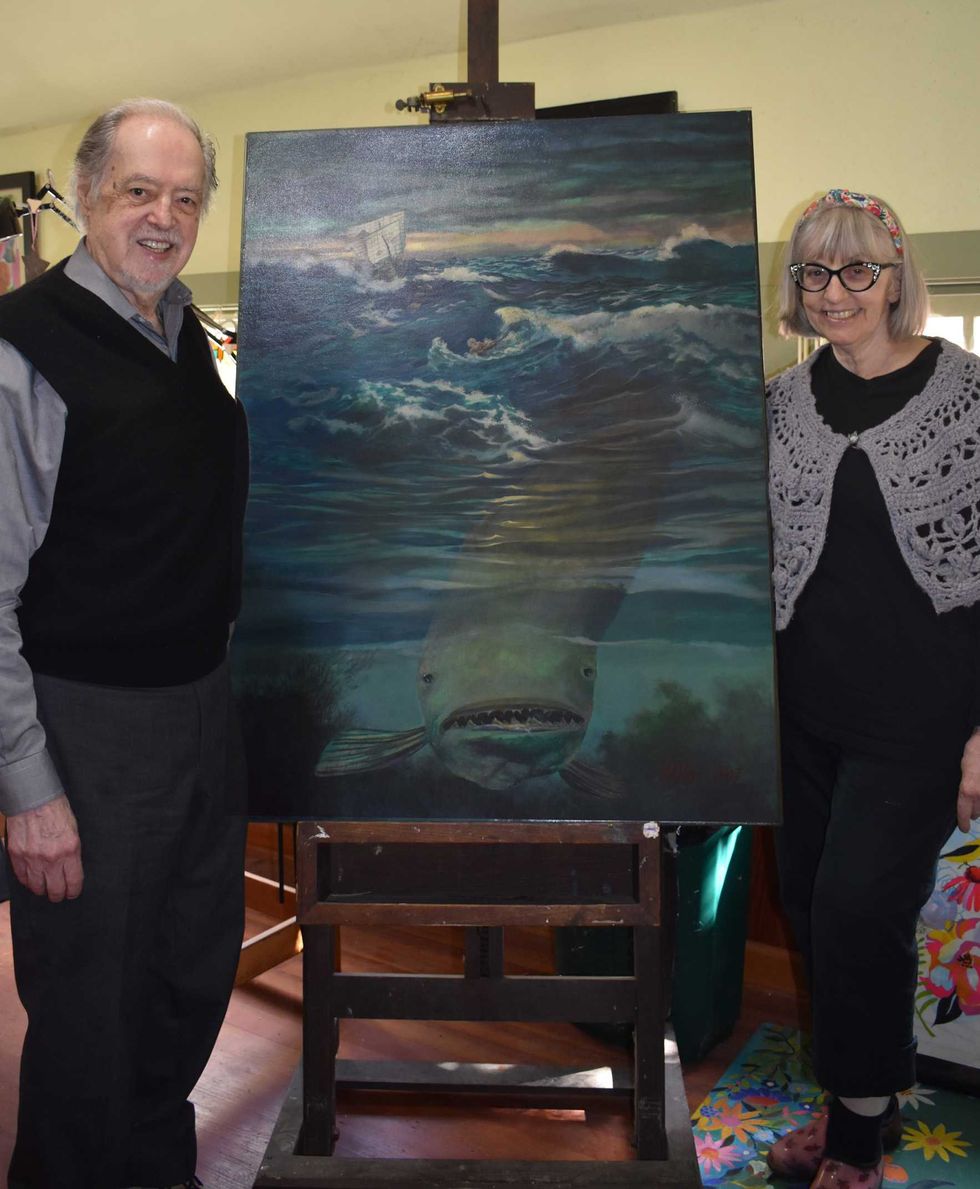 Justine and Victor Valla in their studio with a painting of Victor’s,”Jonah and the Whale.” Robin Roraback

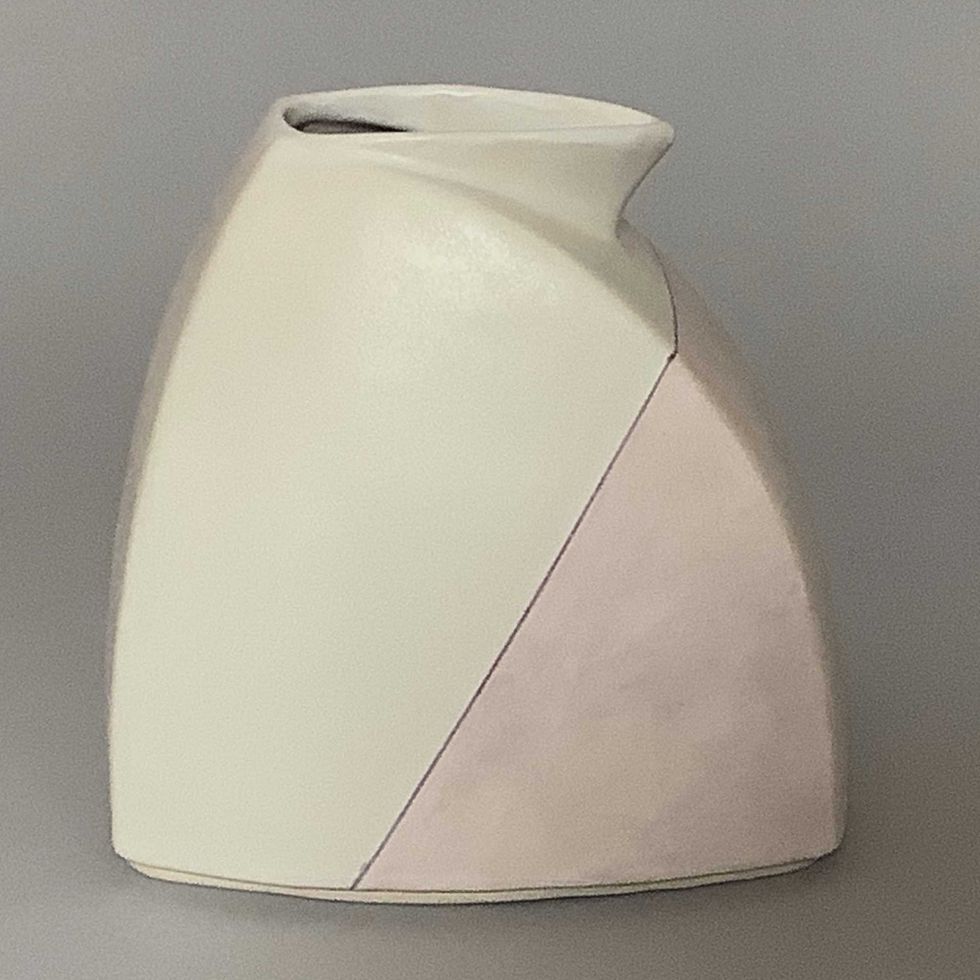 A ceramic vase by Kathleen Heidemann.Provided
 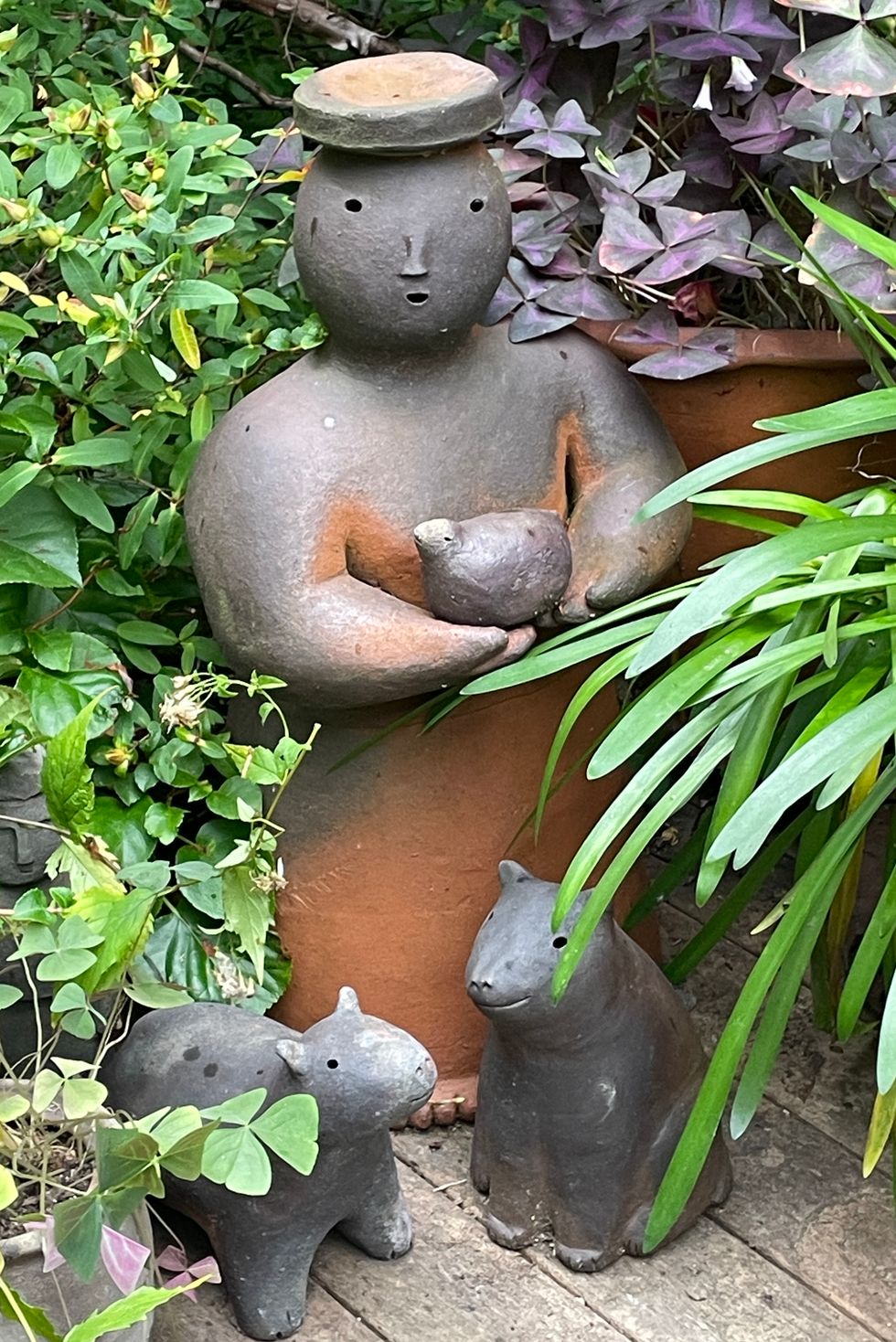 Joy Brown’s delightful ceramic sculptures.Provided