NORTH CANAAN —With kratom now illegal in Connecticut, some Northwest Corner residents are already crossing state lines to get it.
The substance — a controversial herbal product with opioid-like effects — can cause dependence and withdrawal, prompting state officials to warn of serious health risks.
Just a few miles from towns like North Canaan, Sharon and Salisbury, smoke shops and convenience stores in neighboring New York and Massachusetts continue to sell the once-common substance, drawing interest from Connecticut customers in the days since the March 25 ban took effect.
State officials have made the message clear about kratom, used for its stimulant and pain-relieving effects, and for some, to relieve symptoms of withdrawal from opioids.
“It’s illegal. You can’t buy it, you can’t sell it or possess it because it’s dangerous, unregulated and unsafe,” said Connecticut Attorney General William Tong in a statement announcing the ruling.
Bryan T. Cafferelli, commissioner of the state Department of Consumer Protection, also issued a warning to licensees and business owners.
“As of March 25, it is illegal to have this substance on your shelf,” he said. “We look forward to working with our local and state partners as we target this.”
The ban is already reshaping behavior across the Northwest Corner — affecting local businesses, prompting cross-border sales and raising concerns among clinicians about withdrawal and a potential shift toward more dangerous substances.
Kratom products, commonly sold in gas stations, smoke shops, convenience stores and online as powders, capsules, gummies and concentrated liquid “shots,” have long existed in a regulatory gray area.
Connecticut’s recent classification now places the substance alongside heroin and LSD, effectively banning its state sale, transport and possession.
Impact on merchants’ bottom line
In North Canaan, the change is immediate and visible.
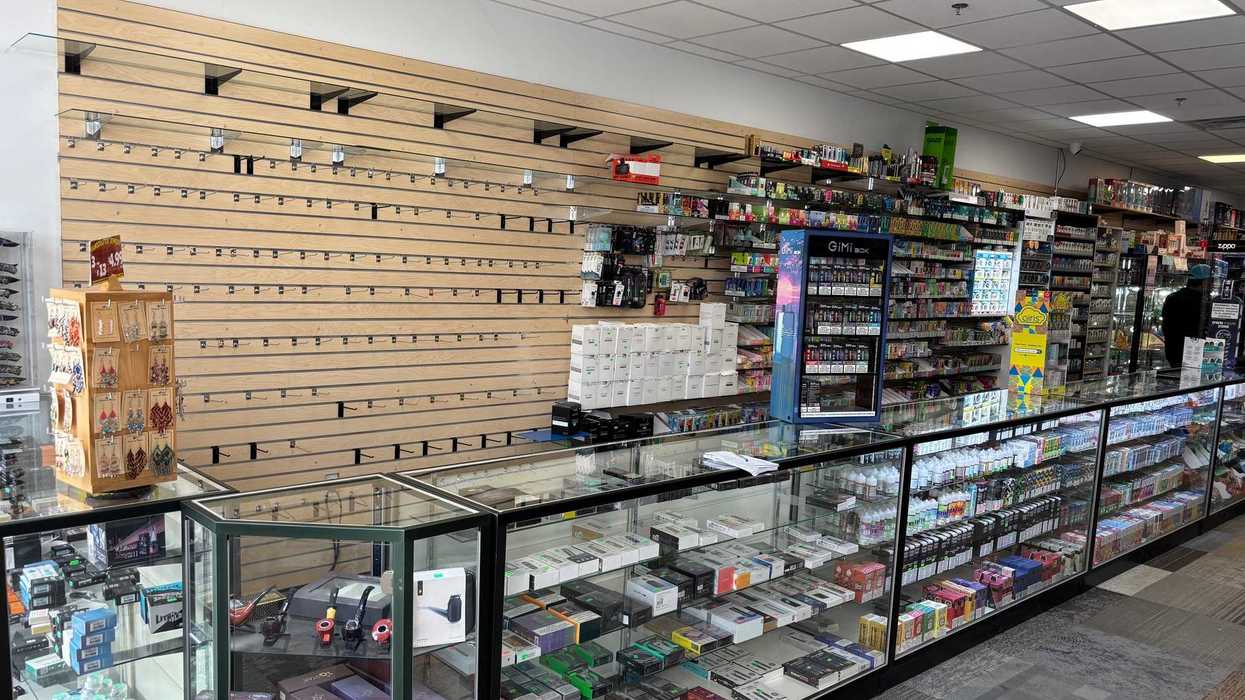
At Smoker’s Choice and nearby The Smoking Ape — two North Canaan smoke shops within a mile of each other— kratom products have been removed entirely.
A large portion of the wall behind the counter at Smoker’s Choice that once held kratom products is now bare.
During a March 31 visit, an employee declined to elaborate beyond confirming that all kratom is no longer being sold. “You can see the empty shelves,” he said.
At The Smoking Ape, which opened at 61 East Main St. in January, owner Omar Nasser said all kratom products have been pulled from the shelves. They have also been removed from hisstore in Torrington.
“We gave everything back to our vendors,” he said, noting that the loss was significant. “It was a big contributor to our sales,” he said.
Nasser said many shopssaw big losses with the ban.
“Some sellers lost a lot of money — threw it away or sold it at a discount,” he said. “It would be no surprise if others are taking it over the border into New York to sell it or are selling it under the table.”
In the days leading to the ban, he said, demand at his shops surged.
“I sold what I could,” he said, noting that some customers were buying in bulk as the deadline loomed.
Clinicians warn of a critical window for intervention
Clinicians say they are concerned about a largely unaddressed consequence: people going into sudden withdrawal without support.
New data from Mountainside Treatment Center, an addiction rehabilitation facility in North Canaan, shows kratom-related admissions have nearly tripled over the past year, pointing to a growing population of residents who may be physically dependent as access disappears overnight.
Clinicians say the days immediately following the ban are a critical intervention window — and warn that, without support, some individuals may seek more dangerous alternatives.
“With the ban taking effect, we are deeply concerned about what happens next for the people already using kratom daily,” said Jana Wu, director of clinical integration at Mountainside and a national expert on kratom dependence treatment.
Many individuals, Wu explained, don’t realize they’ve developed a physical dependence until they try to stop.
“Withdrawal symptoms can include anxiety, insomnia, nausea and intense cravings. When access disappears overnight, people may find themselves in crisis without knowing where to turn.”
Since the ban took effect, Nasser said customers have continued to come into his North Canaan and Torrington shops — some, he said, seeking relief from withdrawal.
“They’re looking for something,” to replace kratom, he said. In response, the store owner has been recommending various botanical extracts in pill form.
However, he doubts that it is meeting the needs of kratom consumers.
“I don’t think it does the same job as kratom. I don’t think it’s even close. Withdrawal from kratom is very serious, like heroin. It’s not a joke,” he said.
He also believes the ban is already shifting behavior.
Some customers, he said, are traveling across the border into neighboring Dutchess County, where kratom remains legal for those 21 and older.
Others, particularly at his Torrington location, he fears, may turn to stronger substances.
“I think people will be going, definitely, to hardcore drugs,” Nasser said.
At Shawn’s City Smoke in Torrington, owner Shawn Chowdhury said his family-run business removed kratom products immediately following the state’s Feb. 24 announcement, weeks before the ban took effect.
“We took it off the shelves right away,” he said of his inventory, which consisted only of all-natural kratom leaf powder. “We did not want to take any chances.”
Chowdhury said kratom made up only a small share of his business and that removing it will not significantly affect his bottom line.
He added that more concentrated forms of kratom are particularly concerning and expressed support for restricting them.
“They should take it out if it’s bad,” he said, referring to 7-hydroxymitragynine, or 7-OH, a concentrated compound derived from the kratom plant. 7-OH has a much higher potency.
Treatment providers watch for fallout
At Mountainside, clinicians say the effects of the ban are already being felt.
“We are definitely seeing more calls — not only from Connecticut but from other states,” said Wu, referring to the concentrated compound. “People are getting nervous.”
She said the anxiety reflects a broader national moment, pointing to a rise in overdose-related calls to the CDC pertaining to 7-OH and national poison control centers.
“Those numbers have spurred more political action, and in this election year, a lot of politicians are speaking up.”
The federal Food and Drug Administration (FDA) is among several agenciesworking to address concerns about the growing availability and use of 7-OH.
“Vape stores are popping up in every neighborhood in America, and many are selling addictive products like concentrated 7-OH,” said FDA Commissioner Marty Makary in a statement.
“7-OH is an opioid that can be more potent than morphine. We need regulation and public education to prevent another wave of the opioid epidemic.”
Connecticut, Wu noted, is the eighth state in the country to enact a full ban on kratom, which includes 7-OH. “We are being watched. All eyes are on Connecticut. It’s a bold move, and a divisive move.”
Wu said Mountainside clinicians have been counseling individuals experiencing cravings and withdrawal, including the use of medications such as naltrexone and injectable Vivitrol.
At the same time, she confirmed that cross-border purchasing is already part of the conversation. “People are definitely going into New York to buy kratom,” she said.
Wu noted that prior to the ban, the substance had been widely available throughout the Northwest Corner.
“It’s a very contentious topic,” Wu said. “Many people are very upset about the ban. There is a lot of grief and a lot of frustration, which is understandable.”
She noted that people who had been taking kratom for chronic pain and anxiety, or veterans suffering with post-traumatic stress disorder, are now left to find alternative relief.
“The fear is that people who are dependent will turn to other illicit drugs,” added Wu.
Crossing the line
Just across the state line in Millerton, N.Y., the shift is less visible.
Along Route 44 and into nearby Amenia, smoke shops continue to operate under New York’s regulatory framework, where kratom remains legal for adult purchase.
On Saturday, visits to several gas stations and smoke shops — including Cumberland Farms just over the border in Millerton and Smokes 4 Less in nearby Amenia — found clerks hesitant to discuss the volume of Connecticut customers.
At Smokes 4 Less, a worker would only say that he has seen an uptick in Connecticut customers in recent weeks, as did a Cumberland Farms employee.
While it is too early to quantify any sustained increase, the proximity of the Northwest Corner to the New York border — in some cases just minutes away — is already shaping consumer behavior.
The same holds true to the north, where Sheffield, Mass., just across the border from North Canaan, offers another option, since Massachusetts does not have a comparable statewide ban.
Currently, the state legislature in Massachusetts is weighing two different regulatory options – either a total ban or establishing a new set of safety measures. One plan would mirror Connecticut’s policy, while the other would institute kratom control rules, including lab testing for dangerous chemicals and not allowing anyone under 21 to purchase the substance, as is the case in New York.
Online questions — and legal risk
Another question is surfacing in smoke shops and treatment settings alike: Are Connecticut residents permitted to order kratom online?
While some residents have wondered whether online purchases could bypass the ban, Connecticut’s law applies to possession — not just retail sales. That means even if a product is shipped from out of state, having it in Connecticut could carry legal consequences.
At the same time, enforcement is not expected to center on tracking individual consumer shipments, but rather to mirror other controlled substances.
Still, shop owners say the guidance they give customers is straightforward.
“It doesn’t matter where it comes from,” Nasser said. “It’s illegal here now.”
What changed on March 25
On March 25, Connecticut officially classified kratom — derived from the tropical tree Mitragyna speciosa — as a Schedule I controlled substance, placing it in the same legal category as drugs with a high potential for abuse and no accepted medical use.
The change, approved on Feb. 24 by the state’s Legislative Regulation Review Committee, made it illegal in Connecticut to possess, sell, distribute, manufacture or transport kratom.The ban officially went into effect on March 25.
State officials directed retailers to remove all kratom products from shelves ahead of the effective date and to return or properly dispose of remaining inventory.
The ban applies to kratom in all forms, including powders, capsules, extracts and products containing 7-hydroxymitragynine (7-OH), a potent derivative.
Violations may carry criminal penalties under Connecticut’s controlled substance laws.
Across the border, laws differ. New York permits regulated adult sales of kratom, while Massachusetts does not have a comparable statewide ban, allowing the substance to be sold in many retail settings.
The differing policies create a patchwork across the region, particularly in border communities like those in the Northwest Corner.
For residents near the state line, access may now depend less on availability — and more on geography.
Where to get help
In an emergency: call 911.
Mountainside Treatment Center, North Canaan: (860) 824-1397
High Watch Recovery Center, Kent: (860) 775-4769
McCall Behavioral Health Network, Torrington: (860) 496-2100


 Justine and Victor Valla in their studio with a painting of Victor’s,”Jonah and the Whale.” Robin Roraback


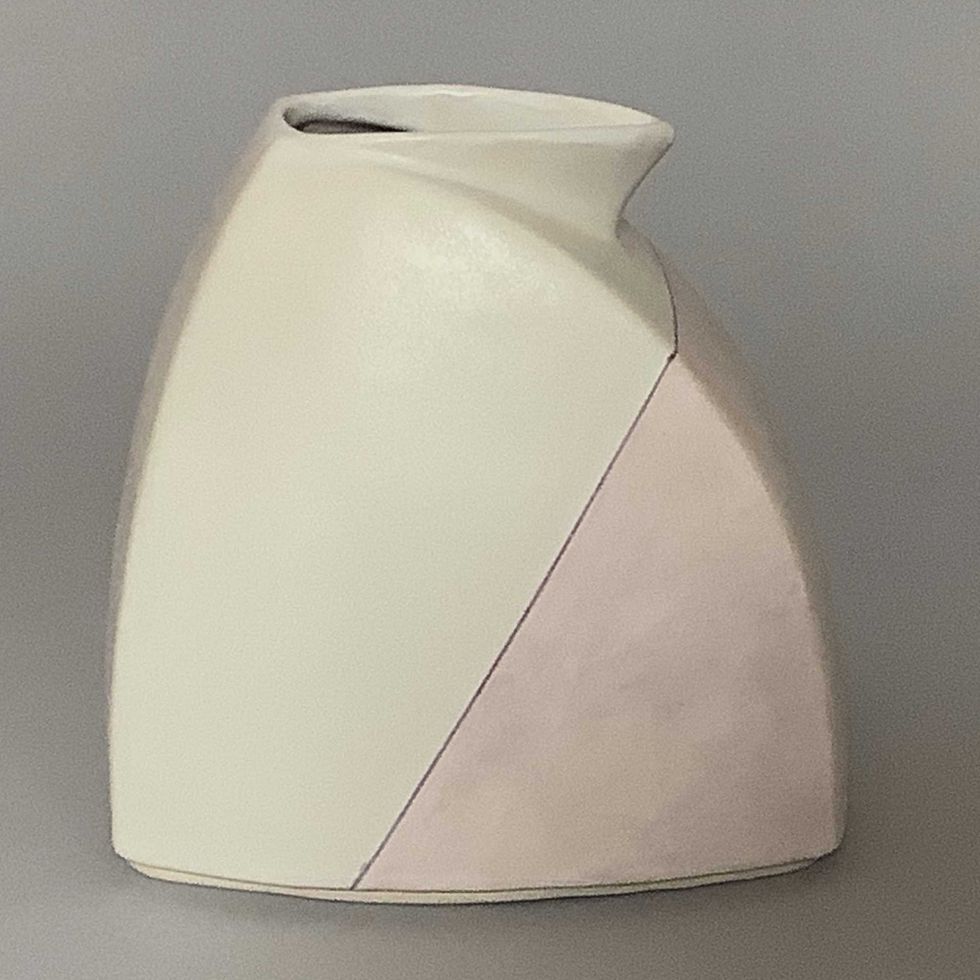 A ceramic vase by Kathleen Heidemann.Provided
 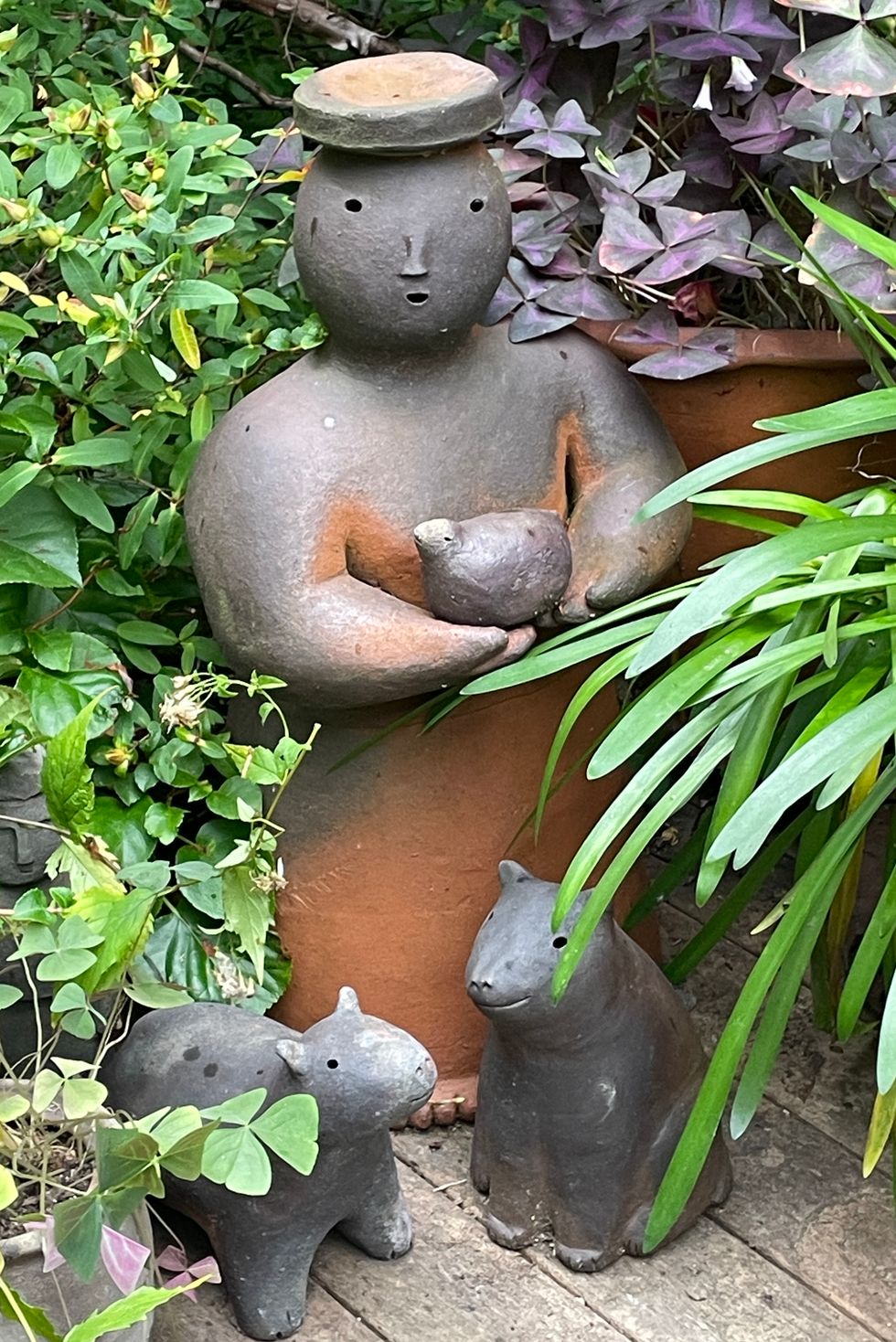 Joy Brown’s delightful ceramic sculptures.Provided