CORNWALL — An eight-year-old black labrador retriever named Charlie was mauled by a bear in his yard on the evening of Wednesday, July 17.
Phyllis Nauts, his owner, said she did not hear or see the fight and only realized what had happened when Charlie came inside for mealtime.
“When it was time for dinner he came into the house and didn’t seem interested, which, if you know anything about labs, is unusual,” she said. “He collapsed on the kitchen floor. As I petted him I realized there was blood on his flank.”
Nauts said the bite marks were deep and roughly the width of a dime. Charlie could not make it upstairs to sleep, so Nauts arranged dog beds in the kitchen and slept with him on the floor.
The next morning she took Charlie to Millerton-based veterinarian Caroline Cannon, who put him on a combination of antibiotics, pain killers, rabies boosters, and tender love and care. She also condemned Charlie to a cone collar while he healed.
As of Friday, July 19, Nauts reported her beloved lab is on the mend. “He’s chipper and up and about.”
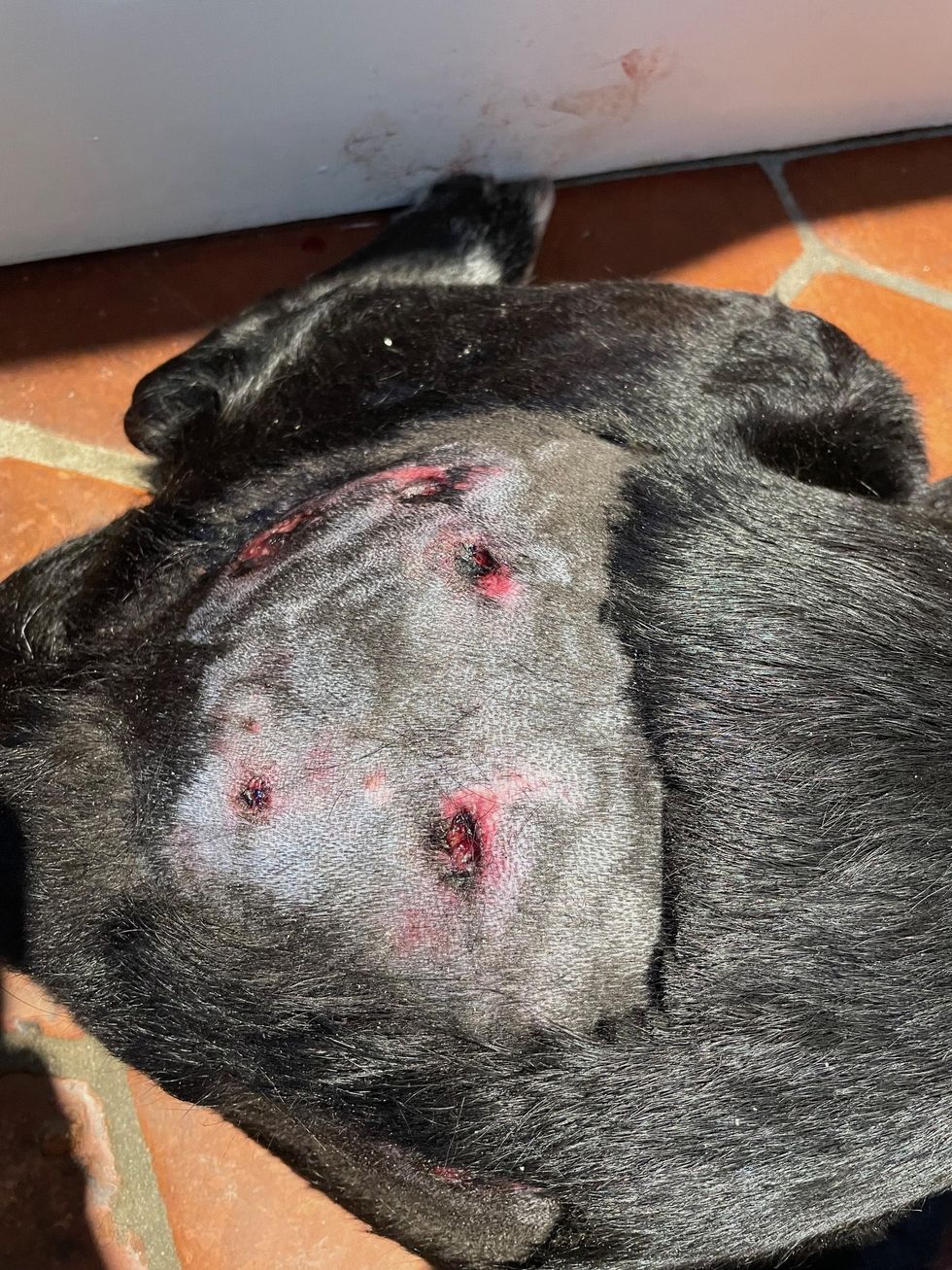 Charlie the black lab was bitten by a bear July 17. Bite marks on both flanks left deep wounds in the dog.Phyllis Nauts
Nauts said she has seen bears on her property for many years but has never experienced an incident like this.
“I’m concerned there may be a rogue bear out there,” she said.
Nauts reported the attack to Cornwall Town Hall and Connecticut Department of Energy and Environmental Protection.

 Models walk the organic runway at HVSFW. Ilan Harel
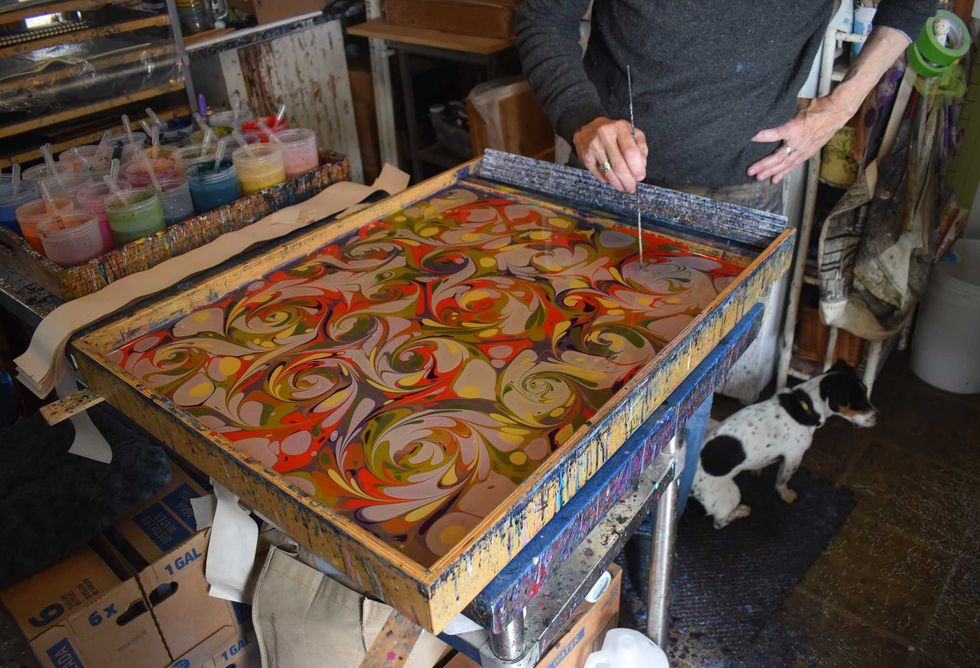 Susan Schneider, owner of Shandell’s, creates a variety of products with marbleized surfaces in her Ashley Falls studio.L. Tomaino



 Roger McKee naming the winners with the first place entry over his left shoulder. Patrick L. Sullivan
 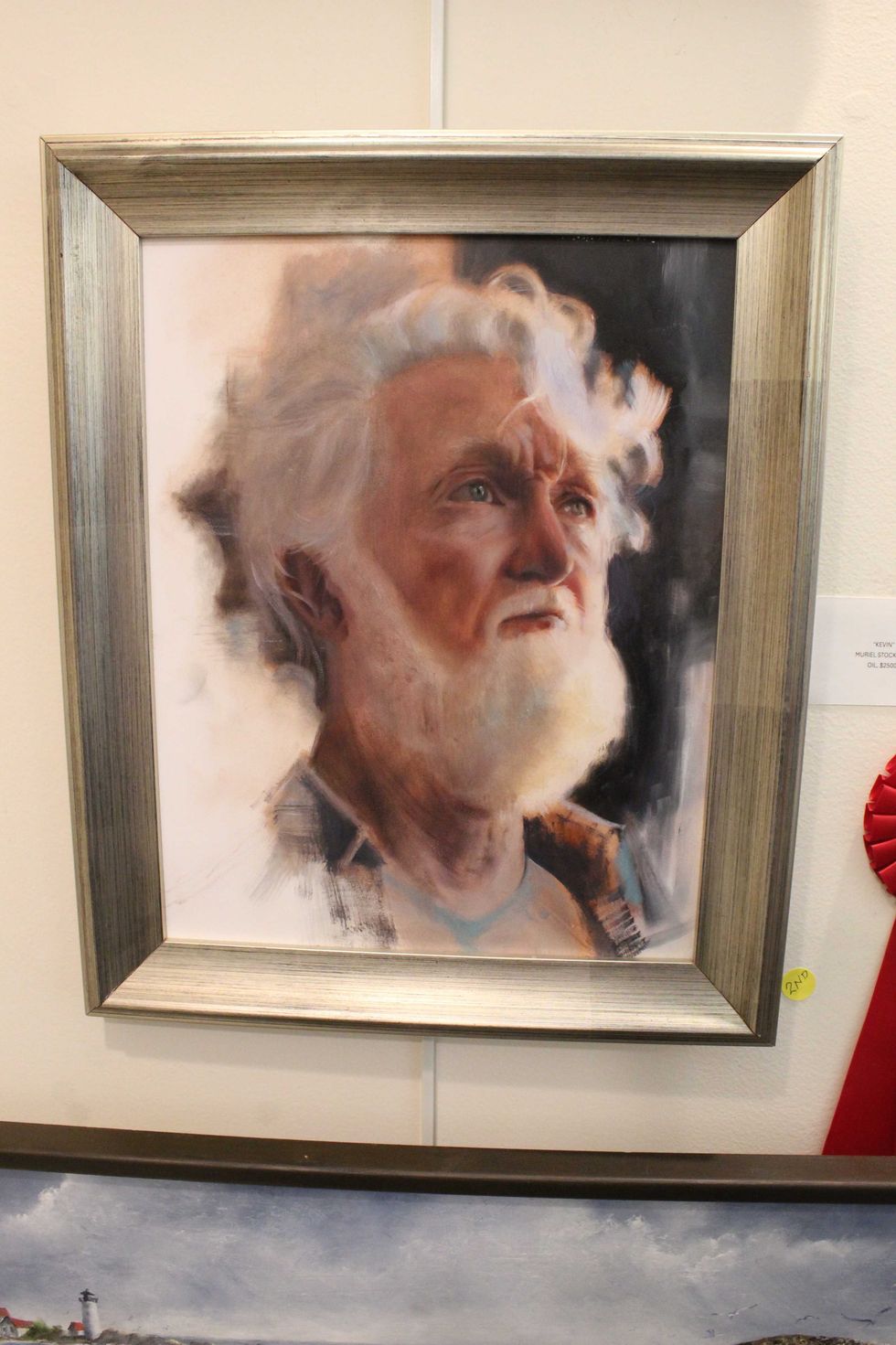 Muriel Stockdale’s “Kevin” took second place in the juried art show at Trinity Episcopal Church.Patrick L. Sullivan