Dear EarthTalk: Can earthquake energy be harnessed for power, particularly in places like Japan? Also, how can Japan, so vulnerable to earthquakes, even have nuclear power?Sasha M.AustraliaWhile it is no doubt theoretically possible to generate electricity by harnessing the kinetic energy of shifting tectonic plates below the Earth’s crust, pulling it off from a practical standpoint would be a real logistical challenge — not to mention prohibitively expensive compared to harnessing other forms of energy, renewable or otherwise. Big earthquakes throw off vast amounts of energy. According to Beth Buczynski of the CrispGreen website, researchers have calculated that the January 2010 magnitude 7.0 earthquake that killed upward of 220,000 people in Haiti released as much energy as 31 of the atomic bombs the U.S. dropped on Hiroshima in 1945. And the magnitude 9.0 earthquake that struck northeast Japan in March 2011 unleashed the equivalent of more than 15,000 Hiroshima bombs. That’s a lot of energy indeed.“The total energy from an earthquake includes energy required to create new cracks in rock, energy dissipated as heat through friction, and energy elastically radiated through the earth,” reports the U.S. Geological Survey’s Earthquake Hazards Program. “Of these, the only quantity that can be measured is that which is radiated through the earth.” Likewise, only this radiated energy — which is what shakes buildings and is recorded by seismographs — could be harnessed given the dedication of enough resources and the proper implementation of the right technologies.Just how to harness tectonic energy is the big question. One way would involve stringing quartz crystals, which can transfer electricity via piezoelectricity, underground along known fault lines. When tectonic plates shift, the crystals could transfer the energy they pick up to a grid-connected storage medium for later use. But this is hardly practical, for one because earthquakes rarely happen in a predictable manner let alone in the exact spots where energy harvesters would have set up their gear. Also, fault lines tend to run deep below the Earth’s surface, so laying down a network of quartz crystals would involve mining out shafts and connecting them underground on a scale way beyond what humans have done to the present.Regarding why Japan is so reliant on nuclear power despite the tectonic risks is a matter of economics. Lacking the rich oil, coal and other energy reserves of many other nations, Japan relies on nuclear power for some 30 percent of its electricity. Prior to the March 2011 earthquake and tsunami, Japan was gearing up to boost its nuclear power reserves to account for half of its electricity needs by 2030. This increased reliance on nuclear power was set to play a big part in the country’s rollback of greenhouse gas emissions. Prior to the earthquake and tsunami, the Japan Atomic Energy Agency had modeled a 54 percent reduction in carbon dioxide emissions from 2000 levels by 2050 and a 90 percent reduction by 2100, with nuclear energy accounting for upward of 60 percent of the country’s total energy mix. Now it looks like the country may scale back its nuclear expansion plans, which in the short term will only increase its reliance on fossil fuels, which will in turn drastically limit Japan’s ambitious plans to reduce greenhouse gas emissions. Of course, one would hope that turning away from nuclear expansion would spur the growth of alternatives such as wind power and other forms of renewable energy.CONTACTS: CrispGreen, www.crispgreen.com; U.S. Geological Survey’s Earthquake Hazards Program, www.earthquake.usgs.gov.Dear EarthTalk: I have a carpet made out of recycled PET bottles in my baby’s room and I started noticing a lot of the fibers on our clothes and even in my mouth! Is it dangerous for me or my baby to be in contact with and possibly ingest these fibers?Ashley Riccabonivia emailThe jury is still out as to whether PET plastics can leach contaminants into our systems, but most reputable consumer advocates seem to think the stuff is relatively benign. That said, it can’t be good to ingest carpet fibers of any kind, and a 2009 study by German scientists found that some PET water bottles contained trace amounts of chemicals that could mimic hormones if ingested. So while there is no documented proof that PET carpet fibers are bad for you, why risk it? Stay safe by keeping them out of your mouth and nose. Also, frequent vacuuming (once a week or more often) should help to contain the problem, and is recommended for general maintenance anyway.Overall, PET carpet — which is indeed made from recycled soda and water bottles and is sold under the name brands Resistron and Permalon, among others — is a pretty green choice. Buildings in several national parks have used PET carpet in lobbies and other high-traffic areas with minimal need for maintenance and excellent results. PET fibers are naturally stain resistant and do not require the chemical treatments used on most nylon carpets,and they retain color and resist fading from exposure to the sun or harsh cleaning. PET carpet advocates report that because plastic beverage containers are made with top quality resins as required by the U.S. Food & Drug Administration, recycled PET is superior to lower grades of virgin synthetic fibers used in making other brands of polyester carpet yarns.Also, old PET carpet can live another day when it is “down-cycled” for use in other applications such as car parts, insulation, and even furniture stuffing. PET carpet advocates brag that their products keep plastic soda and water bottles out of the landfill, but who knows how many of those sacrificed bottles could have lived on as more bottles instead of other end-of-the-line products.GreenAmerica, publisher of the popular yearly published National Green Pages, recommends the 100 percent post-consumer recycled PET carpets for sale on Liberty Carpet One’s GreenFloors.com website. Liberty Carpet One claims that every square yard of PET carpeting they sell keeps 40 water or soda bottles out of landfills. The company also reports that its dyeing method is less polluting and requires less energy to produce than other flooring options and that all of their carpets have been tested and meet indoor air quality standards set by the U.S. Environmental Protection Agency.Of course, if you’re starting from scratch, good old natural fibers such as wool, sisal, jute and seagrass may be the greenest and healthiest carpet choices out there, especially when paired with pads made from cotton or rag (not petroleum). Other than GreenFloors PET carpeting, GreenAmerica also vouches for natural fiber offerings from the likes of Contempo Floor Coverings and Natural Home. And besides carpeting, there is a whole world of harder flooring choices that meet environmentalists’ strict criteria, from sustainably harvested hard woods to bamboo to cork.CONTACTS: “Plastic Water Bottles May Pose Health Hazard,” Discovery News, dsc.discovery.com/news/2009/04/28/water-bottles-health.html; Go Green Flooring, www.gogreenflooring.com; GreenAmerica, www.greenamerica.org.EarthTalk is written and edited by Roddy Scheer and Doug Moss and is a registered trademark of E-The Environmental Magazine (www.emagazine.com). Send questions to: earthtalk@emagazine.com. Subscribe: www.emagazine.com/subscribe. Free trial issue: www.emagazine.com/trial.
Latest News
After 15 years, Black Rabbit owner says goodbye
Patrick L. Sullivan
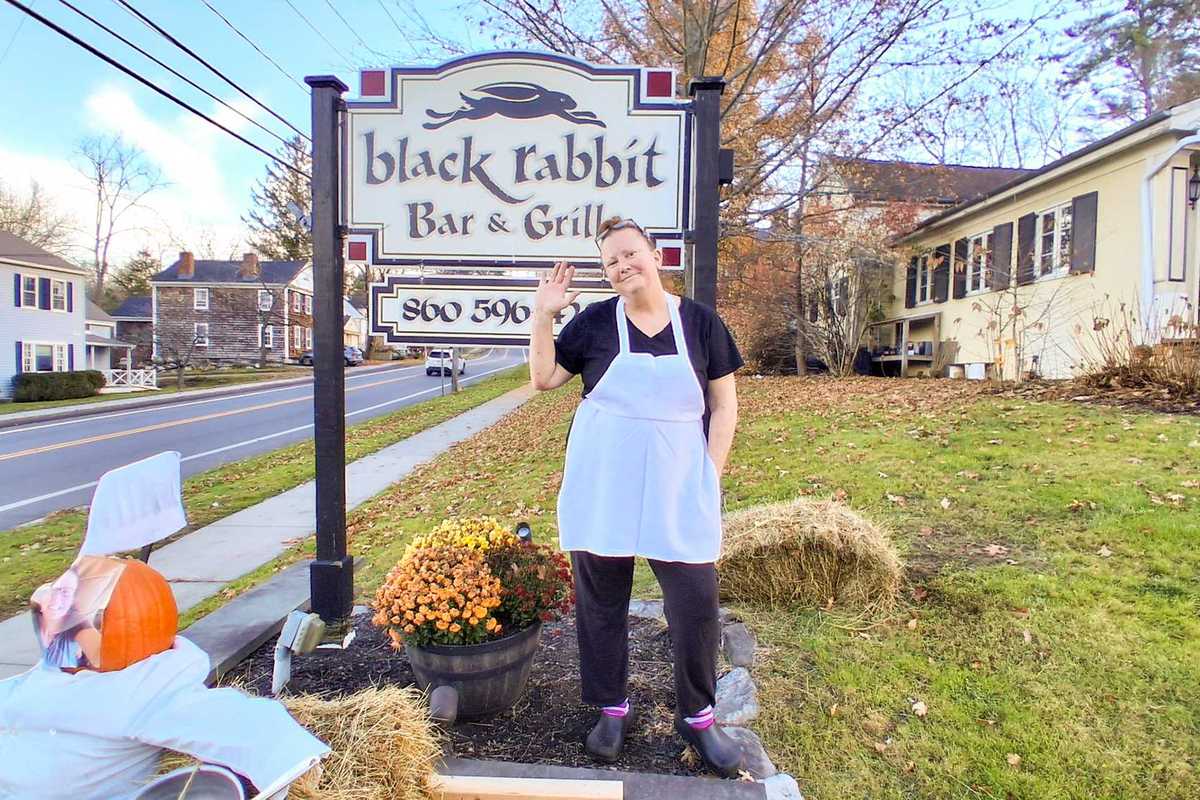
Black Rabbit owner Kendra Chapman outside her Lakeville restaurant on Sunday, Nov. 8, its final day after 15 years in business.
LAKEVILLE — After 15 years running the Black Rabbit Bar & Grille, Kendra Chapman decided it was time to stop working 70-hour weeks and spend more time with her family.
The restaurant at 2 Ethan Allen St. closed Sunday, Nov. 8, following a busy final week filled with farewells from longtime customers. She announced the Nov. 8 closing date on Oct. 31.
Chapman, 56, said the workload had been weighing on her for some time. After more than 27 years in the restaurant business, she said she was exhausted.
“I’m tired,” she said. “The restaurant business is hard.”
The final week brought an outpouring of support — and enough customers to prompt a joke from one of her kitchen staff: “Are they trying to support you or kill you?”
“It was a joke but honestly summed it up in a nutshell,” Chapman said.
Chapman thanked her patrons for their loyalty over the years and for reaching out to her when word got out she was closing.
“I cannot even begin to express the overwhelming, heartfelt, warm, loving wishes I experienced this past week,” she said. “The amount of guests, friends, patrons that expressed their well wishes to me and my staff were truly humbling.”
Kendra and Corey Chapman opened the Black Rabbit in 2011, offering casual, family dining for local residents and weekend visitors. Its menu included Kendra’s New England clam chowder, burgers, sandwiches and pizza, and the restaurant became a gathering place for regulars who had followed her through earlier ventures.
Chapman credited Scott and Roxanne Bok, former owners of the White Hart inn in Salisbury, with giving her a start in the community when they hired her to run its bar and restaurant in 2000. She stayed for 10 years.
“I really don’t think the Black Rabbit would have been as successful as it was without the opportunities the White Hart provided,” she said.
Before opening the Black Rabbit, the Chapmans operated Chapman’s Chowder House within the Sheffield Pub in Massachusetts. Customers and employees followed them along the way.
Although the pair are no longer married, Kendra said they remain extremely close. Corey continued helping with the business over the years, and they opened and closed the Black Rabbit together.
For now, Kendra has no immediate plans beyond spending time with her family, particularly her mother, 87, and her father, who turns 88 this year.
“I am so fortunate to still have two amazing parents at my age and I’m really looking forward to spending some long overdue time with them,” she said. “I have not been able to celebrate a Mother’s Day or a Father’s Day with them in 27 years.”
The space is likely to house another restaurant. Chapman said she is leaving the equipment in place so the next tenant can take over a turnkey operation. “I’m hoping to pay it forward,” she said.
She also thanked her 25 employees.
“I really want to give a huge shout out to my employees that stuck with me through all the good times and the bad,” she said.
Regulars say they will miss the restaurant, describing the warm welcome they received and the friendships they developed there.
Some had followed Chapman from the White Hart to the Black Rabbit. Many expressed sadness while wishing her well and acknowledging her need for a break.
Chapman said she enjoyed being part of the community.
“The people I met have become lifelong friends throughout that experience,” she said.
Northwest Corner libraries offer laptops to eligible residents
Ruth Epstein
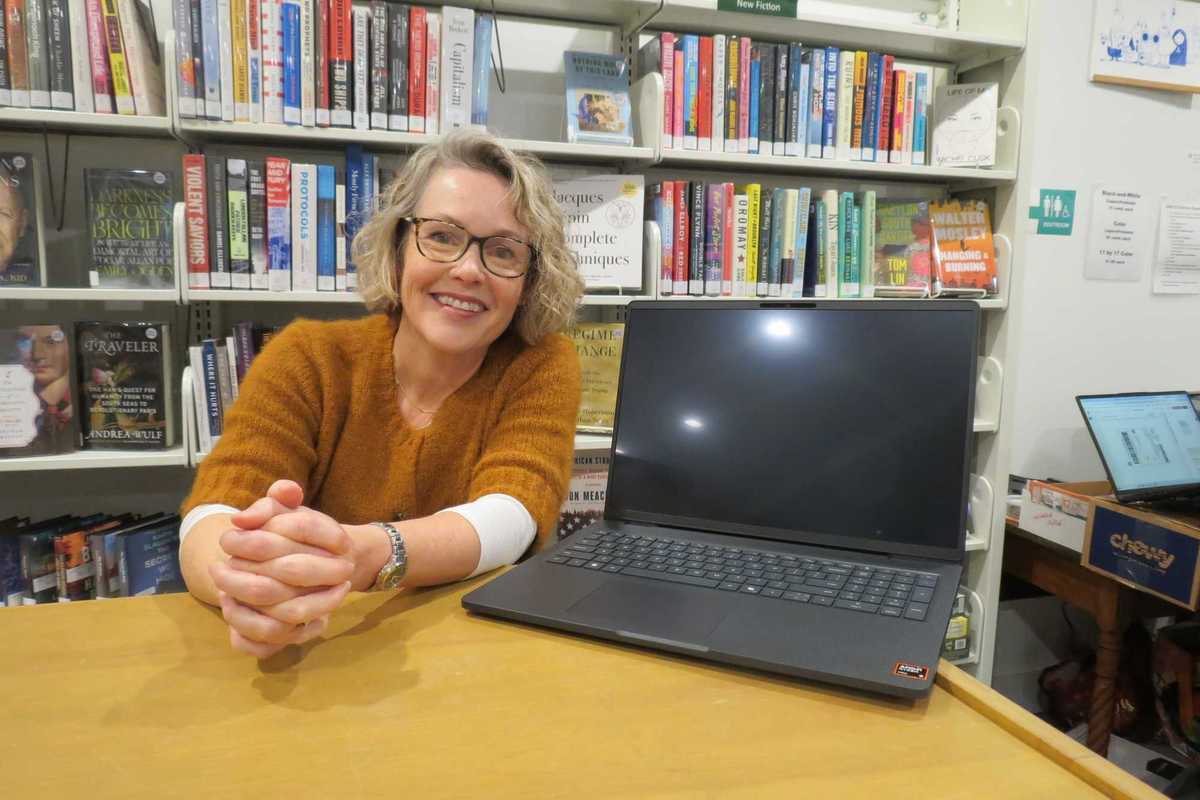
Sarah Marshall, director of Kent Memorial Library, displays a laptop available through the Laptop ConneCT Library program, now offered at all town libraries in Region One.
NORTHWEST CORNER — Libraries provide much more than books nowadays, and eligible Connecticut residents now have another resource available.
All six libraries in the Region One school district are participating in Laptop ConneCT, a program that allows eligible residents to borrow laptops for long-term use.
“It’s terrific,” said Meg Sher, executive director of the D.M. Hunt Library in Falls Village. “We’ve already given out two.”
Laura Moran, director of the Douglas Library in North Canaan, spoke enthusiastically about the program, saying it has particularly benefited people over 65.
“They are able to use it for such things as telehealth,” she said. “They are finding it easier to read because of a larger screen and keyboard than on their phones.”
Each library has received an allocation of laptops through the statewide program. The Dell Pro 16 laptops run Windows and have built-in cameras for video calls, online classes, virtual doctor appointments and more. They come with a power adapter, charging cable and a carrying case, subject to availability.
To qualify, borrowers must be at least 18, have a valid library card from the municipality distributing the laptop and lack access to a sufficient personal computer at home.
They must also participate in one of the following assistance programs: SNAP, the Connecticut Energy Assistance Program, the Low-Income Home Energy Assistance Program, Medicare or HUSKY Health.
Each library also has a digital navigator who visits weekly to provide instruction and support.
Sarah Marshall, director of the Kent Memorial Library, said the library received 11 laptops. Five will be shared with community members, and six will remain in-house. Paul Bacsik, Kent’s navigator, is there Tuesdays from 10 a.m. to 1 p.m.
“Why wouldn’t we be part of it?” Marshall asked rhetorically. “It’s really something good for our patrons.”
Jennifer Lutris of Winchester, a retired librarian with the state’s community college system, is one of the digital navigators. She serves libraries in North Canaan, Falls Village and Norfolk.
“I’ve found it to be really fun,” she said of the position. “I’m meeting cool people with cool stories. I’m so glad I got this job. It’s so rewarding.”
She described one woman who loves music but had difficulty viewing content on her phone because the font was so small. Lutris helped her get started with a laptop, and she now enjoys viewing her favorite selections.
“People think seniors will need it to deal with issues like Social Security and Medicare,” said Lutris. “That’s part of it, but it also gives them connections to the outside world.”
The program is administered by the state Department of Energy and Environmental Protection in partnership with the Connecticut State Library. It is funded through the American Rescue Plan Act’s Capital Projects Fund.
Kent library honors Sam Callaway as Volunteer of the Year
Ruth Epstein

KENT — Sam Callaway is this year’s recipient of Kent Memorial Library’s Volunteer of the Year Award. The presentation was made by library Director Sarah Marshall at Sunday’s Volunteer Luncheon held at the Community House.
Callaway, an architect, has provided extensive free architectural services over many years for the new library building, which is under construction.
“We wouldn’t be here without you,” Marshall told him.
In his short acceptance speech, Callaway talked of the incredible team he worked with, including the staff, board and volunteers.
“I’ve come to believe that libraries in small towns are the engines of those towns,” he said. “We have to make sure they exist.”
Several committee reports were given during the event.
The book sale met its fundraising goal despite moving from the library’s usual Main Street site to a temporary location on the Kent Green during construction. Marshall described the result as a great achievement given the move away from busier Main Street.
Marshall assured those gathered that with the new facility there will be a book sale next year. The sale, which runs every weekend from May to October, is a major fundraiser. Its used books are all donated.
Dana Slaughter, who co-chaired the annual cocktail benefit held every spring, said this year’s event brought in the third-highest proceeds.
The raffle, which offered three $1,000 prizes in gift certificates to local businesses, was also a success, said Julie Saxton, a Kent Memorial Library board member.
“It was great that we could keep it local,” she said, thanking the sellers “for harassing everyone who went by.”
Marshall noted that it was rewarding to be able to buy local gift certificates. One winner requested a $500 gift certificate from NAPA and another from Ace Hardware.
At the raffle drawing following the Pumpkin Run on Oct. 25, Kent Center School third-grader Nami Kahn mistakenly read one winner’s name as David Poirier, her music teacher. The ticket belonged to David Perugini of Thomaston — but the next ticket she drew really was Poirier’s.
Looking ahead, the library will be putting out a cookbook and is seeking recipes from townspeople.
Marshall said she will also be giving tours of the new library soon and that construction is progressing very well.

Want more of our stories on Google? Click here to make us a Preferred Source.
Police Blotter: Troop B
Lakeville Journal
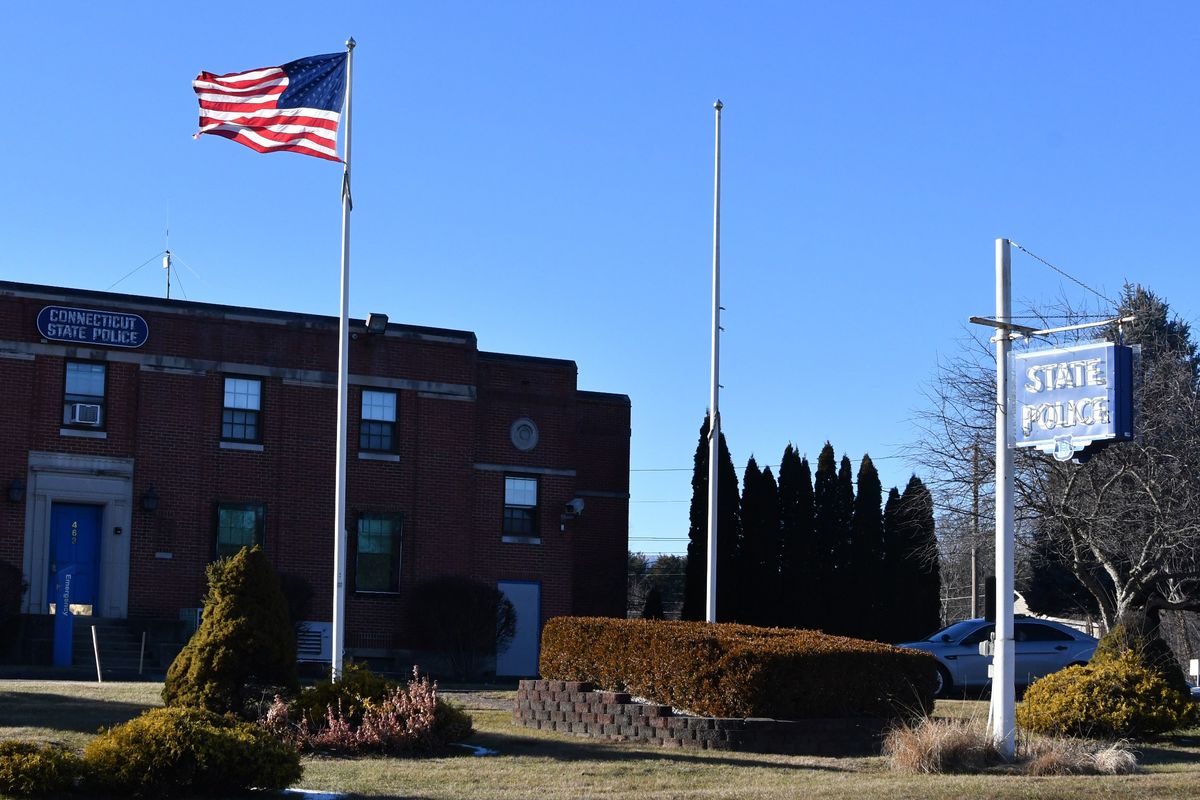
The following information was provided by the Connecticut State Police at Troop B. All suspects are considered innocent until proven guilty in a court of law.
North Canaan DUI
A 21-year-old driver was charged with driving under the influence after a single-vehicle crash on Casey Hill Road early Nov. 3, state police said.
Troopers responding to an automatic crash notification found that Samuel Green had been driving north near the intersection with Route 44 when his Ford F-150 struck a Frontier utility pole, left the road and came to rest atop a dirt mound, police said.
Green, the vehicle’s sole occupant, had no reported injuries.
He is scheduled to appear Nov. 13 in Torrington Superior Court.
North Canaan possession of a controlled substance
Police arrested a Torrington man in North Canaan on Nov. 8 for alleged possession of a controlled substance after a routine traffic stop investigating an equipment violation. Police reported that they stopped Shane Murphy, 33, on Deely Road at 12:26 a.m. due to improper tail lights. During a roadside interview, officers learned that narcotics were in the vehicle, according to police. A search allegedly led to the discovery of “presumptive crack/cocaine.”
Police arrested Murphy without incident for alleged possession of a controlled substance and issued an infraction for a failure to illuminate tail light. Murphy posted a $1,000 bond and was assigned a court date later thatmorning.
The Lakeville Journal will publish the outcome of police charges. Send mail to P.O. Box 1688, Lakeville, CT 06039, Attn: Police Blotter, or send to editor@lakevillejournal.com
Sharon median home price reaches $710K, up 16% from a year ago
Christine Bates
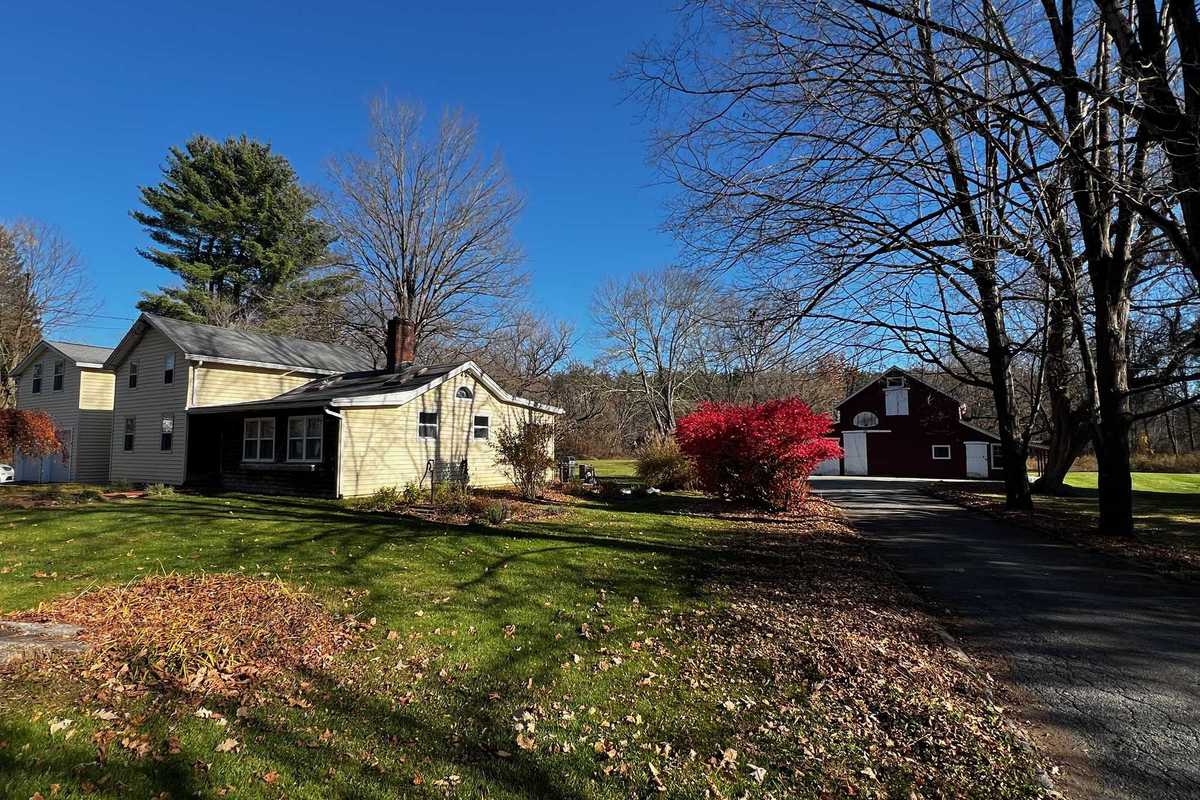
This home at 88 Sharon Valley Road, set on 6.9 acres with several outbuildings, sold for $675,000.
SHARON — The median sale price of a single-family home in Sharon reached $710,000 for the 12 months ending Oct. 31.
The median, which excludes condominiums, was 16% higher than the $610,000 recorded for the 12 months ending Oct. 31, 2025, and 5% above the $677,500 recorded for the corresponding period in 2024.
Sharon’s record 12-month median was $880,000, which was for the year ending August 2024.
Single-family home sales totaled 33 for the 12 months ending Oct. 31, down from 37 for the same period in 2025 and 40 in 2024.
The town’s highest 12-month sales volume was 87, recorded for the 12 months ending in May 2021 during the COVID-19 pandemic.
Annual sales over the past decade have typically ranged from 30 to 60.
Housing inventory was up in early November, with 33 homes listed for sale, including one condominium. Of those, 13 had asking prices above $1 million and 11 were listed below the $710,000 median sale price.
Land inventory remained stable, with 16 parcels available through the Multiple Listing Service, ranging in asking price from $133,000 to $2.25 million.
There were also 13 homes listed for rent in Sharon in early November, including five unfurnished dwellings.
October Transfers
1 Lovers Lane – 2 bedroom/3.5 bath home in a commercial zone transferred by Matthew and Brittany Hosier to 1 Lovers LLC for $650,000.
87 Sharon Valley Road – 3 bedroom/2 bath home built in 1870 plus a studio on 1.5 acres of land transferred by Todd Allen Barnes and Anna Helena Barnes to Kate Lascar-Tronquois and Brian Michael Budak for $625,000.
88 Sharon Valley Road – 4 bedroom/2 bath home with outbuildings on 6.9 acres transferred by Michael and Susan Clemente to Matthew and Brittany Hosier for $675,000.
249 Cornwall Bridge Road – 3 bedroom/1.5 split level home on 2 acres transferred by Darlene Melody Hardzog to R&S Investments and Solutions for $210,000.
29 West Main Street – the former home of barbeque restaurant When Pigs Fly South was transferred by 29 West Main Sharon LLC to Kennedy Foods for $350,000.
*Town of Sharon real estate transfers recorded between Oct. 1, 2026, and Oct. 31, 2026, provided by Sharon Town Clerk. Transfers without consideration are not included. Current market listings from Smart MLS and market statistics from InfoSparks. Note that recorded transfers may lag sales by a number of days. Compiled by Christine Bates, Real Estate Salesperson with William Pitt Sotheby’s International Realty, Licensed in CT and NY.
Free help navigating Medicare options in Falls Village
Patrick L. Sullivan
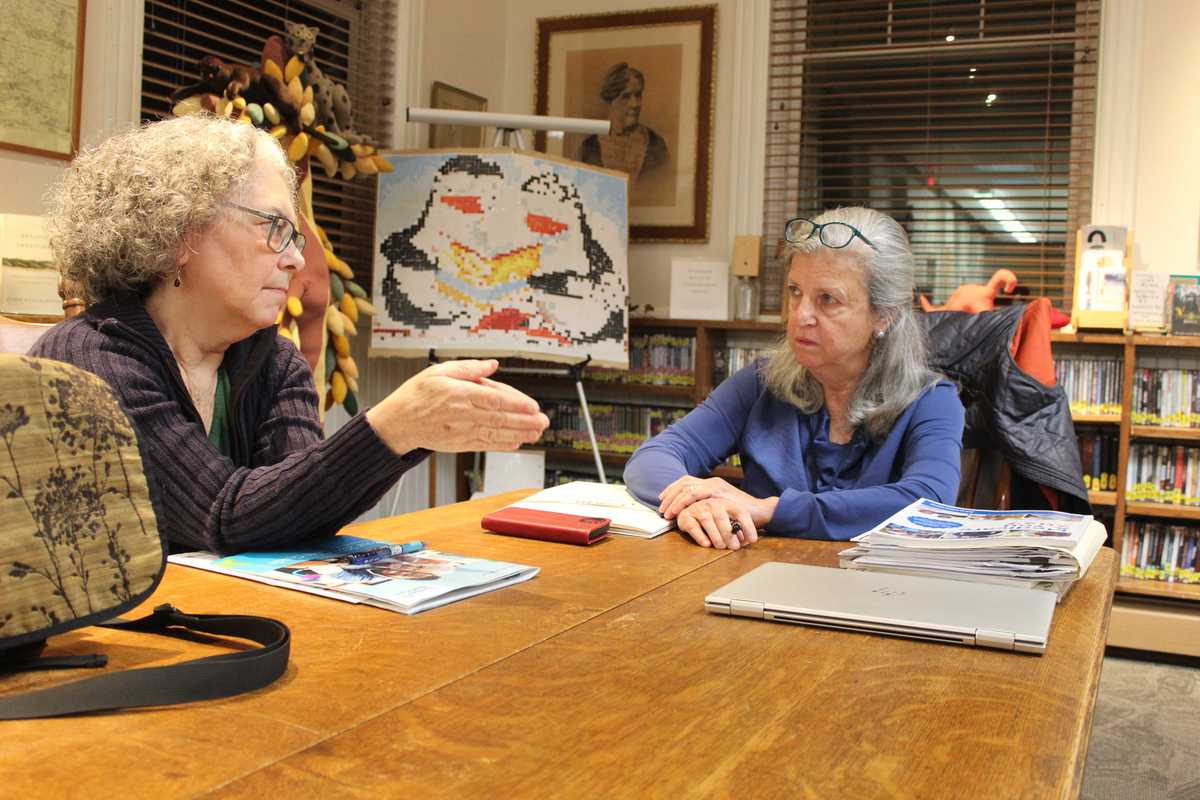
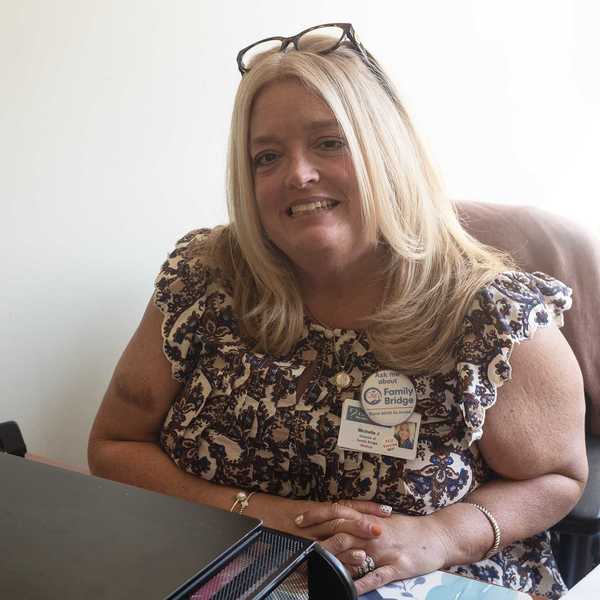
Amy Wynn, left, explores Medicare options with Amanda Halle at the David M. Hunt Library Nov. 5.
FALLS VILLAGE — Amanda Halle of the Western Connecticut Area Agency on Aging (WCAAA) was at the David M. Hunt Library Thursday, Nov. 5, to offer assistance with Medicare enrollment.
Halle explained that WCAAA is a nonprofit agency based in Waterbury that offers free assistance for people trying to navigate the intricacies of Medicare.
Amy Wynn of Falls Village was one of them. She is currently on her husband’s health insurance but wanted to know what her options are.
There were several, and explaining them in detail is where Halle’s expertise showed.
Medicare provides health insurance primarily for people 65 and older. Original Medicare consists of Part A, which helps cover hospital stays, certain skilled nursing care and hospice services, and Part B, which helps cover doctor visits, outpatient care, tests and medical equipment.
Most people pay no monthly premium for Part A but pay a monthly premium for Part B. Both have deductibles and other out-of-pocket costs.
People generally become eligible at 65, although those covered through their own or a spouse’s current employment may be able to delay Part B enrollment without a penalty. Enrollment in Parts A and B is handled through Social Security.
Halle said the Torrington Social Security office is very efficient and advised going in person rather than trying to do it all online.
Then it gets tricky.
People who choose Original Medicare can buy Medicare supplement insurance, also known as Medigap, to help cover costs Medicare does not pay. These policies have monthly premiums, and people typically buy a separate prescription drug plan, known as Part D.
The alternative is Medicare Advantage, which provides Medicare benefits through a private insurer and usually includes prescription drug coverage. People generally continue paying their Part B premium, along with any additional plan premium, deductibles and copays.
Halle said Advantage plans are often a good choice for people who are “relatively healthy, don’t have a lot of doctors, don’t have a lot of drugs, and are true advocates for themselves.”
Advantage plans also offer extras such as gym memberships or allowances for over-the-counter products, although those benefits might not be useful to every individual.
Halle went through the options for Wynn, who took copious notes and said she would think it over.
Halle emphasized the mission of WCAAA, which is to explain — free of charge — the complexities of Medicare to people either enrolling for the first time or considering changes to their coverage.
WCAAA personnel work closely with town social services agents, who are another source of information and help.
Halle will hold a session at the Falls Village Senior Center with town social services director Theresa Graney Tuesday, Nov. 17. Registration is required. Email socialservices@canaanfallsvillage.org or call 860-824-9855.
WCAAA’s website is wcaaa.org and the phone number is 800-994-9422.
Want more of our stories on Google? Click here to make us a Preferred Source.