WASSAIC — The Wassaic Project will host an open studio event featuring its June artists-in-residence on Saturday, June 24, at 3 p.m.
The work of 11 artists or artist groups will be on display in Luther Barn, hanging between rafters and on old livestock fences. Different than a gallery or an exhibition, the open studio day is an opportunity for members of the public to view and engage with art while its in the process of creation, and to speak with the artists.
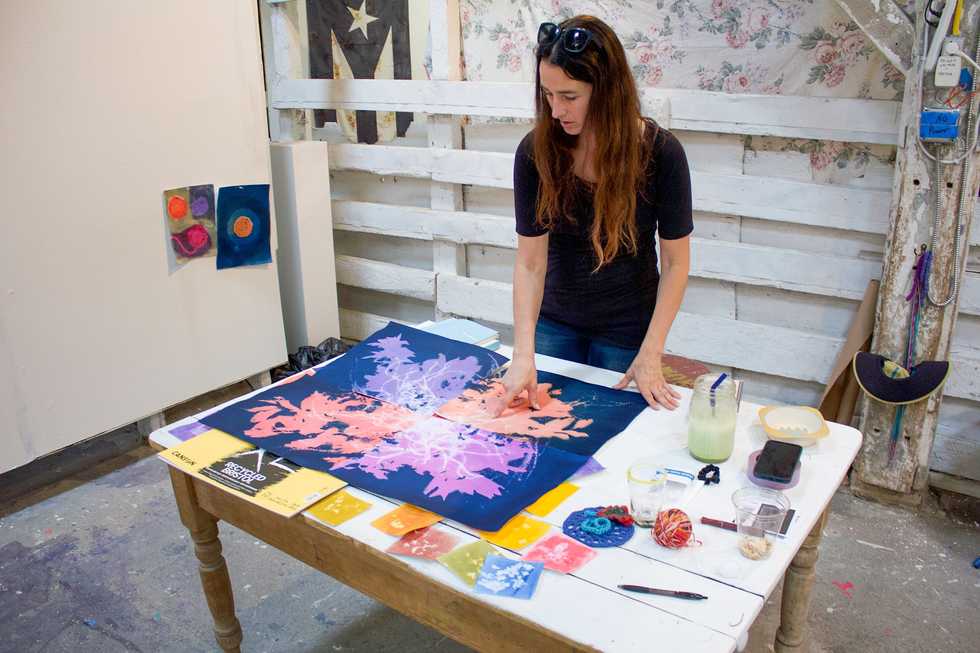
The work of Diana Heise, professor and chair of photography and filmmaking at Kansas City Art Institute in Kansas City, Missouri, straddles many lines between performance, film, photography, and writing. What she’s focused on at Wassaic hones in on an ecological through-line present in her practice. Making use of cyanotype, an ancient form of photography that develops prints through direct UV exposure, Heise has taken elements of the environment around her, from stinging nettle to mugwort, and arranged them in radiant clusters, captured in 2-D by the cyanotype process.
By mixing her own chemicals, Heise is able to deploy a wide range of colors beyond the typical cyanotype blue, and for the work on display at Luther Barn, some of the chemicals used were mixed from components of her gathered materials.
The inspiration for Heise to explore cyanotype arose from a combination of COVID-19 pandemic containment and a desire to question “what we need and what art can actually serve” in an era of rapid ecological change. Heise engages deeply with the supply chain of her materials, from paper to the chemicals used for cyanotyping, which “are completely inert if they go into a water system.” The result is a series steeped in the time and space of Wassaic, depicting explosive and ghostly images of flora.
For Johnathan Payne, a Brooklyn, New York, artist, the Wassaic residency has afforded him an elemental yet important luxury: physical space. At his apartment, his bedroom is his workspace — and he said the ample room of his Luther Barn studio allowed him to see his work in a different context.
Payne makes what he calls “constructed paintings,” which are intricate web-like, maze-like works, made of paper and often vibrantly colorful. They begin as geometric sketches in a notebook of grids, before being meticulously mapped and scaled onto paper, then embroidered, and then coated in primer. The resulting pieces are hypnotic and nuanced, drawing you with their intimations of structure and pattern.
Payne’s process arrives in large part from his love of patterning, particularly quilting, and weaving — and he takes inspiration from ancient tapestries and more modern works like the AIDs Memorial Quilt.
Payne is also engaging with the concept of patterns on a larger scale. Having worked in youth outreach as an AmeriCorps service member, Payne ran workshops that focused on economic and racial justice.
“That work grounded me in an awareness of the larger systems we exist within and are bound by,” he said, and guided him to the potential to “reorient oneself through learning, empathy, and leaning into new perspectives.” He sees those experiences as directly tied to his propensity for creating structures on a formal and artistic level.
Part of that engagement is embodied in his willingness to embrace his work as a craft-based practice, something Payne has experienced as being “very ‘no, no’ in the fine art world.” Doing so, Payne said he hopes to “moves the needle and create tension with those kinds of hierarchies.”




 Tiffany Lemelin, shelter manager, brushing Marsala upon arrival.Provided
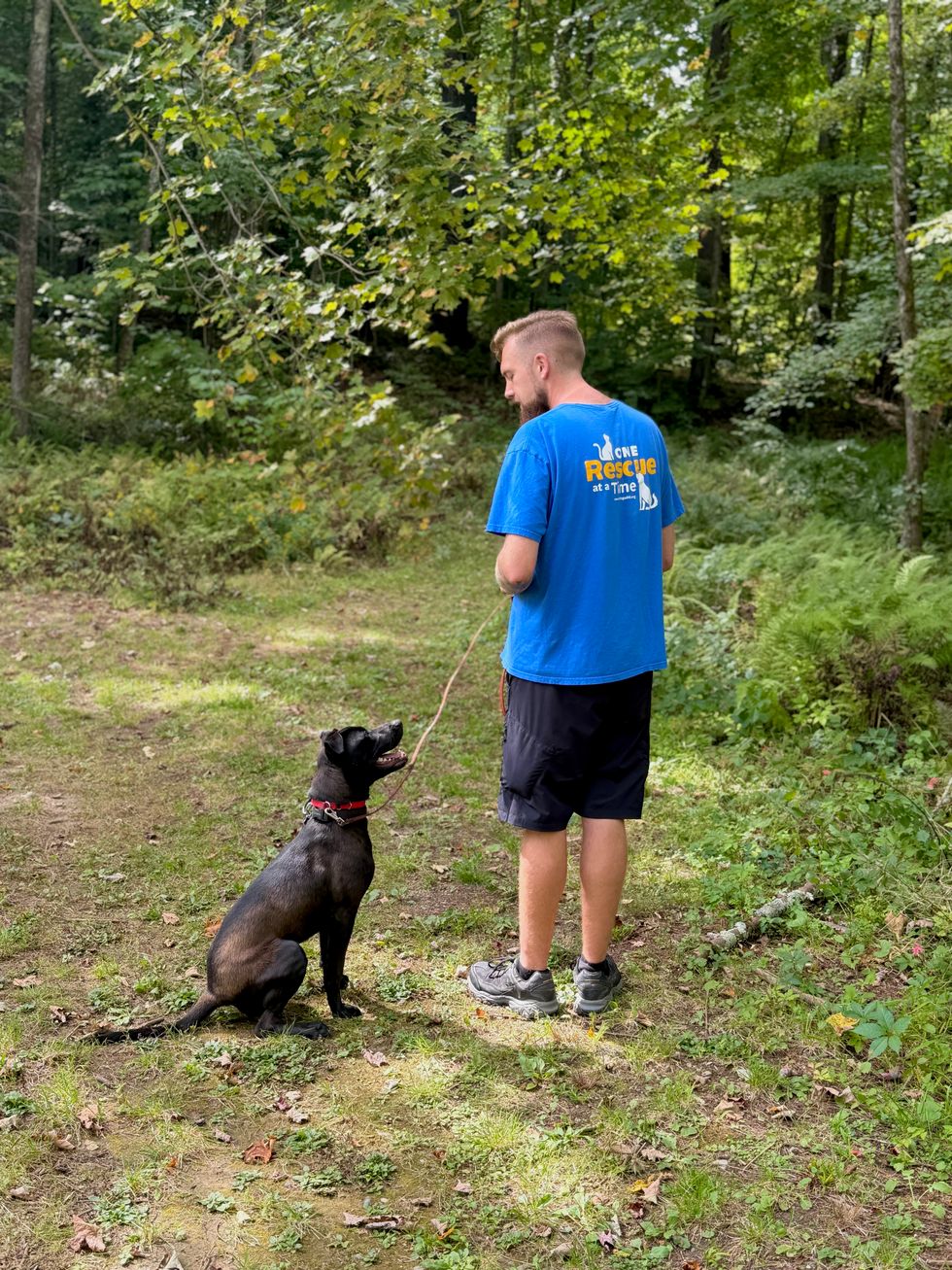 Michael DeBarba, certified dog trainer working with Marsala.Jennifer Almquist
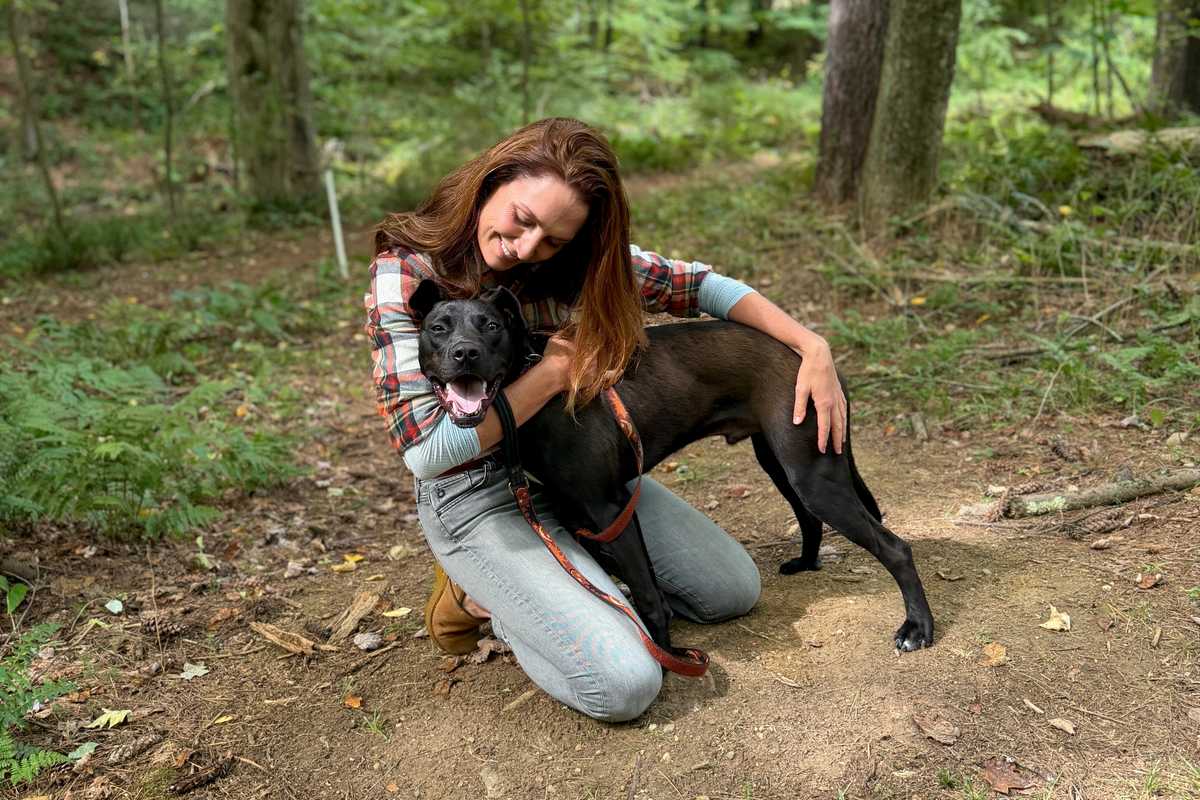 Marsala wins a heart.Jennifer Almquist