Groups of civic-minded residents in several Connecticut towns are banding together to raise awareness about the importance of local government and issues that affect people across the state, like affordable housing and food insecurity.
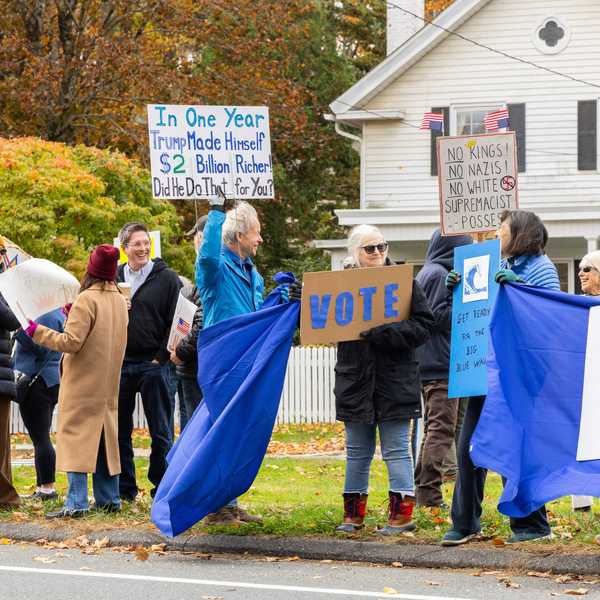
Members of “All In” ran for local school boards and zoning commissions in Tuesday’s election, have organized meetings with elected officials and have made improvements to community gardens.
They’ve organized letter-writing campaigns and opened a food pantry. Some have been appointed to town boards and committees. One chapter in Ansonia and Derby even has a standing meeting time with the mayor.
The movement, which began three years ago, has at least three chapters in municipalities across Connecticut’s Naugatuck Valley including Ansonia-Derby, Oxford and Seymour. There is also a chapter in Milford.
All In is made up of groups of residents and organizations that aim to get the community more involved with local government by encouraging people to attend meetings, interact with local politicians and stay up-to-date on new policies in the town.
They’re primarily focused on issues related to housing affordability and food insecurity.
“That can be a barrier where people feel like they don’t know enough to engage,” said Jenny Rice, a founding member of All In for Seymour. “We are giving them enough knowledge that they feel they can navigate those spaces.”
The movement gets consultation and support from TEAM Inc., a Connecticut-based human services nonprofit. Rice is also a consultant with TEAM.
She got involved with All In about two years ago and runs a food pantry out of her home.
Part of the movement’s focus is to bring in a diverse group of people from across the political spectrum, said Jamie Rude, a member of All In for Milford.
“This is just very different,” Rude said. “You can’t tell who’s a Republican or a Democrat. There are no boundaries. Folks are just coming together because they love Milford and they want to make it even better.”
Research has shown that the people who speak up at public meetings are more likely to be older, male and white.
Lower numbers of voters also turn out for local elections. In 2020, more than 1.8 million Connecticut residents voted. In Tuesday’s municipal elections, only about 700,000 voted, according to unofficial results from the secretary of the state.
All In is working to change that dynamic, to encourage people to place more importance on local government.
“Getting people in town meetings is huge, so is getting people to show up at planning and zoning, and getting people to show up at board of education and selectmen meetings,” Rice said.
Housing
Many of the All In chapters are working to advocate for an increased affordable housing stock in their towns. Affordable housing has been a hot-button political issue for years and got more attention from the state legislature in the last session in the face of rising rent costs.
The state lacks 89,000 units of housing that are affordable and available to its lowest-income renters, and local zoning ordinances mean that developers have to get special permission from zoning boards in order to build multifamily housing in more than 90% of the state.
One of the ways All In is tackling the issue is by urging elected officials to loosen restrictions on accessory dwelling units. A 2021 law aimed to streamline the process and regulations around accessory dwelling units, but more than two-thirds of Connecticut towns opted out. Still, most allow units of this type in some form.
Accessory dwelling units are additional units of housing on the property of a single-family home. Many advocates, including some from All In, have advocated for looser restrictions around housing of this type including allowing attached or detached units and allowing nonrelatives to rent out the spaces.
Several All In groups have pushed for loosening ADU restrictions in their towns including in Seymour and Milford, group members said. They’ve written letters and spoken out at town meetings.
“Those are our two big issues that we’ve been looking at tackling in our area — especially in Ansonia and Derby. We’ve got very high rates of folks living in poverty without access to affordable housing, affordable food,” group member Rose Hatt said.
Food insecurity
About 1 in 10 Connecticut residents don’t have access to enough food, according to Feeding America’s Map the Meal Gap study.
All In members are helping out at food pantries and nonprofits that recover food waste, such as baked goods that don’t sell, to use at food pantries or shelters.
Some of the chapters, such as the one in Oxford, have also organized meetings with elected officials so that community members can get to know them, said group member Lynn Aiksnoras.
They had a couple of forums with elected officials in Oxford to talk about issues such as how to use the city’s money from the American Rescue Plan Act, Aiksnoras said.
Two of the Oxford All In members were appointed to the committee that made proposals about how to spend the money, Aiksnoras added.
All In members have also worked on tenant organizing efforts and host community meals.
Kevin Atterberry, a member of All In for Seymour, worked with other group members to organize the area’s first Juneteenth celebration over the summer, he said. It was a combined event with Seymour and Oxford, he added.
They’ve also organized an essay contest around Juneteenth for school-aged children and are planning another Juneteenth celebration next year.
“It’s not just Black history, it’s American history,” Atterberry said.
It’s also about educating people and building community, he added.
“You’re showing that there’s power in a community,” he said. “If people don’t like something, they can get together and try to figure out a solution instead of being like ‘Oh, this sucks.’”
It’s helping combat isolation, particularly in some of Connecticut’s smaller towns, members said.
“The overarching general concern was we’re all very isolated, and we need a better sense of community,” said Sara Locke, member of All In for Oxford.

 Pay Bill for Robin Starr’s service in the Continental Army.Courtesy the Alex Breanne Corporation
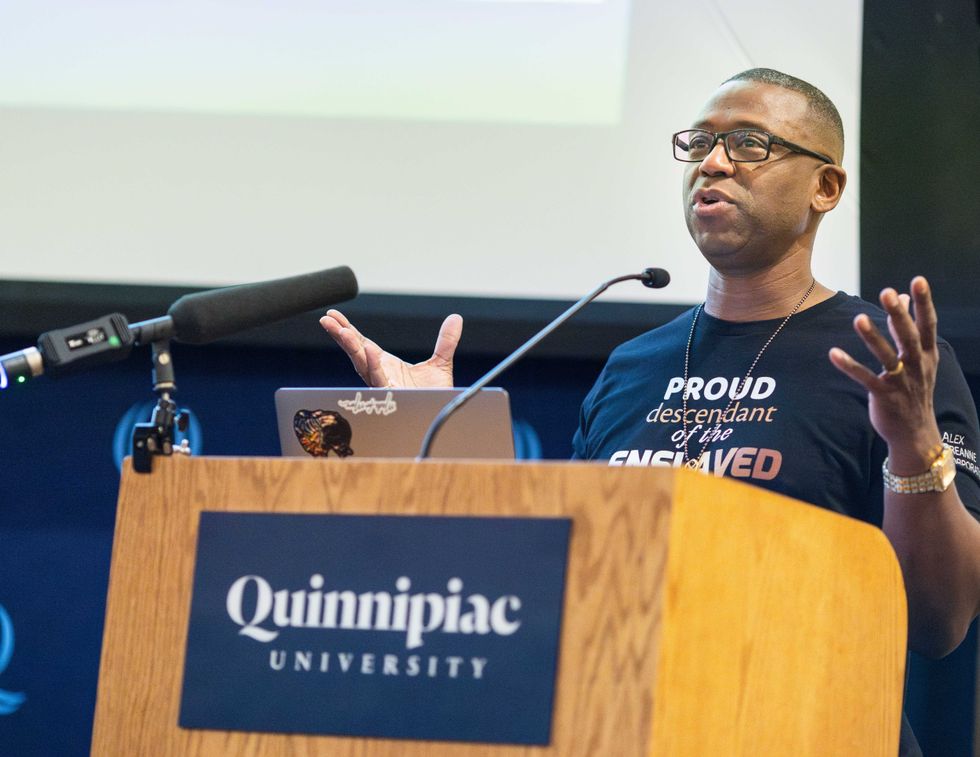 John Mills speaking at Quinnipiac University.Courtesy the Alex Breanne Corporation
 Stephanie Saetta,with her rescue dog George and Blue (left), a shepherd mix awaiting his forever home.Madi Long
 Blue, a 7 year-old Shepard mix, is waiting for his forever home. Madi Long