Latest News

Weatogue Stables has an opening: for a part time or full time team member. Experienced and reliable please! Must be available weekends. Housing a possibility for the right candidate. Contact Bobbi at 860-307-8531.
Services Offered
Deluxe Professional Housecleaning: Experience the peace of a flawlessly maintained home. For premium, detail-oriented cleaning, call Dilma Kaufman at 860-491-4622. Excellent references. Discreet, meticulous, trustworthy, and reliable. 20 years of experience cleaning high-end homes.
Hector Pacay Service: House Remodeling, Landscaping, Lawn mowing, Garden mulch, Painting, Gutters, Pruning, Stump Grinding, Chipping, Tree work, Brush removal, Fence, Patio, Carpenter/decks, Masonry. Spring and Fall Cleanup. Commercial & Residential. Fully insured. 845-636-3212.
The Villas Cleaning Team: Owner-Operated. Reliable, detailed cleaning by a trusted husband-and-wife team. Homes & Offices. Airbnb. Small Post-Construction. Commercial. Windows. Laundry. Consistent cleaners every time. Competitive rates. Flexible scheduling. Call/Text: 903-918-2390. Dave Villa for a free estimate.
Auctions, Estate Sales
Estate/Tag Sale: 168 Johnson Road, Falls Village CT. Friday Saturday Sunday, December 5th-7th. Total house contents, furniture, antique and vintage collectables, costume jewelry, shed stuff, basement stuff, stairs chairlift, some art. Fri, Sat 9-4 and Sunday 9-noon. A Tommy sale, come and get it!!
Real Estate
PUBLISHER’S NOTICE: Equal Housing Opportunity. All real estate advertised in this newspaper is subject to the Federal Fair Housing Act of 1966 revised March 12, 1989 which makes it illegal to advertise any preference, limitation, or discrimination based on race, color religion, sex, handicap or familial status or national origin or intention to make any such preference, limitation or discrimination. All residential property advertised in the State of Connecticut General Statutes 46a-64c which prohibit the making, printing or publishing or causing to be made, printed or published any notice, statement or advertisement with respect to the sale or rental of a dwelling that indicates any preference, limitation or discrimination based on race, creed, color, national origin, ancestry, sex, marital status, age, lawful source of income, familial status, physical or mental disability or an intention to make any such preference, limitation or discrimination.
Tag Sales
Sharon, CT
TAG SALE: SATURDAY, DECEMBER 6, 10:00 AM - 2:00 PM, 135 Sharon Mountain Road, Sharon, CT 06069. Clearing things out before the holidays! Stop by for a great mix of items, including: Kitchenware, Small pieces of art, A few pieces of furniture, Clothing, Books, And more assorted household items. Easy to find, everything priced to sell. Hope to see you there!





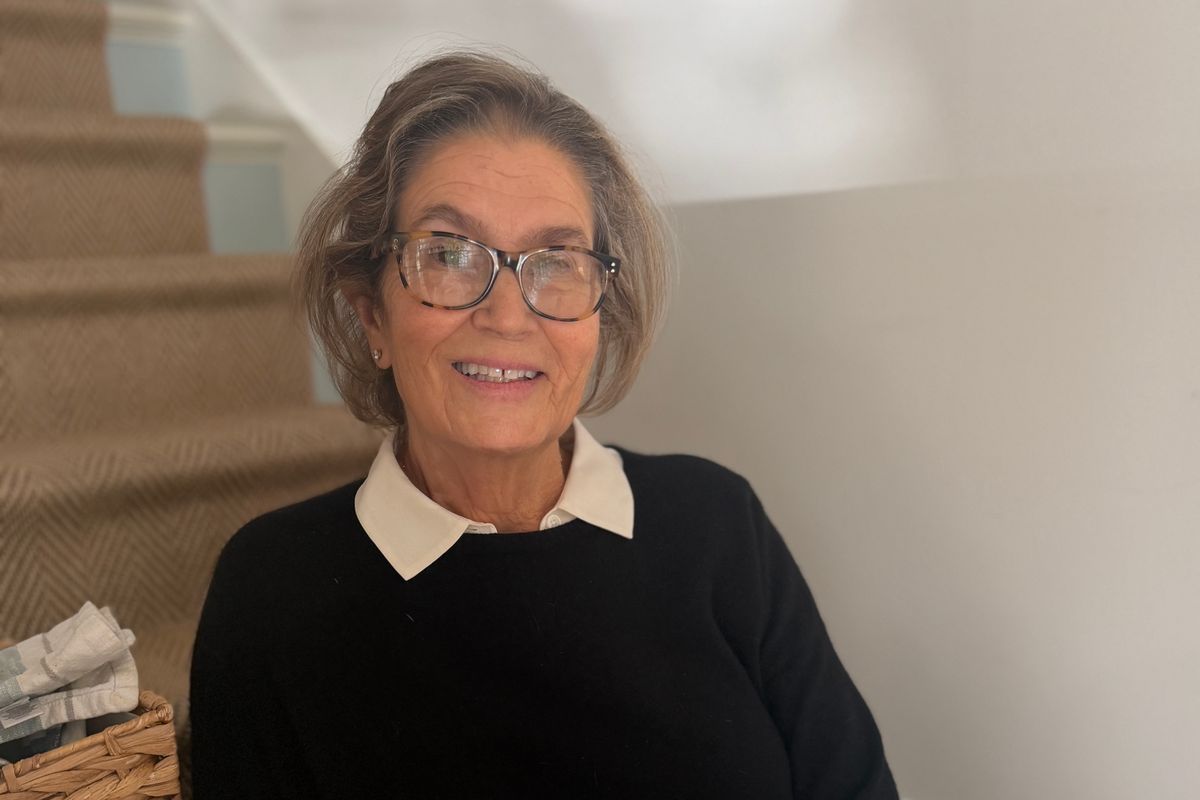
‘Les Flashs d’Anne’: friendship, fire and photographs
‘Les Flashs d’Anne’: friendship, fire and photographs
On Dec. 11, at 6:30 p.m., at the White Hart Inn in Salisbury, Day and Weitzman will share their memories in a conversation moderated by noted designer Matthew Patrick Smyth. The event is organized by Oblong Books and the Scoville Library.
Fresh home from her exhibition and book signing in Paris, Day sat in her Salisbury aerie high above the distant hills, her daughter’s black cat on her lap. She told the story of “Les Flashs d’Anne,” and the kismet that spurred its evolution.
In 2024, afterlearning that Day had worked with Guibert in New York and Paris, Weitzman — the author of numerous books about Guibert —saw her salvaged images, sought her out and announced, “We must do a book together.”
Weitzman writes in the book’s prologue, “This book is the dreamlike, uncanny result of that serendipitous encounter with a remarkable woman.”
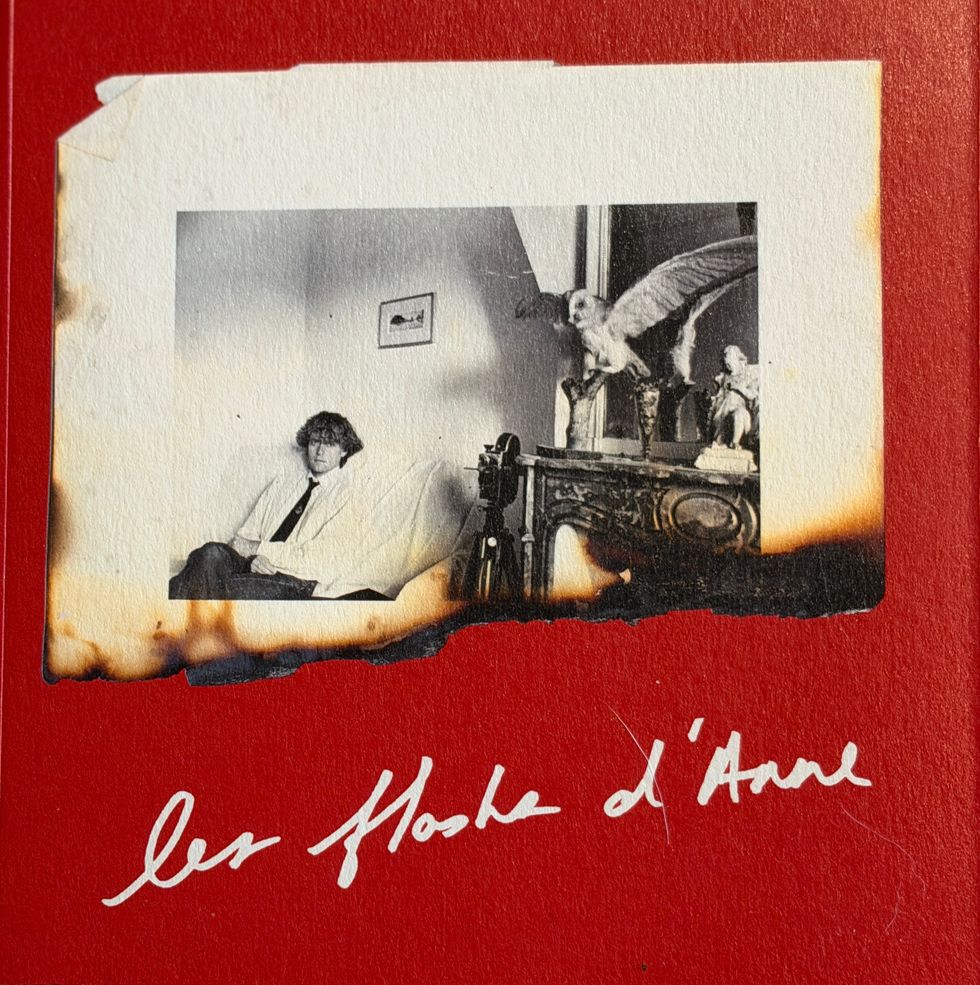 Cover of “Les Flashs d’Anne”Jennifer Almquist
During the 1980s, Day was a working photographer living on Fifth Avenue. A friend, the editor of Le Monde, asked whether Guibert, on his maiden voyage to New York, could stay with her. “I remember it was a cold night when Hervé showed up at my door,” she said.“His flight had just gotten in from Paris and he had this big box of Guerlain perfume. It was wrapped in beautiful pink paper. Within four minutes, we were friends.”
Thus began a whirlwind collaboration that took them from Manhattan, where they interviewed André Kertész, to Paris where they dined with Henri Cartier-Bresson and Duane Michals, and on to interviews with Isabelle Huppert, Gina Lollobrigida, designer Madeleine Castaing, Orson Welles and other luminaries of that time.
Day never saw Guibert after 1983. “Hervé got AIDS in the late ’80s and was quite militant. He now has a following of young people,” Day saidwistfully. During his final days, Guibert wrote five books based on his existential journey.
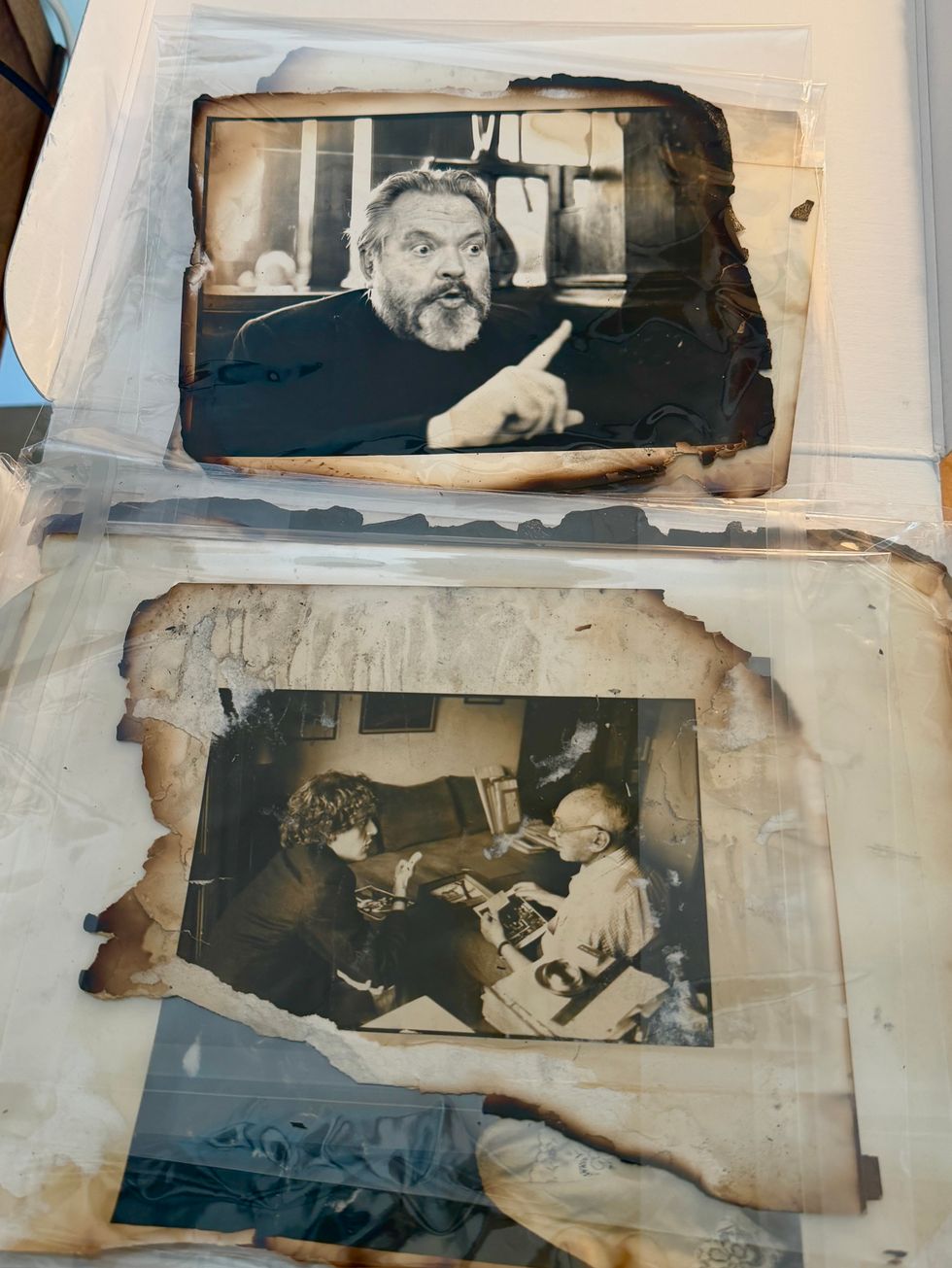 Orson Welles, top, and Hervé Guibert and André Kertész by Anne DayJennifer Almquist
Day recalled the devastating house fire in which her family tragically lost their friend Maria Paz Reyes and their dog. Day survived by jumping from the second story. A lifetime of images, negatives and slides were lost or damaged. “To lose pictures is like losing friends. Everything was piled into metal file cabinets in my studio. All my negatives and slides were packed in tight. The fire started at the farthest point from there as possible. It was the only thing that wasn’t destroyed— every other single thing was gone. Nothing left. It was raining, so my friend Christopher covered everything with a tarp. The fabulous part of this story is how much help I had from my town, which gave me the empty firehouse to lay out everything to dry. Friends came from near and far to help. Some days I had ten volunteers, and it went on for a month, which gave me something to move forward with. It was so tragic and awful.”
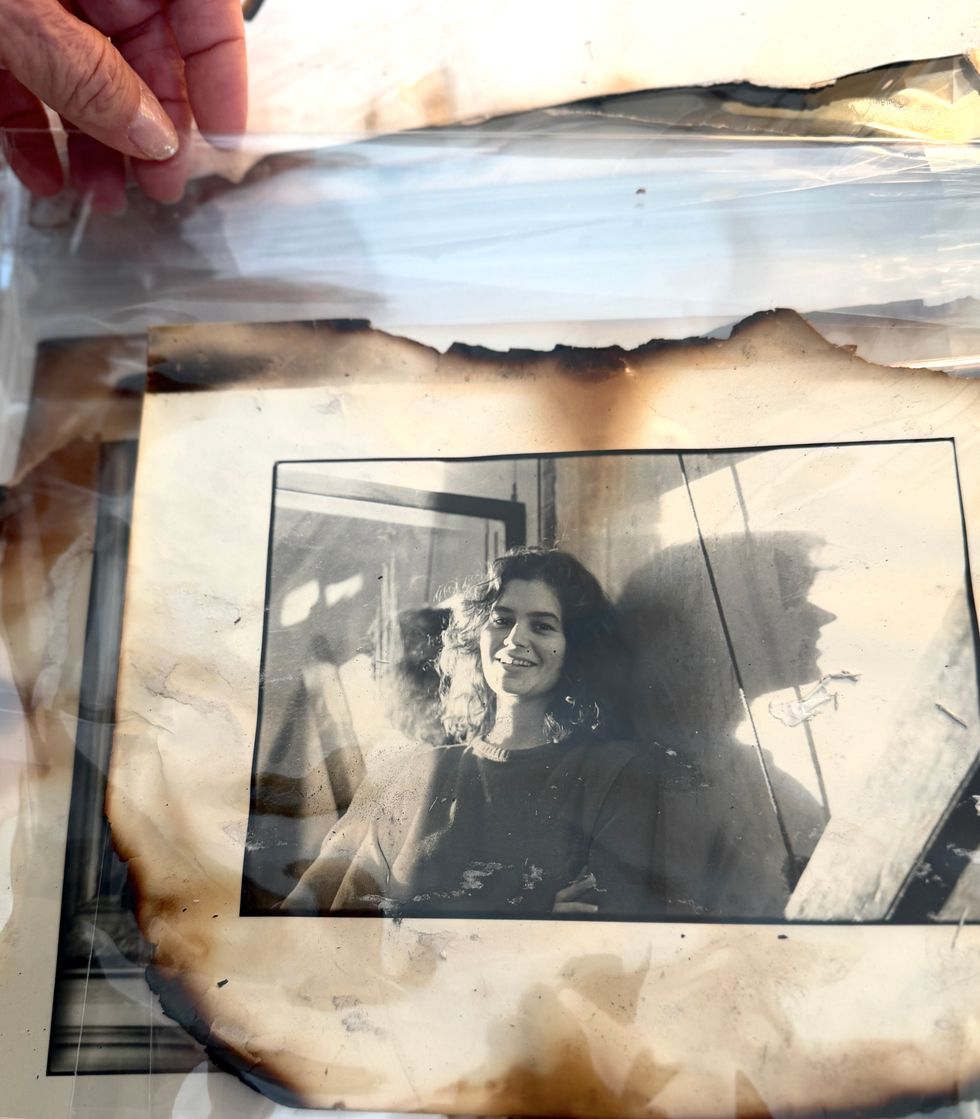 Self-portrait, New York City, 1981by Anne DayJennifer Almquist
A veteran photojournalist, portrait, wedding, and architectural photographer, Day created images for five books featuring the architecture of the Library of Congress, the U.S. Capitol, and the New York Public Library. She covered events in Cuba, Haiti and South Africa, where she took an iconic image of Nelson Mandela emerging from his prison cell. Her commissioned images of four Presidential Inaugurations are featured in the Smithsonian. Her work has appeared in Newsweek, Time, The New York Times, The Washington Post, Fortune, Paris Match and Vogue. She was the editor of Compass at the Lakeville Journal and The Millerton News.
Currently, she enjoys shooting digital photographs of nature. “I am interested in migration, large groups of birds and insects. I’ve been to New Mexico to photograph monarchs, Nebraska to photograph Sandhill cranes, and Ireland to photograph a murmuration of starlings.”
Day summed up her life: “Things just happened to me.”
Tickets to the event at The White Hart Inn on Dec. 11 are available at oblongbooks.com