National Honor Society opens membership to rising juniors


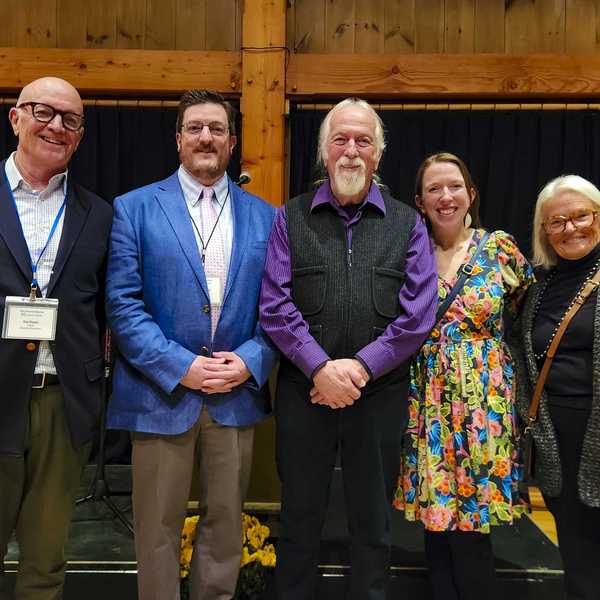
NHS faculty counsel voted this year to invite Sophomores to apply and be inducted to the National Honor Society.
While NHS inductees at Housatonic were historically limited to juniors, this change is something that’s already common across the country.
The decision came after a unanimous vote by the faculty counsel of the National Honor Society. This is a group of five teachers who are voting members.
Then the decision was handed off to senior student members of the NHS chapter for approval. The decision was posed as a yes or no question on the ballot when students voted for officers in the fall. A majority of seniors voted in favor of allowing sophomores to join the club, so this year’s chosen sophomores will be inducted in June 2026.
“Some people might be upset because it has been Juniors for so long, so they might not think that the Sophomores should be able to join, but it is a good opportunity for everyone so there is honestly no harm in it,” NHS member and HVRHS senior Maddy Johnson said.
Although this is new for HVRHS, faculty advisor Peter Vermilyea said that’s not the case nationwide. “That’s pretty typical across the country for students to be inducted as Sophomores,” Vermilyea said. “So, I was inducted as a Sophomore to the National Honor Society, and my two sons were inducted as Sophomores.”
This would create a bigger NHS group which will allow a bigger pool for different volunteering, leadership and service opportunities. “Our members are pulled in so many directions, they are class officers, they are captains of sports teams, they have lots of different responsibilities,” Vermilyea said. Having a bigger group will ease the burden for after school volunteer opportunities, like graduation, parent night, service projects.
“The thing that really excites me about this is the problems that we have now in the National Honor Society is that there is no continuity of membership,” Vermilyea said. “So, when our current seniors were inducted on June 4 last year, we left school eight days later, and we came in completely cold next year. Nobody knows what’s expected of them, nobody has had the opportunity to gain any leadership opportunity to become officers.”
“I’m not sure that there is a downside, I never see a downside in recognizing worthy students,” Vermilyea said. The only possible challenge that he acknowledged is that it may be more difficult for them to qualify. Being younger, sophomores have less time than juniors to cultivate leadership experience and community service.
NHS member Hannah Johnson explained her perspective. “It will be good to expand our program but will make the ceremony longer and make it a less special achievement at HVRHS,” Johnson said.
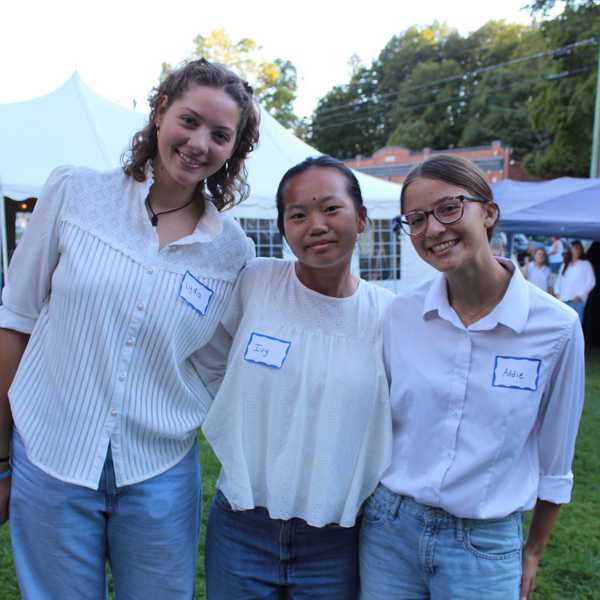
The Community Closet at HVRHS is open for students to take clothes for any reason during the school day.
What started with one unexpected donation of clothes has grown into a quietly impactful resource for all students at HVRHS: the Community Closet. Now located in a spacious area above the cafeteria, the closet offers free clothing to any student for any reason.
The idea began a few years ago when a community member reached out to the former superintendent wondering if anyone at the school could benefit from used clothing that would otherwise go to waste. The superintendent then got in contact with Rachel Novak, the school social worker. “Once I had all those bags of clothes in my room, I was like, ‘I should put this in a space,’” Novak said. Her simple idea eventually became a full-sized closet accessible to all students.
From the beginning, Novak envisioned the closet as an inclusive space. “It’s open to anybody, it’s not just based on economic needs,” she said. Sustainability also plays a role. “Thinking about the environment, some students like to thrift and just get clothes that way,” Novak said.
After the initial donation, contributions continued to grow. “I reached out to our staff members and faculty,” Novak said. The most consistent donations come from the faculty at HVRHS and a few community members who learned about the closet. Finding teenage-appropriate clothes has been a challenge. “I get a lot of donations that are nice, but I don’t think teenagers would want to wear them,” Novak said.
Another ongoing obstacle has been awareness. Many students don’t know the closet exists at all. “That’s been the hard part,” Novak said. “Getting it out to the wider community of the school.” Novak is looking for students and staff to spread the word. “It helps because our school nurse knows and other faculty members,” she said. “When they know a student needs something, they just bring them up.”
Looking ahead, she hopes to promote the space more actively. “When we come back from this break, I do plan to … get fliers and all that up and going,” Novak said. There may even be an upcoming expansion — she has discussed the possibility of turning part of the area into a food pantry. “That would be more of a need-based system for students,” she said. “But right now, promoting it is where I’m at.”
The Community Closet is well-stocked currently. “Just because of the amount of clothes I have, I’m not accepting any more donations until I clear some stuff out,” Novak said. She is still willing to make room for more fashionable, teen-friendly items donated by students. “That way I’ll have more teenager approved clothes.”
Above all, she wants students to know that no one is limited to using the space. “Sometimes there’s a stigma around it … like, ‘I don’t need help. I don’t want to take away from anybody else that may need it,’” Novak said. Due to the amount of clothes, students should feel welcome to use the closet for any reason. Some students even grab items last minute for sports and activities. “It’s important for kids to know it’s for everyone.”
Whether a student wants to thrift clothes sustainably, forgot to pack clothes for an after-school practice, or is in need of a new outfit, the Community Closet is a resource for all.
Theater is sometimes just a way to be diverted, to escape from the real world. This is a good escape.
— Mr. Krupa, director
Housatonic’s Musical Theatre program is bringing “Guys and Dolls” to life this year, and the process is well underway. Auditions took place at the end of November, marking the beginning of the journey from casting to performing the musical this spring.
But with 28 students auditioning, the casting environment was competitive.
“It’s trying to fit different types of people that we have into the spot where the students are going to learn the most,” said music director Thomas Krupa. “I think that’s the fundamental thing. When you think about professional theater, it’s always who is absolutely the best possible puzzle piece.”
The process encouraged actors to lean into not only their dramatic skills, but comedic ones as well. Students had to showcase dance abilities, musical talents and chemistry with their costars.
Senior Richie Crane has participated in Housatonic musicals since his freshman year. He recalled the difficulty of auditioning. “I’ve been in over twenty five productions, and every time I audition I’m just as nervous,” Crane said. “In your initial audition, you are auditioning not only for the role you want, but the one that showcases the best of your skill sets and abilities. The nerves don’t go away, but they can help you succeed.”
Of the five leading roles being cast, eight students were offered callbacks. “Guys and Dolls” will be a predominantly senior leading cast, as well as an opportunity for those seniors to take one final bow on the Housatonic stage.
“It’s been wonderful to see the seniors grow,” said director Christiane Olson. “They all have a lot of experience now, so it’s wonderful to see them go from a little bit more timid and unsure to much more confident performers.”
Experience is usually crucial to the success of the production, but it’s the overall number of participants that sets Housatonic apart. For a small school, Housatonic didn’t have trouble attracting the right number of students to bring the show to life.
“If you have a show with just leads, you don’t have a world. The world of ‘Guys and Dolls’ is the hustle and bustle of New York City,” Krupa said. “If we have one actor in the show, we’re not going to have that hustle and bustle. So we need every single one of the 28 kids that auditioned.”
This year’s production is filled with comedic and dramatic talent. For the next few months, the cast will be preparing to bring the vibrant musical to the stage in the spring. And just a few weeks into rehearsals, it’s clear this is a show you wouldn’t want to miss.
“It’s a really fun, timeless show. It’s very funny, and there’s great music,” Krupa said. “Theater issometimes just a way to be diverted, to escape from the real world. This is a good escape.”
For now, Housatonic indoor track faded when last year’s seniors graduated, but all it takes are enough students with a passion for running and the team could easily be revived.
As the bright leaves fall off the trees and Housatonic’s exciting fall sports seasons come to a close, winter sports are ramping up with some big changes ahead for HVRHS’s indoor track, swim, and boys basketball teams.
The first and most notable change for many HVRHS students interested in running is the absence of the recently established indoor track and field team. While indoor track had been offered somewhat inconsistently by the school in past years, Housatonic alumni Kyle McCarron and Patrick Money decided to try and start it up again in their senior year in the winter of 2024.
McCarron and Money were both Berkshire League champions across many events, and McCarron would go on to run D1 for Quinnipiac University, so it was only natural that the pair would want to continue to run during the winter season.
With the help of athletic director Anne Macneil, Housatonic’s winter track and field team was brought back last year, and a team led mostly by seniors competed at meets across the Berkshire League.
But only four people signed up before the Dec. 1 deadline this year, meaning there weren’t enough people to run a team. Track and field and former winter track coach Alan Lovejoy explained what’s changed.
“Last year, we were real senior heavy,” Lovejoy said. “I just think we have smaller numbers … I talked to a few kids and they just don’t like running in the cold.”
However, this isn’t the last Housatonic will hear about winter track. Senior Silas Tripp continues to represent HVRHS at indoor meets, while continuing to practice with the Lakeview indoor track team. For now, Housatonic indoor track faded when last year’s seniors graduated, but all it takes are enough students with a passion for running and the team could easily be revived.
An intriguing development for Housatonic’s swim team comes with the many underclassmen joining the team. In past years, the team has flown well under the radar, leading to many students being unaware that the school even hosted a swim team at all.
“[The swim team] was always really small … and almost always girls, like last year there were only two boys,” senior Anna Gillette said.
While the team has suffered from a lack of people in the past, the future of the team is looking brighter with the high number of underclassmen. Four freshmen and three sophomores are new to the swim team.
Freshman Phoebe Conklin is one such swimmer, having swam and competed for various club teams since she was three years old. “I’ve heard that it’s just … not a very competitive program at the moment,” Conklin said. “But I think [the underclassmen] are gonna improve it … I’m excited.”
Another notable change comes to one of Housatonic’s most popular sports, the boys basketball team, as former coach Kurt Johnson hands over the leads of a commanding team of seniors to Bobby Chatfield.
Johnson teaches Chemistry at the school, and coached the boys basketball team at HVRHS for four years. Johnson cited the large time commitment as the reason for his resignation before the start of the season.
Chatfield, Johnson’s replacement, has coached basketball and baseball for the Region One middle school programs since 2020, and this year he started coaching for HVRHS’s basketball team. But this is far from the first time he’s played with this team, as only a few of the students on the team are players he hasn’t coached previously.
“I think we’re gonna do pretty good, pretty competitive … [Berkshire League] and State Tournaments are our two team goals,” Chatfield said. “We’re senior heavy, so that bodes well for us.”
Coach Chatfield believes the team’s athleticism is one of the biggest strengths, a sentiment echoed by many on the team such as seniors Wesley Allyn and Anthony Labbadia.
“I think our biggest strength is gonna be our size and our speed,” Labbadia said. “In the four years that I’ve been here, this is easily our strongest year.”
The HVRHS girls basketball team is set out for success this year, with aspirations to win the Berkshire League title and compete at states.
“I’m feeling very optimistic,” said senior Victoria Brooks. “Our strength is definitely going to be our dedication this year.”
Last but not least is the HVRHS Ski team, a small team that competes at Mohawk Mountain against private schools from around the area. Having lost the talent of various seniors, the team of six is looking for new talent to break through and give the team an edge against more formidable private school teams.
“Last year, we finished third in the League, and we’re looking for new talent,” said junior Danny Lesch. “We’re a bit short staffed … but we’re really excited.”
At the back of HVRHS sits the ag-ed wing, where chocolate milk sells and holiday spirit flourishes every year thanks to the FFA’s Holiday Store.
The greenhouse transforms into a storefront selling over a dozen products, some locally sourced. Notable among the selection are the blue spruce and fir trees from Canada, poinsettias, Cabot dairy products — including cheese, eggs and the popular chocolate milk — and homemade wreaths.
“The Holiday Store has been around since the 1940s,” said David Moran, one of the ag-ed teachers and coordinators for the event. “It was created to align with common standards that students need, that they’re able to practice in a way that is connected to the community.”
Ag-ed students make up most of the staff at the store, and they must go through extensive training before participating in the event, said Housatonic Valley FFA President Riley Mahaffey. “Training starts roughly two weeks in advance for our students,” Mahaffey said. The four ag-ed educators — Ms. Boardman, Mrs. Lloyd, Mr. Moran and Mrs. Melino — lead the training. “They go through five stations of training. Knowing what to expect from the unit, identifying the plants, running the register, working with customers outside,” Moran said.
The Holiday Store is a true group effort. Every student in an ag-ed class participates, as the event takes up a majority of class time in the winter. “Class time is definitely devoting 95% of our time towards the Holidays Sales and Marketing because of how much we actually get out of it,” Mahaffey said. “You’re learning the aspects of your class through Holiday Store.”
Students are expected to spend at least eight hours working in the store during the month it operates. How serious they take that time commitment is up to the student. “It’s open until 4:30 after school, so I know some students do it after school before sports, during flex blocks, and during their class time they can use as well,” Mahaffey said. Students can also work in the store on weekends. “On the weekends we’re open all day,” she said.
While students are required to spend at least eight hours in the store, there’s no cap for those that want to contribute more time. “The average student spends 8 hours, but you have those excelled students that go for 16, 20 hours, and then some of them it’ll be three or four,” Mahaffey said.
Moran said students build a multitude of skills staffing the Holiday Store. “Mainly communication, problem solving — that’s constant — a lot of times the students have to encounter all kinds of problem solving,” Moran said. “When they meet with customers and serve people, they gain a lot of confidence, and you can just see the confidence grow as they work through the unit.”
There are also specific professional and business skills incorporated. “They learn the business aspect of it while getting a grasp of everybody in our program and working as a team,” Mahaffey said. Mahaffey explained students track their time using a digital system. “Responsibility and accountability with our clock in system, making sure that you’re being accountable for your time and honest with your time.”
After the Holiday Store closes, students are graded on their performance and knowledge. “Their summative is based on how well they produce, how well they sell, their work ethic, and the time that they invest,” Moran said.
Profits from the Holiday Store are donated to area food banks and a nonprofit chosen by a vote of the student body. “The five food banks come in at the end of the unit in January, and we present them significant funds and also a nonprofit,” Moran said. “It’s been the Jane Lloyd Fund … a fund for women that are living with cancer and want to stay in their homes. It covers some of their everyday expenses.” The amount given differs, but it usually stays within a certain range. “The last couple years they’ve given $4,000 to $6,000 away,” Moran said.
Reception of the Holiday Store is generally positive — among student participants and customers. “It has a very good reputation, and for some people, it’s their only interaction with the high school from the community,” Moran said. “We have celebrities come in, and they really connect with those students in front of them and do something to serve the community.”