More than 5,700 caregivers at 51 Connecticut nursing homes have threatened to strike if an agreement between the state’s largest health care workers union and state officials to boost workers’ starting pay to $25 per hour, is not reached by May 27.
While the strike, affecting 26% of the state’s nursing homes, would not directly impact non-unionized nursing facilities in the Northwest Corner, including Noble Horizons in Salisbury, Geer Village in North Canaan and Sharon Center for Health & Rehabilitation, operators are bracing for repercussions in the job market should the unionized workers prevail.
The strike deadline, originally set for May 19, was pushed back after Gov. Ned Lamont sent a request on May 8 to Rob Baril, president of SEIU 1199NE, asking the union to “strongly consider” postponing the original strike date for a few weeks until the state budget process reaches a resolution.
Union workers agreed last Friday to an eight-day postponement.
“It is likely that the budget process will be resolved for at least a couple of more weeks, and until that time it is impossible to provide the assurances necessary to allow providers to make commitments to employees, collectively bargained or otherwise,” noted Lamont.
State officials are currently engaged in negotiations with the union. The union is seeking to increase starting pay to $25 per hour and eventually raise wages over several years to around $30 per hour.
Union officials have said the state needs to make a long overdue investment in the industry as many nursing home workers are facing financial strain, struggling to afford basic necessities and working multiple jobs.
According to Baril, the majority of nursing home workers earn between $18 and $22 per hour, less than the hourly wage at fast food jobs in many areas of the state.
“A bit unsettling”
The strike comes at a time when legislative leaders are weighing a bill to raise the daily minimum staffing requirement at nursing homes from 3 to 3.6 hours per resident.
Referring to the pending strike, “It is always a bit unsettling, but it shouldn’t directly affect us, unlike our sister facility in Hartford, which is a union facility,” said Bill Pond, administrator at Noble Horizons, referring to the Avery Heights retirement community, operated by the not-for-profit church Homes, Inc.
Although operations at Noble would not be impacted during a strike, because unionized facilities are required by the state to prepare a contingency plan for support staff to cover for striking workers, he noted that some department heads may need to be deployed to its sister facility to provide support.
“It’s not something that would have a direct effect on Noble,” said Pond, who noted that “these things have come up before and have dissipated.”
The Noble administrator said the wage requests by striking workers are fair and will serve to “level the playing field,” and that his facility has been generous in recent years with salary increases, sign-on bonuses and referral bonuses. In theory, he noted, the state should increase the funding to facilities proportionally.
“We are looking not to maintain the status quo, but to advance,” said Pond, who teased that he is hoping to unveil plans soon for an “entirely new inpatient service” at Noble.
Contingency plans impact labor market
At the nonprofit Geer Village Senior Community, CEO/CFO Shawn Powell said while he does not expect his facility to be directly affected by the threatened strike, “we are kind of impacted by it insofar as a number of our employees come from Torrington and there are union facilities in Torrington and Waterbury.”
Unionized facilities, he explained, are required to put a contingency plan in place to maintain quality of care to residents, and those plans can put pressure on the labor market, both short and long term.
“In the long term, any salary increase impacts the labor market. That’s the biggest ramification down the road,” said the Geer official. “Any increase that is given to workers at 51 nursing homes, that impacts the labor market.”
At the Sharon Center for Health & Rehabilitation, which is a non-unionized facility owned and operated by National Health Care Associates Inc., Administrator Ed Baker said in the short term, it will be business as usual even if a strike occurs.
“But if the unionized workers prevail, we will have to go through the state in order to increase the rates for everybody to $25 to $30 dollars an hour.”
DPH plans to deploy monitors
In the meantime, the Connecticut Department of Public Health has been working on strike monitoring plans for several weeks in preparation for the possibility of strikes by unionized nursing home staff if new contracts could not be agreed to by the facilities and the unions, according to a statement issued by DPH spokesperson Brittany Schaefer.
“If nurses and other unionized care professionals choose to strike later this month, DPH will deploy monitors to each of the nursing home to ensure that facility owners and management continue to provide quality care and safety to their residents.”
In his May 8 correspondence with Baril, Lamont said he believes that nursing home workers provide “an invaluable service and do strenuous work on behalf of our most vulnerable citizens.
Lamont said his administration is “committed to reaching a positive resolution as soon as possible.”







 Tiffany Lemelin, shelter manager, brushing Marsala upon arrival.Provided
 Michael DeBarba, certified dog trainer working with Marsala.Jennifer Almquist
 Marsala wins a heart.Jennifer Almquist

 Sadie, center, a Carolina dog, plays with her friend Negra, a terrier mix. Bella Linda, the small poodle, has since been adopted.L. Tomaino
 Wesley, a young, exuberant mix, is looking for an active home.L. Tomaino
 Bonnie and Clyde, an affectionate terrier pair.L. Tomaino
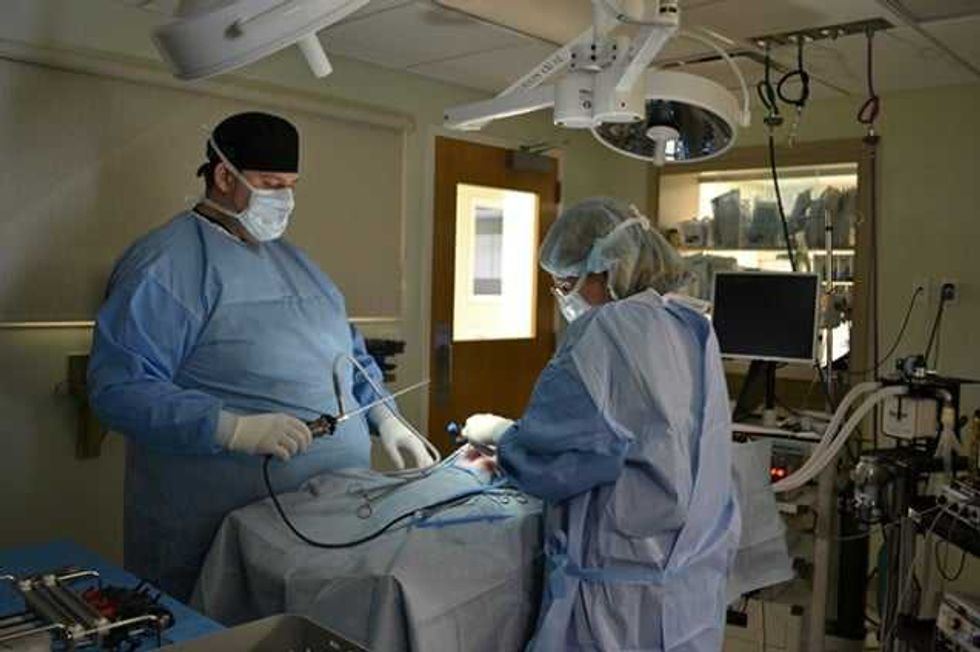 Provided