Republican senators top gov’s tax cut by $1B

If Connecticut’s next state budget can be considered a sort of poker game of tax cutting, Gov. Ned Lamont has opened with $500 million and the minority Republicans in the state Senate have seen his $500 million and raised him $1 billion.

But it’s not as hopeful for taxpayers as it looks.

The governor, a Democrat seeking election to a third term in November, proposes to spend $500 million to issue state tax “rebates” — $200 for single people and $400 for couples — a week ahead of Election Day. (If President Trump, a Republican, tried something like this, Democrats and most journalists would scream: “Bribery!”)

If things go according to what seems like the Democratic plan, soon after the election state residents will be hit with big increases in oil, gasoline, natural gas, and electricity prices as a result of a “climate superfund” tax many Democrats want to levy against energy producers to punish them for letting state residents use their fuels for the last century. Of course the energy producers won’t pay the tax by themselves; they’ll recover the cost by raising prices and the public will pay. But people will blame the energy producers, not the elected officials who enacted the tax and quickly took their “tax rebates” away.

The Republican senators, previously tribunes of fiscal responsibility, have counterproposed sharp reductions in the state income tax and property taxes on cars, $1.5 billion worth — reductions that might endure year after year.

The Republican senators also would eliminate state government’s “public benefits” charges on electric utility bills, which help to make Connecticut’s electricity prices nearly the highest in the country.

Sen. Ryan Fazio, R-Greenwich, a candidate for his party’s nomination for governor, says, “There is so much pork stuffed in our public benefits tax that it would boggle the mind — over 50 different government programs passed by the legislature and the governor over many years.”

Indeed, but Governor Lamont notes that some of the “public benefits” charges are not “pork.” They also pay for a guarantee of electricity supply from the Millstone nuclear power station in Waterford and for management of the regional electric grid. Some of the charges would be more honestly and transparently placed in the state budget and financed by general revenue rather than by what is essentially a sales tax on electricity, but they’d still have to be paid, and eliminating the “public benefits” tax won’t save as much money as Republicans imply.

So where is the rest of the money for the Republican tax relief to come from?

The Senate Republican leader, Brookfield’s Stephen Harding, says: “We have a $4 billion-plus ‘rainy-day fund.’ The people of the state have essentially been overtaxed by that much.”

Not really. This claim is wrong for the same reason Gov. Lamont, Democratic legislators, and state Comptroller Sean Scanlon are wrong when they claim that state government lately has produced balanced budgets with surpluses.

For the state employee and teacher pension funds are still underfunded by $35 billion or more, so the “rainy-day fund” and the supposed surpluses are really just borrowing from the pension funds and pushing their burdens deeper into the future, when they will thrust on taxpayers who weren’t even born when the pensioners were working, taxpayers who never benefited from the pensioners’ services.

When it comes to state budgeting and taxes, there are really only three ways of serving the public better: reducing the burden of government, improving services and making them more efficient, and eliminating the inessential. Connecticut fails badly in these respects.

The failure starts with state government’s failure to care about actual results. State government equates success with merely spending money even as important results worsen, including education, poverty, payroll control, and corruption. The Democrats can’t find anything to cut, especially since most failures profit Democrats, and the Republicans are too few and averse to being frank about the horrible.

Two-hundred-dollar “tax rebate” checks may help voters overlook failure but they won’t fix or improve anything.

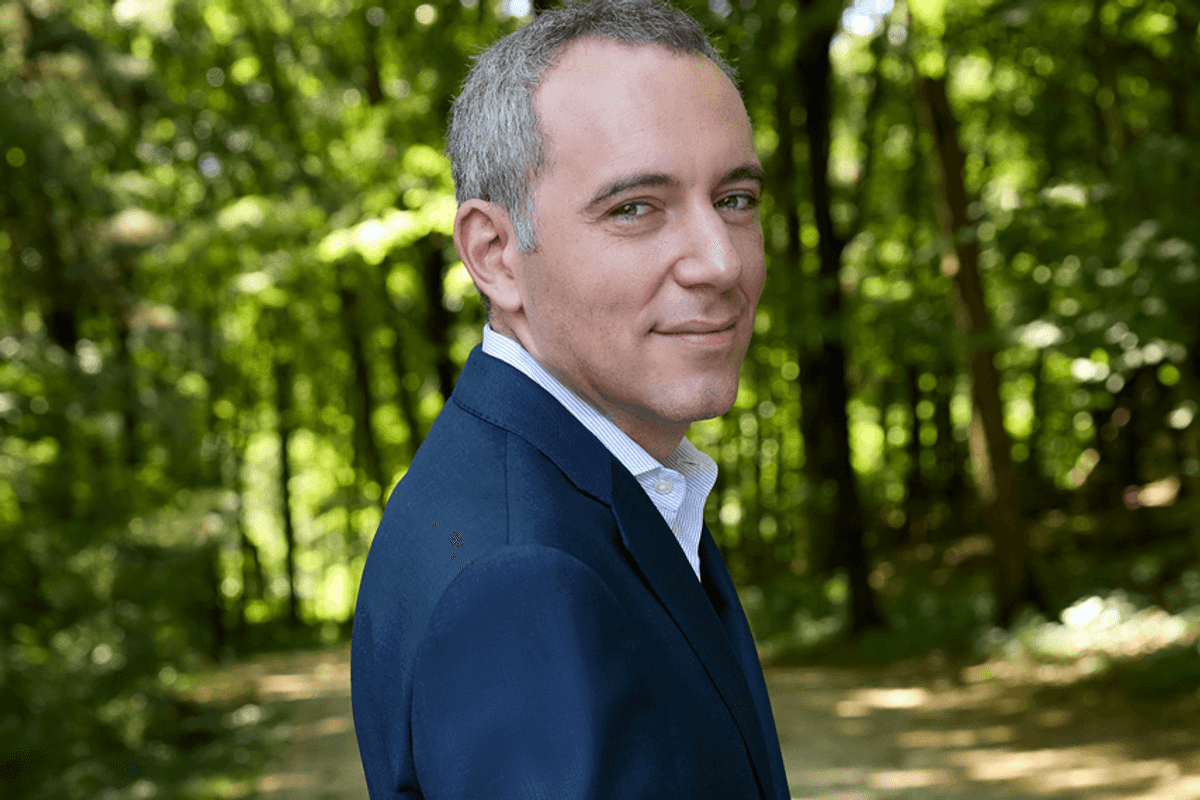
Chris Powell has written about Connecticut government and politics for many years. (CPowell@cox.net)

The views expressed here are not necessarily those of The Lakeville Journal and The Journal does not support or oppose candidates for public office.

Latest News

Living art takes center stage in the Berkshires

Contemporary chamber musicians, HUB, performing at The Clark.

D.H. Callahan

Northwestern Massachusetts may sometimes feel remote, but last weekend it felt like the center of the contemporary art world.

Within 15 miles of each other, MASS MoCA in North Adams and the Clark Art Institute in Williamstown showcased not only their renowned historic collections, but an impressive range of living artists pushing boundaries in technology, identity and sound.

Keep ReadingShow less
Persistently amplifying women’s voices

Francesca Donner, founder and editor of The Persistent. Subscribe at thepersistent.com.

Aly Morrissey

Francesca Donner pours a cup of tea in the cozy library of Troutbeck’s Manor House in Amenia, likely a habit she picked up during her formative years in the United Kingdom. Flanked by old books and a roaring fire, Donner feels at home in the quiet room, where she spends much of her time working as founder, editor and CEO of The Persistent, a journalism platform created to amplify women’s voices.

Although her parents are American and she spent her earliest years in New York City and Litchfield County — even attending Washington Montessori School as a preschooler — Donner moved to England at around five years old and completed most of her education there. Her accent still bears the imprint of what she describes as a traditional English schooling.

Keep ReadingShow less
Jarrett Porter on the enduring power of Schubert’s ‘Winterreise’
Baritone Jarrett Porter to perform Schubert’s “Winterreise”
Tim Gersten

On March 7, Berkshire Opera Festival will bring “Winterreise” to Studio E at Tanglewood’s Linde Center for Music and Learning, with baritone Jarrett Porter and BOF Artistic Director and pianist Brian Garman performing Franz Schubert’s haunting 24-song setting of poems by Wilhelm Müller.

A rejected lover. A frozen landscape. A mind unraveling in real time. Nearly 200 years after its premiere, “Winterreise” remains unnervingly current in its psychological portrait of isolation, heartbreak and existential drift.

Keep ReadingShow less
google preferred source

Want more of our stories on Google? Click here to make us a Preferred Source.

A grand finale for Crescendo’s 22nd season

Christine Gevert, artistic director, brings together international and local musicians for a season of rare works.

Stephen Potter

Crescendo, the Lakeville-based nonprofit specializing in early and rarely performed classical music, will close its 22nd season with a slate of spring concerts featuring international performers, local musicians and works by pioneering composers from the Baroque era to the 20th century.

Christine Gevert, the organization’s artistic director, has gathered international vocal and instrumental talent, blending it with local voices to provide Berkshire audiences with rare musical treats.

Keep ReadingShow less

Leopold Week honors land and legacy

Leopold Week honors land and legacy

Aldo Leopold in 1942, seated at his desk examining a gray partridge specimen.

Robert C. Oetking

In his 1949 seminal work, “A Sand County Almanac,” Aldo Leopold, regarded by many conservationists as the father of wildlife ecology and modern conservation, wrote, “There are some who can live without wild things and some who cannot.” Leopold was a forester, philosopher, conservationist, educator, writer and outdoor enthusiast.

Originally published by Oxford University Press, “A Sand County Almanac” has sold 2 million copies and been translated into 15 languages. On Sunday, March 8, from 3 to 5 p.m. in the Great Hall of the Norfolk Library, the public is invited to a community reading of selections from the book followed by a moderated discussion with Steve Dunsky, director of “Green Fire,” an Emmy Award-winning documentary film exploring the origins of Leopold’s “land ethic.” Similar reading events take place each year across the country during “Leopold Week” in early March. Planning for this Litchfield County reading began when the Norfolk Library received a grant from the Aldo Leopold Foundation, which provided copies of “A Sand County Almanac” to distribute during the event.

Keep ReadingShow less

Erica Child Prud’homme

Erica Child Prud’homme

WEST CORNWALL — Erica Child Prud’homme died peacefully in her sleep on Jan. 9, 2026, at home in West Cornwall, Connecticut, at 93.

Erica was born on April 27, 1932, in Doylestown, Pennsylvania, the eldest of three children of Charles and Fredericka Child. With her siblings Rachel and Jonathan, Erica was raised in Lumberville, a town in the creative enclave of Bucks County where she began to sketch and paint as a child.

Keep ReadingShow less
google preferred source

Want more of our stories on Google? Click here to make us a Preferred Source.

google preferred source

Want more of our stories on Google? Click here to make us a Preferred Source.