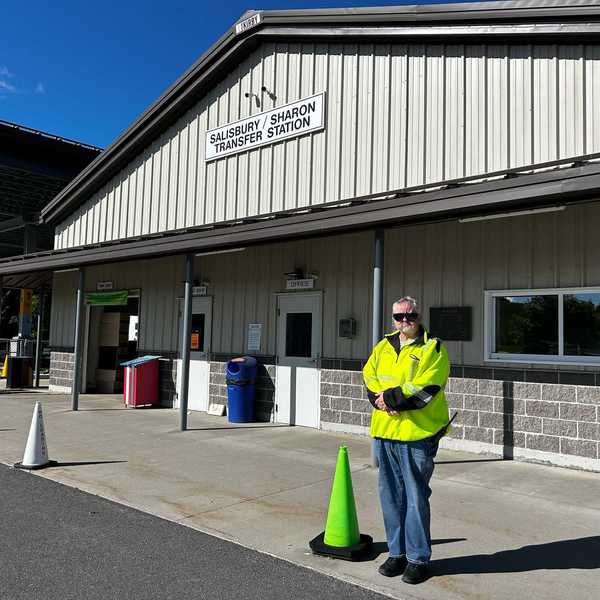
SALISBURY — Disputes among patrons and unsuitable donations are creating problems at the Salisbury–Sharon Transfer Station’s popular Swap Shop, where the manager warned that continued incivility could force a temporary closure.
The Swap Shop allows residents to leave usable items they no longer want and take home items others have dropped off for free. But disagreements over people collecting goods for resale, along with unwanted donations and clutter, are testing the operation.
Transfer station manager Brian Bartram described the problems at the Transfer Station Recycling Advisory Committee’s Oct. 21 meeting.
Some patrons have questioned whether others have the right to be at the Swap Shop at all, Bartram said. He described settling one such dispute by making clear that anyone with a transfer station sticker has access.
“As far as I’m concerned they can come in,” he said.
TRAC Chair Barbara Bettogile said some residents are annoyed by people who spend extended periods at the Swap Shop collecting items to resell.
Bartram acknowledged that some patrons do so, but said access comes down to whether they have paid for their sticker.
“If people can’t be civil we’re going to have to shut down the Swap Shop for a while because we can’t be mediating when people think someone shouldn’t be there,” he said.
Disagreements over who can use the shop are compounded by differences over what belongs there. Patrons routinely ignore signs explaining where items should go and what can and cannot be dropped off, Bartram said.
“We’re never going to solve the fact that somebody thinks their three-legged chair is a good thing to put in the Swap Shop because somebody could fix it,” he said.
Books present a recurring challenge. Committee member Karen Lundeen said people leave books with little appeal, including old textbooks, and sometimes become defensive when questioned about their donations.
Asked whether a dedicated book recycling container would help, Bartram said the station had unsuccessfully tried that twice.
Keeping the space orderly is another persistent problem. Bartram said staff can empty it completely before the transfer station opens at 8 a.m., and “it’ll be filled up and messy by 2 p.m.”
Volunteers have helped residents with their donations in the past, but stopped showing up after unpleasant interactions, according to the committee’s discussion.
Committee members considered sturdier signs and a renewed roster and rotation of volunteers. Bartram suggested giving volunteers vests to convey authority.
The committee plans to revisit the issues at a future meeting.