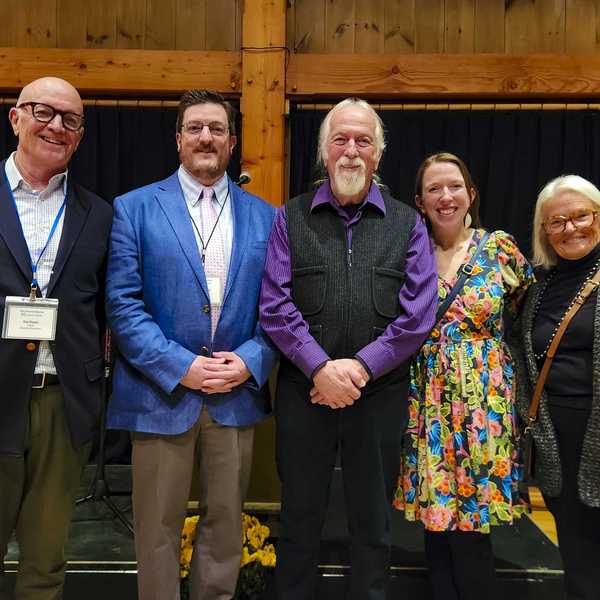
KENT – How do you love a forest in the modern era of invasive species, rampant plant diseases and climate change? You love it toughly, and you love it “with your whole body” according to forester, author and punk band frontman Ethan Tapper who visited Kent Town Hall for an evening talk on Thursday, Aug. 13.
Supported by the Kent Land Trust, Kent Parks and Recreation Commission, Kent Conservation Commission and Cornell Lab of Ornithology, Tapper left his stage persona back home in Vermont, instead sharing a message of deep empathy for the natural world to a nearly full Town Hall meeting room. That empathy, Tapper said, does not always mean sitting back and leaving the forest alone, but sometimes taking action — and that action is not always pretty.
“A really good love story,” Tapper said in the early stages of his hour-long speech, “isn’t like, two people meet and fall in love and everything is good forever, right?”
Instead, “they climb mountains and they cross rivers and they make compromises and sacrifices and they do things that they never thought they had to do — and I really feel like that’s what our ecosystems are asking from us right now.”
Tapper articulated his philosophy of land stewardship through his own complicated story, starting from his childhood in southern Vermont when he had no interest in forests at all, and wanted only one thing — “My passion was that I wanted to get out of there.”
Even today, in the wake of success from his 2024 book “How to Love a Forest: The Bittersweet Work of Tending to a Changing World,” which won a New England Book Award for Nonfiction, Tapper struggles to pin down what exactly he is.
“I’m basically a forester from Vermont,” he said, “although now I kind of say I don’t know what I am.” Tapper also alluded to his position as a popular figure on social media platforms — “I call myself a digital storyteller, which is my attempt at a less gross way to say influencer.”
Despite the happy accidents of his life — he claimed the book was the unplanned result of six years of morning journaling — the story Tapper told Thursday evening was one of very deliberately building a home.
Tapper spent much of the talk describing his own home, which is a 175-acre mountainside tract of forest in Vermont he has come to call Bear Island since purchasing it nearly a decade ago. When he first saw it, he said, “everything was wrong.” There was trash everywhere, old half-buried logging equipment sticking out of the ground, rampant invasive plants and signs of deer overpopulation. Tapper said after an hour wandering the steep hillside, he “couldn’t find one healthy tree.”
He said the dire condition was due to poor logging practice in the area several decades earlier. Initially put off by the property, it eventually won him over after a pivotal moment standing on a log landing — a clearing used for timber storage — and looking at the ruined ecosystem around him.
He said the forest has improved greatly since then, and continues to every day. It didn’t do it by itself, though — Tapper had to intervene.
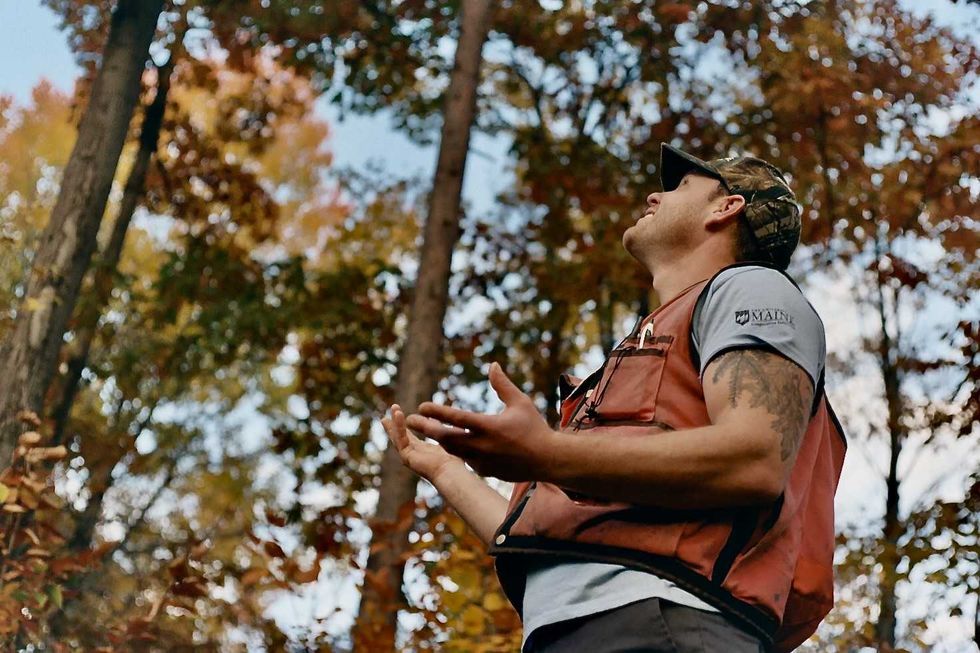 Ethan Tapper told Kent residents that loving a forest isn’t easy, but it’s certainly worth it.Provided
He said the methods he used to bring it back from the brink may seem counterintuitive to many, like cutting down thousands of unhealthy trees, which makes room for healthy ones to grow, or killing dozens of deer that eat native understory plants and young shrubs and trees. But making those decisions is what it means to truly love a forest, Tapper said.
Tapper accented the speech with passages from his upcoming book, “The Forest Year: Finding Hope in a World Worth Saving,” set to be published in October, that specifically related to birds.
“This seems to be an exceptionally birdy place,” he said early on. “Am I wrong?”
From the nods and murmurs of assent from the crowd, he assumed correctly. He also acknowledged the several bird conservation projects in town, such as an ongoing effort by the Kent Land Trust, the Marvelwood School, the Sharon Audubon Center and the Purple Martin Conservation Association to protect breeding populations of the eastern purple martin, which Tapper said was one of his favorite birds.
In one passage, Tapper compared the “winter birds” that spend the cold season in the Vermont woods to his community of friends that “have chosen to stay in this place and with each other.”
“We have chosen roots over wings,” he recited. “It’s a different kind of freedom.”
Following the reading, Tapper said that this type of freedom embodies “the act of stewardship,” in that it is deliberate, it’s not always easy, and it’s an ongoing process. Just as he built a home for himself at Bear Island, stewardship at both the personal and global scale is really about building a home that supports humans and the natural world alike.
“We’re all standing on that log landing,” he said.


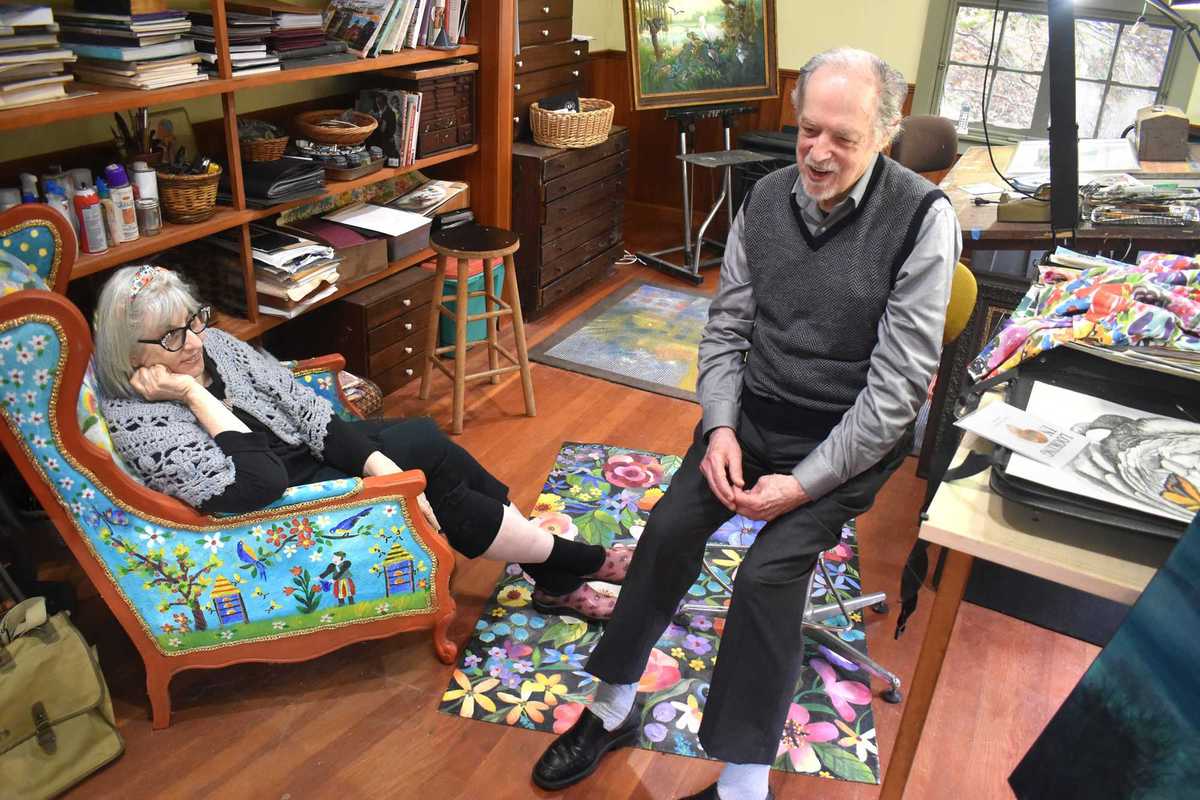
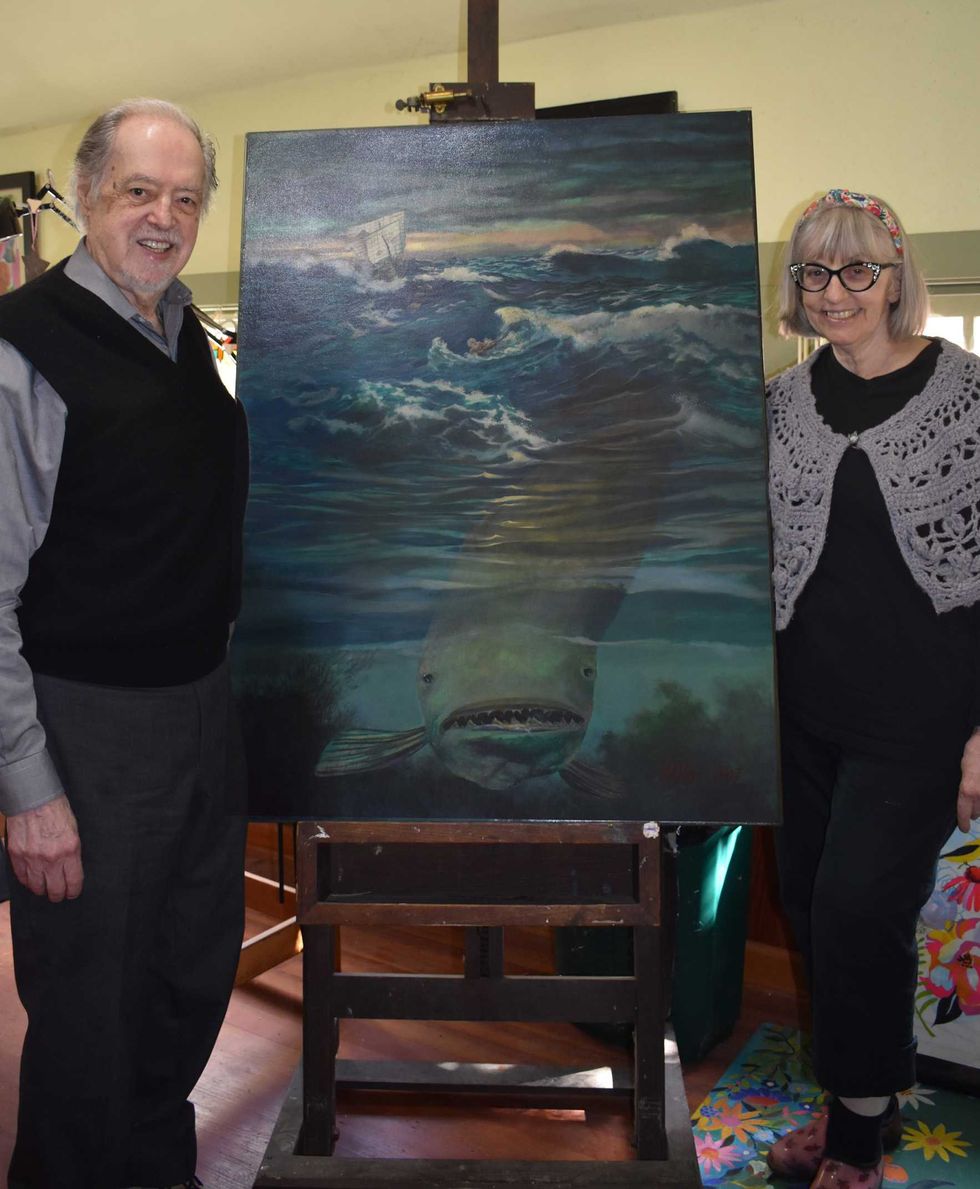 Justine and Victor Valla in their studio with a painting of Victor’s,”Jonah and the Whale.” Robin Roraback


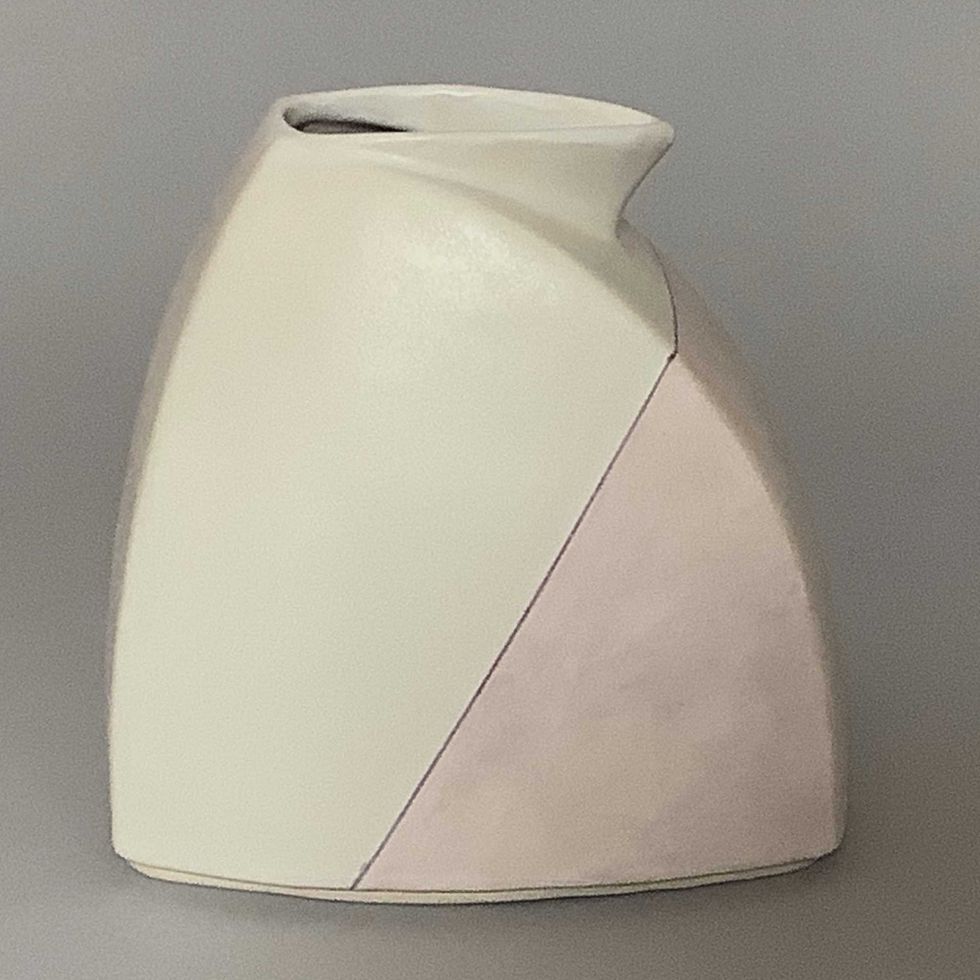 A ceramic vase by Kathleen Heidemann.Provided
 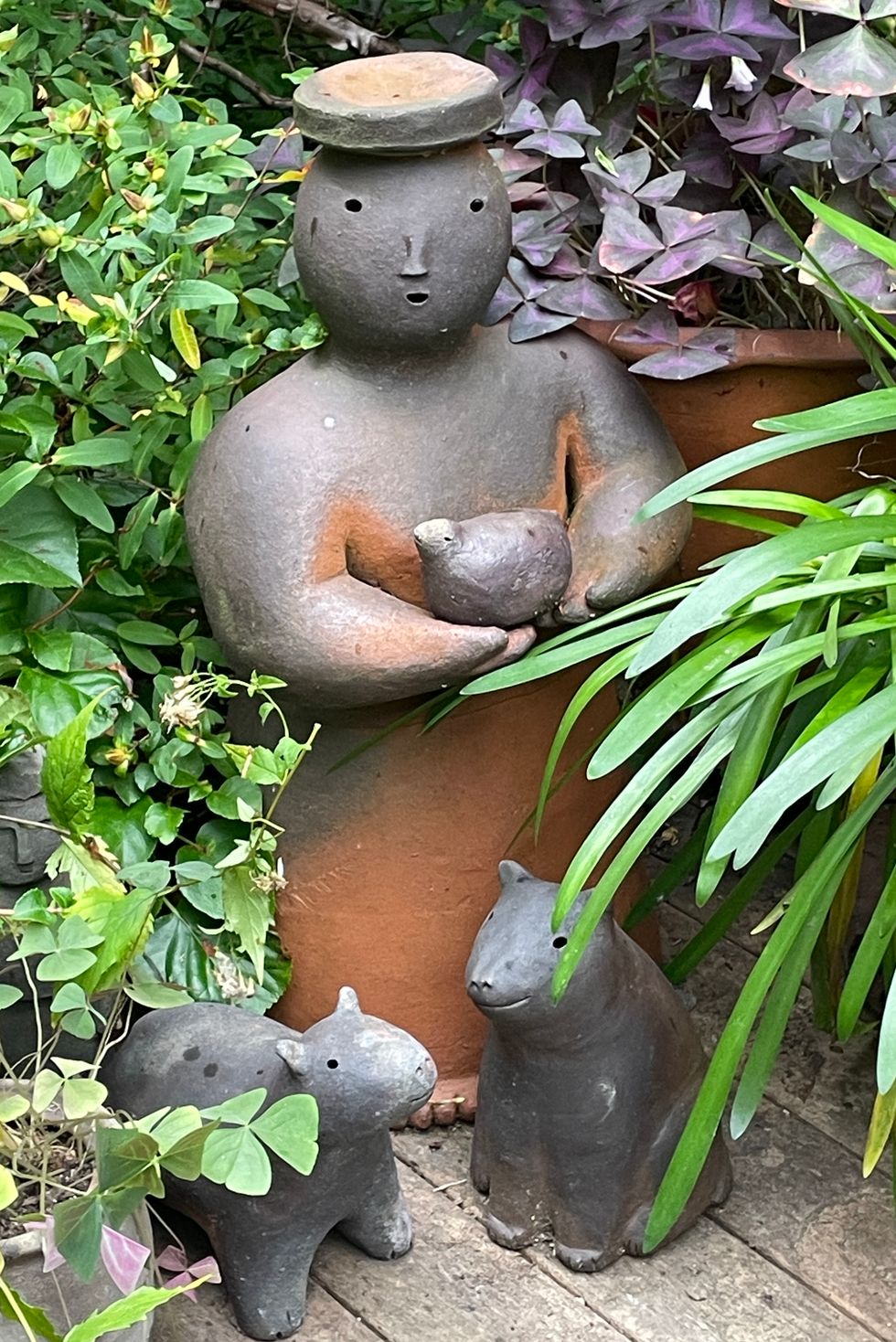 Joy Brown’s delightful ceramic sculptures.Provided