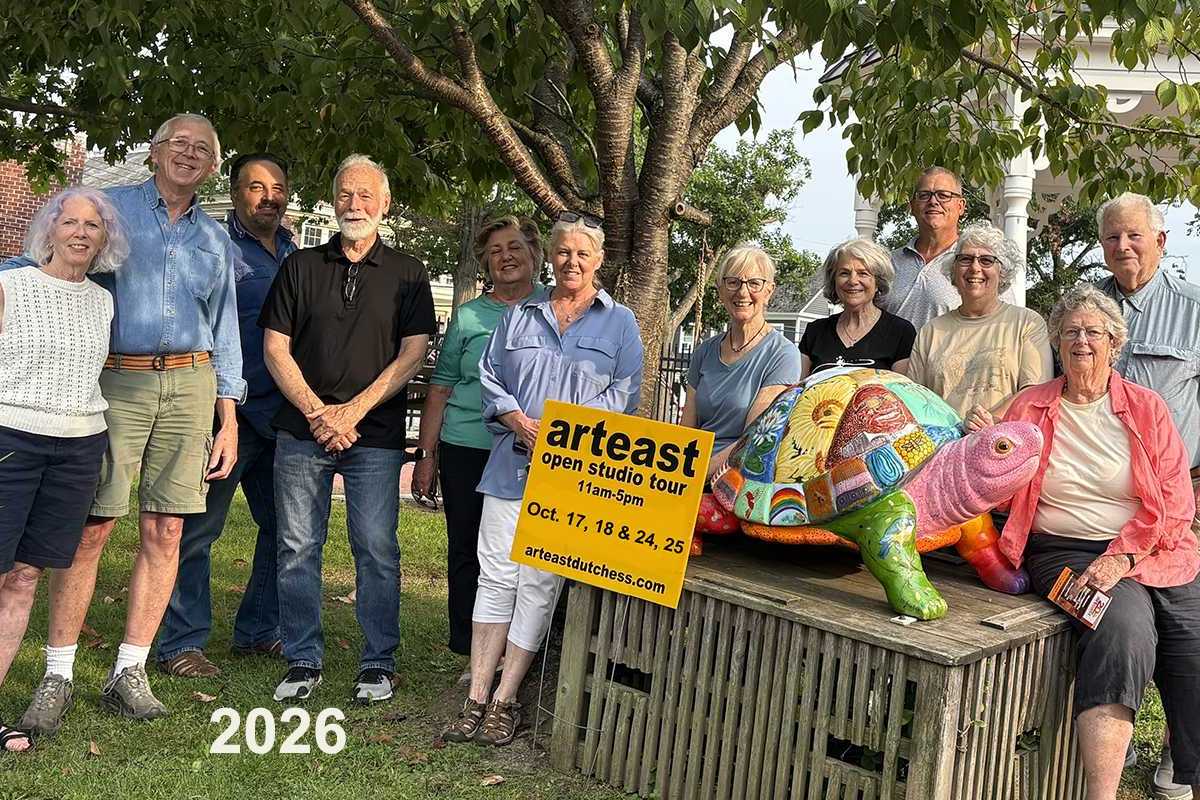
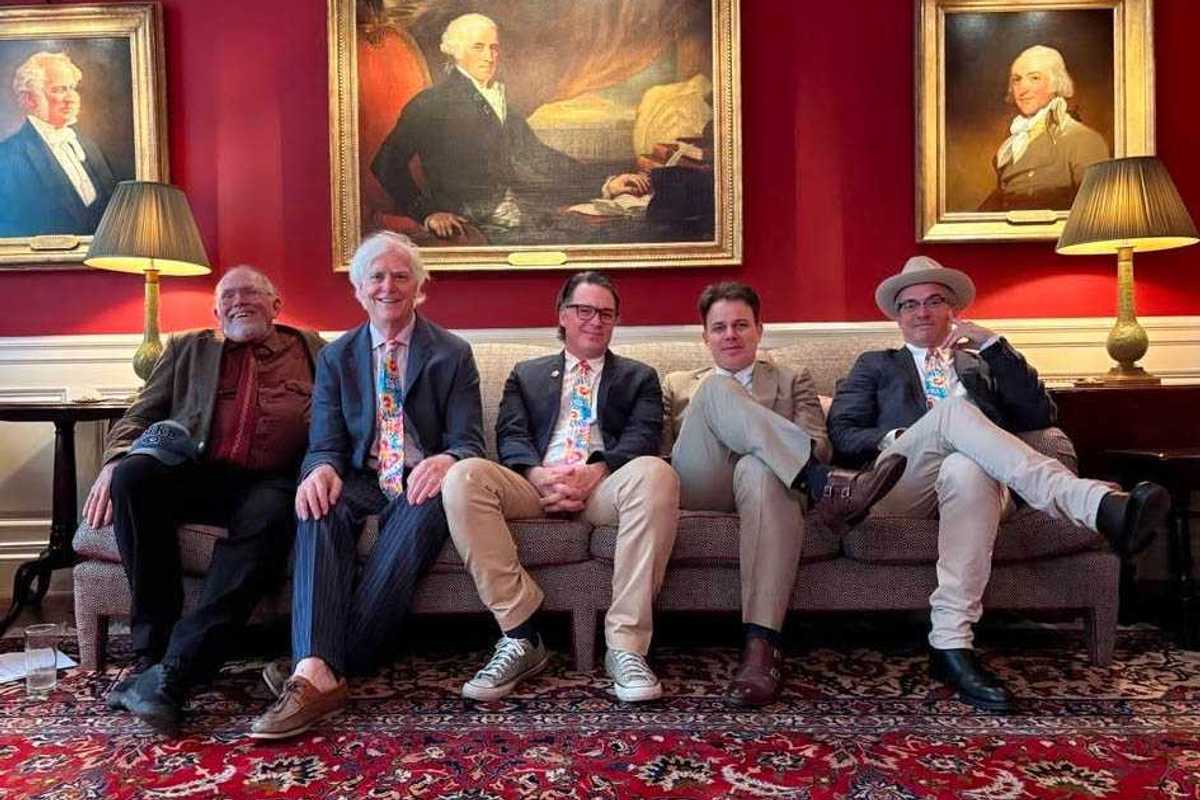
A wide selection of popular books and treasured volumes are for sale at Dog’s Ear, a pop-up in the Arcanum Building in Norfolk. Proceeds benefit the Norfolk Library Associates. Michael Selleck, right, helps Anne Collins, center, and Caroline Collins. It runs through May, open Thursday, Friday and Saturday 11 a.m. to 4 p.m.
Latest News
Laurie Lane-Zucker’s pioneering path to the regenerative economy
Richard Feiner And Annette Stover
Sep 02, 2026
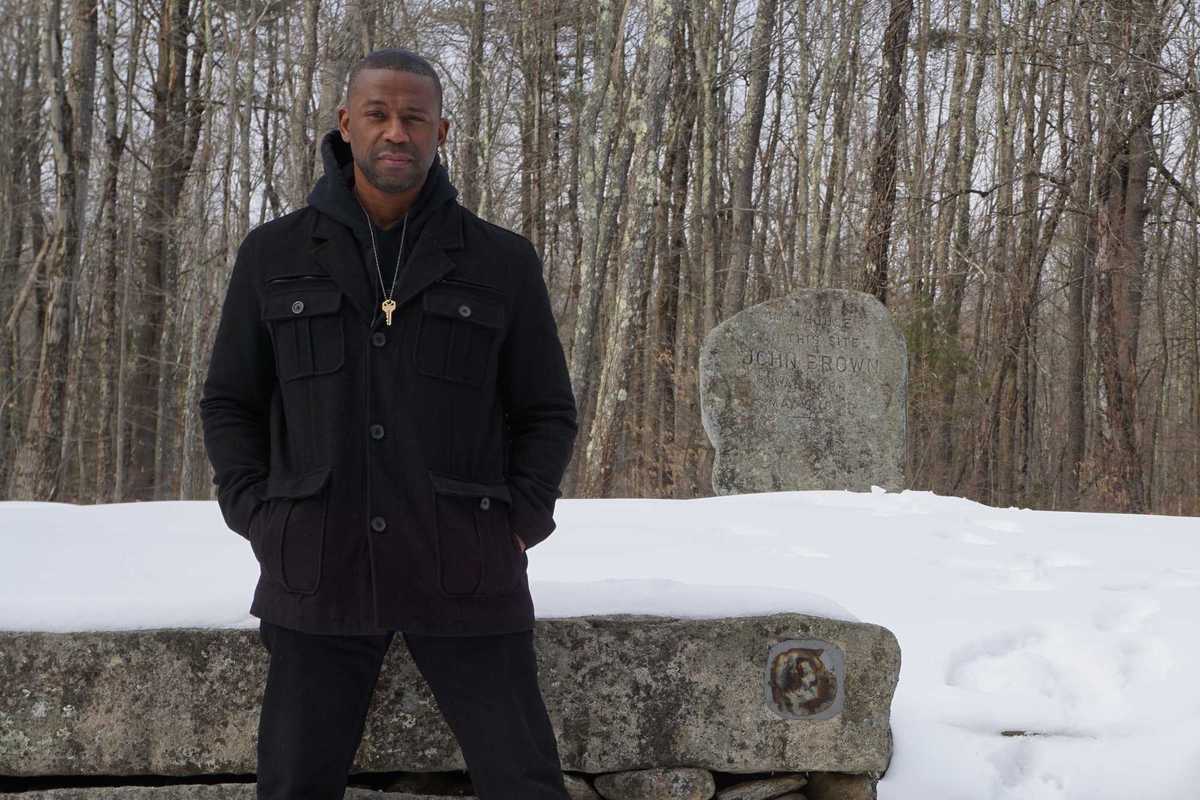
Laurie Lane-Zucker is founder and CEO of Impact Entrepreneur, PBC, a company dedicated to fostering the Impact Economy.
Provided
One of the things that I am happiest about is that my grandchild, if I am lucky enough to have one, or anyone, will know what I did with my work. —Laurie Lane-Zucker
Longtime Northwest Corner resident Laurie Lane-Zucker sees hope everywhere for positive economic and social change. For the past 15 years, he has been building Impact Entrepreneur, a global online media and community platform from his base in Sheffield, Massachusetts. Today, Impact Entrepreneur reaches more than 70,000 changemakers across the globe. The platform publishes Impact Entrepreneur Magazine, produces a live webinar series and convenes field-building conferences focused on the impact economy.
His new book, “The Impact Entrepreneur Breakthrough: A Field Manual for the Regenerative Economy,” was just published by Berrett-Koehler on Sept. 1 and is distributed by Penguin Random House. The book serves as a manual for shifting to a system in which business, capital and culture create lasting value for people, communities and the planet. It maps the full architecture for the transformation to a regenerative economy and is the culmination of Lane-Zucker’s 35-year commitment to sustainable and responsible development and his love for the Berkshire-Taconic region.
“I love being here. Some years ago, I realized that I spent most of my life along Route 7. I grew up in Fairfield County, not far from Route 7. I went to Salisbury School. I went to Middlebury College, also right on Route 7. It’s this region’s geography — the whole Taconic range — that just has a hold on me, and I love it.”
Early in his career, Lane-Zucker worked in Manhattan with Orion Magazine. When the magazine outgrew its office space, he advocated for its relocation to Great Barrington, Massachusetts. He then served as the founding director of The Orion Society, the nonprofit that now publishes the magazine. While there, he co-developed and coined the term “place-based education,” an approach that prioritizes local community and landscape as primary resources for learning.
He has never left the area, despite several professional opportunities.
“I couldn’t do it. I couldn’t leave this place. I had too many roots here. My kids all went to Great Barrington public schools at different points. My older son Liam went to the Salisbury School and still lives in the area and my daughter Anna went to the Waldorf School. I just love this place so much.”
Determined to forge his career here, Lane-Zucker set out on his own entrepreneurial path. He started the Triad Institute, an international think tank focused on sustainability. One of his projects was a digital media initiative called Hotfrog, which became a founding Certified B Corporation, with verified standards for social and environmental accountability.
These professional experiences and his passion for the region all come together in his work. In 2011, he coined the term “impact entrepreneur,” giving a name to the hopes and actions of a growing community of social innovators and practitioners — a new archetype of changemaker, who understands the need to reinvent the way we engage with the world through business and finance.
“Impact Entrepreneur is more than a brand or description,” Lane-Zucker said. “It is an identity that people increasingly embrace. It is who they are. The term is now widely used in the media and in conversation at every conference I go to. It is one of the great successes of this project.”
Lane-Zucker’s book celebrates the movement toward a regenerative economy and makes the case for security that rests on investments in ecological stability, public health, equity and community cohesion. He shines a light on business models and practices that marry profit with purpose and are inspired by the region’s special sense of place — this “landscape of deep memory where the earth itself seems to speak in whispers.”
He also includes 36 beautiful original watercolor images in which colors flow and form one continuous gesture. They offer a visual interpretation of the book’s call for a unified economic system in which human intention guidescomplex systems rather than dominating them.

Lane-Zucker also sees the book, in part, as his own memoir.
“One of the things that I am happiest about is that my grandchild, if I am lucky enough to have one, or anyone, will know what I did with my work.”
Lane-Zucker is doing something new and needed — giving voice and leadership to transformative change and providing a roadmap for others to join in and take action.
As he said, “There are a lot of models and tools that exist now. This is not a pipe dream or niche thing. This is the next step; the next stage of the economy; a rightful human evolution that’s happening.”
For more information and to order a copy of the book, visit impactentrepreneur.com
Keep ReadingShow less
A family business gives old furniture a second act
D.H. Callahan
Sep 02, 2026
“London Sky,” a vintage settee reimagined by Pryor and Peacock with a dramatic view of the London skyline.
Provided by Pryor and Peacock
If you’ve ever seen one of those updated episodes of Antiques Roadshow, you know a lot of old furniture doesn’t hold its value the way it used to.
Gone are the days when the Keno brothers could tell you that your great-grandmother’s old chairs could pay off your mortgage. Instead, a younger market of buyers is looking for more simply designed furniture, often in the form of factory-made pieces using more affordable materials. Think Crate & Barrel or even IKEA, versus the ornate craftsmanship of yesteryear.
The women at Pryor and Peacock — two sisters and their mother — thought that was a shame. They decided to save these carefully crafted pieces and breathe new life into them using old designs and new technology. The results are one-of-a-kind pieces of furniture, each with its own feel, design and story.
It started with a crazy idea. Interior designer Luca Shapiro, one of the sisters, was trying to revitalize an old telephone chair — the kind with a little table built onto the side for a phone and notepad. She wanted to upholster the chair with pages from a phone book. The idea was so specific, she knew she’d never be able to find the fabric she was looking for, so she began researching ways to make it herself.
What she and her business partners — a.k.a. her mom and sister — discovered was digital textile printing. The method first came about in the late 1980s, and the process has become more precise through advances in dyes, inks and the inkjet printers now used by manufacturers. Pryor and Peacock use the process both as the only practical way to achieve their specific designs and as a means of reducing waste associated with traditional furniture making.
One aspect of that waste has been a hot-button issue of late: water. According to the World Bank Group, textile dyeing and treatment account for an estimated 20% of industrial water pollution. With the onslaught of data centers, conserving water seems to be more important than ever. While P&P is a relatively small operation, which couldn’t possibly consume the levels of water being used by big data, the company believes that every drop matters.
Fast-furniture is another detrimental trend the women wanted to address. Cheaper, lighter and more convenient pieces are now favored over carefully made and designed furniture.

P&P finds unique statement pieces from the past and gives them new life through period-appropriate design and cutting-edge textile technology. It also sees this as a way to protect wildlife. While the company is committed to abstaining from leather and fur in its production, reducing the need for new wood means less deforestation, and the preservation of animal habitats.
Sustainable practices aside, the work is really about pairing artworks in unexpected ways. The designs are mostly sourced from old art books, featuring illustrations from centuries past. Sometimes P&P finds a piece of furniture, and looks for ways to enhance its beauty through design. Other times, the design comes first, and they scour antique shops, auctions and flea markets to find its perfect canvas.
The results are always completely unique, and frequently come with fun, inspiring stories of the art, the “frame” and sometimes both. It’s thanks to these unique pairings that you won’t find anyone with the same piece as you. Of course, that means if you see something you love, you better get it before somebody else does.
P&P presented its first pop-up shop in Stockbridge, Massachusetts, last month, and is looking for other in-person opportunities to show its work.
To learn more about the business and browse its current inventory, visitpryorandpeacock.com.
Keep ReadingShow less
SWSA ski jumping team trains across the globe
C.E. Tripler
Sep 02, 2026
Charlotte Milner at the Holmenkollbakken Ski Jumps in Oslo.
Margaret Banker
Winter may be competition season for ski jumpers, but much of their development takes place during the summer, when athletes train without snow on metal inruns and water-slicked artificial landing surfaces.
Members of the Salisbury Winter Sports Association traveled from Alaska to Norway, Slovenia, and Austria this summer to train on unfamiliar hills and refine their ability to adjust to different speeds, surfaces, weather conditions, and hill configurations.
The traveling group included Caleb Bodwell, Camden Hubbard, Oona Mascavage, Charlotte Milner, Imogen Milner, Aerin Sheil, Henry Sheil, Islay Sheil, Wyeth Taylor, and Gus Tripler.
Bodwell traveled to the Karl Eid Ski Jumping Complex in Anchorage, as well as Fox River Grove, Illinois.
“It was amazing getting to jump the K65 at midnight while it was still bright and sunny out,” Bodwell said of his experience in Alaska.

His development has accelerated since SWSA added a 36-meter hill to its complex at Satre Hill, giving young jumpers another step between the association’s smaller training hill and its largest jump.
Ski jumps are commonly identified by their K-point, or construction point, which marks a designated location in the landing area and is used in scoring. Satre Hill has 20-, 36-, and 65-meter jumps. By comparison, the largest officially sanctioned ski jump in the United States is the 134-meter hill at Utah Olympic Park in Park City.
Mascavage and Milner were among the SWSA athletes who traveled to Norway to train at the Holmenkollen Ski Jump Camp. Like other summer ski-jumping facilities, the hills are equipped with artificial surfaces that allow athletes to train without snow.
SWSA coach Seth Gardner accompanied the group and guided the athletes through the week of training. The experience allowed the jumpers to test themselves on new hills while training in a country with a deep ski-jumping tradition.
Islay Sheil traveled even farther, training on summer ski-jumping hills in Slovenia and Austria as she works toward earning a place on the junior national team, which can provide a pathway to higher-level international competition.
Despite spending months away from home, Sheil said the experience has been enjoyable.
Summer training is especially important in a sport that requires athletes to adapt quickly. While snow covers the landing hills during the winter, summer facilities generally use artificial surfaces kept slick with water. Changes in hill size, speed, wind, and equipment can require jumpers to make immediate adjustments.
SWSA has supported ski jumping in northwestern Connecticut for more than a century. Its best-known event is Jumpfest, held each February at Satre Hill.
The association also maintains ties with the New York State Ski Education Foundation. Salisbury athletes frequently travel to Lake Placid to train with experienced coaches and former Olympic ski jumpers, including Jay Rand and Salisbury’s Larry Stone.
Traveling to training camps and competitions can be costly, particularly for families whose athletes must make repeated trips to reach suitable jumping facilities. SWSA raises money throughout the year to maintain its hills and help offset some of those expenses.
Keep ReadingShow less

Want more of our stories on Google? Click here to make us a Preferred Source.

Great Mountain Forest demonstrates how to manage invasive plants
Patrick L. Sullivan
Sep 02, 2026
Eileen Fielding (at right with backpack) speaks to a group of people interested in forest management techniques.
Patrick L. Sullivan
FALLS VILLAGE—More than a dozen people interested in forest management gathered at the Yale Forestry Camp in Great Mountain Forest (GMF) on Aug. 28 before heading into the woods to examine invasive species and ways to manage them.
GMF forester Kate Regan-Loomis; Peter Picone, a wildlife biologist with the Connecticut Department of Energy and Environmental Protection (DEEP); and Eileen Fielding, the recently retired director of Sharon Audubon and a GMF board member, led the group.
At the start of the hike, where a footbridge crossed a beaver pond, Fielding stopped and said, “Let me get my bird goggles on.”
She noted that by late August, the birds were no longer singing.
“They’re molting, eating bugs, fattening up for migrating,” she said.
“If it were May, you’d have yellow warblers, sparrows, lots of little migratory songbirds taking advantage of the abundant cover and insect life.”
Not all the birds in GMF are migratory, but a significant percentage are, Fielding said.
“We are standing in a nursery for tropical birds,” she told the group. “Lots of good habitat, lots of food, not too many predators.”
The group continued to a recently cleared four-acre area that had once been an apple orchard.
“There are still a few sad little apple trees around,” Regan-Loomis said.
The former orchard had become overrun with invasive plants, including multiflora rose, barberry, and bittersweet.
“It was pretty bad,” Regan-Loomis said.
Instead of using a brush hog, the area was cleared with a forestry mower. One participant described the machine as one that “chomps everything” without plowing the unwanted plants back into the soil.
Regan-Loomis said GMF will spot-treat the area with glyphosate rather than spray it broadly.
“We have a very light touch at our scale,” she said. “It’s unrealistic to think we’ll eliminate everything. We just want to manage it without backbreaking labor.”
When asked about the goal for the former orchard, Regan-Loomis replied, “I see open growing space for native plants.”
Along the trail, the group stopped several times to examine plants and discuss their roles in the forest.
Picone observed that Norway spruce, although not native, can provide habitat similar to that of native hemlocks, which have declined.
“It duplicates some of the habitat values,” he said.
At another stop, Picone said mountain laurel, a native shrub, provides winter food for deer but is toxic to many other animals.
Peter Picone, a wildlife biologist, gives detailed instructions on how to combat invasives.Patrick L. Sullivan
Picone also identified invasive plants along the trail, including bittersweet and barberry. He said DEEP sometimes uses triclopyr, an herbicide that targets a narrower range of plants than glyphosate.
He, too, favored targeted treatment rather than indiscriminate spraying over a wider area.
When the group reached the former orchard, Fielding said, “For those of you from land trusts, this is your worst PR nightmare.”
People unfamiliar with forest-management practices may see a recently cleared area, think it looks devastated, and draw a negative conclusion, she said.
“It’s up to you to explain.”
The group included representatives of the Salisbury and Winchester land trusts and the Housatonic Valley Association, as well as a private woodland owner, a landscaper studying forestry, a Vermont man with several acres of long-neglected forest, and a New Preston man whose woods were overrun with multiflora rose.
Keep ReadingShow less
Student films bring hidden history to the big screen
Patrick L. Sullivan
Sep 02, 2026
Rhonan Mokriski, left, and Lionel Maltby discussed the student’s film at The Moviehouse Thursday, Aug. 27.
Patrick L. Sullivan
MILLERTON– Five student films on little-known aspects of history were shown at The Moviehouse in Millerton Thursday, Aug. 27.
Rhonan Mokriski, a history teacher at Salisbury School, introduced the films, which were from the 2026 Troutbeck Symposium, held at the Troutbeck hotel complex in Amenia.
“Hamilton in Salisbury” by Rocco Famularo, a student at Salisbury School, used primary sources and some detective work to establish that Alexander Hamilton did in fact have a connection to Salisbury.
Drawing on a survey by Samuel Moore, Famularo noted that what is now Route 44 was known for years as Hamilton Street.
And working backwards from an item in The Lakeville Journal in 1941, Famularo was able to find evidence of a 1793 real estate transaction in Salisbury involving Hamilton.
Ty Moynahan, another Salisbury School student, looked at the Northeast Lime Company of North Canaan, which produced magnesium.
Magnesium was needed as part of the Manhattan Project, which produced the first atomic bombs, subsequently used on Hiroshima and Nagasaki, Japan during World War II. Moynahan interviewed Christian Allyn of North Canaan, who said that the Northeast Lime Company was known for the purity of the product and the plant’s ability to produce the volume necessary.
There was a personal connection for the filmmaker. He interviewed his grandfather Steve Moynahan, who told the story of his father, John F. Moynahan, who worked on the project.
“My name was actually on the bomb” that was detonated over Hiroshima on Aug. 6, 1945.
“It was supposed to be the bomb that ended the war,” said Steve Moynahan. “My father wrote ‘No white crosses for Stevie’ on it.”
Produced by a team at Housatonic Valley Regional High School, “MLK in Connecticut” looks at the summer a 15-year-old Martin Luther King Jr. spent at a tobacco farm in Connecticut.
The story relates how King, traveling by train in the summer of 1944, had to ride in a segregated car until Washington, D.C., where the travelers switched to a train with integrated seating.
He was headed to the Cullman Brothers tobacco farm in Simsbury. The farm produced broadleaf tobacco for cigar wrappers.
One interviewee, Lerone Martin of the Martin Luther King Jr. Research and Education Institute, said King’s future career was foreshadowed at the farm, when he was asked to lead Bible study.
The Black students working at the farm were invited to worship by a church in Simsbury, and King was asked to join the choir.
The MLK film was produced by Jordan Almeida, Sophia Camphouse, Ivy Zheng, and Sophia Fitzpatrick.
Another film was “Hotchkiss and Hampton,” made by students in Hotchkiss teacher Amanda Robiolo’s history classes, who examined the connection between The Hotchkiss School in Lakeville and what was then known as the Hampton Agricultural and Industrial Institute in Hampton, Virginia. (It is now Hampton University.)
In 1903 Hotchkiss students were making direct financial donations to Hampton and the relationship deepened over the years. The students practiced “microhistory,” making use of census records, city directories, and military records.
The final film, “Juanita Jackson: The Power of Youth” by Lionel Maltby of Salisbury School, focused on the remarkable career of Juanita Jackson Mitchell, who was the first African-American woman to practice law in Maryland and was active in the National Association for the Advancement of Colored People (NAACP) starting in the mid-1930s.
After the films, Mokriski opened the discussion by noting that the 2026 Troutbeck Symposium was the sixth year of the event, which brings high school students together to work on neglected areas of history and to tell those stories.
“We’ve found so many good ones,” he said. “You just got a taste of it.”
Mokriski said that in addition to acting as historians, the students are also filmmakers, responsible for all the technical aspects of a successful film.
Keep ReadingShow less
Kent Carnival brings games, goats and community fun
Lans Christensen
Sep 02, 2026
Children snuggle up with baby goats from Got Your Goat Farm during the Kent Memorial Library’s annual Kent Carnival on Golden Falcon Field.
Lans Christensen
KENT — The Kent Carnival brought families to Golden Falcon Field on Saturday for games, food and activities presented by the Kent Memorial Library.
Various non-profit groups offered activities and met with members of the public throughout the event. Children bounced in an inflatable barrel-shaped playhouse and explored a Kent Volunteer Fire Department vehicle during a touch-a-truck activity.
A highlight was a goat-cuddling enclosure organized by Kent Affordable Housing. Mother goats and their babies were brought from Got Your Goat Farm, giving children an opportunity to hold, pet and play with the animals. Four of the young goats were just a week old.
Keep ReadingShow less

Want more of our stories on Google? Click here to make us a Preferred Source.
loading