Russell Shorto to discuss ‘Revolution Song’ at HVRHS March 27
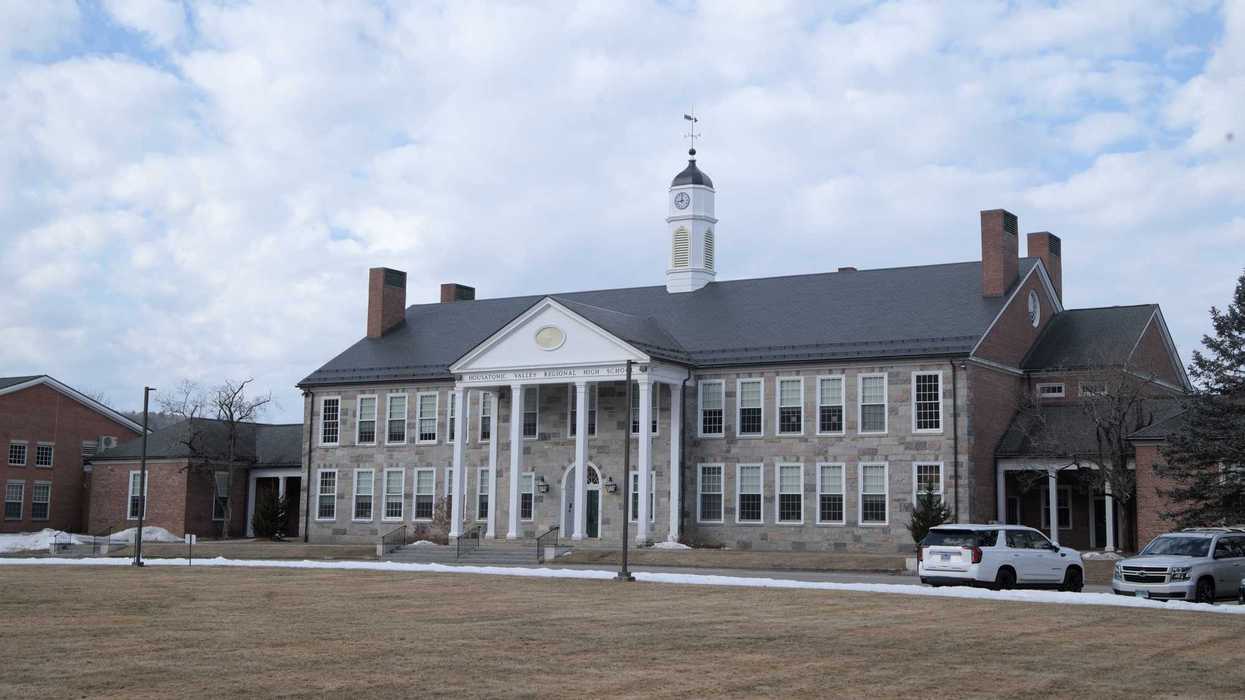
Housatonic Valley Regional High School
File photo


FALLS VILLAGE — Russell Shorto, author of “Revolution Song: The Story of America’s Founding in Six Remarkable Lives,” will appear at Housatonic Valley Regional High School on Thursday, March 27, for a live discussion.
The event, which begins at 7:30 p.m., will feature Shorto in conversation with local historians Peter Vermilyea and Rhonan Mokriski, focusing on the nation’s founding and the individuals who shaped it.
Revolution Song is this year’s selection for Salisbury READS, an annual collaborative program that encourages the community to read a chosen book together and participate in discussions and related events.
Shorto is director of the New Amsterdam Project at The New York Historical and a senior scholar at the New Netherland Institute. He is the author of eight books of narrative history, including the national bestseller “The Island at the Center of the World.”
Vermilyea, an award-winning history educator and author, teaches at Housatonic Valley Regional High School and for the University of Connecticut. His next book, “Litchfield County in the Revolutionary War,” is scheduled for publication in spring 2026.
Mokriski, a co-founder of the Troutbeck Symposium, has been teaching at his alma mater, Salisbury School, since 1996. For his dedication and innovative approach to teaching, he was named the 2024 Gilder Lehrman Connecticut History Teacher of the Year.
The program is presented by the Salisbury Forum in partnership with the Salisbury Association, the Troutbeck Symposium and the Scoville Memorial Library, in connection with Salisbury Commemoration 250 and CT 250.
Robin Roraback
Yonah Sadeh, Falls Village filmmaker and curator of David M. Hunt Library’s new VideoWall.
The David M. Hunt Library in Falls Village, known for promoting local artists with its ArtWall, is debuting a new feature showcasing filmmakers. The VideoWall will premiere Saturday, March 28, at 6 p.m. with a screening of two short films by Brooklyn-based documentary filmmaker and animator Imogen Pranger.
The VideoWall is the idea of Falls Village filmmaker Yonah Sadeh, who also serves as curator. “I would love the VideoWall to become a place that showcases the work of local filmmakers, and I hope that other creatives in the area will submit their work to be shown,” he said.
After the screening of the two films, “Mail Myself to You” and “Circle, Circle Square,” Pranger and Sadeh will discuss filmmaking and answer questions.
Of Pranger, Sadeh said, “She has a strong visual voice as a director, and both of these films are great examples of a blend of documentary and experimental filmmaking.”

Pranger described her approach to filmmaking. “I have always approached the visual arts from an interdisciplinary, multimedia perspective.” This approach was a reason why animation was particularly appealing to Pranger as she began exploring the possibilities of filmmaking.
“I particularly fell in love with the tactility of hand-drawn and painted animation and the ways in which it can be used in tandem with analog 16-millimeter film. Stop-motion animation holds the unique power to bring inanimate objects to life, something that became crucial to my practice of archival documentary filmmaking. I appreciate the sense of play that is encouraged in the medium of animation and find great joy in exploring new avenues and possibilities within the medium,” she continued.
At the core of Pranger’s films, she hopes to capture the joy and intimacy of human connection that blossoms through engagement with material and creative process.
After the opening event, the films will remain available to view at any time on the VideoWall screen in the library stacks. “The screen will always be on and ready for anyone to use,” Sadeh said. The installations will last three to four months.
Sadeh added, “Each installation will begin with a public screening at the library, followed by a talkback with the filmmaker.”
Filmmakers can contact Sadeh at huntartwall@gmail.com for information about submitting films for consideration. Visit huntlibrary.org/art-wall for a schedule of ArtWall and VideoWall events, which are free and open to the public.
Cheryl Heller
A bowl full of stones.
There’s a bowl in my studio where pieces of the planet reside. I bring them home from travels, picking them up not for their beauty or distinction but for their provenance. I choose the ones that speak to me — the ones next to pyramids, along hiking trails, on city sidewalks or volcanic slopes.
I like how stones feel in my hand: weighty, grounding. I don’t mind them making my pockets and suitcase heavier. The bowl is about the size of an average carry-on. It has been years since it was light enough for me to lift.
They’re not specimens. I’m not a scientist comparing igneous with sedimentary, or metamorphic with minerals or meteorites. I don’t know slate from quartzite, or schist from basalt or gabbro. They aren’t memories either, because I can’t tell by looking at them where they’re from. They sit quietly beside me in whatever moment I’m occupying.
They’re not souvenirs from places, like coffee mugs or snow globes. They are the places themselves.
The planet has reorganized itself in my bowl. Melbourne nestles next to the Hebrides. The streets of Roma in Mexico City rub elbows with Vatican City, Rome. Eastern Tibet sits on top of Machu Picchu; New Delhi is now close to Detroit. Cappadocia has finally met Capri. Mustique knows Morocco, and they both lie on the beaches of southern France.
These stones have witnessed the fall of civilizations, the birth and death of infinite beings, tectonic upheavals and the creative destruction of fire and ice.
Who touched them before me? Inca, Maya, Trojans? Warriors, slaves or yaks? Blue-footed boobies in the Galápagos or a slithering Costa Rican fer-de-lance? Was one of them used to stone a blasphemer in ancient Greece?
It’s not as if the place where I live needs more stones. In New England we’ve been blessed with an imposing population of glacial erratics — characters dragged here by the last Ice Age and left to sit silently in the woods for the past 16,000 years. The stones themselves, I’ve learned, are more than a billion years old.
The most ancient rocks known to us are more than four billion years old. Others are practically new, formed continually as tectonic plates shift along seabeds or lava cools along volcanic slopes. And while individual rocks vary wildly in age, the substance of rocks — atoms of silicon, oxygen and iron —is far older than the Earth itself, forged in ancient stars before our Milky Way existed.
Perhaps my bowl is filled with stars.
I recently stood before an exhibit of Aboriginal art called “The Stars We Do Not See.”The artists are descendants of the oldest continuous civilization on Earth, at 350,000 years. Their past is not distant or inaccessible to them; they understand time as a cycle and live in relationship with everything on earth and sky, including stones.
The title of the show was inspired by the late Yolŋu artist Gulumbu Yunupingu, who painted the night sky on bark. She spoke about the “stars behind the stars” — all there is to learn and appreciate beyond what we can see.
Deep in the woods on the hill above our house in Norfolk sits a giant marshmallow-shaped rock, one of the billion-year-old ones. At some point, someone leaned a ladder against it — a standing invitation to a new perspective.
How can we know the things that are invisible, the stars behind the stars? How can we feel connected to what came before us and sits silently around us, too slow for our impatient eyes to see?

Every once in a while, someone leans a ladder against a rock so we can’t miss it. Most of the time, we’re on our own.
I sometimes joke with my younger sister that when I die, she and our nieces can divide up whatever I leave behind, including the handbag she has had her eye on for years. But who will see and care about a bowl of rocks too heavy to lift and too silent about their value to be appreciated?
This is for you, Lynn, Stacey, Katie and Rose.
I hope you keep the planet in my bowl together.
It might be, after all, my small and only lasting intervention in the world.
Cheryl Heller is a designer, educator and business strategist who pioneered the field of social design and founded the first social design MFA program at the School of Visual Arts. She lives in Norfolk.
Natalia Zukerman
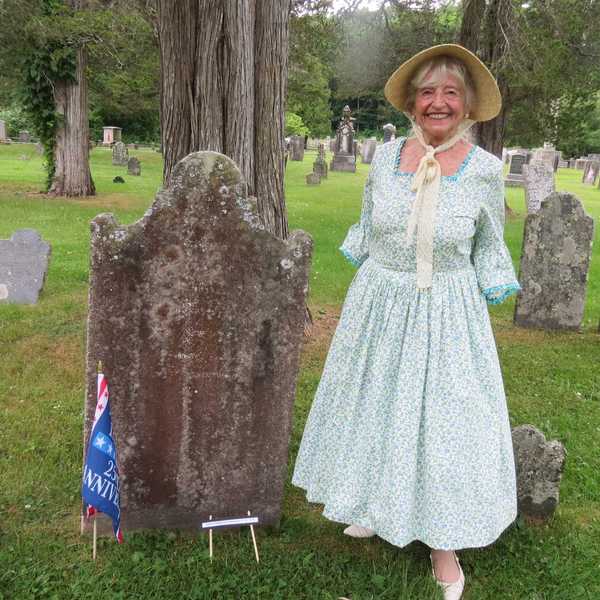
On March 29, writer, producer and director Tammy Denease will embody the life and story of Elizabeth Freeman, widely known as Mumbet, in two performances at the Scoville Library in Salisbury. Presented by Scoville Library and the Salisbury Association Historical Society, the performance is part of Salisbury READS, a community-wide engagement with literature and civic dialogue.
Mumbet was the first enslaved woman in Massachusetts to sue successfully for her freedom in 1781. Her victory helped lay the legal groundwork for the abolition of slavery in the state just two years later. In bringing Mumbet’s story to life, Denease does more than reenact history.
“I have been performing Mumbet for over 15 years now,” she said. What continues to resonate is “her self-awareness and self-worth even though she was enslaved. Her legacy of self-care and the ability to take care of others. That has not changed over time.”
Denease’s one-woman performance, “One Minute a Free Woman,” is part of her “Hidden Women” series, which centers figures too often pushed to the margins of historical memory. Drawing upon her own lineage and storytelling traditions passed down from her great-grandmother, a formerly enslaved woman, Denease creates work that bridges personal inheritance and collective history. Her background as a museum educator and interpretive guide shapes this approach.
“Being an interpretive educator helps me put the humanity back into history that has been removed when telling the stories,” she said.
The 2 p.m. program welcomes school-age audiences and families, while a 4 p.m. performance invites adults into a deeper and more intense exploration of Mumbet’s life.
“The format of the show will only change in the way I deliver the story,” Denease explained. “It will be more intense and in detail for the adults, less intense for the kids. However, it will not be watered down.”
For young people, Denease hopes the performance ignites curiosity and critical thought. “I hope school-age audiences’ imaginations are activated to want to know more and to never stop asking questions.” Adults, she said, are invited into a deeper investigation. “I hope for my adult audience that they will question what they were taught and see history through a different lens.”
That spirit of inquiry lies at the heart of Salisbury READS. “Literature and live performances go hand in hand,” Denease said. “Reading activates the imagination; living history helps that activated mind to make historical connections and keep the humanity and dignity in place where it was never given or taken away.”
Ultimately, the performance asks audiences to treat history not as distant fact but as shared responsibility. “I hope the audience will continue to question why knowing accurate and complete history is so important,” Denease said. “To understand that not knowing the whole story hurts everyone.”
To register for the event, visit scovillelibrary.org

Want more of our stories on Google? Click here to make us a Preferred Source.
Natalia Zukerman
On Saturday, March 28, Troutbeck in Amenia will host “An Acoustic Evening with Buddy Wakefield and Holly Miranda,” bringing together two artists who carefully employ language — to tell stories, to shape songs and to search for truth.
The two artists met last August at the memorial service for their dear friend, poet Andrea Gibson.
“We kept bumping into each other in those really funny, awkward, weird moments that can happen at a funeral,” said Miranda. “We knew we really liked each other and wanted to spend some more time together.”
That connection continued over the winter when Miranda enrolled in one of Wakefield’s online poetry courses.
“I just thought maybe I should do something totally out of my comfort zone to kick-start some creative flow,” she explained. The class introduced her to a structured prompt and feedback process which, in the end, sparked new material. “I’m not a poet,” said Miranda. “And I’m definitely not a student,” she continued, laughing, making reference to herself as a high school dropout. “So, this was a new process for me. And I really liked it.”
Born in Detroit, Miranda burst onto the Brooklyn music scene in the late ’90s and has since collaborated with a wide constellation of artists from Lou Reed to Karen O, Leslie Gore and Tegan and Sara. In 2021, she co-founded Eye Knee Records with Elissa Young and Ambrosia Parsley to support independent artists. She is currently part of a team developing a 250-capacity music venue in Woodstock, Calliope, named for the Greek muse who presides over eloquence and epic poetry.
“There’s a lot of small-town bureaucracy we’re still wading through,” said Miranda, estimating it’ll be another 18 months or so before the venue opens its doors.
Wakefield, a three-time Individual World Poetry Slam champion now based in Portugal, said this event came together after an invitation from Troutbeck’s director of culture and commerce, Sascha Lewis.
“Everything he’s invited me to in the past has been awesome, so I knew this would be too. And then, of course, there’s Holly.”
The performance will take place in the ballroom, the perfect setting to foster intimacy and a close connection to the audience. Wakefield, whose performances blend theater, poetry, humor and personal narrative, said he adjusts each set to fit the space he’s in.
“I definitely adapt in a choose your own adventure way,” he said.
Over more than two decades of relentless touring — from grand urban stages to unexpected corners of the world — Wakefield has helped expand spoken word beyond readings into emotionally dynamic live performance.
It’s fitting as well that this pairing unfolds at a place steeped in creative history. The evening, which begins at 5 p.m., will be a continuation of that tradition: art not as spectacle, but as exchange.
In a time when so much competes for our dwindling attention, this performance will offer something rare: the chance to sit quietly in a beautiful room while two singular artists remind us how powerful unamplified truth can be.
Guests are invited to stay for dinner. Reservations are encouraged. Tickets at troutbeck.com
Lakeville Journal
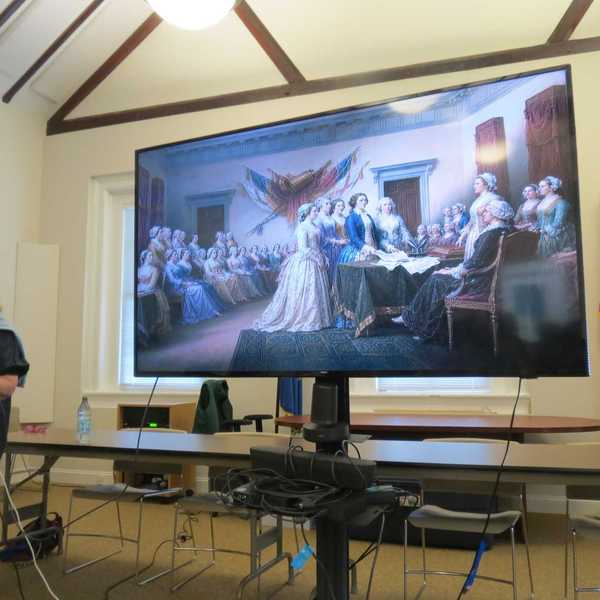
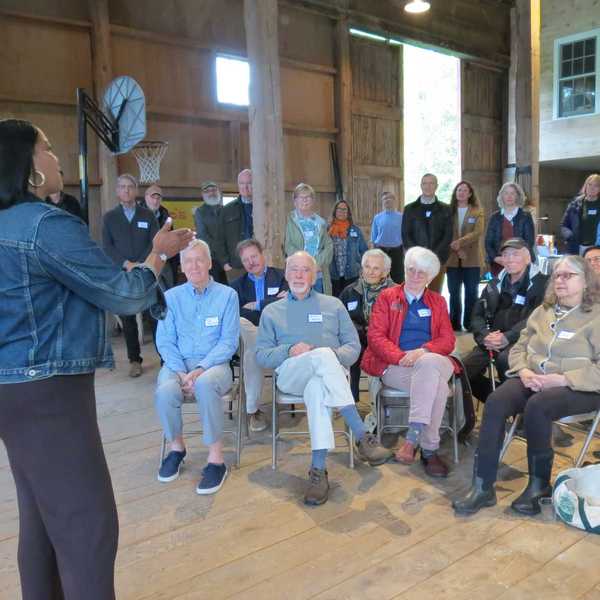
Historian Russell Shorto joins local educators Peter Vermilyea and Rhonan Mokriski for a conversation about Shorto’s “Revolution Song” on March 27 at the Salisbury Forum, marking Salisbury’s commemoration of the 250th anniversary of the Declaration of Independence. The event begins at 7:30 p.m. at Housatonic Valley Regional High School. Register at salisburyforum.org
Patrick L. Sullivan
Bill Beebe, left and Denny Jacobs hard at work making maple syrup at Whiting Brook Farm.
FALLS VILLAGE — Denny Jacobs dipped a metal spoon into boiling maple sap that was slowly turning into maple syrup.
He held the spoon up horizontally and watched as the thick liquid dribbled off.
“It’s not done until the last drop stays on the spoon,” he said. “That’s what the old-timers told us.”
The Jacobs family — Denny, Judy and their son Dave — along with Bill Beebe and a couple of dogs, were busy Saturday morning, March 21, at their Whiting Brook Farm on Undermountain Road maple syrup operation.
Judy Jacobs had a covered skillet perched on the side of the evaporator. In it were hot dogs and kielbasa, cut in slices and simmering in maple sap.
The Jacobs operation was one of six Falls Village sugaring concerns participating in a statewide maple syrup showcase weekend, with visitors traveling between farms to see each operation in action.
Matt Gallagher and his son Connor were boiling away at a much smaller apparatus at the Gallagher home, also known as Acer Creek Farm, on Canaan Mountain Road.
Matt Gallagher said he had one big tank just off Canaan Mountain Road which collected sap via tubes from 24 taps, plus another 73 taps and buckets on trees.
Jody and Jean Bronson, ofUndermountain Road, also had a smaller system running and a steady stream of visitors.
Bronson said they prefer a more robust, darker syrup than the amber colored variety that is the unofficial standard, and Jean Bronson had samples ready for visitors.
The amount of sap needed to produce syrup varied considerably. Denny Jacobs said the Whiting Brook Farm ratio was between 50 and 55 gallons of sap to one gallon of syrup. Bronson and Gallagher had 35-to-1 and 30-to-1, respectively.
Bronson, a retired forester, said altitude and whether trees are wild or farmed both make a difference.
Back at Whiting Brook, Denny Jacobs and Beebe, watching the hydrometer and the spoon, decided it was time for a “draw.” A clean five-gallon bucket was positioned under the tap, and the hot, dark syrup filled the container.
Then it was time for the initial filtering.
Jacobs was proud of his innovative filter mechanism. A conical filter made of a thick, felt-like material was suspended between the legs of an upside-down kitchen stool, with another five-gallon bucket beneath.
Jacobs simply poured the hot syrup out of the first bucket into the filter. The syrup slowly seeped through. “We finish it on the stove at home,” said Judy Jacobs.
Also participating in the maple weekend were Lou Timolat and Eric Carlson at Saw Mill Syrup on Route 7, Kent Allyn on Music Mountain Road, and Adamah Farm on Johnson Road, each operating from their own sugarhouse or farm.
The Falls Village maple syrup makers are hosting an event on the town Green on Saturday, April 25, co-sponsored by the town’s Recreation Commission. There will be demonstrations and, of course, maple syrup for sale.

Want more of our stories on Google? Click here to make us a Preferred Source.
Want more of our stories on Google? Click here to make us a Preferred Source.