GREAT BARRINGTON — Fire crews overnight have been monitoring a slow-moving, but growing 100-acre wildfire on East Mountain, a remote and forested area, that appears to have started around midnight Tuesday. No injuries have been reported.
Authorities said the wildfire poses no immediate threat to public property, but they urged residents to remain vigilant and avoid the area. Authorities have named it the Butternut Fire. About 50 to 75 crew members were on the ground with another 20 working at the incident command center.
"Though the fire looks very dangerous to the general public, it is not," said Ryan Brown, the Lee fire chief who led a morning press conference at the Great Barrington Fairgrounds area.
Fire crews were stationed at areas to ensure no structures are threatened.
No evacuation orders have been set.
As of 11 a.m. Tuesday, smoke continued to rise over the mountain to the east of downtown. The wildfire was burning trees and ground clutter; firefighters had not actively begun fighting the fire because the area is difficult to access, but scouts and drones were monitoring the wildfire's progress. Accessing the area requires hiking on foot, according to authorities at the Great Barrington Fire Station.
Multiple agencies, including the Massachusetts Emergency Management Agency, were on the scene and monitoring the situation.
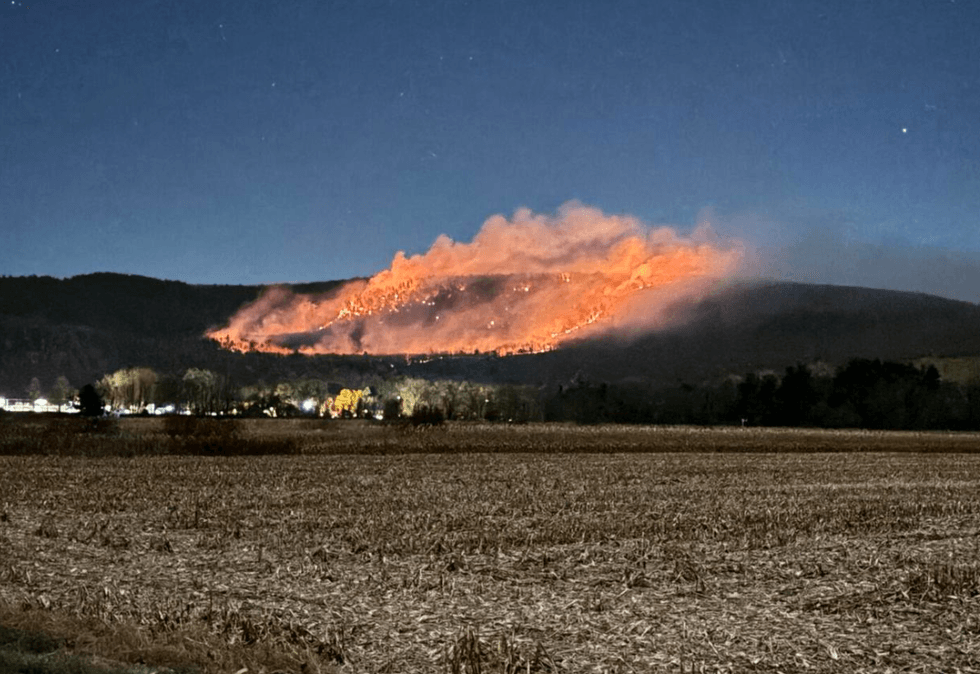 Another angle of the fire, which authorities have named the Butternut Fire.Photo by Stephen P. Willig, courtesy of The Berkshire Eagle
The fire comes as a severe drought in the region and across the state has increased the risk of wildfire.
Authorities have been warning the public against any outdoor fires or anything that might cast a spark. Massachusetts is in a so-called Red Flag Warning, the highest warning level for wildfire potential because of dry conditions, wind and warm temperatures.
A Great Barrington Fire Department spokesperson said firefighters are using a drone to help determine the extent of the fire.
Ryan Brown, the Lee fire chief who is handling public information, said the terrain is difficult and that the vegetation is dry. Brown said that a tornado came through the area several years ago and left a lot of ground clutter that may be fueling the wildfire.
"The rain the other day did not help," Brown said.
The rate of the fire's spread was about 60 feet per hour, Brown said.
As of 7:45 a.m., the Great Barrington Fire Department was deploying resources to address the situation. Structural firefighting crews have been strategically staged in case their support is required.
Fire Chief Scott Turner and Police Sargent Adam Carlotto are working closely with Town Manager Mark Pruhenski to coordinate efforts, according to a news release sent by the town.
This wildfire adds to the more than 500 fires reported across Massachusetts since Oct. 1.
The Brookside Bridge, which had been closed to traffic for structural reasons, was re-opened on Tuesday morning to provide emergency access and resident safety due to the East Mountain fire in Great Barrington.
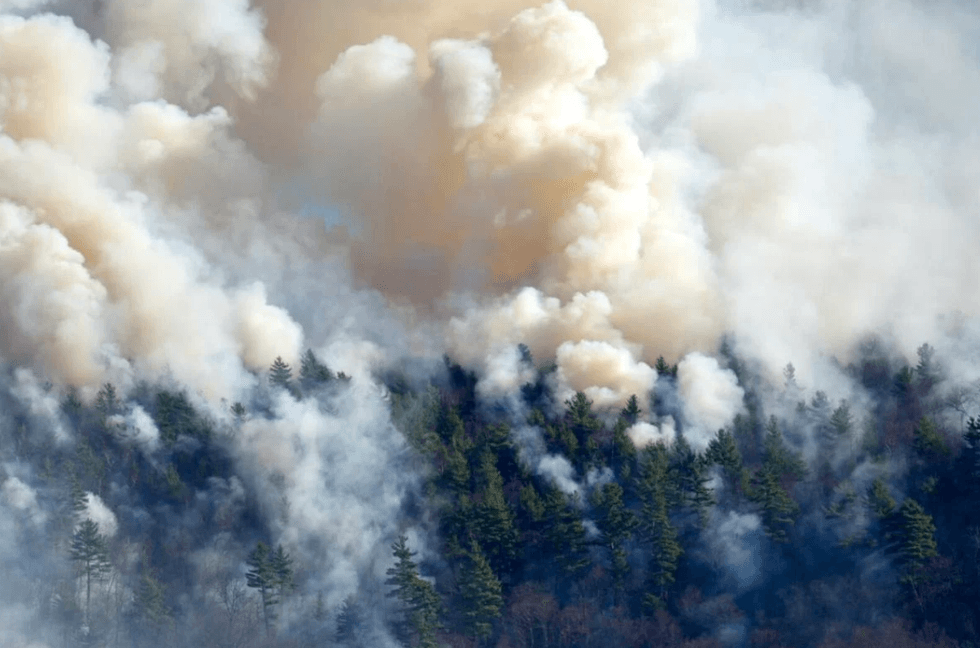 As of 11 a.m. Tuesday, smoke continued to rise over the mountain to the east of downtown.Photo by Ben Garver, The Berkshire Eagle