These skills that are developed with animal care transfer to owning personal animals or a career that works with animals.
— Madison Melino, 2025-26 Housatonic Valley FFA Historian
HVRHS’s agriculture education program is abundant with unique experiences and opportunities for students, one of which is the barn. This barn, located next to the Science and Technology Center, has seen a wide variety of animals; from the typical sheep and goats, to the occasional heifer, alpacas and miniature ponies.
This barn looks a little different, however, when the grass dies and the wind turns frigid.
Care for these animals during the more ideal seasons is split between a couple of the ag-ed classes. “Students in agriculture classes learn about all aspects of animal care in the classroom and take shared responsibility over weekends and breaks for the care of the animals,” said Madison Melino, the 2025-26 Housatonic Valley FFA Historian. While both the teachers and the students are involved in the animals’ care, students lead in most of the work. “Teachers buy the supplies for the animals, but I would say it’s mostly students feeding and caring for them all year round, not just in the winter,” said Hannah Johnson, the 2025-26 Housatonic Valley FFA Vice President. “These chores are delegated mostly to students in the Vet Science class.”
Students even organize who does what chores among themselves. “They take care of the animals and everyday they volunteer to do the different tasks necessary.”
While the delegation of these chores remains the same throughout the year, the supplies and care plans used differ. There is one main priority in the winter; keep the animals warm. “In the winter we have to really make sure that [the animals] water is not frozen, so they always have something to drink. We also have to make sure that they have enough hay to keep them warm,” Johnson said.
Winter care also requires additional supplies — leading to higher costs through the season. “Additional costs include bedding material like shavings and straw,” Melino said. “They go through more hay in the winter which is an additional cost,” Johnson said. In addition to extra straw and shavings, Melino said barn animals can require heat lamps, water heaters, blankets and extra bedding to stay warm in the cold.
For the sheep specifically, it’s important that they go into winter with extra weight to keep warm. “In the winter we check the body condition of the animals every week to ensure a healthy weight,” Melino said. “It is always a good idea to go into winter with a few extra pounds on the sheep.”
“The number one priority … ensuring that they don’t get frostbite,” Johnson said. Blankets and extra bedding can help, but snow gets in the way of animal care in more ways than one may think. “The biggest struggle in the winter is the weather if it gets extremely cold or a lot of snow is on the ground preventing the opening of the stalls,” Melino said. “Closed stalls are hard for humans because it takes additional work to keep the area clean inside.”
Winter brings some benefits along with the challenges, FFA members said. “One benefit during the winter is that there’s little to no mosquitos and bugs which creates less worry about disease transmission,” Melino said. There is also little impact on the animals’ general lifestyle. “For the animals we have at the school they are pretty acclimated to the winter from past seasons so we don’t really notice a change in behavior,” said Melino.
Students learn valuable lessons and skills while taking care of these animals. “Students learn about nutrition, health, vaccination schedules, behavior, breeding, and more,” Melino said. “These skills that are developed with animal care transfer to owning personal animals or a career that works with animals.”





 Justine and Victor Valla in their studio with a painting of Victor’s,”Jonah and the Whale.” Robin Roraback


 A ceramic vase by Kathleen Heidemann.Provided
 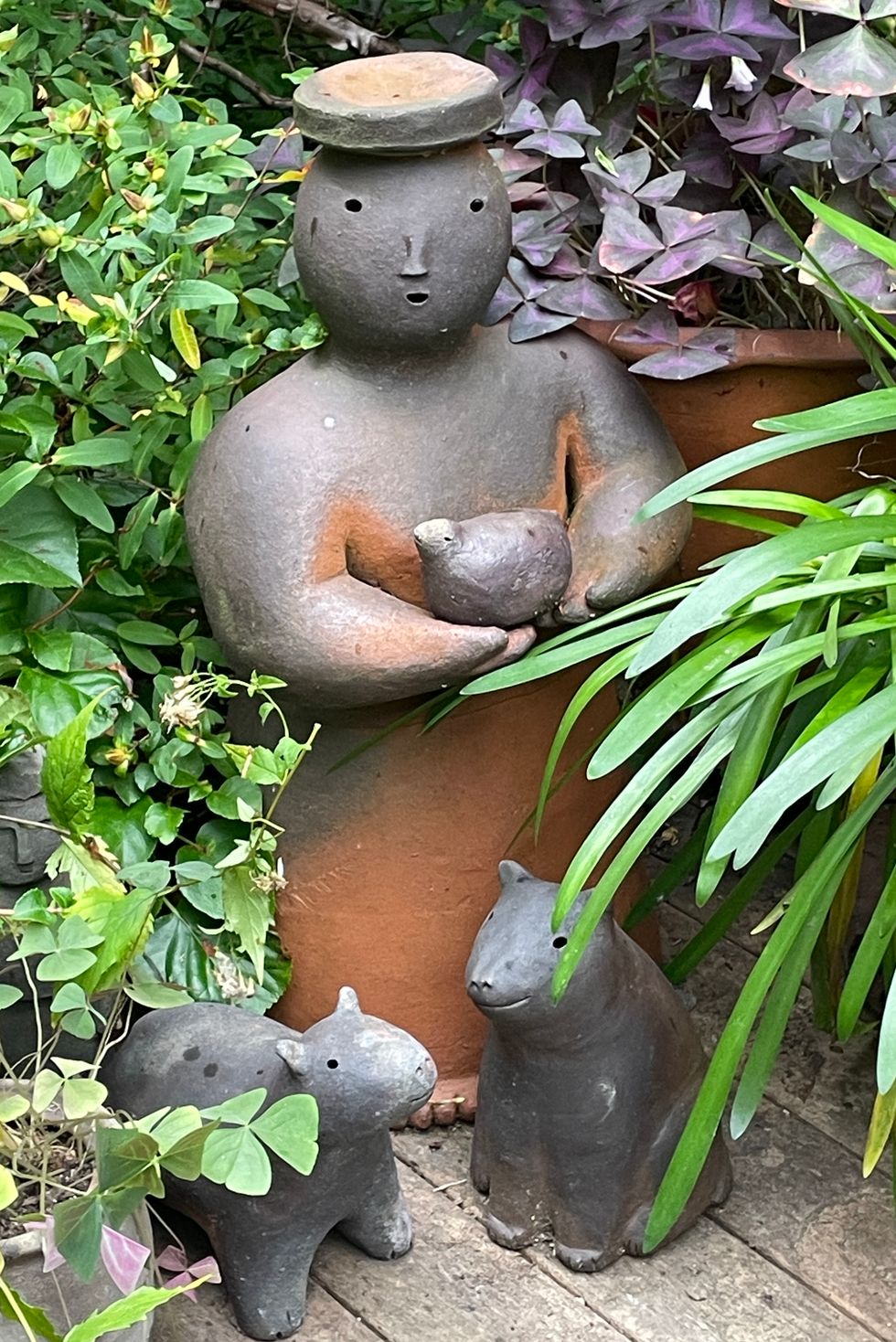 Joy Brown’s delightful ceramic sculptures.Provided