Coventry knocks Housy out of Class S tourney

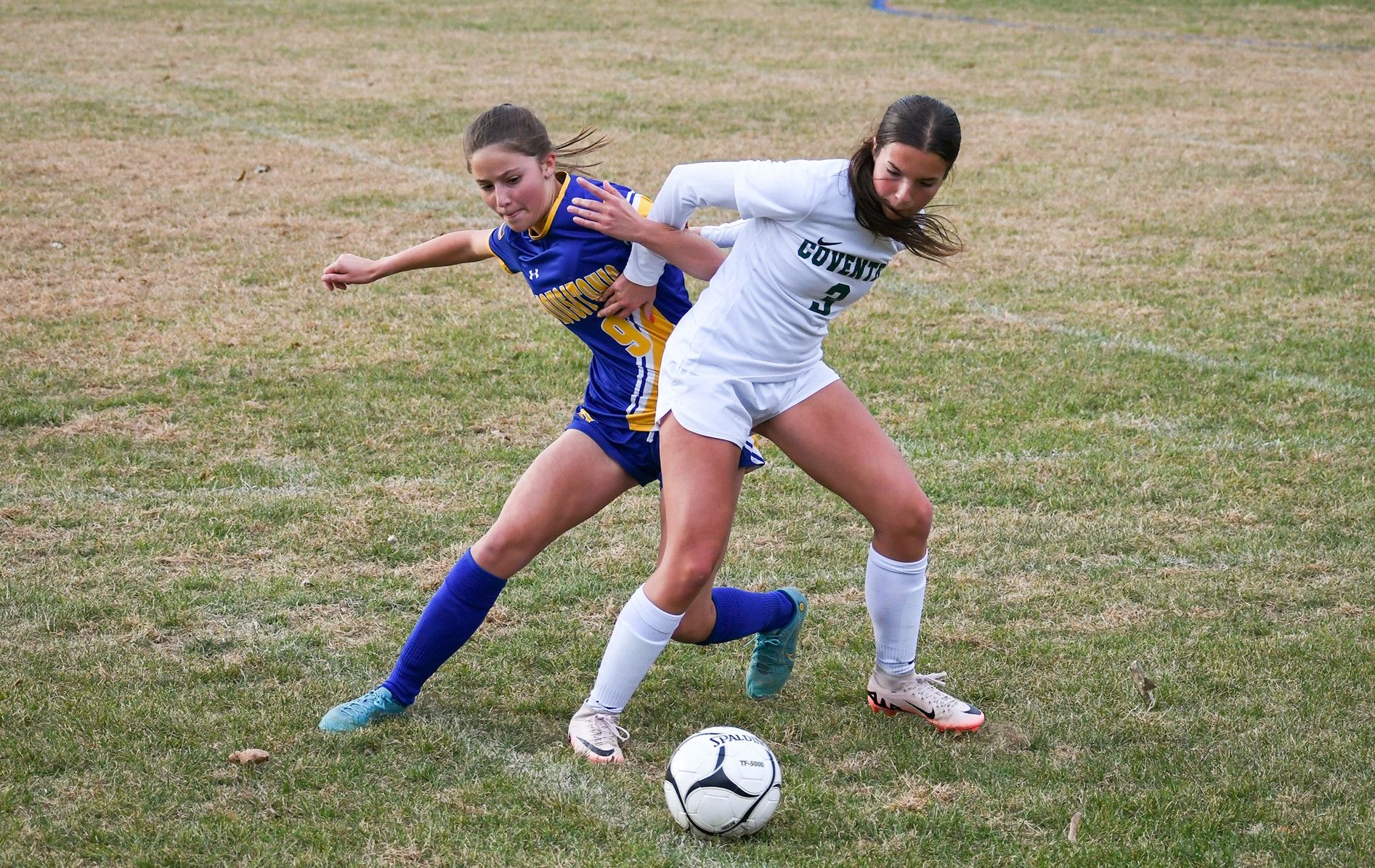
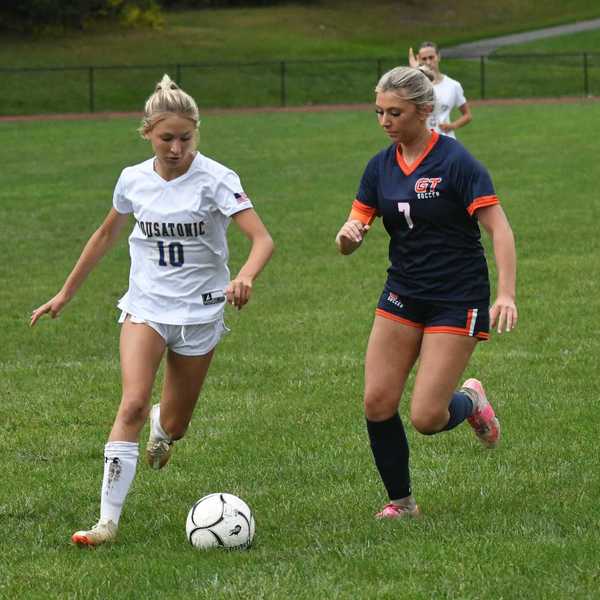
HVRHS’s Addie Diorio battles Coventry’s Celina Cuhha for possession.
Photo by Riley Klein

HVRHS’s Addie Diorio battles Coventry’s Celina Cuhha for possession.
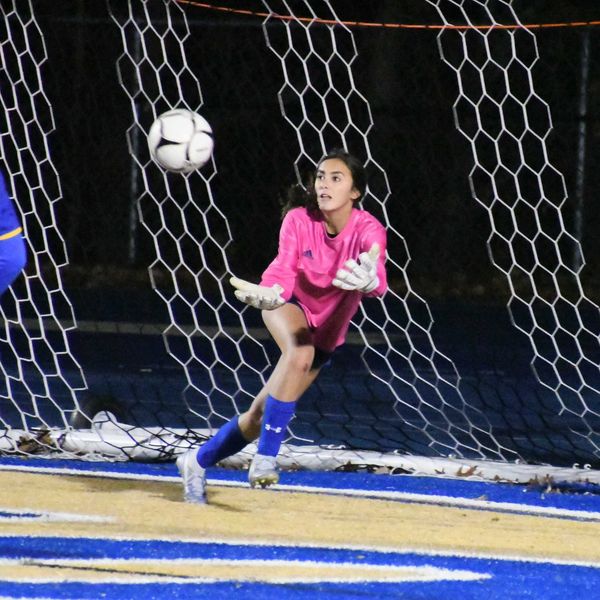
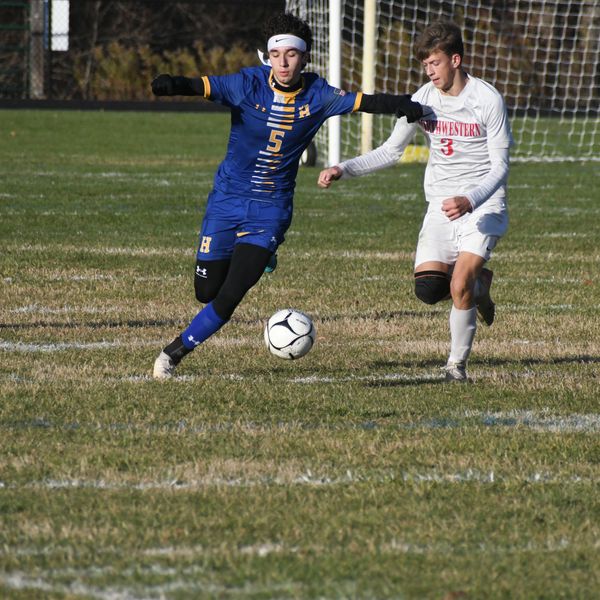
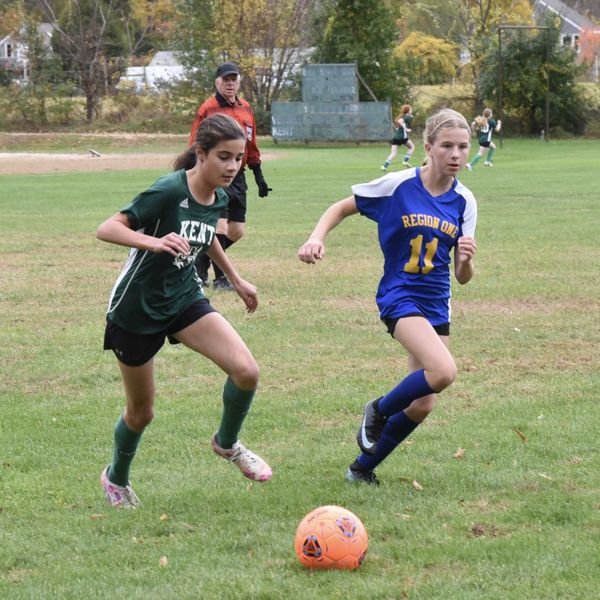
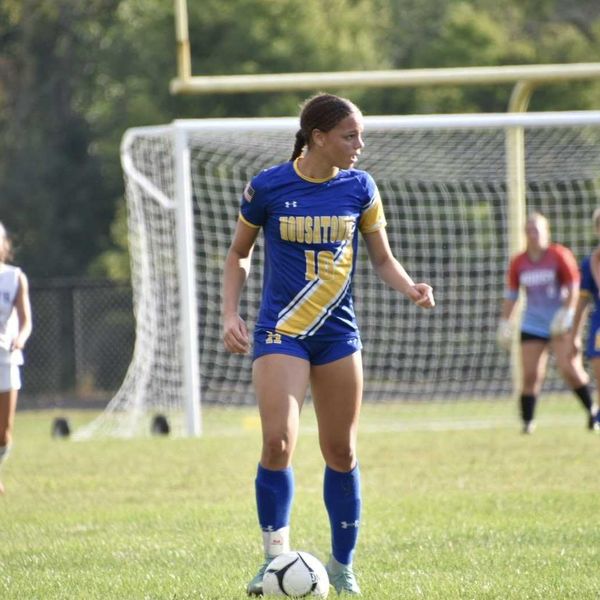
FALLS VILLAGE — Housatonic Valley Regional High School soccer lost 1-0 to Coventry High School in the second round of the Connecticut Interscholastic Athletic Conference Class S tournament Nov. 4.
Coventry scored in the 10th minute and held on to the lead through effective ball control and precision passing. HVRHS’s defense played strong to keep the Mountaineers in the game despite the possession disadvantage.
HVRHS entered the tournament as the 2nd seeded team in Class S with a record 13-2-1. The Mountaineers earned a bye for the first round and opened the tournament in round two against Coventry.
Coventry (8-6-2) was ranked 15th entering the Class S tournament. The Patriots defeated 18th ranked Canton High School 2-1 in the first round.
Coventry came to Falls Village for round two on a cold, gray and windy afternoon Monday, Nov. 4. The game was well attended with students let out of class early to watch the 2 p.m. game.
HVRHS was without striker Ava Segalla, who broke her ankle Oct. 31.
Possession was dominated by Coventry through most of the first half.
The goal in the 10th minute came from striker Mazie Cox on a fast break. She snuck a shot past HVRHS goalie Madison “Maddog” DeWitt.
HVRHS’s defense started to click as the game went on and seized possession. The Mountaineers had a scoring chance late in the first half that ultimately did not connect.
HVRHS Coach Don Drislane encouraged his team. “Be positive girls. We can win this.”
Coventry resumed ball control in the second half and sent several shots at the net. DeWitt saved the shots-on-goal and several others flew high above the crossbar.
With time ticking down, HVRHS pushed everyone forward but could not find the net. Coventry hung on for a 1-0 win.
The decision knocked HVRHS out of the tournament. Coventry advanced to play 7th seed Morgan High School (10-3-3) in the quarterfinal round Nov. 7.
Striker Mazie Cox, no. 4, scored the lone goal of the game when HVRHS hosted Coventry High School in the state tournament Nov. 4Photo by Riley KleinSally Haver
Christine Gevert, artistic director, brings together international and local musicians for a season of rare works.
Crescendo, the Lakeville-based nonprofit specializing in early and rarely performed classical music, will close its 22nd season with a slate of spring concerts featuring international performers, local musicians and works by pioneering composers from the Baroque era to the 20th century.
Christine Gevert, the organization’s artistic director, has gathered international vocal and instrumental talent, blending it with local voices to provide Berkshire audiences with rare musical treats.
“The biggest event of this part of our season is our April 25 and 26 concerts, with the US premiere of ‘A Jewish Cantata’ and the iconic ‘Misa a Buenos Aires,’” said Gevert. “The composer, an internationally renowned musician, will come and share the podium with me.”
Among the other season highlights are concerts showcasing the works of two trailblazing female musical innovators, Francesca Caccini, the early Baroque composer, poet and singer; and Wanda Landowska, the 20th-century virtuoso who single-handedly brought the harpsichord back from obscurity. Also not to be missed is the May 30 concert, Bach’s Motets in Concert, featuring all six of Johann Sebastian Bach’s surviving motets, sung by four eight-part double choruses and accompanied by period instruments, widely considered the pinnacle of Baroque choral music.
For a schedule of concerts and tickets, visit crescendomusic.org
Jennifer Almquist
Aldo Leopold in 1942, seated at his desk examining a gray partridge specimen.
In his 1949 seminal work, “A Sand County Almanac,” Aldo Leopold, regarded by many conservationists as the father of wildlife ecology and modern conservation, wrote, “There are some who can live without wild things and some who cannot.” Leopold was a forester, philosopher, conservationist, educator, writer and outdoor enthusiast.
Originally published by Oxford University Press, “A Sand County Almanac” has sold 2 million copies and been translated into 15 languages. On Sunday, March 8, from 3 to 5 p.m. in the Great Hall of the Norfolk Library, the public is invited to a community reading of selections from the book followed by a moderated discussion with Steve Dunsky, director of “Green Fire,” an Emmy Award-winning documentary film exploring the origins of Leopold’s “land ethic.” Similar reading events take place each year across the country during “Leopold Week” in early March. Planning for this Litchfield County reading began when the Norfolk Library received a grant from the Aldo Leopold Foundation, which provided copies of “A Sand County Almanac” to distribute during the event.
Aldo Leopold, born in 1887 in Iowa, was educated at Yale University, where he studied in the newly formed forestry school, graduating in the class of 1909. His then-radical concept of a “land ethic” states that land as a whole — soils, water, plants, animals and humans — should be understood as one community. Leopold explained, “A thing is right when it tends to preserve the integrity, stability and beauty of the biotic community. It is wrong when it tends otherwise.”
For a small town of roughly 2,000 people, Norfolk has an abundance of conservation land, including the 6,000-acre Great Mountain Forest and Aton Forest, a 1,300-acre research forest. It is a community where many share a sense of responsibility to live sustainably on the land. Sharing Leopold’s essays at the Norfolk Library honors his legacy.
Leila Hawken
Impressive dance moves were displayed by Village Trustee Shannon Mawson who added a visual flair of fabric in motion at Club Friendly, a community dance at Village Hall on Friday, Feb. 27.
Nearly 80 residents filled Village Hall on Friday, Feb. 27, for a two-hour community dance party organizers hope will become a recurring event.
The gathering, dubbed “Club Friendly,” transformed Village Hall into a lively dance space with colorful décor, upbeat lighting and a steady mix of tracks spun by local DJ Christopher James. Serving as emcee, James kept the energy high and encouraged dancers of all ages to take to the floor.
Young children also got into the spirit, tossing countless balloons that were scattered throughout the hall.

Pizza and light refreshments were served in the Village Hall meeting room, offering a place for attendees to recharge between songs.
The event was organized by the Millbrook Library and the Millbrook Arts Group, and was used as a pilot program to gauge interest in hosting future community dance nights.
“It could continue with different themes,” said library director Courtney Tsahalis, adding that participation by other sponsoring organizations would be welcome.
Tsahalis said the turnout shows there’s interest in holding more dances.

Want more of our stories on Google? Click here to make us a Preferred Source.
Lakeville Journal
Isle of Klezbos brings its high-energy, all-women klezmer to the Stissing Center in Pine Plains on Saturday, March 7. Touring internationally since 1998, the ensemble blends neo-folkloric originals and reimagined Yiddish classics in a style dubbed “cutting-edge klezmer” by New York Magazine.
Lakeville Journal
Housing, land use, community
On Thursday, Feb. 26, I attended a collegial conversation, a tour and a luncheon offered by the Salisbury Housing Trust at its Open House held at Town Hall. The Trust has been working to find possibilities for affordable homeownership options in Salisbury.
The entire event was generated by John Harney, President of the Salisbury Housing Trust. Speakers were Abby Conroy, Salisbury’s Director of Land Use, and Kayla Johnson, Salisbury’s Assessor. In addition, there were other presenters: Janna Siller, Director, Adamah Farm; Jocelyn Ayer of the Housing Collective; Mirna Martinez, Executive Director of the Southeastern Connecticut Community Land Trust; Karmine Aybar from the Naugatuck Valley Project. Miles Todaro who works with Abby in Land Use managed the Power Point slides.
The slides clarified how the different community trusts function. The Salisbury Housing Trust retains the land and leases it to the homeowners to reduce property taxes and ensure that the house deed is restricted and the property remains affordable. The Southeastern Connecticut Community Land Trust also does this but in addition, has a community farming component and a house for teens to continue their education and develop work skills. The Naugatuck Valley Project is a faith- and labor-based organization supporting fair housing in Waterbury. We heard about the challenges and opportunities of rural versus urban affordable housing initiatives.
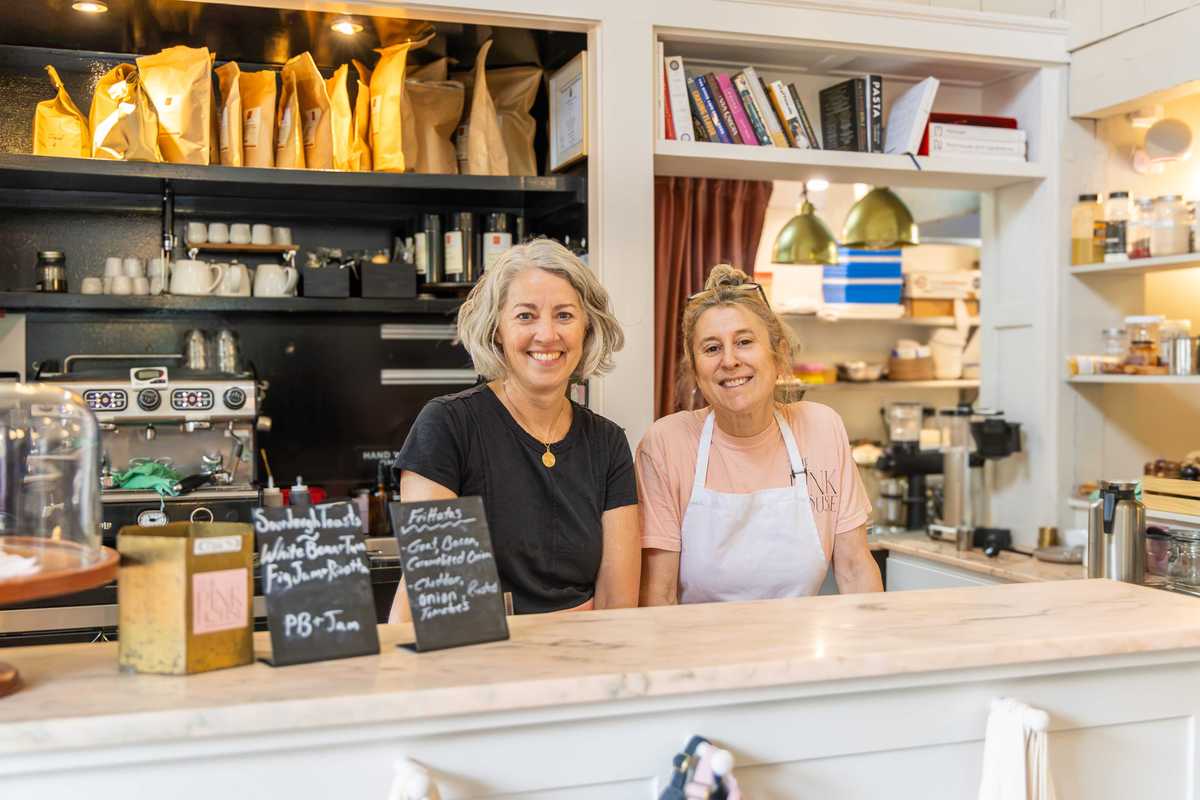
On The Run in Lakeville graciously supplied coffee and pastries as well as a delicious lunch which we enjoyed while seeing the new 26 Grove Street home. The spirit of the meeting was positive and energizing for three hours. People wanted to keep talking at the end of the event at Town Hall. We continued to meet each other, sharing ideas and accomplishments and just having fun while have a chili/wrap lunch at 26 Grove Street. This new home is beautiful and the family who moves in will be fortunate. Kudos to John Harney who organized this event. Frosting on the cake was the gift bag from Harney Tea for each participant. Thank you, Mike Harney.
Eileen Epperson
Salisbury
Youth basketball program impressive
I’d like to compliment everyone involved in organizing and coaching the youth basketball program at the High School. My granddaughter participated at the 6 year old level, and I’ve had the chance to attend a practice a couple of months ago and again this past Saturday morning. The improvement in all of the participants in that short a time is remarkable!
It’s terrific to see both male and female coaches working with the kids. Even at this young age, when a whistle blows, every child immediately stops and looks to the coaches for instruction — a real indication of the structure, respect and positive environment they’ve created.
I couldn’t be more impressed. If this level of enthusiasm and development continues, the elementary schools, Housatonic, or whatever teams these kids eventually join — will be incredibly fortunate to have them.
Thank you so much to all of you for your dedication and hard work!
Dave Beaujon
Canaan
Rail Trail care, signage needed on bridges
July 23, 2025, was a beautiful summer morning. I loaded my bicycle and headed for Harlem Valley Rail Trail. I was on one of the narrower wooden bridges when I heard someone say “On your left.”
I had never had a cyclist pass me from behind on the bridges before. I pulled my bike closer to the side of the bridge. I was out for a leisurely ride, but the gentleman that came up behind me was all business.
There were vines growing over the side of the bridge so I rode back toward the center of the bridge after he passed. Another cyclist, who did not announce himself, came up on me quickly. I pulled back to the right, and when I did my handlebar caught the fence.
I fell down.
The cyclists came back as I lay on the bridge, with the bike wrapped around my legs. They got the bike off me. I grabbed the fence and pulled myself up. My helmet still sat on my head. In shock, I stumbled around the bridge. My right arm was bleeding and my left leg was badly bruised. My neck hurt – like a really bad stiff neck. I called my husband and told him where to meet me.
Unable to walk, I rode my bike the last mile as the two cyclists followed me. My husband took me directly to the hospital. A CT scan showed I had broken my neck at C2, called the “Hangman’s Fracture.” I was transported to Hartford Hospital. The break appeared stable so I was put in a neck brace, told I was very lucky not to be dead or paralyzed, and that I needed to follow up with an orthopedic surgeon.
That began the longest six and a half months of my life. The neck brace was a 24/7 fixture. If I didn’t heal I’d need surgery to put rods and screws in my neck. The whole experience was traumatic and grueling.
By the grace of God, my 66 year old neck decided to heal eventually. My body will never be as it was before, and I lost over six months of life. I tell this story because my life was forever altered in a second by the behavior of others.
Many people use and enjoy the Rail Trail. If you see an elderly person on a leisurely ride, or a family with children, please take a moment to respect their right to do so without being placed in life-changing danger. I know that the cyclists who passed me did not want to harm me, but a moment’s impatience and disregard for me nearly cost me my life. I hope Dutchess County Parks will at least put signs up at the bridge approaches asking cyclists NOT to pass from behind. Sometimes we just need a little reminder to be considerate of others. Is it really so much to ask?
Rachel Lamb
Lakeville
Primary care shortage needs bold leadership
Yes, we really need primary care doctors. Attracting potential candidates to the Northwest Corner has always been problematic, as more candidates are drawn to more populated areas with larger teaching facilities. However, we will continue to have a shortage of primary care doctors unless other larger issues are addressed: managing debt among primary care physicians and the effects of our for-profit healthcare system.
I was the only Family Medicine physician in Sharon during the period 1994 to 2011. I was one of the few residency graduates that, even then, opened up a solo private practice. My practice was successful with many wonderful patients. In 2011, I made the decision to move to the Savannah, Georgia, area to work as a civilian for the Department of Defense, taking care of Army families and retirees, which I did until 2019, just prior to Covid-19. The difficult decision to close my practice in Sharon and move was almost entirely a financial decision.
In the past, most physicians could be entrepreneurial and open up a private practice. Very few physicians choose that pathway today. Medical school students are graduating with $300 to $400 thousand in loans. Primary care physicians are chronically underpaid by health insurance companies for their services. The implementation of the “One Big Beautiful Bill” in 2027 will result in hospital and nursing home closures and has already resulted this year in non-sustainable double digit increases in private and subsidized health insurance premiums. The additional $500 billion in Medicare cuts will certainly exacerbate insurance underpayments and more closings.
We have a broken healthcare system that cannot be fixed piecemeal. The U.S. spends the most on healthcare by far of any industrialized country, accounting for 18% of GDP. Yet we have the lowest life expectancy, the highest infant mortality, the highest suicide rates, the highest rate of preventable deaths and the highest rate of chronic disease and obesity. Clearly, we are not getting what we pay for.
It is time for bold leadership to create a not-for-profit National Healthcare System that is accessible to everyone, placing more emphasis in healthcare on wellness and prevention, using evidence based scientific principles. And it is time to end putting individuals not well-trained in science and medicine in charge of the U.S. health system.
Richard F. Hanwacker, MD
East Canaan

Want more of our stories on Google? Click here to make us a Preferred Source.

Want more of our stories on Google? Click here to make us a Preferred Source.