Four upstate chefs nominated by the James Beard Foundation

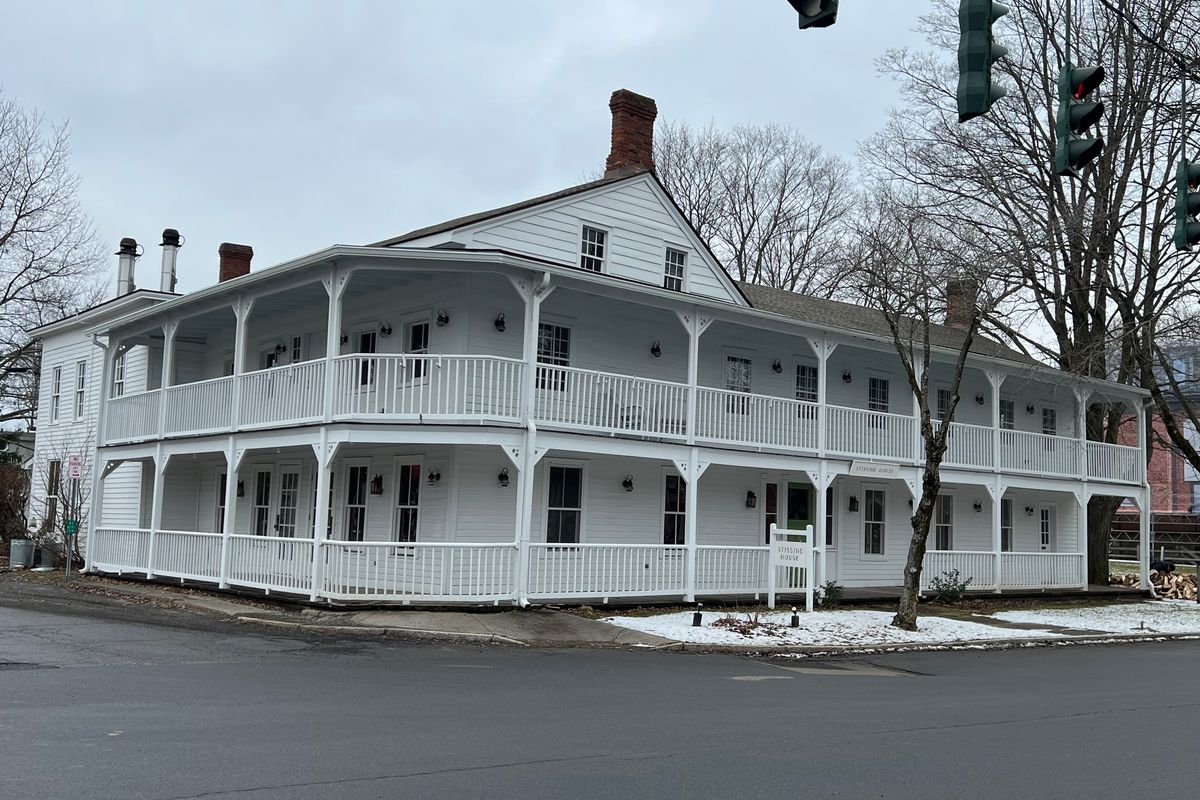
Stissing House in Pine Plains.
Christine Bates

Stissing House in Pine Plains.
The semifinalists for the James Beard Awards were announced Jan. 24.
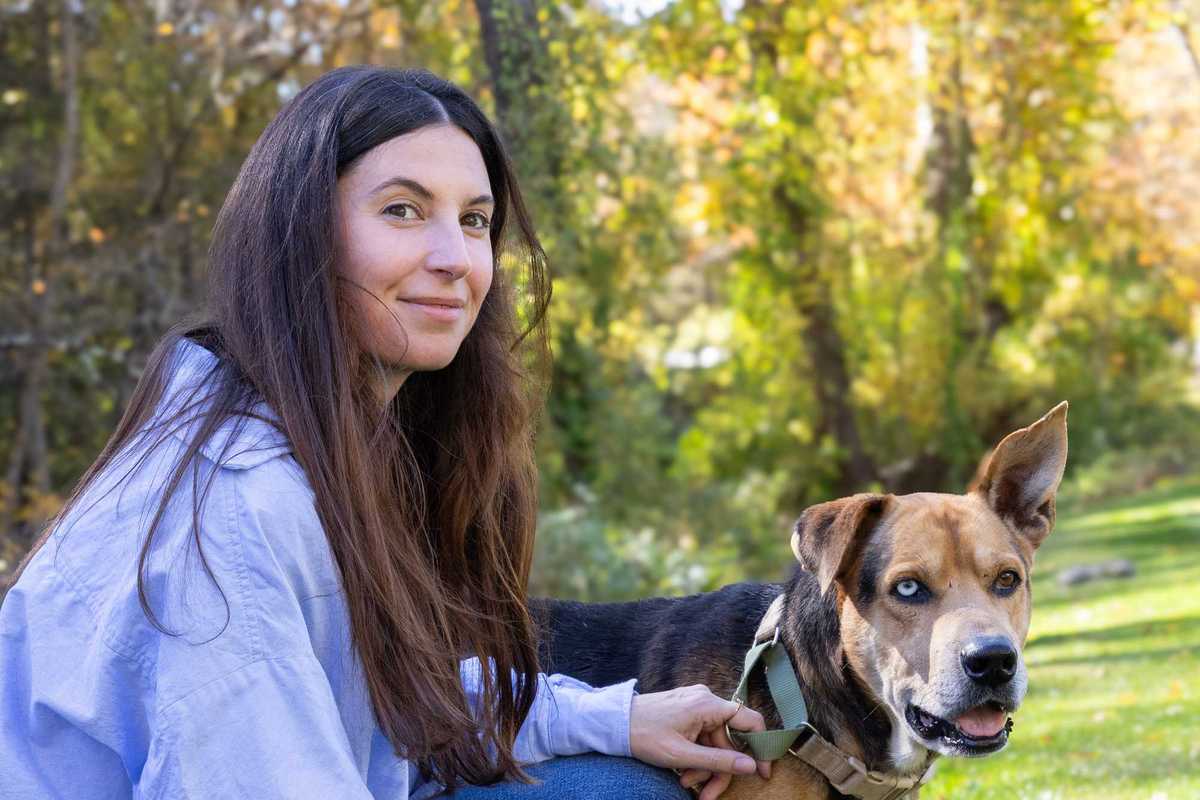
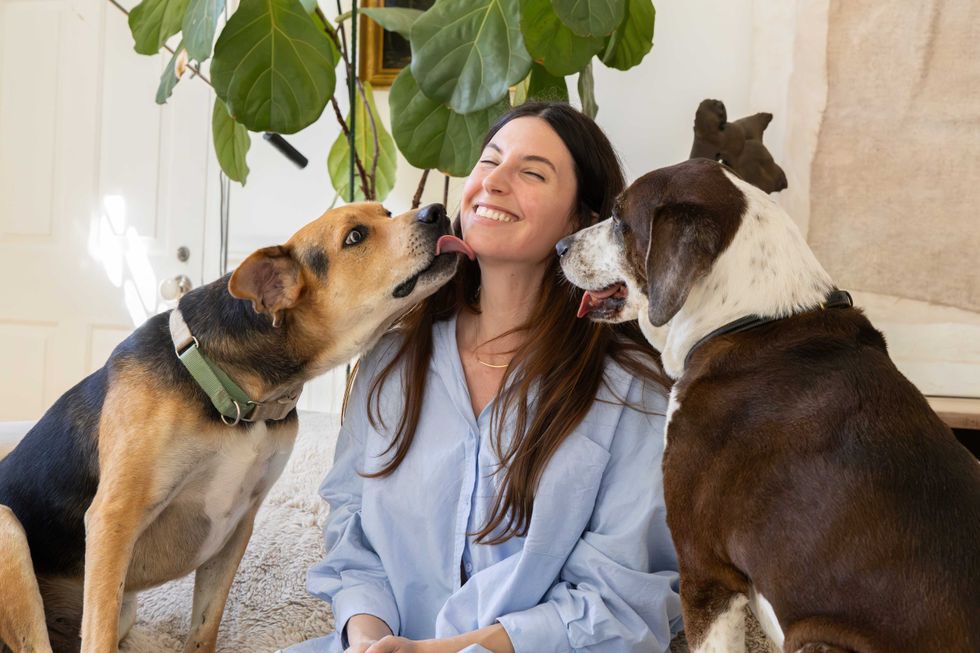
In the Best Chefs in New York State category, four upstate chefs were recognized: Clare de Boer of Stissing House in Pine Plains, Doris Choi of Good Night in Woodstock, Shaina Loew-Banayan of Café Mutton in Hudson and Chris Mauricio of Harana Market in Accord. The final nominees will be announced in April, followed by an awards ceremony with the winners in June, complete with a red carpet, lifetime achievement awards, and lots of chefs wearing aprons.
Also, like the Oscars, the selection process and the judges who decide the winners are not revealed. FAQs on the foundation’s website state, “The Voting Body, including judges chosen for their expertise per program, then reviews and votes on the eligible entries to determine the nominees and winners, as applicable to each program.”
The yearly James Beard Foundation Awards include wide recognition in many categories including best chef, best restaurant, best new restaurant, outstanding bar, outstanding wine programs, pastry chefs, hospitality, and bakery. Last year, Stissing House was a semifinalist for Best New Restaurant along with 29 other eateries across the country, and that’s just one category. The Best New Restaurant winner last year was Kann, in the Pacific Northwest, serving Haitian-inspired cuisine.
The New York Times publishes its own list of 50 Best Restaurants and included Stissing House among only five restaurants in New York, including New York City, in its 2023 list.
Cornwall's Parade of Lights, Sunday, Dec. 21.
CORNWALL — A variety of brightly decorated vehicles rolled through Cornwall Village the night of Sunday, Dec. 21, for the town's inaugural Parade of Lights. It was well attended despite the cold conditions, which didn't seem to dampen spirits. The various vehicles included trucks, utility vehicles, a school bus and rescue apparatus from Cornwall and surrounding towns.
Sharon Hospital
SHARON — Northern Dutchess Paramedics will cease operating in Northwest Connecticut at the start of the new year, a move that emergency responders and first selectmen say would replace decades of advanced ambulance coverage with a more limited service arrangement.
Emergency officials say the change would shift the region from a staffed, on-call advanced life support service to a plan centered on a single paramedic covering multiple rural towns, raising concerns about delayed response times and gaps in care during simultaneous emergencies.
The decision became known on Dec. 11, when communities were informed that NDP’s service would end as of Jan. 1, according to Andrea Downs, president of the Falls Village Volunteer Fire Department and an employee of the organization.
Founded in 1994 and based in Rhinebeck, New York, NDP has provided advanced and basic life support ambulance services to communities in Dutchess and Columbia counties in New York, as well as parts of Litchfield County, for nearly three decades.
How the change came about was outlined by Al Tortorella of Sharon, also an employee of NDP.
Tortorella said every Connecticut municipality is required to have an advanced life support provider. For the past 28 years, Sharon Hospital has fulfilled that requirement by signing an annual hospital-sponsored agreement with NDP. In recent years, the agreement was signed by Dr. Ronald Santos, head of the hospital’s emergency department, under whose medical license NDP operates.
When NDP recently approached Santos to renew the agreement, he said he could not sign it, a decision that took the organization by surprise, Tortorella said.
Area towns operate volunteer ambulance squads that provide basic life support. NDP supplements those crews by delivering advanced medical care, administering medications and conducting inter-facility transports.
Sharon Hospital, which is part of Nuvance Health, merged earlier this year with Northwell Health. Downs and Tortorella said they understand that the hospital system plans to replace NDP with its own paramedic service.
Under the proposed arrangement, a single paramedic would cover the Sharon Hospital catchment area, starting each 12-hour shift in New Milford before traveling to Sharon. If needed, the paramedic would be assisted by a paid EMT provided by Nuvance.
Tortorella sharply criticized the model.
“It’s a system designed to fail,” Tortorella said. “This is a huge issue.”
Downs echoed those concerns, noting that the paramedic’s 12-hour shift would include significant travel time between locations.
“I’m very concerned about the health and well-being of residents in the Northwest Corner,” she said. “We don’t want any reduction in services for patients in the region. I can’t understand the rationale of taking services away. Northwell wants to maintain a model of corporate health care, but they can’t put a face to the people and culture we’ve established here. We’re talking life and death.”
Downs emphasized that the decision does not involve layoffs at NDP, which was recently acquired by Empress. She said there is ample demand for paramedic services in New York state and that employees’ jobs are secure. The concern, she said, is for the safety of families, friends and neighbors in Northwest Connecticut.
In an interview, Sharon Hospital President and CEO Christina McCulloch and Andrea Rynn, assistant vice president for community, government and public relations at Northwell Health, addressed the decision to discontinue the hospital-sponsored agreement with NDP.
“Recently, concerns were brought to our attention about compliance and [a lack of] communications,” they said. “This information left us unsettled and unable to be a sponsoring hospital at this time.”
They acknowledged that the timing of the transition was far from ideal. “Despite the tight timing, we are actively developing a coverage plan in concert with local first responders and area leaders. This is a process that is just beginning and we are confident it will strengthen over time.”
McCulloch and Rynn said the hospital and health system remain committed to maintaining service continuity and working with community partners to enhance emergency medical services across the region.
The pair have met with representatives of area ambulance squads and on Friday held a session with the region’s first selectmen.
Gordon Ridgway, first selectman of Cornwall, said people are feeling rushed by the move. They are concerned that services will be lessened, not enhanced.
“This is the most important thing in town; picking up people in the middle of the night and providing immediate care. It has to be done well.”
Falls Village First Selectman David Barger said the meeting was productive and answered some questions, but left others unresolved.
He said he plans to host a meeting in January at the town’s emergency services center, inviting ambulance providers, first selectmen and hospital representatives to continue the discussion.
Berlin High School’s football team rejoices after a last-minute win in the Class M championship game Saturday, Dec. 13.
In December’s deep freeze, football players showed their grit in state playoff tournaments.
Connecticut Interscholastic Athletic Conference named six state champions in football. The divisions are based on school size: Class LL included schools with enrollment greater than 786; Class L was 613 to 785; Class MM was 508 to 612; Class M was 405 to 507; Class SS was 337 to 404; and Class S was fewer than 336.
Eight teams qualified for each tournament and all championship games were played on Saturday, Dec. 13.
Class LL was won by Greenwich High School for the second straight year. Greenwich beat Southington High School 45-6 to win the tournament. Jack Kelly rushed in three touchdowns for the Cardinals and caught a fourth.
Class L was won by New Canaan High School, which completed an undefeated season. New Canaan beat Cheshire High School 34-13 for the school’s fourth-straight state title. In the regular season, New Canaan defeated Greenwich 14-7.
Class MM was won by Windsor High School, which defeated Bunnell High School 23-13. Windsor quarterback A.J. Robinson threw for 140 yards with a passing touchdown and two rushing touchdowns.
Class M was won in the final minute by Berlin High School 20-15 over Brookfield High School. The thriller came down to the wire. Brookfield went ahead with a late touchdown. Then on the kickoff that followed, Berlin’s Eli Rice ran it 80-yards to the house to take the lead with 33 seconds remaining and secure the state trophy.
Class SS was won by Daniel Hand High School, marking its 15th state title in school history. Hand defeated reigning champion Killingly High School 37-13. Killingly was previously on a 25-game win streak that stretched over two seasons.
Class S was won by Sheehan High School, defeating Northwest Catholic High School 21-7. Running back Joshua Durant ran for 215 yards and three touchdowns in the win for Sheehan, which was the first state title since 2019 for the school.
Details and photos from each championship game can be found at ciac.fpsports.org
Volunteers scan snowy treetops during the Trixie Strauss Christmas Bird Count in Sharon. Teams identified more than 11,400 birds across 66 species.
SHARON — Birdwatching and holiday cheer went hand in hand for the Trixie Strauss Christmas Bird Count on Sunday, Dec. 14, with hobbyists and professionals alike braving the chill to turn their sights skyward and join the world’s longest running citizen science effort.
The Christmas Bird Count is a national initiative from the Audubon Society, a globally renowned bird protection nonprofit, that sees tens of thousands of volunteers across the country joining up with their local Audubon chapters in December and January to count birds.
This wintry avian census, which is now in its 126th year, is very effective at amassing bird quantity and species diversity data, especially in colder climates where seasonal populations of birds are highly variable. These datasets, Audubon has upheld, provide vital snapshots of population health and trends, which then informs conservation strategy.
Sharon Audubon helped to host the Trixie Strauss count, the formal name of the regional count that covers an area centering on The Hotchkiss School, with staff members aiding 24 volunteers spread out over eight teams that each surveyed a unique 15-mile loop.
According to the total tally, the volunteers had identified over 11,400 birds spanning 66 species, just one less than last year’s total of 67 species.
While the number is similar, Bethany Sheffer, volunteer coordinator and naturalist at Sharon Audubon, said the species that are present are subject to change based on a number of factors. The early freeze of lakes and ponds in the Northwest Corner meant that there were fewer species that prefer open water tallied this December, Sheffer explained.
Belted kingfishers, for example, were entirely absent from the count.
The data also found no northern mockingbirds or gray catbirds. Several groups noticed an abundance of the dark-eyed junco, though Sheffer noted that the reasons for these changes from previous years are as of yet unclear.
However murky the causes, Sheffer noted that the amassing of this data lays the foundation for vital observations surrounding species trends. Citizen science observations enabled scientists to discover that the range of the northern cardinal was expanding, for example, and that the Cooper’s Hawk is becoming more common in the wintertime New England forest as it’s been staying behind to prey on smaller songbirds that congregate at bird feeders when the ground is snow-covered.
Sheffer noted, though, that it’s not all about the data.
“The history of the Christmas Bird Count is really moving,” she said, explaining that its origins lie in a Victorian tradition of a Christmas “hunt,” where groups would scour the hillsides and treetops to kill, not count.
Since ornithologist Frank M. Chapman declared the first count in 1900 as a direct opposition to the hunt, the tradition has stuck. Sheffer said it’s a valuable example of how humans’ relationship to the natural world can be reframed.
"It’s important for us now more than ever to be serving birds” as stewards, she said, noting that many species face threats due to climate change and habitat degradation and loss. And another plus, Sheffer said, is the spirit of community, bringing people of all experience levels with birds together for what she described as a truly joyous day: “It’s become an event that brings people together in a really moving way.”
The Trixie Strauss count is just one of 20 in Connecticut. Several, including one just over the border in Pawling, New York, have yet to occur. For a list of each upcoming count, and who to contact with inquiries, visit ctbirding.org/cbc-2025-2026/.