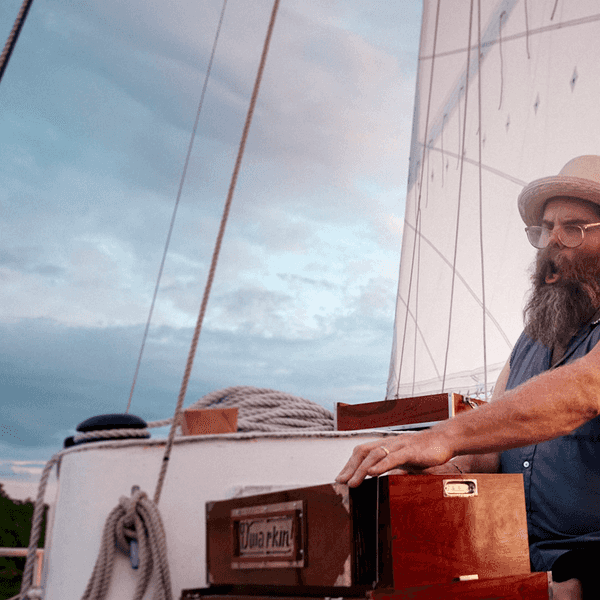
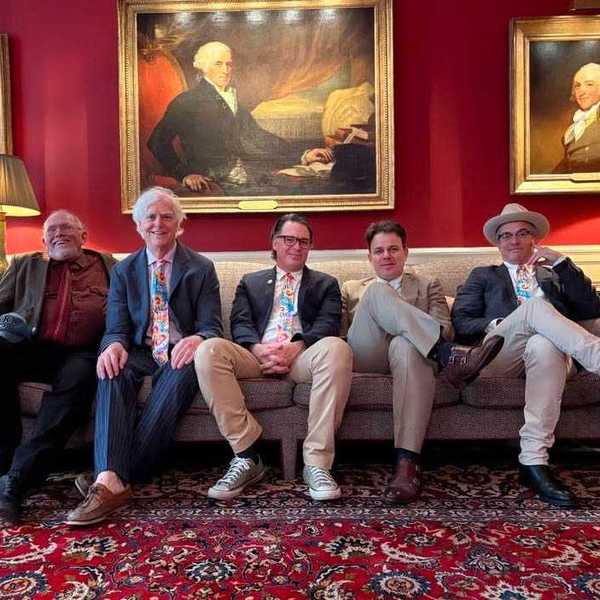
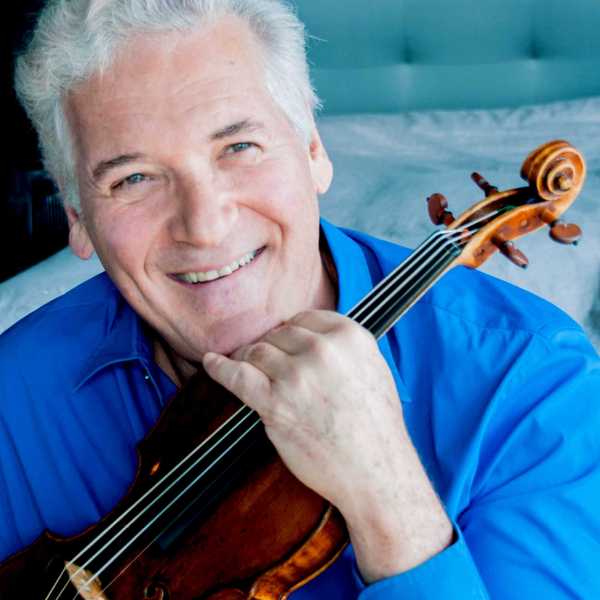
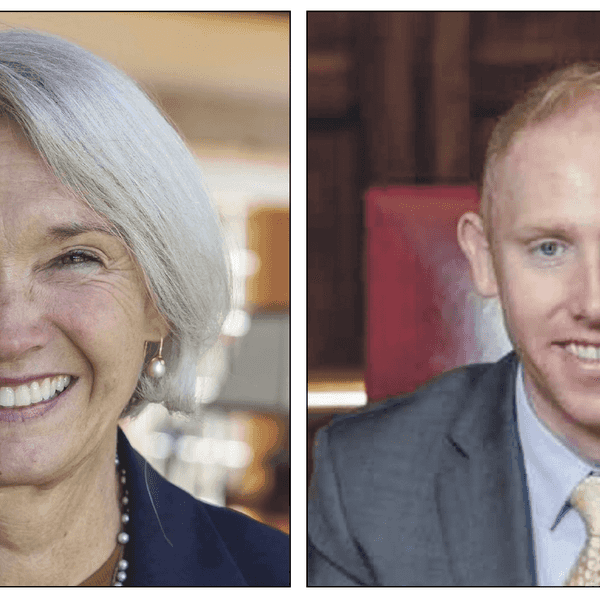
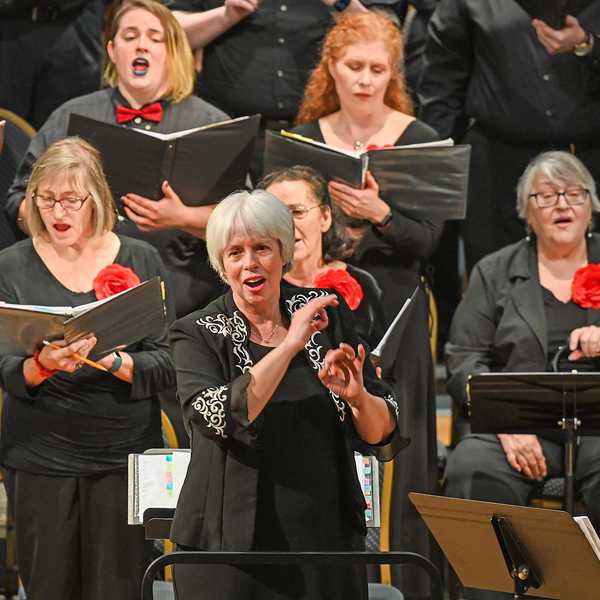
Isle of Klezbos brings its high-energy, all-women klezmer to the Stissing Center in Pine Plains on Saturday, March 7. Touring internationally since 1998, the ensemble blends neo-folkloric originals and reimagined Yiddish classics in a style dubbed “cutting-edge klezmer” by New York Magazine.
Latest News
A life reshaped by clay in “Matin”
D.H. Callahan
Oct 27, 2026
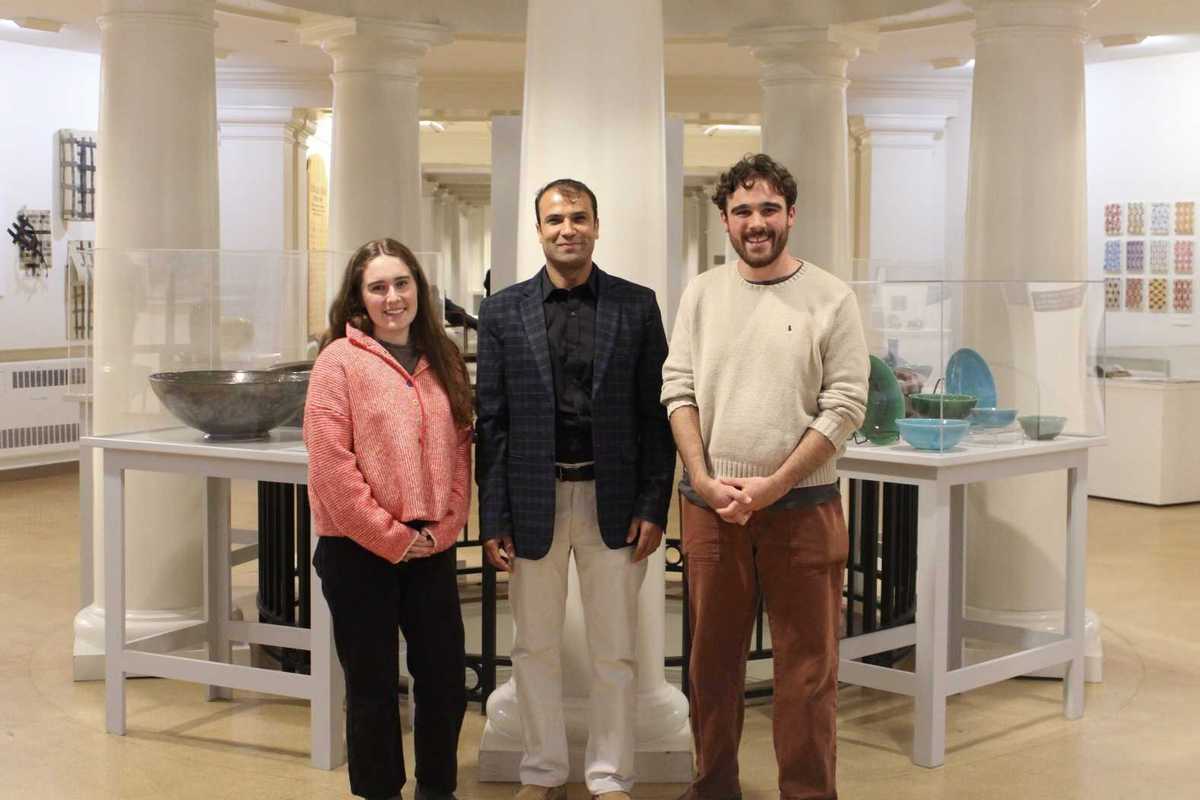
Left to right: Hannah Wheeler, Matin Malikzada and Yonah Sadeh.
D.H. Callahan
On Monday, Oct. 26, a group of students, teachers and local residents gathered at the Hotchkiss School in Lakeville for a screening of the new short documentary “Matin.” The film tells the story of Matin Malikzada, a seventh-generation Afghani potter making a new life in New Milford, Connecticut. The film was made by local filmmaker Yonah Sadeh, creator of the Video Wall at the David M. Hunt Library, and Berkshires-based potter Hannah Wheeler, who were both present for the screening, along with Malikzada himself.
As a member of the seventh generation of his family to master the art of pottery, Malikzada had done things the way his family had for over a century. Istalif, the village where his family has lived for generations, was known throughout Afghanistan for its pottery, with wares sent across the country for use as everyday cups, bowls, plates and other vessels. The pottery-making families of Istalif gathered clay from the same mountain, about 30 to 45 minutes away by donkey. Every July, they would head north toward the Uzbekistan border to gather ishkar, a plant they processed by hand to make their signature glazes.
By the time Malikzada became a master potter, he no longer processed or gathered the clays and glazes himself. He had assistants and family members to prep everything for him, allowing him to stay seated at the electricity-free kick wheel all day long, sometimes making more than 100 pieces a day.
Eventually, Malikzada became the head of the ceramics department at the Turquoise Mountain Institute, an NGO founded by King Charles III, where he had also trained as a student. After graduating, Malikzada was hired as a master ceramicist and eventually became head of the department. It’s through his role there that he first started visiting the United States. Thanks to a relationship with Yale, he quickly took to Connecticut and eventually decided to move his family to New Milford.
The film explores Malikzada’s challenges in relearning his craft far from the traditions and materials of his home. In Istalif, his family would fire a wood-fueled kiln packed with 1,800 to 2,000 pieces once a month. Now, he would have to rely on the much smaller, standardized electric kilns found in most ceramic studios today. Without access to his ancestral clay, he had to learn to use an entirely new material, which he would now have to process and prepare himself. Perhaps most challenging, he was forced to develop a new method for creating glazes that could match his signature colors and textures. As he tells the filmmakers, he experimented with the glazes through 415 firings. “The 416th, I got result.”
“Matin” avoids the fraught political questions that have dominated public discourse in recent years, choosing instead to focus on Malikzada’s art, ingenuity and determination. The filmallows the artist to tell his story in his own words, with a remarkably calming voice.
Though the students, faculty, and ceramics enthusiasts thoroughly enjoyed the screening, the filmmakers hope to continue developing the story, incorporating animation andmore of their footage. As Malikzada teaches his children the family trade, maybe someday they will film an eighth generation at work.
To learn more about Malikzada’s work, visit malikzadapottery.com.
Keep ReadingShow less
Meg Sher finds her calling among the stacks
Robin Roraback
Oct 27, 2026
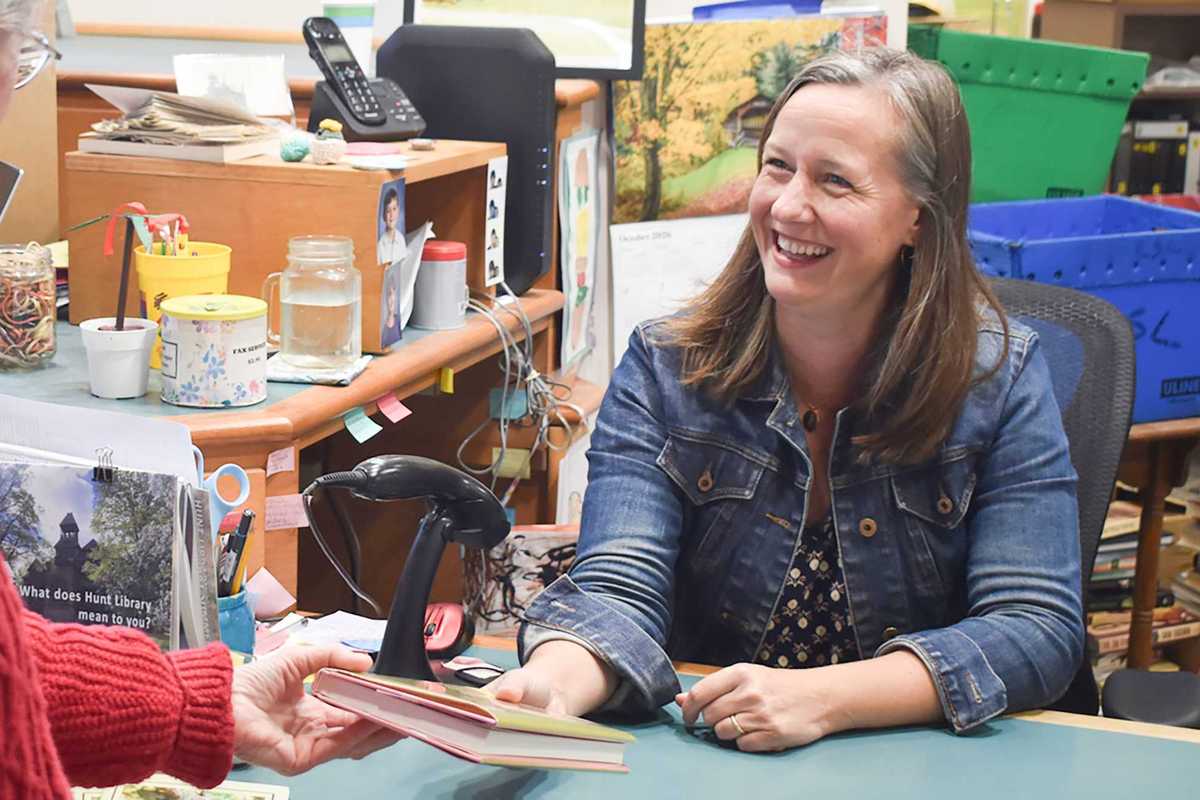
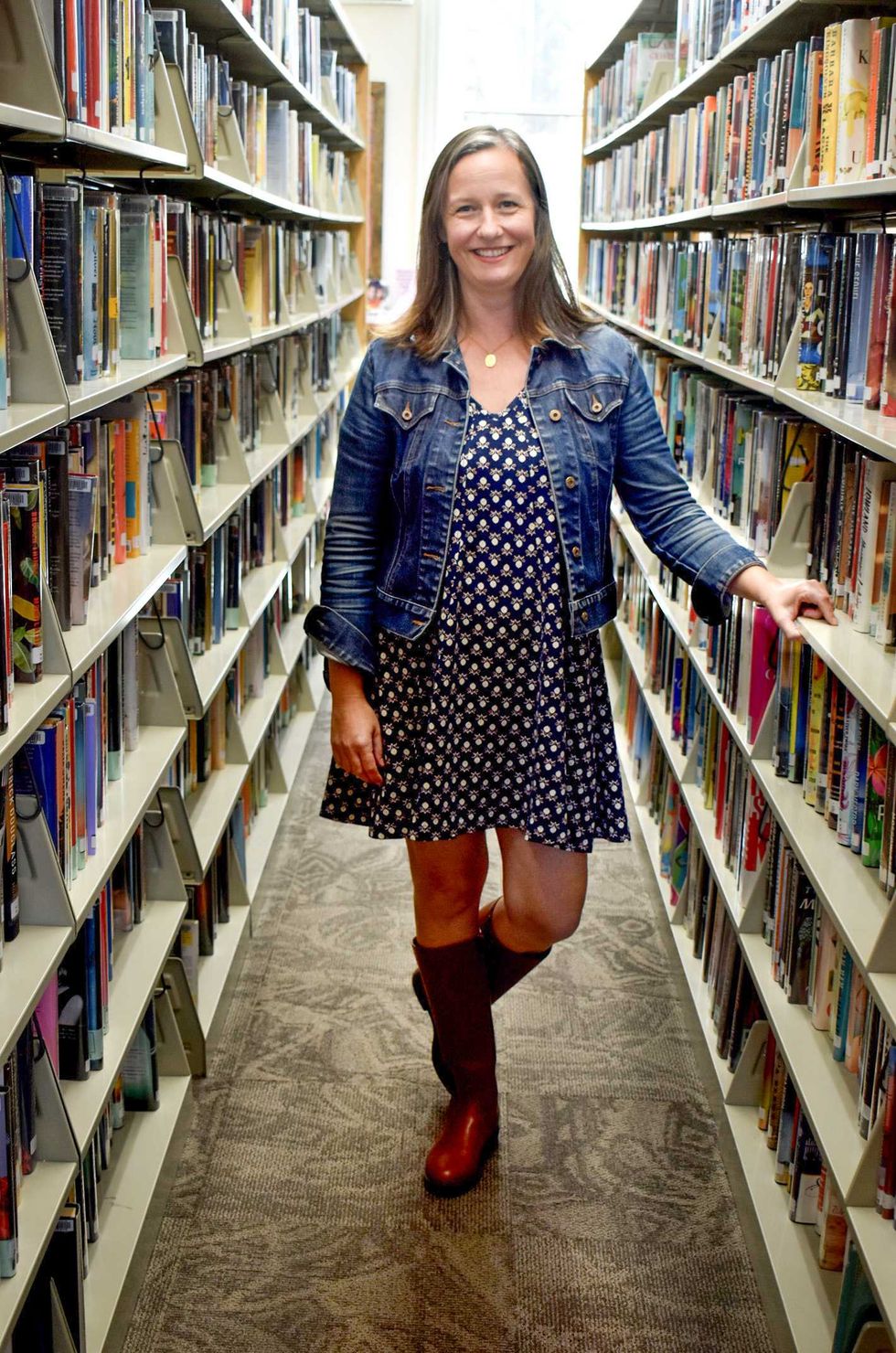
Meg Sher, executive director of the David M. Hunt Library in Falls Village.
L. Tomaino
When Meg Sher came to Falls Village in 2006 from Old Lyme, Connecticut, where she grew up, she never imagined she’d someday be the executive director of the David M. Hunt Library.
Although, in hindsight, perhaps it makes sense.
“I was a library kid. I walked to the library after school,” she said.
For Sher, the library is as much about the people as it about the books.
“Part of the job I love so much is that running the library is such a community,” she said.
She treasures the relationships she has built, whether recommending books, celebrating accomplishments or helping patrons through difficult times.
“I am thankful that our community is so supportive of the library, unlike what is happening in some other places where librarians are villainized,” Sher said.
Sher takes pride in the Hunt Library’s reputation for being “open and welcoming to everyone. People come in and see things and get pulled into things they weren’t expecting. Our library is seen as a positive force.”
Sher came to Falls Village after being awarded a fellowship at Adamah Farm, then a program of the Isabella Freedman Jewish Retreat Center. She worked at pickling, in the greenhouse and later in the development office. She also worked as a nanny.
At the same time, “I was in the library all the time,” she recalled. “I’m a voracious reader. The library is where I met a lot of my first friends in Falls Village.”
She became assistant librarian at Hunt and worked in that position for almost a decade before becoming the executive director four years ago.
Sher met her husband, Adam, while working at Adamah. They had their wedding there in 2012. He now emcees many events which she co-organizes with the Falls Village Recreation Commission.
Sher and her family live near the library.
“It’s an easy commute,” she said with a smile. “My kids run back and forth. I can go home to walk the dog if I need to.”
“My kids have grown up here.” Her oldest son, Eli, “loves volunteering. He helps with Augustfest and often helps set up chairs for ArtWall gatherings.” Her younger son, Noah, is often at events and was eager to taste cookies at last year’s holiday cookie swap.
When she is not at the library, Sher likes to hike with her family. Bella, their Portuguese water dog, often accompanies them.
Sher enjoys seeking out people to offer events at the library.
“I do a lot of different community programming. It is one of my favorite parts of the job.”
Augustfest, featuring food, music and an auction, is the library’s biggest fundraiser.
“This summer we had a record 152 attendees, which was pretty incredible.”
Yonah Sadeh, a filmmaker from Falls Village, inaugurated the VideoWall this year, Sher explained.
“I’ve known Yonah since he was two. It’s wonderful to work with him as an adult.”
The VideoWall complements the library’s ArtWall, which showcases a new artist each month. Sher praised the ArtWall committee for its work and highlighted December’s popular “12x12 Show,” featuring works by local artists, each measuring 12 by 12 inches and priced at $150.
Sher added that some of the artists who exhibit at the ArtWall offer workshops to students at Kellogg School, next door to the library. In September, artist Danielle Mailer worked with the children. Vincent Inconiglios taught a class last November.
Being next to the school, said Sher, is a great advantage.
“Kids are coming after school, to see friends, work on projects, find a great book. Kids that love the library end up using the library as grownups.”
This past year, in partnership with Adamah, the library and school created a garden, with excess produce made available at The Center on Main.
This year is Sher’s second year participating in the Troutbeck Symposium in Amenia with James King, director of the library at Salisbury School. The Troutbeck Symposium is “a gathering of a year of student historical inquiry across the region” in which students “uncover stories that have been overlooked, forgotten, or never recorded.”
Last year, Sher and King began a project with a group of students researching Irish immigrants in Falls Village, exploring ancestry and creating small magazines about their findings.
They continued this year, visiting St. Patrick’s Catholic Cemetery on Dublin Road, cleaning seven gravestones and even righting one with the help of stonemason and gravestone restoration expert Karl Munson. Paul Kozeazny, a representative of the Catholic archdiocese, helped secure access to the site.
A film documenting their activities will be shown at the symposium in spring 2027.
A full schedule of programs and events, ranging from tech help to ceramic mug-making, can be found on the library’s website.
Despite spending her days surrounded by books, and a busy schedule of programming, Sher still loves to settle in with a book at home.
For more information on library programs and events, visit huntlibrary.org
Keep ReadingShow less
A feast of cookbooks in Wassaic
D.H. Callahan
Oct 27, 2026
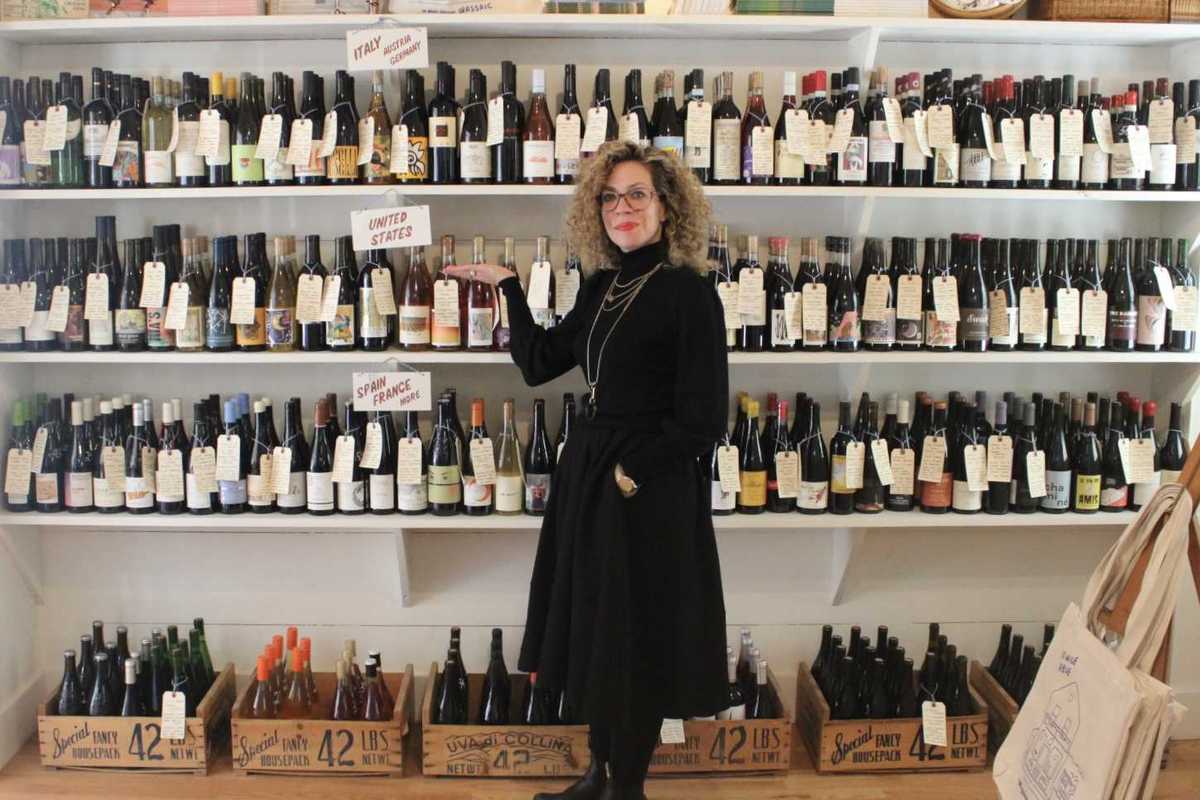
Erika DaSilva at Ten Mile Table.
D.H. Callahan
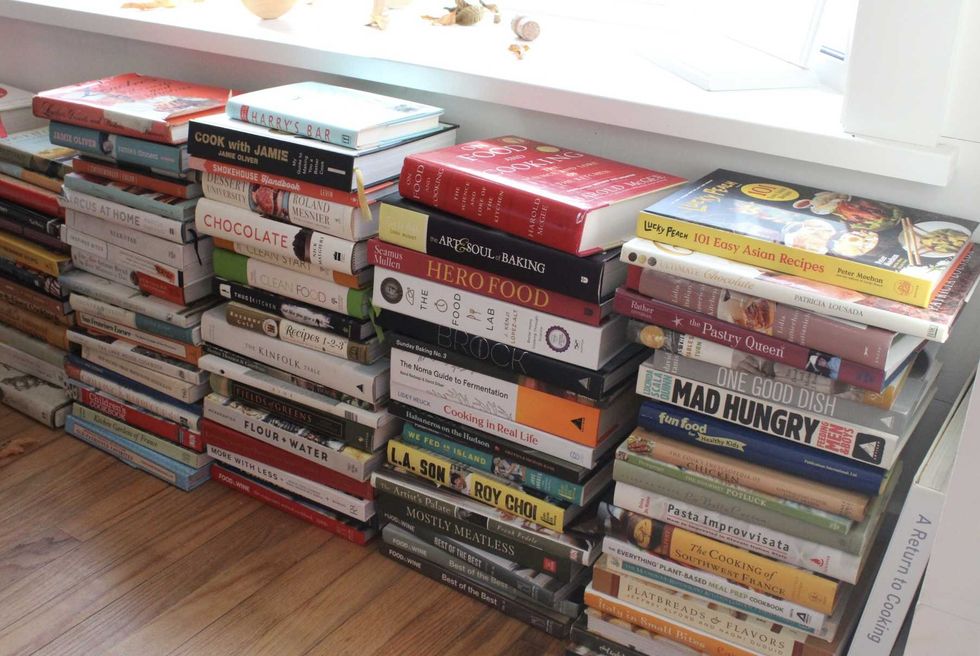
On Nov. 7, Ten Mile Table, the independent wine and spirits shop in the hamlet of Wassaic, will host its first Cookbook Fest and Swap. Erika DaSilva, the shop’s owner, is a big fan of cookbooks. While most people will flip to a recipe that piques their interest, she reads them cover to cover like novels. She’s already published two volumes of her community-based cookbook, “The Corner Table,” featuring recipes and writings from cooks and foodies all hailing from Wassaic and the surrounding towns. For DaSilva, community is half the reason for the event.
Spend any amount of time at Ten Mile Table, located in Wassaic’s old candy shop, and one thing will becomes obvious: Community comes first. DaSilva stops to talk with local residents as they pass by her open door, asking about health updates or letting them know she has something they requested back in stock. It shouldn’t come as a surprise that, as publisher of the hyperlocal newspaper the Hamlet Gazette, DaSilva knows more or less everything about everybody in town. But despite having all that knowledge, she doesn’t treat it like gossip. She holds it with care until the story is ready to be told — or kept forever as a secret.
Of course, sharing information is the other big reason to hold a cookbook swap. More than most forms of literature, cookbooks have one overriding purpose: to share knowledge. Over time, cookbooks have undergone a whirlwind of changes. Scholars have noted that cookbooks of the past two or three centuries often contained language that reinforced the subordinate roles of women and people of color. On the other hand, many cookbooks were written for and by women who wanted to share hard-won wisdom from their experiences in those very roles, offering guidance to others in similar circumstances.
Problematic or progressive, cookbooks are, at their essence, are a way to help others become better cooks, bakers, mixologists, gardeners or providers of sustenance. Unless there’s an amazing chef in your life, chances are many of your best home-cooked meals come from recipes that have been shared. The cookbook swap offers a chance to keep that tradition alive.
For the past two weeks, DaSilva has been busy gathering donations from bookstores, restaurants and enthusiastic members of the culinary community. Those books will fill a long swap table (though probably not 10 miles long) in the garden of the Lantern Inn, next door to Ten Mile Table and run by DaSilva’s husband, Minh Le.
That table will be the heart of the cookbook swap. No money is involved. Bring books, take books, trade with friends. DaSilva believes people who participate in a cookbook swap are there to share, not hoard, so she isn’t placing rules or restrictions on what or how many anyone can take.
Beyond the swap table, DaSilva has partnered with Merritt Bookstore in Millbrook to offer a selection of cookbooks and books about food, many chosen by chefs and friends in the culinary world.
Some of those friends will be on hand to share their favorite recipes for visitors to sample. Wassaic favorite Vitsky bakery and former White Hart Inn pastry chef Gaby Rios will provide baked goods. Daniel Meissner, executive chef at Willa in Millerton, will serve soups, while his longtime cooking collaborator, Wilfrido Landaira, will grill yakitori.
The Lantern Inn will offer its grandma pizza slices bánh mì sandwiches. Meatballs and other delights will come from Fat Apple Farm, a sustainable livestock farm, while oysters will come from Millbrook’s Canoe Hill. Maitri Farm in Amenia will bring certified organic produce, jams and cut flowers.
Ten Mile Table will also sell its curated selection of wines, spirits, sundries and publications, with beverages for adults and all ages available to try and to buy.
As part of the fest, DaSilva is encouraging visitors to bring recipes that are meaningful to them so she can begin another community collection. While the recipes in “The Corner Table” come from food professionals, she knows that everyday home cooks sometimes have the most hidden gems.
Whether that collection becomes another cookbook will be determined by the recipes people bring. Nothing’s set in stone, but she has faith that the community will provide.
For more information about Cookbook Fest and Swap, visit tenmiletable.com.

Keep ReadingShow less

Want more of our stories on Google? Click here to make us a Preferred Source.
Ancram Play Lab explores the wars that follow soldiers home
Richard Feiner And Annette Stover
Oct 27, 2026
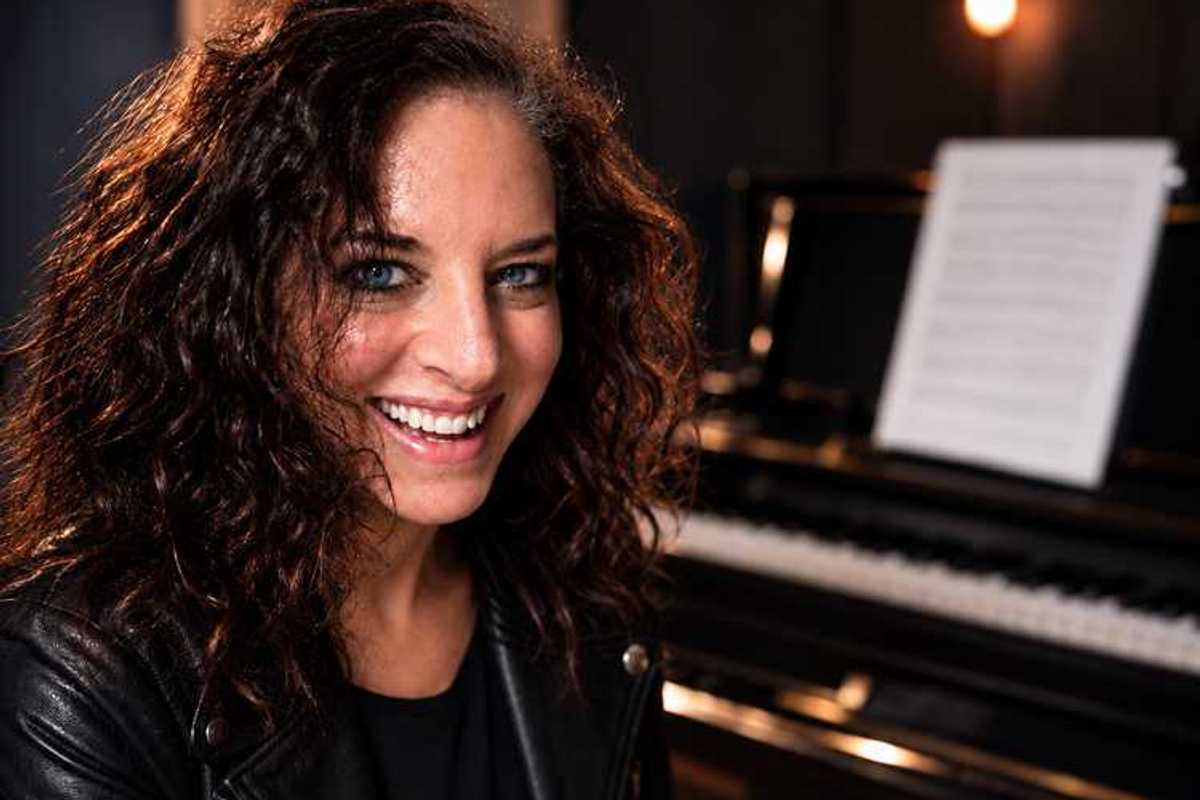
Composer and lyricistStephanie Salzman
Provided
In 2020, the Ancram Center for the Arts launched Play Lab in response to the challenges facing live theater during the COVID-19 pandemic. It continues today as a thriving residency program where artists develop original work and experiment with new forms of performance. Community connection is central to the Play Lab mission, with audiences invited to share in the creative process through interactive workshops, open rehearsals, discussions and more.
The next Play Lab work-in-progress presentation, “Be Safe, I Love You,” is a new musical theater piece based on Cara Hoffman’s acclaimed 2014 novel. It follows Iraq war veteran Lauren Clay as she returns home to Watertown, New York, where post-traumatic stress disorder (PTSD) drives her to protect her family from an enemy only she can see. It is a story about class, loyalty and the wars that follow soldiers home.
The novel has been praised as a critique of the social and physiological costs of war. It asks whether a person can return to a familiar place when their understanding of the world has fundamentally changed. It is also a powerful study of the unequal treatment of women in the armed forces and the expectations placed on women both in the military and at home.
Two leading contemporary women artists, playwright Darrah Cloud and composer and lyricist Stephanie Salzman, are collaborating on the piece, which balances intimate family drama with the emotional intensity of a returning soldier’s experience.
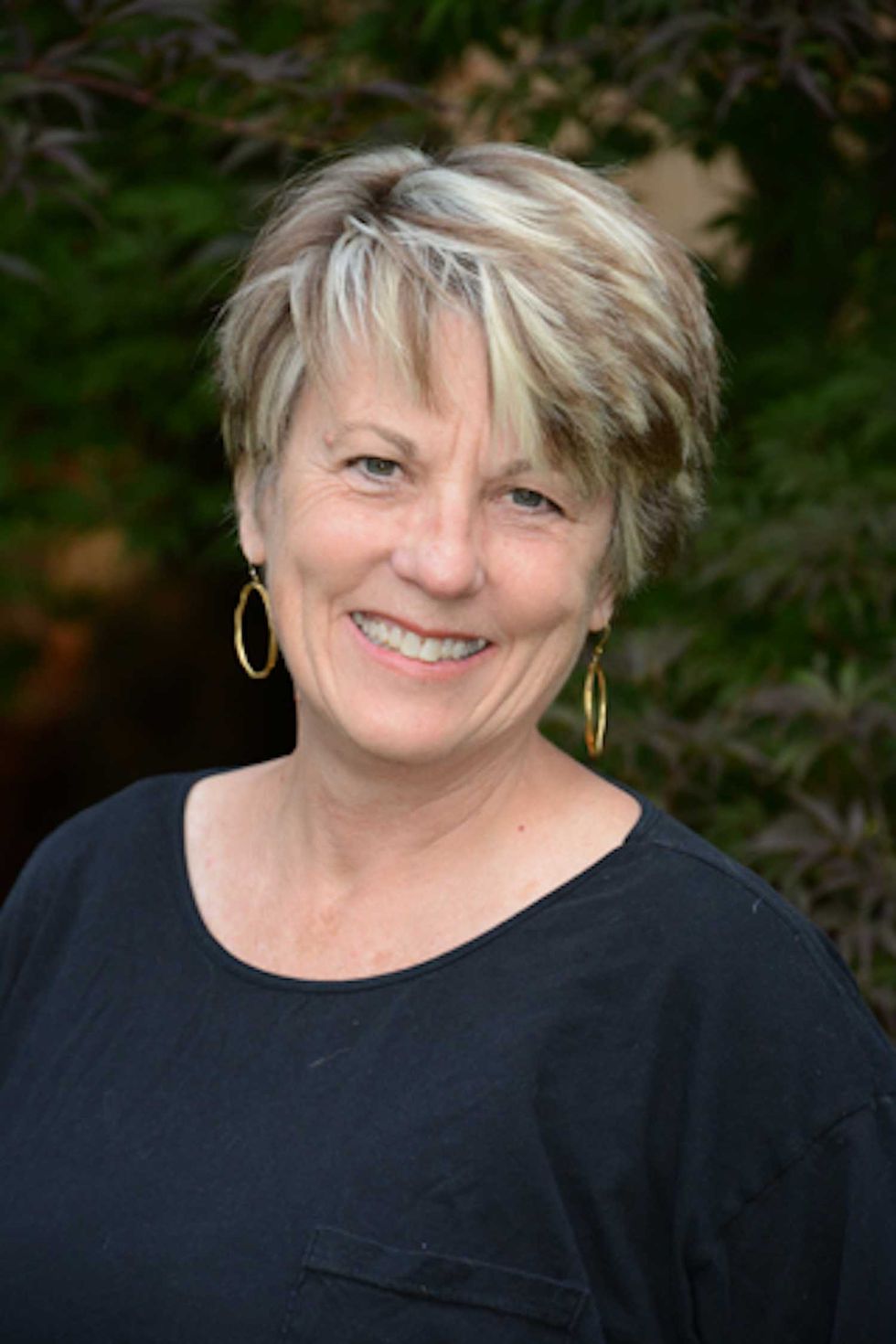
Cloud is an award-winning playwright and screenwriter whose work explores family, history, social conflict and people confronting difficult moral choices. She has also served as the elected town supervisor of Pine Plains, effectively combining her creative career with local government service.
Salzman is a songwriter, composer and lyricist whose career spans musical theater, commercial pop songwriting and artist development. She teaches at NYU’s Graduate Musical Theater Writing Program and runs Power Pitch Music Studio, where she coaches, co-writes, produces recordings and helps develop the careers of emerging recording artists.
“Be Safe, I Love You” has received support from the New York State Council on the Arts and the National Endowment for the Arts. It has been developed through Ancram Center for the Arts’ weeklong Play Lab residency program, leading to the upcoming presentation.
Play Lab is an important part of the Ancram Center’s seasonal programming and builds on its longstanding role as a cultural gathering place in rural Columbia County. The center is committed to the idea that theater can serve not only as a place where finished productions are presented but also as a safe home where the community participates in the questions, experiments and collaborations that shape new work.
While the work-in-progress presentation of “Be Safe, I Love You” at 4 p.m. on Sunday, Nov. 8 at the Ancram Center is sold out, a free invited dress rehearsal will be held at 5 p.m. Saturday, Nov. 7 at 5 p.m. To attend, email info@ancramcenter.org.
Keep ReadingShow less
The case for leaving the leaves
Patrick L. Sullivan
Oct 27, 2026
Dee Salomon, aka “The Ungardener,” at The Scoville Memorial Library.
Patrick L. Sullivan
Dee Salomon, the “Ungardener,” whose advice appears regularly in Compass, told a packed house at the Scoville Memorial Library on Sunday, Oct. 25, what to do in the garden before the ground freezes and what can wait until next year.
Salomon emphasized the importance of creating and maintaining diverse ecosystems. She said that, from a human perspective, paying attention to biodiversity has practical benefits.
For example, getting rid of barberry can reduce tick populations because white-footed mice, which thrive in barberry thickets, are important hosts for ticks.
Reduce or eliminate the barberry, and landowners may see a dramatic reduction in ticks.
A well-managed property that emphasizes native plants and removes or controls invasive species is more valuable, aesthetically pleasing and connected to nature.
For fall and winter, Salomon advises leaving leaves where they fall rather than raking and burning them. She also recommends leaving plant stems, flower heads and dead trees undisturbed.
If someone rakes up all this material, “you lose 45% of the potential insect population. It’s their home for the winter.”
Seed heads feed birds that don’t migrate south for the winter, and decaying wood adds nutrients to the soil.
Before the ground freezes is the time to tackle herbaceous invasive plants. Cut them down to the stems so their seeds don’t spread.
Just before winter is also the time to address woody invasive plants, such as multiflora rose, and remove aggressive ornamentals.
It’s also a good time to collect and plant native seeds, transplant plants and protect vulnerable trees from deer and beavers.
And before the bleak winter sets in, spend some time planning spring gardening activities.
Salomon is a fan of “keystone plants,” such as oaks, spruce, sugar maples, native blueberries and black-eyed Susans.
Careful shopping is critical. “If you go to the nursery, they have everything. Make sure it’s a sugar maple first, and a red maple second. Don’t get a Japanese maple.”
Fighting invasive species and replacing them with native plants helps restore balance to the overall ecosystem.
It’s a daunting task. Salomon was modest about her own efforts on her 12-acre property.
“I really don’t know what I’m doing. I’m very good at taking things out, not so much at putting things in.”
Keep ReadingShow less
Stissing Center hosts the Pine Plains Festival of Shorts
D.H. Callahan
Oct 27, 2026
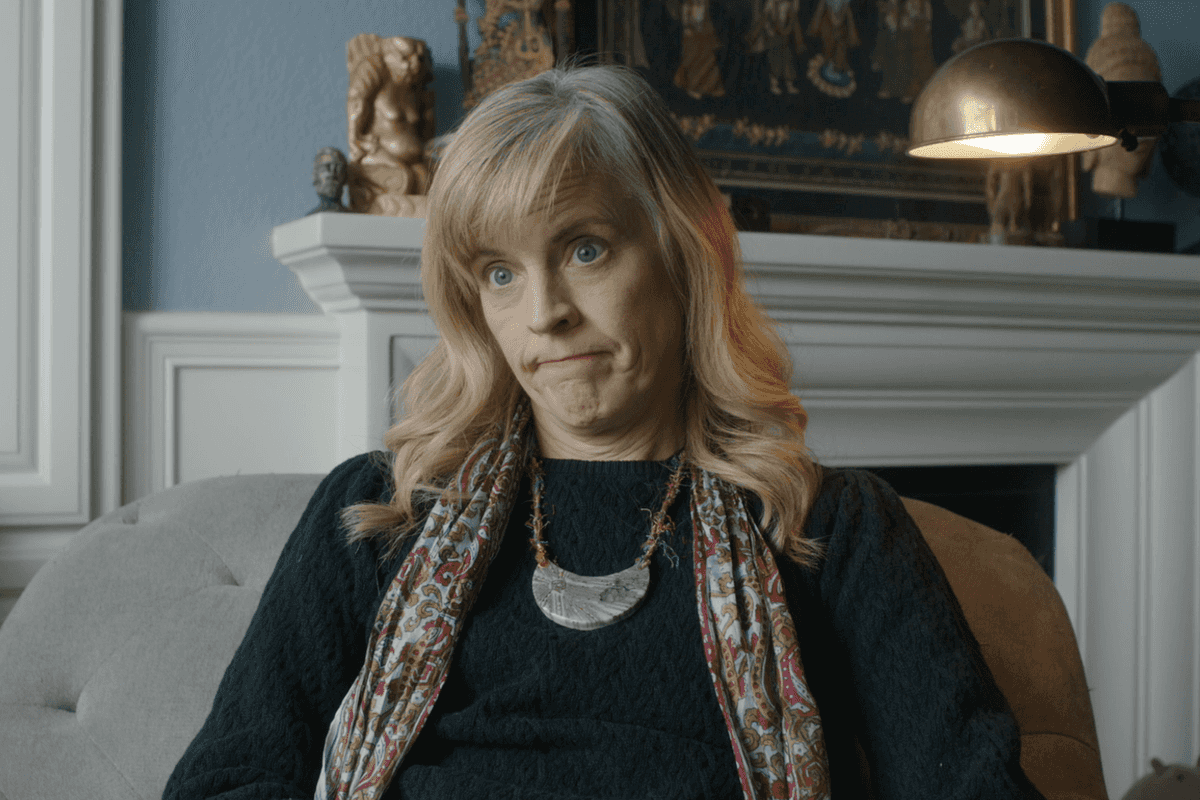
Comedian Maria Bamford plays a therapist in
“Too Many Buddhas” at Pine Plains Festival of Shorts.
Provided
For 15 years, Rhinebeck has welcomed Sinterklaas, a Dutch tradition celebrating community and togetherness with giant puppets, elaborate costumes and whimsical holiday cheer. Created by artistic visionary Jeanne Fleming, the event brings light to winter’s darkness.
This year, however, Sinterklaas is on hold as Fleming faces new financial challenges. SUNY New Paltz filmmakers documented what may be the Hudson Valley’s final celebration, at least for now. Their film screens Nov. 1 at Stissing Center as one of seven shorts in the Pine Plains Festival of Short Films.
Short films offer rich stories without the budgets or demands of features. Some explore a topic in minutes; others hint at something larger or offer glimpses into scripted worlds created by enterprising minds like the Presses.
The mother-daughter-father team of C. Fraser, Maeve and Darren Press wrote, acted in, produced and directed “Too Many Buddhas.” In less than 15 minutes, we meet and are quickly overwhelmed by a precociously anxious tween who’s dealing with some pretty big issues. Daughter Maeve stars as the girl, acting opposite comedian Maria Bamford, who plays her therapist. C. Fraser Press, Maeve’s mother, directed the film, while her father, Darren, produced and edited it.
“Burgers with the Heard,” a slice-of- life film by Stan Hirson, captures an evening gathering at local Chaseholm Farm.
Local filmmaker Matt Bartolomeo, who premiered his independent feature-length film “Dream” at Stissing Center two years ago, will show his scripted, award-winning short “The Misadventures of Jane and Phil.”
“The Blending of Bernie Williams” is an interview-style short by Hudson Valley reporter Jeanine Agnolet, known regionally as the News Lady. She sat down with Yankee legend and Millbrook Winery collaborator Bernie Williams to talk baseball and wine.
Things get a little more experimental when cinematographer Elias Hill teams up with dancer and choreographer Lola Buczkowski. Their film “Rock Party” is an experiment in nature-inspired stop-motion animation, a departure for both creators, who typically draw on movement and the natural world in their work.
“6 on Grove” is a short film created and co-written by Savannah Chambers and students from The Art Effect in Poughkeepsie. What might these young people have to say?
Finally, Michael Churton’s “Bound to Everest” takes viewers to the roof of the world, following a father and daughter in their attempt to reach the highest point on Earth. Though thousands have summited Everest, theirs is a uniquely harrowing tale full of danger and destruction.
Following the screenings, many of the filmmakers will join Justin Stangler, a former co-head writer of “The Late Show with David Letterman,” for an interview and Q&A.
For more information about the Pine Plains Festival of Shorts, visit thestissingcenter.org.
Keep ReadingShow less

Want more of our stories on Google? Click here to make us a Preferred Source.

loading