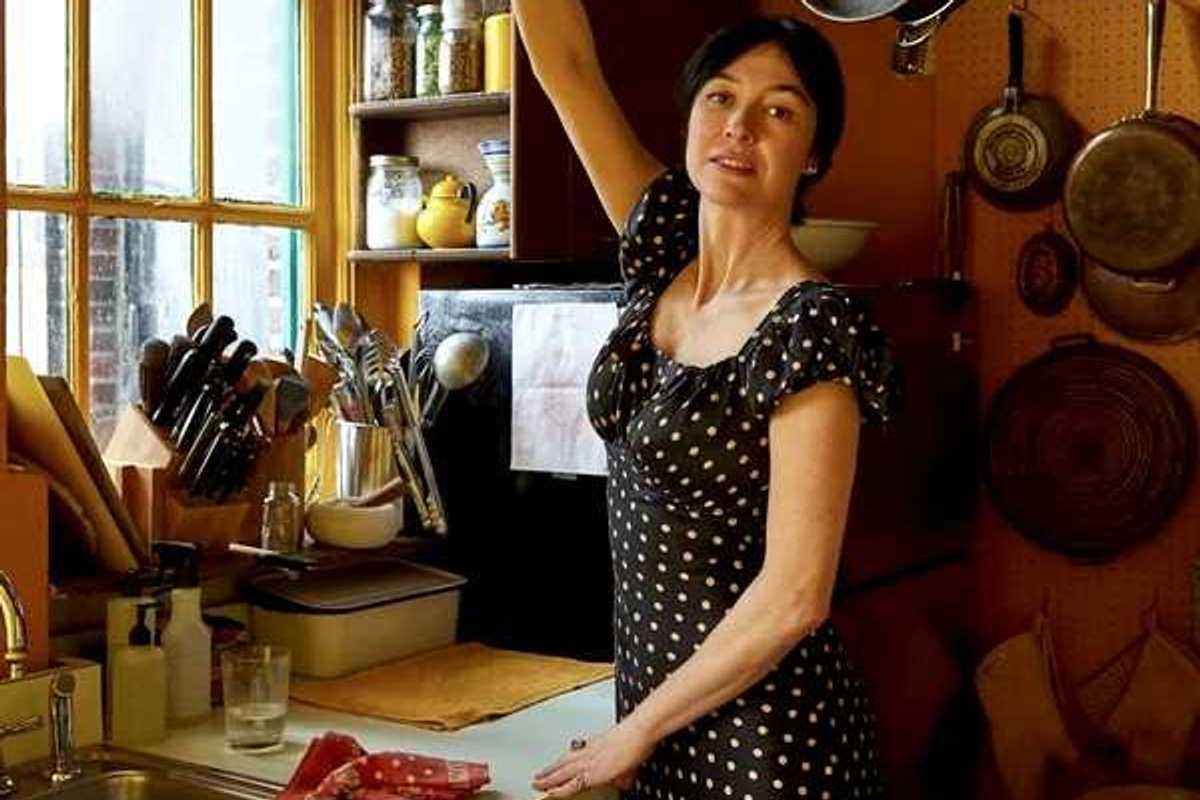
On Saturday, Sept. 19 at 3 p.m. at Smithfield Church (656 Smithfield Road, Amenia), organ virtuoso Kent Tritle will perform works by J.S. Bach, Buxtehude, Frescobaldi, Jean Demessieux and Rachel Laurin on the church’s historic tracker organ. The 14th annual performance benefits the Oratorio Society of New York. A reception with Tritle will follow. Suggested donation is $25; all are welcome.
Latest News

When pet owners struggle, the Northwest Corner steps in
Debra A. Aleksinas
Sep 16, 2026
Whisper, 2, accepts treats from The Little Guild animal care coordinator Cassidy Humphrey in the shelter’s enclosed catio.
Debra A. Aleksinas
“We have found that clients will choose to feed their pets before they feed themselves.”— Allison Gray, The Corner Food Pantry board member and longtime volunteer
WEST CORNWALL — Across the Northwest Corner, financial hardship, housing restrictions, illness and other life changes are leaving some residents struggling to continue caring for their pets.
Local food pantries, veterinary assistance programs, animal-control officers and neighbors are helping owners keep animals they might otherwise surrender. But when that support is not enough, shelters and rescue organizations become the remaining option.
Officials at The Little Guild, a nonprofit animal shelter in West Cornwall, said financial hardship played a role in more than half of the animals relinquished by their owners this year. Through Aug. 27, the organization had taken in 62 animals, including 35 surrendered by their owners. The shelter was operating at capacity in late August.
“The stories behind the surrenders are as varied as they are heartbreaking,” said Executive Director Jenny Langendoerfer.
“Intake” is the umbrella term for animals entering a shelter’s care. It can include owner surrenders, strays, animals brought in by animal control, transfers from other shelters and other categories. An owner surrender, technically called “relinquished by owner,” also includes the return of an adopted animal.
The owner of Sadie, a 3-year-old shepherd-pit bull mix, surrendered his dog after moving to a gated community in the South that did not allow pets. The owner, who was not identified, had lived with Sadie for two and a half years.
“He sobbed when he left,” recalled Susan Boucher, shelter manager at The Little Guild.
Sadie is now waiting for another home.
During a recent tour of the shelter, Boucher and Cassidy Humphrey, The Little Guild’s feline manager and animal care coordinator, introduced Sadie and several other animals awaiting adoption.
Among them were Noodle, 1, and Whisper, 2, two male cats that arrived frightened in separate cages and gradually became inseparable.

When keeping a pet becomes a financial calculation
Boucher said the circumstances described in surrender applications often overlap. They include people moving and being unable to take their pets, families inheriting unwanted animals, allergies, moves into senior housing where pets are not permitted and households discovering they can no longer absorb the cost of another mouth to feed.
“It’s a multitude of reasons,” Boucher said.
Anyone seeking to surrender a pet to The Little Guild must complete an online placement request form. Applicants must be the animal’s legal owner and provide proof of ownership. Shelter staff generally respond within about two business days.
There is no surrender fee, although donations are appreciated. The shelter maintains a waiting list because the number of animals needing placement typically exceeds its available space. Wait times vary.
Veterinary care can be an especially difficult expense for residents with limited incomes.
The Little Guild’s donor-funded Lasey Fund provides veterinary-care vouchers to Litchfield County residents who apply and qualify financially. It covers a range of needs, with an emphasis on preventive care, vaccinations, spaying and neutering, and dental work. The fund can also cover specialty surgeries. Over the past year, approximately $25,000 was spent assisting financially struggling pet owners, according to Langendoerfer.
“Those in need are invited to attend and inquire,” said Langendoerfer. Those services are made possible by community donations.
The Little Guild also holds vaccination clinics periodically, which offer residents free vaccines and wellness checks.
Boucher said several animals at a recent vaccination clinic were found to have dental problems. Some owners then applied to the Lasey Fund, and three animals were scheduled for dental procedures.
The goal is to address problems while they are still manageable rather than allowing them to develop into illnesses that are more expensive—and sometimes impossible—to treat.
When food becomes a choice
For some pet owners, the most immediate need is food.
At The Corner Food Pantry in Lakeville, pet food was not always part of the regular offering. Allison Gray, a longtime volunteer and current board member, said clients began requesting it. As demand increased, the pantry began providing canned and dry pet food every week. Some weeks, the canned food runs out.
“We have found that clients will choose to feed their pets before they feed themselves,” Gray said.
The Little Guild’s Pet Pantry also has expanded over the past six years. It provides food and supplies, including litter, beds, leashes and carriers, and reaches residents through partnerships with food pantries and social-service organizations across the region.
Its partners include The Corner Food Pantry in Lakeville, Fishes and Loaves Food Pantry in North Canaan, the Norfolk Food Pantry, Winchester Social Services, Friendly Hands Food Bank and F.I.S.H. in Torrington, and Litchfield Social Services through the Annex Co-op Pantry.
“There are people who are going without food for themselves because they have to buy the animal’s food,” Boucher said.
She has seen people stretch limited supplies by feeding their animals rice, which she said does not provide adequate nutrition for pets.
Gray believes the availability of pet food has helped many pantry clients keep their animals.
A shelter can only take so many
As of late August, The Little Guild had capacity for 18 dogs, including one kennel reserved for the town of Cornwall’s animal control officer, and 25 cats. It can accommodate up to 30 cats when a litter of kittens is housed together. Some cats also are placed in temporary foster homes.
Pending adoptions were expected to create room for additional surrenders, Langendoerfer said. Through Aug. 27, The Little Guild had completed 48 animal adoptions this year, with others pending.
The organization opened its new facility on Sharon-Goshen Turnpike in May. The $3.75 million project was funded entirely through community support and local foundations.
During construction, The Little Guild operated from a temporary site at Foote Field on Furnace Brook Road in West Cornwall. The temporary operation consisted of two trailers and a small kennel. The organization’s former facility was replaced by the new shelter on the same Sharon-Goshen Turnpike property.
The new building has expanded The Little Guild’s ability to quarantine animals, conduct wellness clinics and operate the Pet Pantry. Langendoerfer said its design also reduces stress for animals and should eventually allow the organization to rescue substantially more animals.
Statewide numbers tell a complicated story
Connecticut’s shelter data present a mixed picture. The state recorded 79,536 surrendered animals in 2025, down 21.91% from 101,853 in 2024, according to Shelter Animals Count data cited by CT Insider.
Despite that decline, shelters in some parts of the state have reported problems with abandonment, crowding and animals remaining in their care longer.
In January, Hartford Animal Control Officer Sherry DeGenova told WFSB that she was receiving five or six calls a day from residents who could no longer care for their pets. The news outlet reported that there was a recent surge in the number of dogs and cats being abandoned in various locations, including during freezing conditions.
The Connecticut Humane Society reported that some animals were remaining in its care for more than three weeks, compared with only a few days previously, according to CT Insider. Longer stays can contribute to crowding even when fewer animals are being surrendered.
Animal-control officers serving the Northwest Corner said they are not seeing the same degree of strain reported elsewhere in Connecticut.
Helping owners before they surrender a pet
Lee Sohl, animal control officer for Kent, Salisbury, Sharon and Cornwall, has served Kent for 35 years. When she began, she picked up about 60 dogs annually in Kent alone. By contrast, she now typically handles just 20 to 25 dogs a year across all four towns.
Although those figures do not directly measure owner surrenders, they offer a long-term view of the local animal-control system. Sohl attributes this decline partly to a shift in mindset: people now ask for help before giving up their pets.
“They call and just don’t know what to do,” Sohl said. “And that’s the point where animal control will try to help them. We want people to keep their pets.”
Modern communication plays a major role in that support network. Sohl uses Facebook to educate residents about lost pets, hot-weather dangers and other concerns. At the same time, local online networks connect residents who need help with neighbors who have resources to share. Someone with extra dog food can quickly find an owner in need, while a resident seeking pet supplies can easily connect with a donor nearby.
That same spirit of community extends to search efforts. Residents, Sohl said, consistently step up when a pet goes missing or is found.
“If a dog gets lost here in the Northwest Corner, people are so helpful,” Sohl said. “They want to help because it’s really a great community.”
While community networks help keep pets in homes, neighboring towns face different structural challenges. In North Canaan, Animal Control Officer Lindsay Burr sees how limited access to veterinary care can contribute to a distinct set of problems: cats that are not spayed or neutered, unwanted litters and growing feral-cat populations.
“A lot of people here can’t afford the veterinary care,” Burr said.
To address these gaps, Burr tries to connect residents with discounted services, particularly preventive care and spaying and neutering. She also responds when animals are outright abandoned.
Abandonment cases often rely on regional rescues to step in. This year, a bulldog was found wandering on Sand Road in Falls Village in the middle of the night. The dog had no microchip and was never claimed, so The Little Guild helped arrange for him to be vaccinated and neutered, and a prospective adopter was recently scheduled to meet him.
The Little Guild handles many success stories that emerge from difficult beginnings.
Boucher recalled a heartbreaking farewell between an elderly man and his 7-year-old dog. The man had recently lost his wife and was struggling to care for the animal, but wanted it to receive the care and affection it deserved.
Happily, that story reached a peaceful closure: after the dog was adopted, the man received photographs of his former companion walking and smelling flowers, and told Boucher, “I know now that I did the right thing.”
Keep ReadingShow less
Celebration of Life - Marilyn Kay
Lakeville Journal
Sep 16, 2026
Holley Place oil cleanup expected to cost up to $175,000
Patrick L. Sullivan
Sep 16, 2026
The Holley Place affordable housing site.
Patrick L. Sullivan
SALISBURY — Soil testing at the Holley Place affordable housing site on Holley Street found contamination from old heating oil, but the situation is “not as dire” as initially feared, First Selectman Curtis Rand told the Board of Selectmen at its regular meeting Monday, Sept. 14.
Construction crews digging the foundation for Holley Place in June detected the smell of fuel oil and notified the developer, the Salisbury Housing Committee, a private nonprofit organization.
The development of the 15,000-square-foot, three-story complex at 11 Holley St. in Lakeville was abruptly brought to a halt upon the discovery, pending soil testing. The plans call for 10 one-bedroom and four two-bedroom apartments, with a garage beneath the building that will provide 22 parking spaces.
Rand said remediation is expected to cost between $165,000 and $175,000. The town will consider contributing toward the expense, he said.
“It’s on town property,” Rand said.
The selectmen also discussed two funding requests from the Affordable Housing Commission: $200,000 for the Dresser Woods development in Salisbury and $81,000 for a three-unit development on Bostwick Street in Lakeville.
Rand said the Dresser Woods contribution, if approved, would strengthen an application for a substantially larger state grant. The proposed development at 37 Railroad St. would have 20 rental units in nine one- and two-story buildings. Plans call for six one-bedroom, 10 two-bedroom and four three-bedroom units.
Rand said a local contribution would demonstrate to the state “that the town has skin in the game.”
The current town budget allocates $100,000 to the commission, Rand noted. After briefly discussing how the requests might be funded, the selectmen tabled the matter and agreed to revisit it at a special meeting Tuesday, Sept. 22, at 8:30 a.m.
Keep ReadingShow less

Want more of our stories on Google? Click here to make us a Preferred Source.
Memorial service - Austin Barney
Lakeville Journal
Sep 16, 2026
Haystack Book Festival returns to Norfolk
Mike Cobb
Sep 16, 2026
Belle Burden, No. 1 New York Times bestselling author of “Strangers,” will kick off the Haystack Book Festival in conversation with Roxanne Coady, RJ Julia Booksellers, on Oct. 2.
Provided
Now in its eighth year, the Haystack Book Festival brings together many of today’s best authors Oct. 2 through 4 for unmoderated conversations about their work in Norfolk, Connecticut.
On Friday, Oct. 2, Infinity Hall will host “The Brendan Gill Lecture” at 6 p.m., with Belle Burden in conversation with Roxanne Coady, founder and owner of RJ Julia Booksellers.
“We have a terrific program this year,” said festival organizer Michael Selleck. “We’re going to kick it off with Belle Burden, the best-selling author of ‘Strangers.’ The event has quite a bit of draw, so we moved it to Infinity Hall. It’s the first time we’re doing that.”
Burden’s book recounts the early days of the pandemic with her husband, who, without warning, announced that he was leaving her after 20 years.
In “Strangers,” Burden revisits her marriage, searching for clues that her husband was not who she always thought he was. As she examines her relationship through a new lens, she reckons with her own family history and the lessons she intuited about how a woman is expected to behave in the face of betrayal. Through it all, she is transformed.
“‘The Brendan Gill Lecture’ was originally a program that the library associates started. It’s a really great platform for us to have writers. This year we chose to do it as a conversation,” Selleck said.
A longtime Norfolk resident, Brendan Gill wrote for The New Yorker for more than 50 years. He contributed short stories, profiles and book reviews and was, in successive decades, the magazine’s movie, theater and architecture critic.
In 1998, “The Brendan Gill Lecture” was established by the Norfolk Library Associates to honor Gill’s generous contributions to the library.
Saturday’s events will be held at the Norfolk Library and include three conversations on America at 250.
“This year our Saturday program will celebrate America 250 through conversations that examine identity by living a life abroad, the effects of war and its aftermath, and the exploration and myth of the western frontier,” Selleck said.
“Across Borders and Belonging — Exile, Identity and American Lives Abroad” will kick off the day at 10:30 a.m. with David Mayers and best-selling author Nicholas Boggs.
At 1 p.m., “After the Wounds — War, Memory and the Search for What Endures” will feature authors David Nasaw and Elizabeth Samet. It will be followed at 3 p.m. by a conversation with Craig Fehrman and Megan Kate Nelson, “Inventing America — Power and Myth at the Nation’s Edges.”
On Sunday at 11 a.m., “Among the Trees — History, Science and Environment” will be discussed by Sophie Pinkham and Robert Moor. This event is sponsored by Great Mountain Forest.
When asked what he likes best about the festival, Selleck said:
“We like the intimacy and unmoderated conversations between the authors. Our hope is that people will be interested and want to come.”
For tickets and information, visit haystackbookfestival.org
Keep ReadingShow less
Danielle Mailer’s lifelong love
Robin Roraback
Sep 16, 2026
Artist Danielle Mailer at her studio and showroom in Goshen.
L. Tomaino
That painful time inspired me to pursue a career in teaching art so that I could find the kid like me who struggled academically but was able to find some joy in the art room. —Danielle Mailer
A visit to Danielle Mailer’s colorful Goshen studio found her busy getting ready for a show at Hunt Library’s ArtWall in Falls Village. The show opens Sept. 19 with a reception from 5 to 7 p.m. and runs through Oct. 23.
She explained, “With just weeks to go and a stack of blank small wooden panels, I set up a challenge to do a painting a day. This became a painting a week. I always forget how little works can be brutal to resolve.”
Well-known for her large-scale work, she commented on taking a break from it.
“I love the way the public art projects involve the community. All of the large-scale works include many hands. But I also welcome the times when I can be in the studio working in solitude and managing a modest-size canvas as opposed to a 200-foot mural.”
Besides the small paintings, she is finishing art for gardens, which will also be in the Hunt show. These tall metal columns are topped with birds, cats or rabbits. Each side takes her about a week to paint, with the intricate patterns and designs that are trademarks of her art.
“My lifelong love for pattern spills over onto every surface, often stepping beyond canvases to chairs, walls, etc. I once saw a quote by an unknown artist who said, ‘To pattern is to make human.’”
Mailer has also been designing costumes for the Nutmeg Ballet’s upcoming production of “El Colibri” (“The Hummingbird”).
Recently, she had a piece in Provincetown.
In mid-August, The Berta Walker Gallery which represents her, commissioned Mailer to make a piece for a show titled “Collaboration.”
“I created a five-foot spinning, two-sided figure silhouette, and my husband, Peter McEachern, a professional jazz musician, composed a piece to accompany this swinging muse. It’s the first time in our 25-year relationship that we have joined forces this way. It was very exciting and possibly a new path.”

Murals by Mailer decorate the city of Torrington, ranging in size from 12 feet to 200 feet. They include “Horse Tale” near the children’s museum, “Fishtales” behind Staples above the Naugatuck River, “Cat Tales” above Five Points Gallery and “Ballet Dancer” at Nutmeg Ballet. At the Bantam Arts Factory is a mural of a potter at work. Leonora, the mountain lion, is a well-known figure outside Scoville Library in Salisbury.
“As a young child I was in certain ways defined by my inability to read. I was and am, most definitely dyslexic, but in those days, some 65 years ago, they did not have the diagnostic tools. So, I felt clueless in the classroom for years. But in the art room I was often a star, and it pretty much saved me from despair. Eventually I managed and did well academically. When making things, I felt successful. I think that painful time inspired me to pursue a career in teaching art so that I could find the kid like me who struggled academically but was able to find some joy in the art room.”
Mailer taught for 30 years, first at Indian Mountain School and then at Salisbury School.
Mailer’s parents — her father, a writer, and her mother, an abstract expressionist painter — were always very supportive of her.
“I would describe my childhood New York City apartments with my mother as creative chaos. She always picked the room with the best light to set up her studio. Invariably, this was the living room, which became an ongoing, ever-changing giant still life. Color, pattern, palettes, with large globs of paint that several cats would often run through, making colored paw prints on the parquet floors. And then a smell of some savory stew (she was a great cook) mingling with the odor of turpentine. All of this was my childhood backdrop.”
Mailer studied at Bowdoin College, New York Studio School and the School of Visual Arts.
At New York Studio School, “We drew from the figure five hours a day and the instructors were very rigid. It was the early ’80s, and Cezanne was the artist du jour. I was more interested in making giant Matisse-like paintings but quickly realized that to survive the program it would be Cezanne. It temporarily killed my joy for painting, but I got a solid art training and so it had its value.”
She continued, “Years later, after a decade of becoming a graphic designer, I returned to painting with the move to Connecticut. There I finally felt free to shed all the ‘art teaching voices’ and make work that expressed more of my ‘inner reality.’ I wanted to make female figures and so started with simple collage and eventually moved over to acrylic on canvas and still later found a desire to pull the figure out of the picture plane and make a stand-alone silhouette.”
Mailer credits her husband with helping her figure out any problems that come up with her work and its installation.
“Peter has been my number one everything! He helps me in every way. A gatekeeper and a sounding board and a smart problem solver and a talented musician in his own right. And a really good guy.”
Art has been a support throughout her life.
“Painting keeps me glued together,” she reflected.
Mailer will take part in a panel discussion at Hunt Library, “The Business of Art,” on Sept. 24 at 5:30 p.m., along with artists Robert Cronin, Janet Andre Block and Jason Losh. The discussion will be moderated by Compass editor, artist and musician Natalia Zukerman.
To see more of Mailer’s work, visit daniellemailer.com.
Keep ReadingShow less

Want more of our stories on Google? Click here to make us a Preferred Source.
loading