Representative government and trial by jury are the heart and lungs of liberty. Without them, we have no other fortifications against being ridden like horses, fleeced like sheep, worked like cattle, and fed and clothed like swine and hounds. —John Adams
“Cell” 1530 is occupied four days a week from nine-thirty to sometimes past five by a large, power-fueled accused defendant seated as required at an assigned table, to his right twelve silent jurors, to the front one seated witness, one seated clerk, one standing attorney, and seated higher than all, the clearly in-charge Judge. Backing the accused is an oft empty row designated for family and friends. A limited number who have acquired coveted access to the live proceedings are in the room’s rear public seating. Indictment 71543- 2023, convening in a court house at the bottom of Manhattan, daily fills an over-flow Room 1523 for the media and a curious public.
“Cell” 1530 is actually the courtroom for New York vs Trump — Room 1530, Supreme Court at 100 Centre Street, New York City. For Trump this is an incarcerated space — a space where he speaks only when spoken to, where he is required to follow judicial court procedures as defined for any defendant, where he cannot interject, interrupt, mutter, or order a diet Coke — where a judge presides in a lofty position of power — where he, the judge, is looked up to, is the person bringing the room to its feet. There are short pauses/breaks where the accused can address, outside the courtroom amid oodles of aluminum barriers, a gaggle of press, not to refute the facts presented but to loudly proclaim his victimhood, his privilege of being immune from the judicial system in place for commoners in the United States for nearing 250 years, for being exempt, as usual, from responsibility for his behaviors. Here the accused’s comments during breaks are void of fanfare — without energetic music from any military band or a flurry of red, white and blue flags.
Although foretold, there is no chock-a-block riot of protesters, banners and manners ablaze as oft commanded by the accused in tweets, at rallies. Rather the exterior of the New York Supreme Court at 100 Centre Street is populated with press and onlookers, milling. Cell 1530 is not positioned amid a boisterous, dramatic display — it is justice as usual. The accused finds himself not in the regal swell of a Henry, Louis, or even his compadre Victor — he is not the sovereign, the commander, the monarch but an American in a court of law not luxury, accused of crimes against the people of New York and the nation.
The accused in New York vs Donald J. Trump has become situationally “sentenced” to weeks of silence, in a staid space where he has no official, welcomed, or imposing voice. He is required as a defendant to be present and to follow judicial procedures inside and outside (iffy) of the courtroom. Trump’s previous appearances at his E. Jean Carroll civil case were completely voluntary. In that case, the accused’s scornful, disrespectful behavior toward trial participants and court proceedings resulted in a $83.3 million jury award to the defamed plaintiff. In Cell 1530 a criminal case is underway for the accused who is ordered to be present daily –given a pass only for May 17 to attend his son’s high school graduation. Trump had to ask the judge for permission, his lawyers had to plead for their defendant under bond.
The current criminal trial is for many — certainly not all — a punitive spectacle for Trump, again as in the January 6 Select Committee hearing, witnesses are Trump-based: prime promoters for his 2016 presidency campaign or persons in his employ. The trial is punitive for its scandal rich content (nearly $300,000 paid in 2016 to hush all details), punitive for Trump’s total subservience to the court, punitive for the lack of follower misbehavior. The trial is poised as a strategic 2024 campaign maneuver for Trump: a near daily reminder of his “victimhood,” his being unconstitutionally “gagged from testifying” at his trial (false), perhaps a continuous affirmation of his disregard for democracy, for the rule of law.
For many, the spectacle is of a former President, the presumed GOP 2024 Presidential candidate, on trial for election fraud — a felony—while three other major cases and a slew of others, criminal and civil, swirl in our national ethos. Though campus protests are the newsworthy political protests of the day, they haven’t overtaken headlines regarding the former President, a could-be President being tried in a criminal court on multiple felony charges.
On trial, the accused is subject to the stipulations, norms and rights engraved in our judicial system, subject to prescribed behaviors dictated by others in authority. Being treated as an American, any ole American, is a major punishment for the accused in New York vs Donald J. Trump. The nation observes the would-be-for-a-day dictator subject to the rule of law. The outcome of this trial is pending judicial examination and decisions, the exam underway is common, everyday adherence of the court to the accused’s rights and the accused’s compliance as a citizen to legal requirements and norms. Behold.
An equal dispensation of protection, rights, privileges, and advantages, is what every part is entitled to, and ought to enjoy.
—Benjamin Franklin
Kathy Herald-Marlowe lives in Sharon.
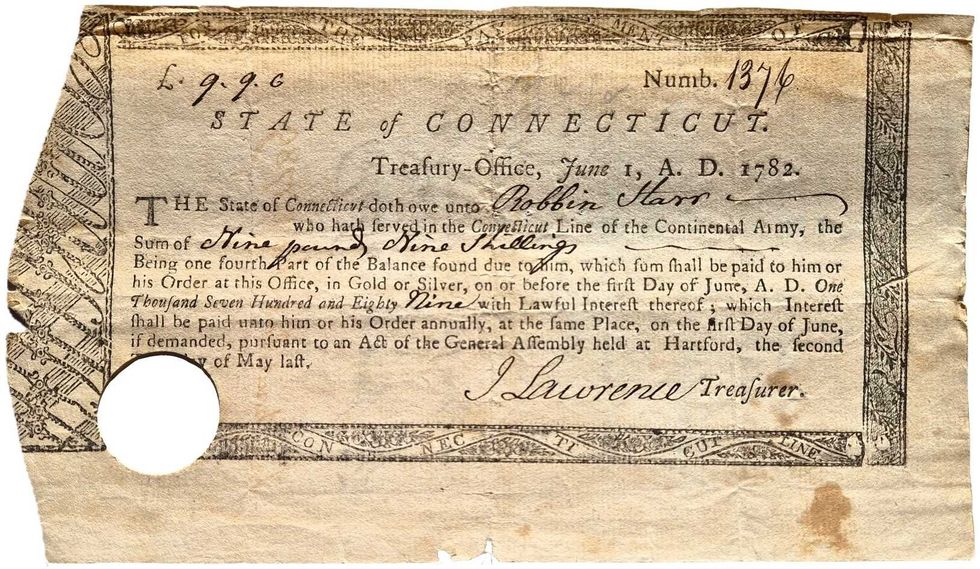 Pay Bill for Robin Starr’s service in the Continental Army.Courtesy the Alex Breanne Corporation
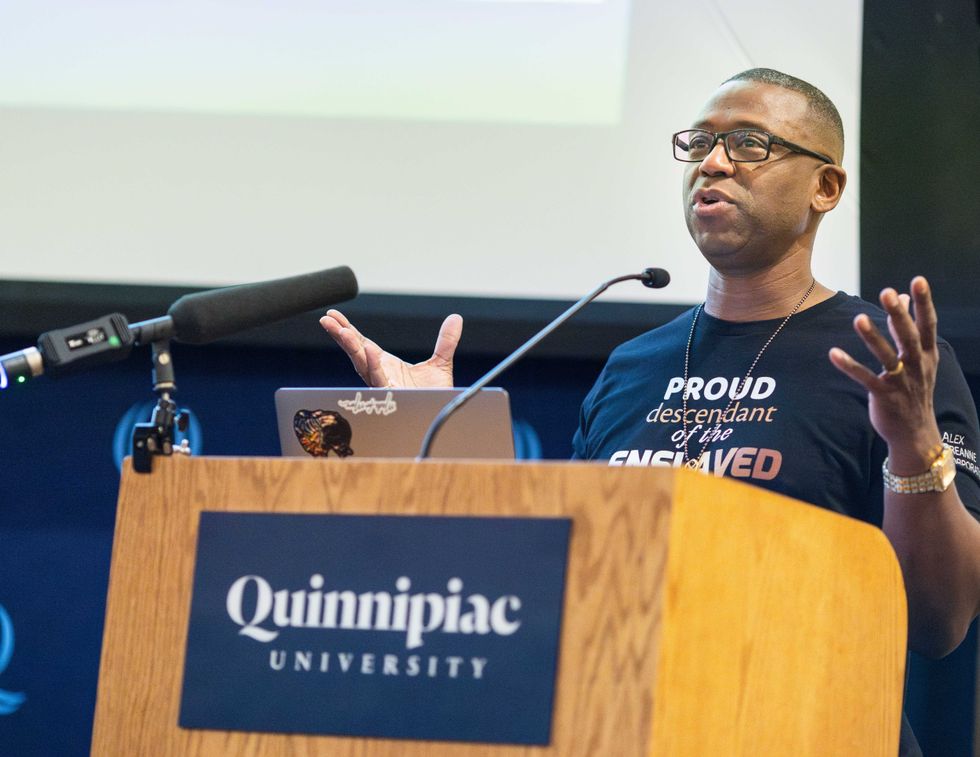 John Mills speaking at Quinnipiac University.Courtesy the Alex Breanne Corporation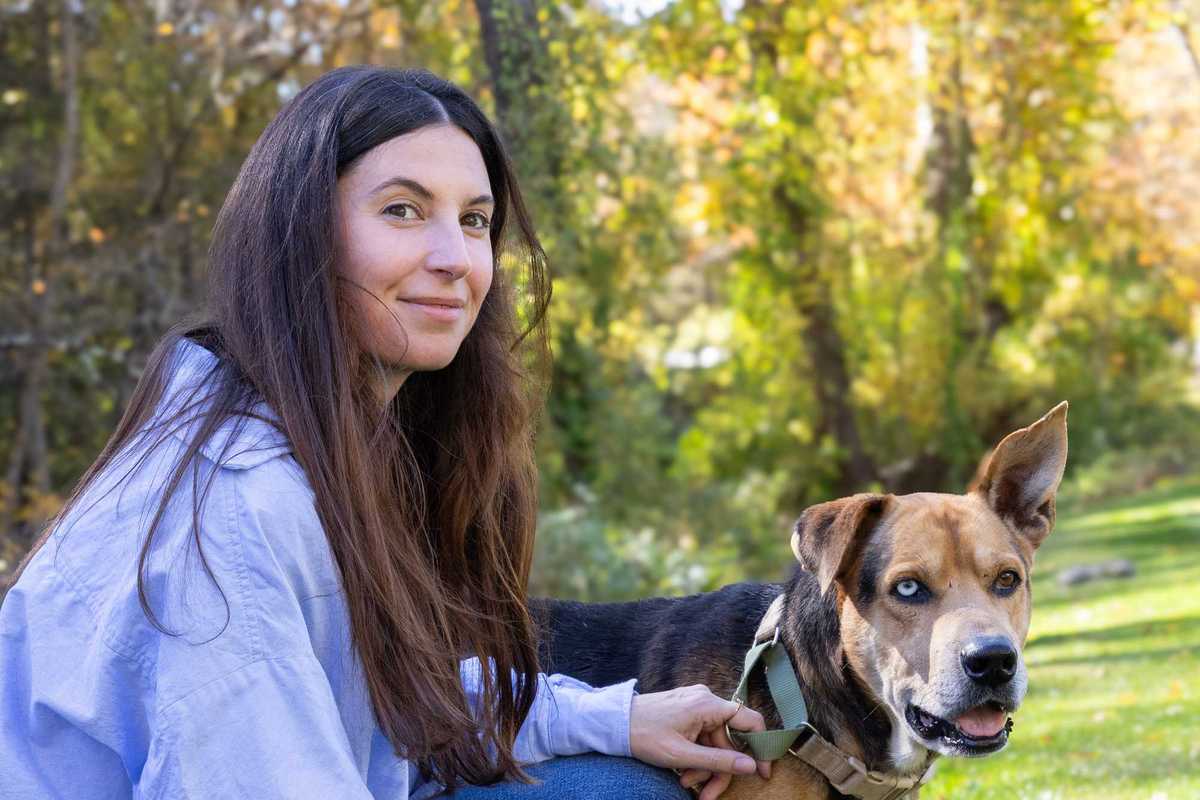
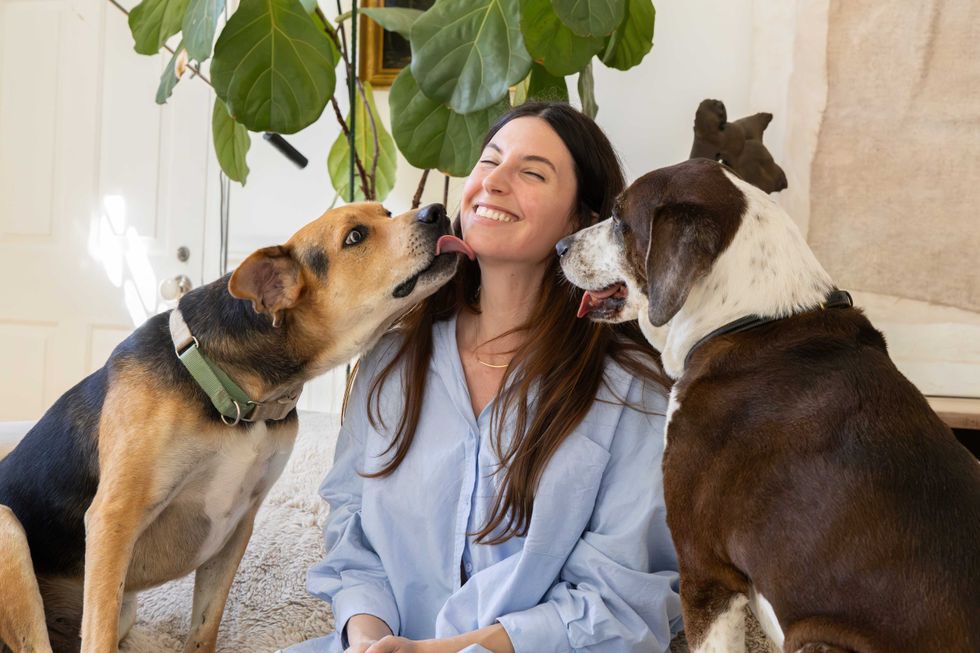 Stephanie Saetta,with her rescue dog George and Blue (left), a shepherd mix awaiting his forever home.Madi Long
 Blue, a 7 year-old Shepard mix, is waiting for his forever home. Madi Long